 Preview
 Send
Send Share
Share
 Details

 Download
 Similars
 X-Ray
X-Ray Diaporama
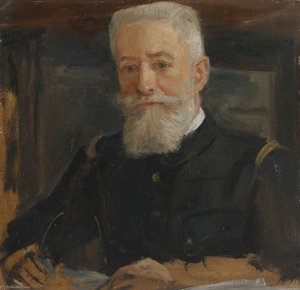
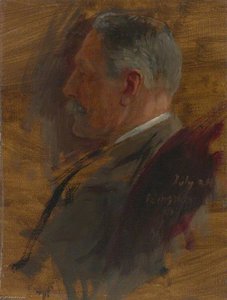
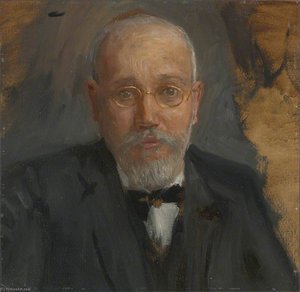
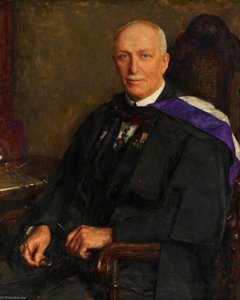
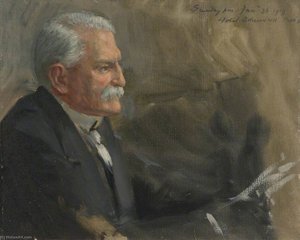
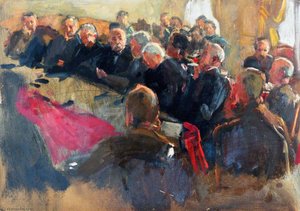
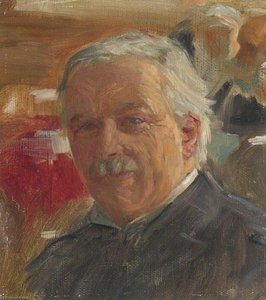
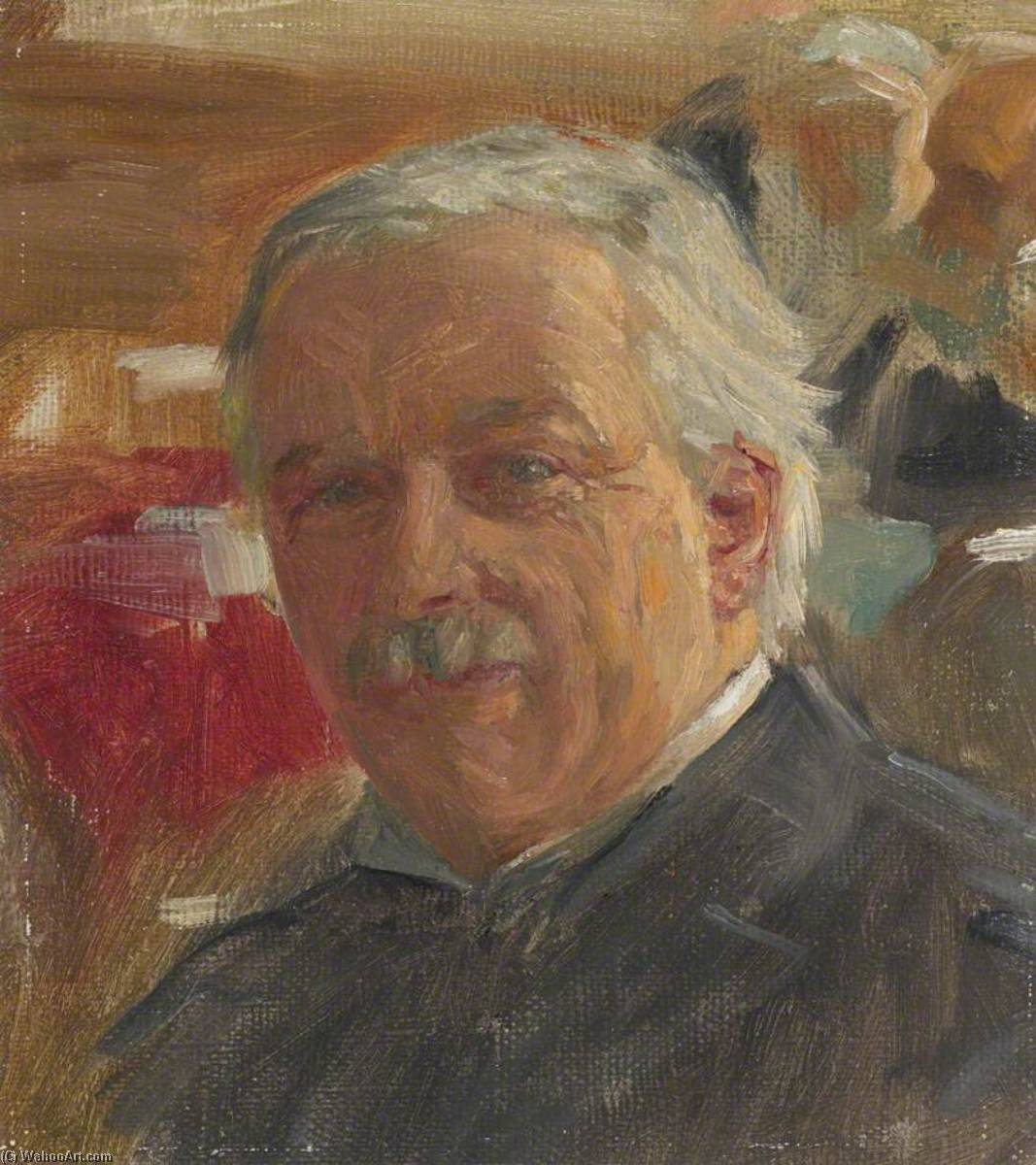
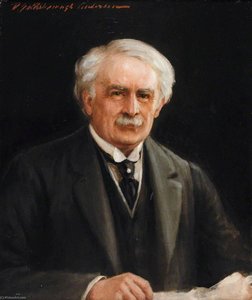
David Lloyd George, 1st Earl Lloyd George of Dwyfor (1863–1945), Prime Minister (preparatory study for 'The Supreme War Council in Session at Versailles on 3rd July 1918')


 Read More
Hand Made Oil Reproduction
Hand-painted oil on canvas in your size and frame, made to order by our artists. ( Buy Print Buy Image)




P118B $10

P118H $10

P118W $10

P438Z $10

P508JH $12

P508YH $12

P805H $10

P805Z $10

P919BZ $10

P919G $10

P919XJ $10

P959ZH $10

P968JZ $12

W106C $8

W218G $10

W218JH $8

W218Y $10

W307PJ $10

W316G $10

W316PJ $8

W316Y $10

W398PJ $8

W4111J $10

W500HY $15

W500JH $15

W692G $12

W849H $8

W940BG $15

W953PJ $8




Pick from our preset sizes that match the artwork's original proportions.

You may enter your own dimensions to fit a specific frame or space. If your selected size does not match the original image's proportions, we will either crop the artwork or extend the painting with additional hand-painted elements. A digital mockup will be sent for your approval before production begins.
Please note that the on-screen preview does not reflect the actual cropping or extension. Only the mockup will accurately show the final composition.
While custom sizes are available, we recommend selecting a dimension from the predefined list to preserve the original proportions.
After order, ArtsDot.com team will email client for instructions and provide a mockup preview
Worldwide Delivery () in 3/4 weeks instead of standard 5 weeks. (16 August). No compromise on quality.

Free Worldwide Express Shipping

High-Quality Linen Canvas

Full Shipping Insurance

Customs Tax Refund Guarantee

True Color Matching Guarantee

60-Day Return Policy (Defects Only)

100% Money-Back Guarantee

Bulk Discount Offer
 Glass option is only available in size under 110 CM

David Lloyd George, 1st Earl Lloyd George of Dwyfor (1863–1945), Prime Minister (preparatory study for 'The Supreme War Council in Session at Versailles on 3rd July 1918')
Reproduction Medium
Reproduction Size
-


Total Price
$ 263
Artwork Description
A Glimpse into the Heart of Leadership
In this evocative preparatory study for his monumental work, The Supreme War Council in Session at Versailles, Herbert Arnould Olivier captures more than just a likeness; he captures the weight of an era. The portrait focuses on David Lloyd George, the formidable British Prime Minister, whose presence dominates the canvas with an undeniable gravity. Through Olivier’s masterful brushwork, we encounter a man caught in a moment of profound contemplation amidst the chaos of 1918. The subject’s white hair and steady, piercing gaze through his spectacles suggest a seasoned intellect, while the subtle tension in his expression hints at the monumental decisions being forged in the halls of Versailles. It is an intimate window into the psyche of a leader navigating the twilight of the Great War.
The composition is a masterclass in focused intensity. While the primary subject commands the foreground, Olivier utilizes a sophisticated use of depth to ground the figure within his historical milieu. The background, though softly rendered, reveals the presence of other figures, suggesting the bustling, high-stakes environment of the war council. This layering creates a sense of being a silent observer in a room where the fate of nations is being decided. The striking contrast between the man’s formal attire and the vibrant, deep red backdrop serves a dual purpose: it provides a dramatic visual anchor that draws the eye immediately to the subject, while simultaneously symbolizing the passion, sacrifice, and blood spilled during the conflict he helped conclude.
Technique and the Art of Presence
Olivier’s technique in this study demonstrates his profound ability to manipulate light and texture to evoke emotion. The artist employs a painterly approach that balances fine detail with expressive, broader strokes. Notice how the light catches the silvered strands of Lloyd George's hair and the crisp lines of his formal tie, lending a tactile reality to the portrait. This meticulous attention to detail is balanced by the atmospheric treatment of the background figures, which prevents the composition from feeling static or overly staged. The interplay of light and shadow across the Prime Minister’s face adds a sculptural quality, emphasizing the contours of experience and the weariness of command.
For the discerning collector or interior designer, this piece offers an unparalleled opportunity to introduce a sense of historical prestige and intellectual depth into a space. As a reproduction, it retains the soulful essence of Olivier’s original vision—a blend of official documentation and deeply personal portraiture. The painting does not merely decorate a wall; it commands attention, acting as a conversation piece that invites reflection on leadership, resilience, and the transformative power of history. Whether placed in a stately study, a sophisticated gallery, or a curated living space, this work brings with it an aura of timeless authority and the quiet dignity of a world in transition.
Related Artworks
Artist Biography
Herbert Arnould Olivier: A Painter of Light and War
Herbert Arnould Olivier (1861-1952) remains a compelling figure in British art, largely due to his evocative portrayals of both the serene beauty of landscape and the stark realities of wartime. Born into a family steeped in public service – his father a clergyman, brothers pursuing military careers, and a distant connection to Laurence Olivier – Olivier’s artistic journey was shaped by diverse influences and a keen eye for detail. His career spanned several decades, marked by consistent exhibition activity, teaching roles, and ultimately, a significant contribution to documenting the First World War through official war art.
Olivier's early life in Battle, East Sussex, provided him with an appreciation for the English countryside, which would become a recurring theme in his work. He received a solid education at Sherborne School, a prestigious institution known for nurturing artistic talent, and subsequently enrolled at the Royal Academy Schools in 1881. It was here that he honed his skills and earned recognition, culminating in the prestigious Creswick Prize in 1882 – an award that signaled his potential as a landscape painter. His early works often captured the subtle shifts of light and atmosphere across the Sussex Downs, demonstrating a mastery of watercolor technique and a sensitivity to color.
However, Olivier’s artistic trajectory took a dramatic turn with his appointment to the Bombay School of Art in the 1880s. This experience exposed him to new perspectives and artistic traditions, particularly within Indian art. His time in India profoundly influenced his palette and approach, introducing him to richer, more vibrant hues and a looser, more expressive style. The trip to Kashmir in 1884 proved particularly fruitful, resulting in a series of paintings that were initially lauded for their “effective, though hard and coarse in colour,” capturing the rugged beauty of the region with a bold, almost impasto-like technique. These works showcased his ability to translate dramatic landscapes onto canvas.
The Rise of a War Artist
Olivier’s artistic reputation solidified during World War I, when he was appointed an official war artist in 1917. This role marked a significant shift in his career and provided him with the opportunity to document the conflict firsthand. Unlike many artists who focused solely on heroic battlefield scenes, Olivier approached his wartime commissions with a nuanced perspective, capturing not only the physical devastation but also the psychological impact of the war on individuals and communities. He was tasked with creating paintings that would serve as visual records for the nation, reflecting both the solemnity and the urgency of the situation.
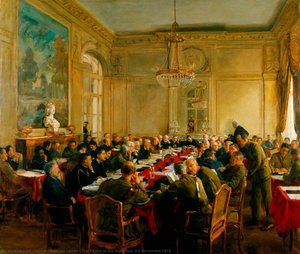
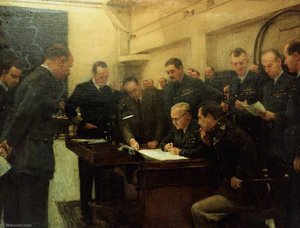
His most celebrated works from this period include “The Supreme War Council in Session at Versailles,” “Armistice Meeting,” and a series of portraits depicting key figures involved in the negotiations. These paintings are notable not only for their technical skill but also for their emotional resonance. Olivier’s use of light, shadow, and color effectively conveys the atmosphere of each scene – from the tense deliberations within the War Council to the exhausted faces of the soldiers at the Armistice Meeting. Notably, he created preparatory studies for these major works, offering a fascinating glimpse into his artistic process and demonstrating the evolution of his ideas.
The Imperial War Museum holds several of Olivier’s war paintings, including “The Supreme War Council,” which was subsequently gifted to the French government and displayed in the Palace of Versailles. This act underscored the importance of his work as a bridge between nations during a time of conflict. His commitment to documenting the war extended beyond grand scenes; he also painted portraits of individuals affected by the conflict, capturing their vulnerability and resilience.
Technique and Style
Olivier’s artistic style is characterized by a blend of realism and impressionism. He meticulously observed his subjects – whether landscapes or human figures – rendering them with remarkable accuracy. However, he also employed loose brushwork and vibrant color palettes to convey mood and atmosphere. His watercolor technique was particularly noteworthy, allowing him to create delicate washes and subtle gradations of tone. He frequently utilized a layering technique, building up colors gradually to achieve depth and luminosity.
His work in Kashmir demonstrated a willingness to experiment with texture and impasto – applying paint thickly to the canvas to create a three-dimensional effect. This approach was particularly evident in his depictions of mountainous landscapes, where he used bold strokes of color to capture the dramatic lighting conditions. Throughout his career, Olivier maintained a consistent dedication to capturing light and atmosphere, which became a hallmark of his distinctive style.
Legacy and Influence
Herbert Arnould Olivier’s contribution to British art is often overshadowed by more celebrated figures, yet his work deserves recognition for its quiet power and historical significance. His war paintings offer a poignant reflection on the human cost of conflict, while his landscapes capture the enduring beauty of the English countryside. His legacy extends beyond his individual artworks; he also played a role in shaping the development of official war art in Britain.
Olivier’s influence can be seen in the work of later generations of British artists who were inspired by his approach to landscape painting and his willingness to engage with contemporary social issues. His paintings continue to resonate today, reminding us of the importance of documenting history through art and capturing the complexities of human experience.
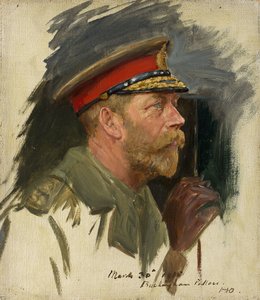
Herbert Arnould Olivier
1861 - 1952
Quick Facts
- Artistic Movement Or Style: Portrait & Landscape
- Artists Or Movements Influenced By This Artist: ['Laurence Olivier']
- Artists Who Influenced This Artist: ['Royal Academy Schools']
- Date Of Birth: September 9, 1861
- Date Of Death: March 2, 1952
- Full Name: Herbert Arnould Olivier
- Nationality: British
- Notable Artworks:
- Easter Morn
- The Supreme War Council
- Armistice Meeting
- Place Of Birth: Battle, East Sussex, England
Related Articles
Georges Braque's Masterpieces: 25 Paintings That Defined Cubism & Modern Art | ArtsDot
Explore 25 iconic Georges Braque paintings that revolutionized Cubism & modern art. Discover the stories behind his masterpieces, from Fauvism to Analytical Cubism. Find museum-quality reproductions & elevate your home decor with ArtsDot.com.
Georges Seurat's Masterpieces: 25 Paintings That Defined Pointillism | ArtsDot
Explore 25 iconic Georges Seurat paintings & discover the brilliance of Pointillism. From 'La Grande Jatte' to his harbor scenes, delve into art history with ArtsDot.com. Find museum-quality reproductions for your home decor. Explore the full collection online!

Crimson Threads of Narrative: Exploring Symbolism & Representation in Artworks Featuring the Red Dress
Explore the rich symbolism of the red dress in art history! From ancient power displays to iconic portraits like Cézanne’s 'Madame Cezanne', discover the cultural and artistic significance behind this captivating color. Expert analysis & insights.
Jacques-Louis David: Neoclassical Ideals & Revolutionary Witness
Explore the life & art of Jacques-Louis David, leading Neoclassical painter of the French Revolution. Discover iconic works like 'The Death of Marat' and his lasting impact on art history. Expert analysis & high-quality reproductions at ArtsDot.
Gerard David: Bridging Late Medieval Tradition with Early Renaissance Humanism
Explore the captivating world of Gerard David, a pivotal figure bridging late medieval artistry with the Early Renaissance. Discover his innovative techniques, religious masterpieces, and enduring legacy – a must-read for discerning art collectors.