 Preview
 Send
Send Share
Share
 Details

 Download
 Similars
 X-Ray
X-Ray Diaporama
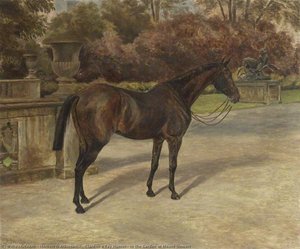
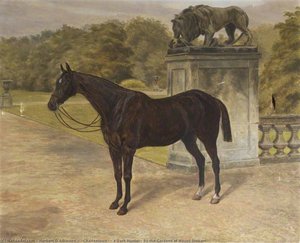
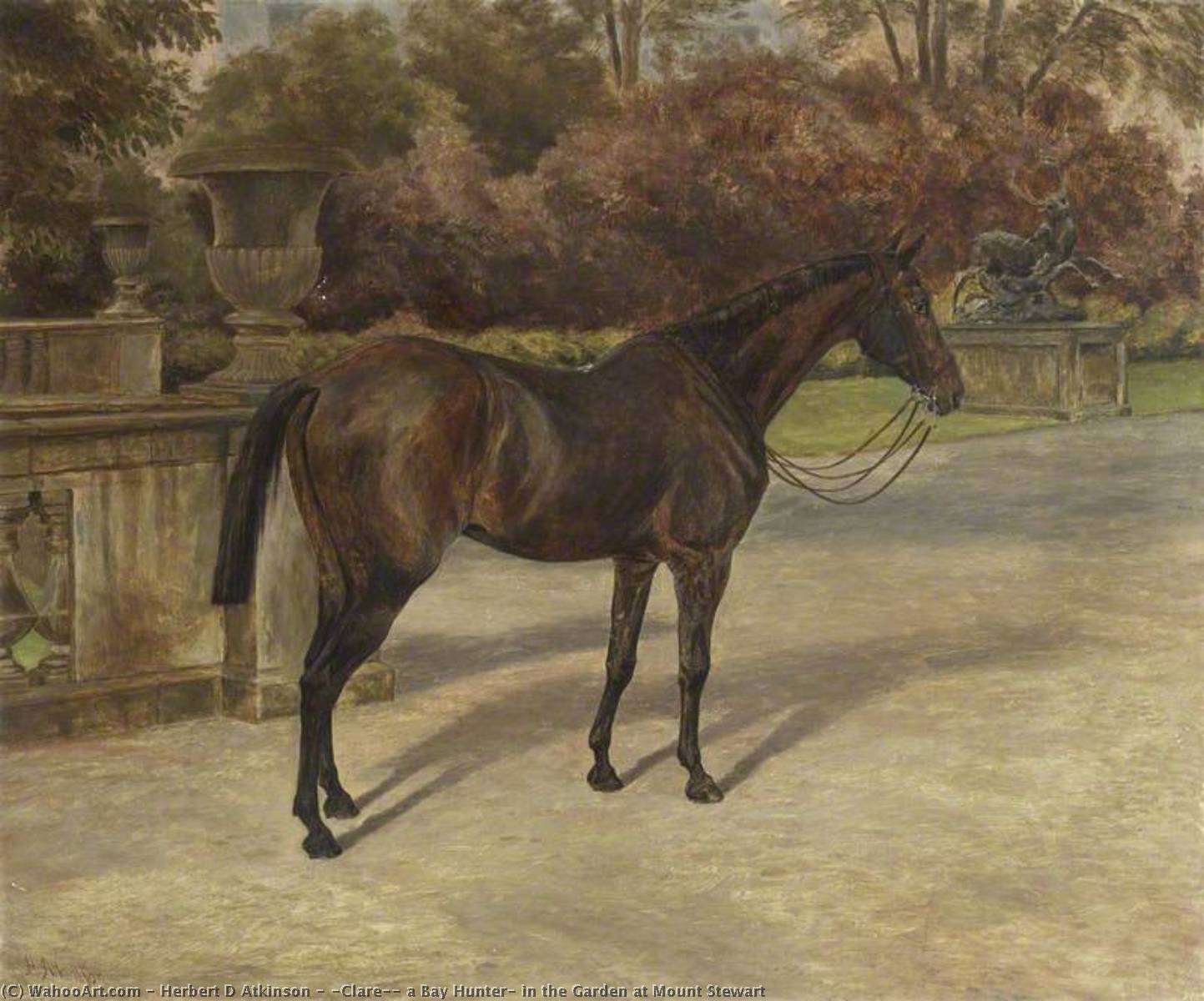
'Clare', a Bay Hunter, in the Garden at Mount Stewart
 1901
1901 56.0 x 71.0 cm
 National Trust
 Read More
Hand Made Oil Reproduction
Hand-painted oil on canvas in your size and frame, made to order by our artists. ( Buy Print Buy Image)




































Pick from our preset sizes that match the artwork's original proportions.

You may enter your own dimensions to fit a specific frame or space. If your selected size does not match the original image's proportions, we will either crop the artwork or extend the painting with additional hand-painted elements. A digital mockup will be sent for your approval before production begins.
Please note that the on-screen preview does not reflect the actual cropping or extension. Only the mockup will accurately show the final composition.
While custom sizes are available, we recommend selecting a dimension from the predefined list to preserve the original proportions.
After order, ArtsDot.com team will email client for instructions and provide a mockup preview
Worldwide Delivery () in 3/4 weeks instead of standard 5 weeks. (21 August). No compromise on quality.

Free Worldwide Express Shipping

High-Quality Linen Canvas

Full Shipping Insurance

Customs Tax Refund Guarantee

True Color Matching Guarantee

60-Day Return Policy (Defects Only)

100% Money-Back Guarantee

Bulk Discount Offer
 Glass option is only available in size under 110 CM

'Clare', a Bay Hunter, in the Garden at Mount Stewart
Reproduction Medium
Reproduction Size
-


Total Price
$ 263
Related Artworks










Artist Biography
Herbert D. Atkinson (1863–1936): A Quiet Master of Coastal Landscapes
Herbert D. Atkinson, born in Southport, Lancashire, England, in 1863, remains a relatively obscure figure within the broader landscape of Victorian and Edwardian British art. Despite producing an impressive oeuvre spanning over seven decades – primarily focused on meticulously rendered coastal scenes and historical depictions – his work has largely evaded widespread recognition until recent scholarship has begun to illuminate its subtle beauty and understated power. This article aims to explore Atkinson’s life, artistic development, influences, and enduring legacy as a painter of remarkable sensitivity and technical skill.Early Life and Artistic Training
Little is known definitively about Atkinson's formative years beyond documented records indicating he was educated at Southport Grammar School. His inclination towards art emerged early, fueled by an appreciation for the dramatic vistas afforded by Lancashire’s coastline – specifically Crosby Beach and Fleetwood Harbour – which would become recurring motifs in his paintings. Encouraged by family members who recognized his talent, Atkinson pursued formal artistic training initially under William Joseph Turner, a respected instructor at Southport School, honing his observational skills and mastering foundational techniques of watercolor painting. This initial grounding proved invaluable as he continued his studies independently, absorbing influences from artists such as Frederic Church and Jules Bastien Lepage, whose expansive landscapes and expressive brushwork resonated deeply with Atkinson’s artistic sensibilities.The Flowering Period: Coastal Visions and Historical Narratives
Atkinson's artistic output reached its zenith between 1890 and 1920, during which time he produced a prolific series of paintings celebrating the majesty of Britain’s shores. His canvases capture not merely visual representations but palpable atmospheres – the swirling mist of Fleetwood Bay, the turbulent waves crashing against Crosby Headland, the serene tranquility of Morecambe Sands – conveying an unparalleled understanding of light and color. These landscapes are characterized by meticulous detail, achieved through painstaking layering of watercolor washes and subtle gradations of tone, reflecting Atkinson’s unwavering commitment to accuracy and realism. Simultaneously, Atkinson undertook commissions depicting historical subjects, primarily focusing on scenes from the Napoleonic Wars and Victorian Britain's imperial expansion. His depictions of battles – notably “The Battle of Trafalgar” – are notable for their dramatic compositions and skillful rendering of movement, demonstrating his ability to translate narrative into visual form with considerable artistry.Technique and Artistic Philosophy
Atkinson’s artistic philosophy centered on the belief that painting should serve as a conduit for conveying emotion and capturing the essence of observed reality. He eschewed flamboyant ornamentation or theatrical gestures, prioritizing instead quiet contemplation and understated elegance in his compositions. His technique—primarily watercolor—was rigorously disciplined, demanding patience, precision, and an unwavering dedication to mastering the medium’s inherent limitations. Atkinson meticulously prepared his watercolors by grinding pigments into a fine powder and suspending them in gum arabic, achieving unparalleled luminosity and tonal subtlety. He employed a layering technique known as “wet-on-wet,” allowing colors to blend seamlessly together and creating atmospheric effects that imbue his landscapes with an ethereal quality. This meticulous approach—combined with his profound understanding of visual perception—resulted in paintings that possess a remarkable immediacy and emotional resonance.Legacy and Recognition
Despite the relative obscurity surrounding Atkinson’s life and career during his lifetime, recent art historical research has begun to reassess his contribution to British landscape painting. His work is now housed in several prominent galleries across Britain, including Art UK and Coventry Art Museum, where it continues to captivate audiences with its understated beauty and technical brilliance. Scholars have increasingly recognized Atkinson’s influence on subsequent generations of watercolor artists, praising his unwavering commitment to observation and his masterful manipulation of color and light. As a painter who quietly persisted in pursuing his artistic vision—guided by principles of sincerity and meticulous craftsmanship—Herbert D. Atkinson deserves renewed appreciation as a significant figure within the artistic heritage of Victorian Britain.
Quick Facts
- Artistic Movement Or Style: Victorian Landscape Art
- Artists Or Movements Influenced By This Artist: ['Romanticism']
- Artists Who Influenced This Artist:
- John Constable
- George Frederic Watts
- Date Of Death: Living
- Full Name: Herbert D Atkinson
- Nationality: British
- Notable Artworks:
- The Old Churchyard, Southport
- Coventry Cathedral
- Place Of Birth: Southport, England