 Preview
 Send
Send Share
Share
 Details

 Download
 Similars
 X-Ray
X-Ray Diaporama
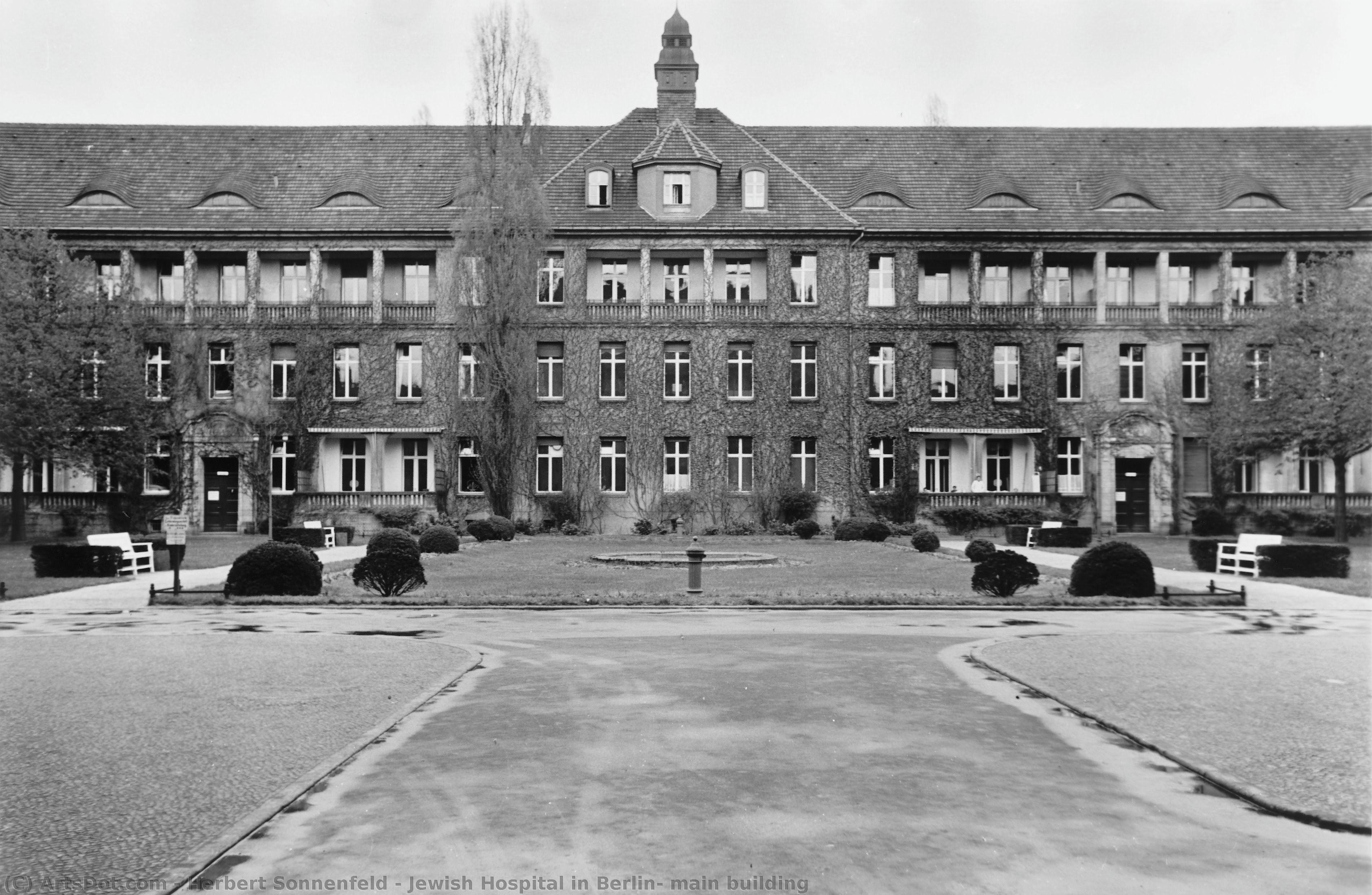
Jewish Hospital in Berlin, main building

 Read More
Hand Made Oil Reproduction
Hand-painted oil on canvas in your size and frame, made to order by our artists. ( Buy Print Buy Image)




































Pick from our preset sizes that match the artwork's original proportions.

You may enter your own dimensions to fit a specific frame or space. If your selected size does not match the original image's proportions, we will either crop the artwork or extend the painting with additional hand-painted elements. A digital mockup will be sent for your approval before production begins.
Please note that the on-screen preview does not reflect the actual cropping or extension. Only the mockup will accurately show the final composition.
While custom sizes are available, we recommend selecting a dimension from the predefined list to preserve the original proportions.
After order, ArtsDot.com team will email client for instructions and provide a mockup preview
Worldwide Delivery () in 3/4 weeks instead of standard 5 weeks. (24 August). No compromise on quality.

Free Worldwide Express Shipping

High-Quality Linen Canvas

Full Shipping Insurance

Customs Tax Refund Guarantee

True Color Matching Guarantee

60-Day Return Policy (Defects Only)

100% Money-Back Guarantee

Bulk Discount Offer
 Glass option is only available in size under 110 CM

Jewish Hospital in Berlin, main building
Reproduction Medium
Reproduction Size
-


Total Price
$ 263
Related Artworks






Artist Biography
Herbert Sonnenfeld: A Window into a Vanishing World
Born in the heart of Berlin’s Neukölln district in 1906, Herbert Sonnenfeld's life was inextricably linked to the unfolding tragedy of the Weimar Republic and the rise of Nazism. Initially pursuing a career as an insurance employee, his path dramatically shifted following Germany’s descent into political turmoil. A trip to Palestine in 1933 proved transformative, igniting within him a profound desire to document Jewish life – not just its vibrancy, but also its increasing vulnerability – and setting the stage for a remarkable photographic legacy. Sonnenfeld's work stands as an invaluable historical record, offering poignant glimpses into a community grappling with displacement, persecution, and the looming shadow of war.
Sonnenfeld’s early career began unexpectedly, fueled by his wife Leni’s encouragement and her own nascent photography skills. Initially, he offered his photographs to Jewish newspapers, quickly establishing himself as a skilled observer and documentarian. This initial foray into press photography evolved into a systematic effort to capture the daily lives of Berlin's Jewish community – from bustling marketplaces and vibrant cultural events to intimate portraits of families and artisans. His subjects weren’t grand historical figures but ordinary people: shopkeepers, teachers, musicians, and members of various communal organizations. Crucially, Sonnenfeld’s work was largely confined to Jewish publications, a deliberate choice that provided an unparalleled, albeit somewhat limited, perspective on the experiences of this marginalized group during a period of immense upheaval.
The photographs themselves are characterized by their intimate quality and understated realism. Sonnenfeld possessed a remarkable ability to capture genuine emotion – moments of joy, resilience, and quiet dignity amidst hardship. His compositions often favored natural light and candid settings, eschewing theatrical poses in favor of capturing subjects as they were, engaged in everyday activities. He wasn’t interested in sensationalizing the plight of his subjects; instead, he sought to present a truthful and nuanced portrait of Jewish life in Berlin – a life that was rapidly being erased by the policies of the Nazi regime. The images are imbued with a sense of melancholy and urgency, reflecting the precariousness of their situation.
The Shadow of the Third Reich
The rise of the Nazi party fundamentally altered Sonnenfeld’s trajectory. His Jewish heritage immediately rendered him vulnerable to persecution, leading to his dismissal from his employment. Despite attempts to emigrate to Palestine – ultimately denied due to financial constraints and bureaucratic hurdles – he continued to document Jewish life in Berlin, often working for organizations dedicated to assisting refugees. These photographs became increasingly poignant as the atmosphere grew darker, reflecting the escalating restrictions and discrimination faced by Jews.
The decision to relocate to New York in 1939 marked a critical turning point. With the outbreak of World War II, Sonnenfeld and his wife Leni seized the opportunity to escape Nazi Germany, carrying only a small selection of their photographs – a testament to the precariousness of their situation. In America, they established a new life, continuing their photographic work, primarily focusing on Jewish subjects. This shift allowed them to maintain a connection to their roots while adapting to a new environment and contributing to the growing American Jewish community.
A Legacy Preserved
Sonnenfeld’s archive represents an extraordinary historical resource. The approximately 3000 negatives he amassed between 1933 and 1938 offer a rare and intimate window into Jewish life in Berlin during a tumultuous period. The collection includes images of the Cultural Association of German Jews, the Jewish Museum (then operating from Oranienburger Straße), various artists and artisans, and countless scenes depicting daily routines and communal activities. These photographs are not merely historical documents; they are deeply human portraits that speak to the resilience, dignity, and spirit of a community facing unimaginable challenges.
Following his death in 1972, Sonnenfeld’s work was carefully preserved by the Jewish Department of the Berlin Museum. In 1988, the museum acquired a significant portion of the archive, followed by further additions over the years. Today, the Herbert Sonnenfeld collection is housed at the Jewish Museum Berlin and has been digitized, making it accessible to researchers and the public worldwide. The museum’s efforts to make these photographs available online represent a vital step in ensuring that Sonnenfeld's legacy – and the story of Jewish life in pre-war Berlin – will continue to be remembered and understood for generations to come.
Technical Aspects & Photographic Style
Sonnenfeld’s photographic style is characterized by its directness and sensitivity. He primarily utilized a Leica camera, a popular choice among journalists at the time, known for its portability and ability to capture sharp images in challenging lighting conditions. His approach favored natural light whenever possible, often shooting during the golden hours of dawn and dusk to create a warm, evocative atmosphere. Sonnenfeld’s compositions are generally unostentatious, prioritizing clarity and authenticity over elaborate staging or artistic manipulation.
He demonstrated an astute eye for detail, capturing not only the outward appearance of his subjects but also their expressions and gestures – subtle cues that revealed their inner lives. The images often possess a remarkable sense of immediacy, as if frozen in time, conveying the emotions and experiences of those depicted with remarkable precision. The use of black-and-white photography further enhanced the documentary quality of his work, stripping away distractions and focusing attention on the essential elements of each scene.
Historical Significance & Continuing Relevance
Herbert Sonnenfeld’s photographs are more than just historical images; they serve as a poignant reminder of a community that was systematically erased by the Nazi regime. His work offers invaluable insights into the daily lives, cultural traditions, and social structures of Berlin's Jewish population in the years leading up to World War II. The collection provides crucial evidence of the persecution faced by Jews during this period, documenting the gradual erosion of their rights and freedoms.
Furthermore, Sonnenfeld’s photographs offer a powerful testament to the resilience and dignity of the human spirit in the face of adversity. They remind us of the importance of remembering and honoring the experiences of those who were marginalized and persecuted, ensuring that their stories are not forgotten. In an era marked by rising antisemitism and social division, Sonnenfeld’s work serves as a vital reminder of the dangers of intolerance and the enduring value of empathy and understanding.
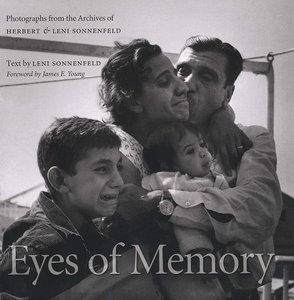
Herbert Sonnenfeld
1906 - , Germany
Quick Facts
- Artistic Movement Or Style: Press photography
- Date Of Birth: September 29, 1906
- Full Name: Herbert Sonnenfeld
- Nationality: German
- Notable Artworks:
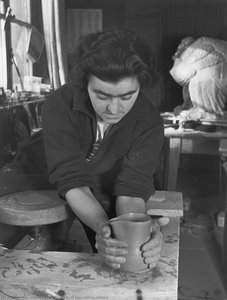
- Nora Herz throwing a jug
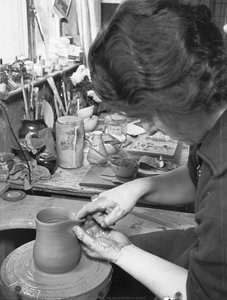
- Nora Herz making pottery
- Place Of Birth: Berlin, Germany