 Preview
 Send
Send Share
Share
 Details

 Download
 Similars
 X-Ray
X-Ray Diaporama
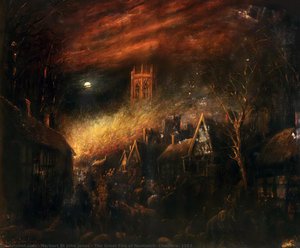
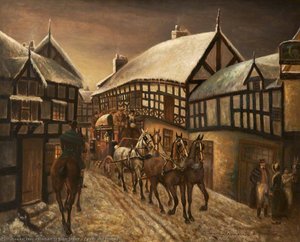
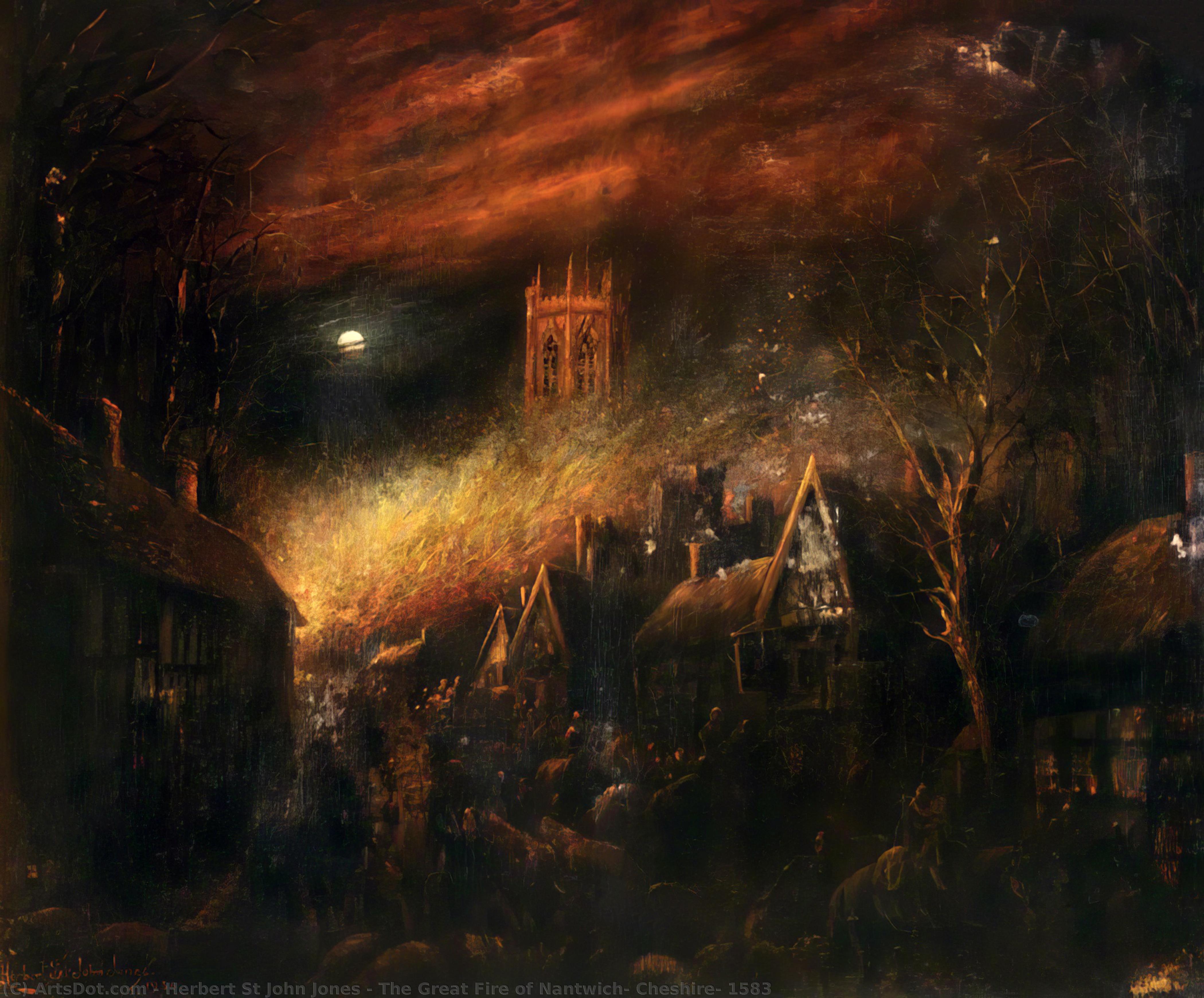
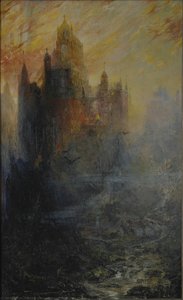
The Great Fire of Nantwich, Cheshire, 1583
 1934
1934 60.0 x 75.0 cm
 Read More
Hand Made Oil Reproduction
Hand-painted oil on canvas in your size and frame, made to order by our artists. ( Buy Print Buy Image)




































Pick from our preset sizes that match the artwork's original proportions.

You may enter your own dimensions to fit a specific frame or space. If your selected size does not match the original image's proportions, we will either crop the artwork or extend the painting with additional hand-painted elements. A digital mockup will be sent for your approval before production begins.
Please note that the on-screen preview does not reflect the actual cropping or extension. Only the mockup will accurately show the final composition.
While custom sizes are available, we recommend selecting a dimension from the predefined list to preserve the original proportions.
After order, ArtsDot.com team will email client for instructions and provide a mockup preview
Worldwide Delivery () in 3/4 weeks instead of standard 5 weeks. (25 August). No compromise on quality.

Free Worldwide Express Shipping

High-Quality Linen Canvas

Full Shipping Insurance

Customs Tax Refund Guarantee

True Color Matching Guarantee

60-Day Return Policy (Defects Only)

100% Money-Back Guarantee

Bulk Discount Offer
 Glass option is only available in size under 110 CM

The Great Fire of Nantwich, Cheshire, 1583
Reproduction Medium
Reproduction Size
-


Total Price
$ 263
Related Artworks








Artist Biography
The Soul of Cheshire: The Life and Art of Herbert St John Jones
In the quiet, rolling landscapes of Cheshire, where the echoes of equestrian tradition still linger in the air, the name Herbert St John Jones evokes a sense of nostalgic grandeur. Born in 1872 in Shrewsbury and raised in the historic heart of Nantwich, Jones emerged during the Edwardian era not merely as a painter, but as a visual chronicler of a vanishing way of life. His life was deeply intertwined with the very soil he depicted; he was a familiar figure on the streets of Nantwich, an artist whose presence was as much a part of the local fabric as the ancient timbered buildings themselves. While his fame may not have reached the global heights of his contemporaries, his devotion to capturing the spirit of rural England—its vibrant hunts, its convivial inns, and its noble animals—has secured his place as a master of British Impressionism with a distinctly regional heart.
The foundation of Jones’s artistic vision was built upon a unique blend of formal discipline and profound philosophical influence. Though his early training began at Rugby School, where he sharpened his fundamental drawing skills, it was the mentorship of John Ruskin that would irrevocably shape his aesthetic compass. From Ruskin, the preeminent Victorian art critic, Jones inherited a reverence for the moral seriousness found within natural beauty. This influence manifested in a technique that sought to balance the ephemeral light of Impressionism with a rigorous, almost scientific, attention to detail. He did not seek the aggressive, broken brushwork of the Parisian avant-garde; instead, he favored softer, blended pigments that allowed him to capture the subtle atmospheric shifts of the English countryside and the delicate textures of horsehair and fine fabric.
A Master of the Equestrian and the Everyday
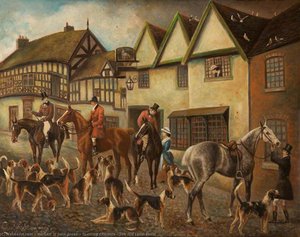
Jones’s true passion lay in the anatomy of movement and the dignity of the animal kingdom. He possessed an extraordinary ability to observe the musculature of a hunter or the spirited gait of a hound, often translating these observations into portraits executed entirely from memory within his studio on Hospital Street. This precision earned him the patronage of the highest echelons of British society, including the Duke and Duchess of Westminster, and even the ownership of works by King Edward VII. His oeuvre is a rich tapestry of sporting life, ranging from the intense energy of a hunting meet to the quiet, dignified presence of cattle and bulls.
Beyond the aristocratic commissions, Jones’s work celebrated the communal pulse of Cheshire. He found inspiration in the local inns and the social rhythms of village life, often painting scenes that served as both art and community service. It is a charming testament to his character that he frequently accepted paintings in lieu of unpaid bills from local shopkeepers, leaving behind a legacy of art that once adorned the walls of local merchants and public houses alike. His subjects were diverse and deeply rooted in his surroundings:
- Equestrian Excellence: Detailed portraits of hunters, hounds, and various horse breeds that showcased his anatomical mastery.
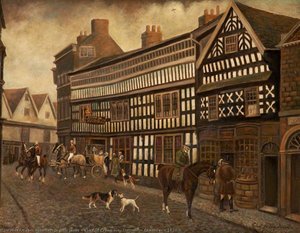
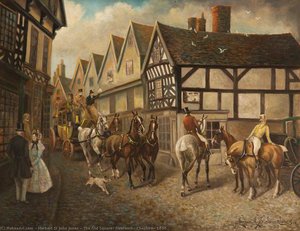
- Landscape and Place: Evocative depictions of Cheshire landmarks, such as the historic The Old Square, Nantwich, capturing the romanticism of 19th-century England.
- Social Realism: Charming scenes of village life, local hunts, and the atmospheric interiors of traditional English inns.
- Animal Portraiture: Beyond horses, his work included cattle and dogs, imbued with a sense of individual character and vitality.
Legacy and Historical Significance
The historical significance of Herbert St John Jones lies in his role as a bridge between the rigorous realism of the Victorian era and the atmospheric sensibilities of the early 20th century. He captured a specific moment in British history—a period where the traditions of the landed gentry and the rural working class existed in a delicate, picturesque harmony before the profound shifts of the modern age. His work serves as a vital historical record of Cheshire’s social and sporting heritage.
Today, his paintings are cherished not only for their technical merit but for the profound sense of nostalgia they evoke. Whether it is the luminous light hitting a field in Sporting Cheshire or the architectural charm of a village square, Jones’s art invites the viewer to step back into a world of elegance, tradition, and quiet beauty. His collection, spread across private estates and public institutions like the Nantwich Museum, continues to resonate with collectors who seek the authentic spirit of a bygone England.
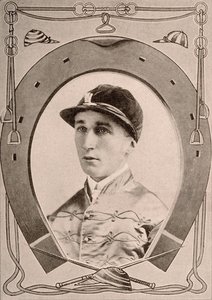
herbert st john jones
1872 - 1939
Quick Facts
- Artistic Movement Or Style: Romanticism
- Artists Or Movements Influenced By This Artist: ['Pre-Raphaelites']
- Artists Who Influenced This Artist: ['John Ruskin']
- Date Of Birth: 1872
- Date Of Death: 1939
- Full Name: Herbert St John Jones
- Nationality: British
- Notable Artworks:
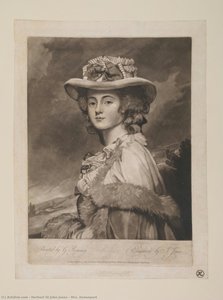
- Mrs. Davenport
- The Old Square, Nantwich, Cheshire, 1836
- E. Rhodes' Toy Shop, High Street, Nantwich, Cheshire, 1885
- Place Of Birth: England