 Preview
 Send
Send Share
Share
 Details

 Download
 Similars
 X-Ray
X-Ray Diaporama
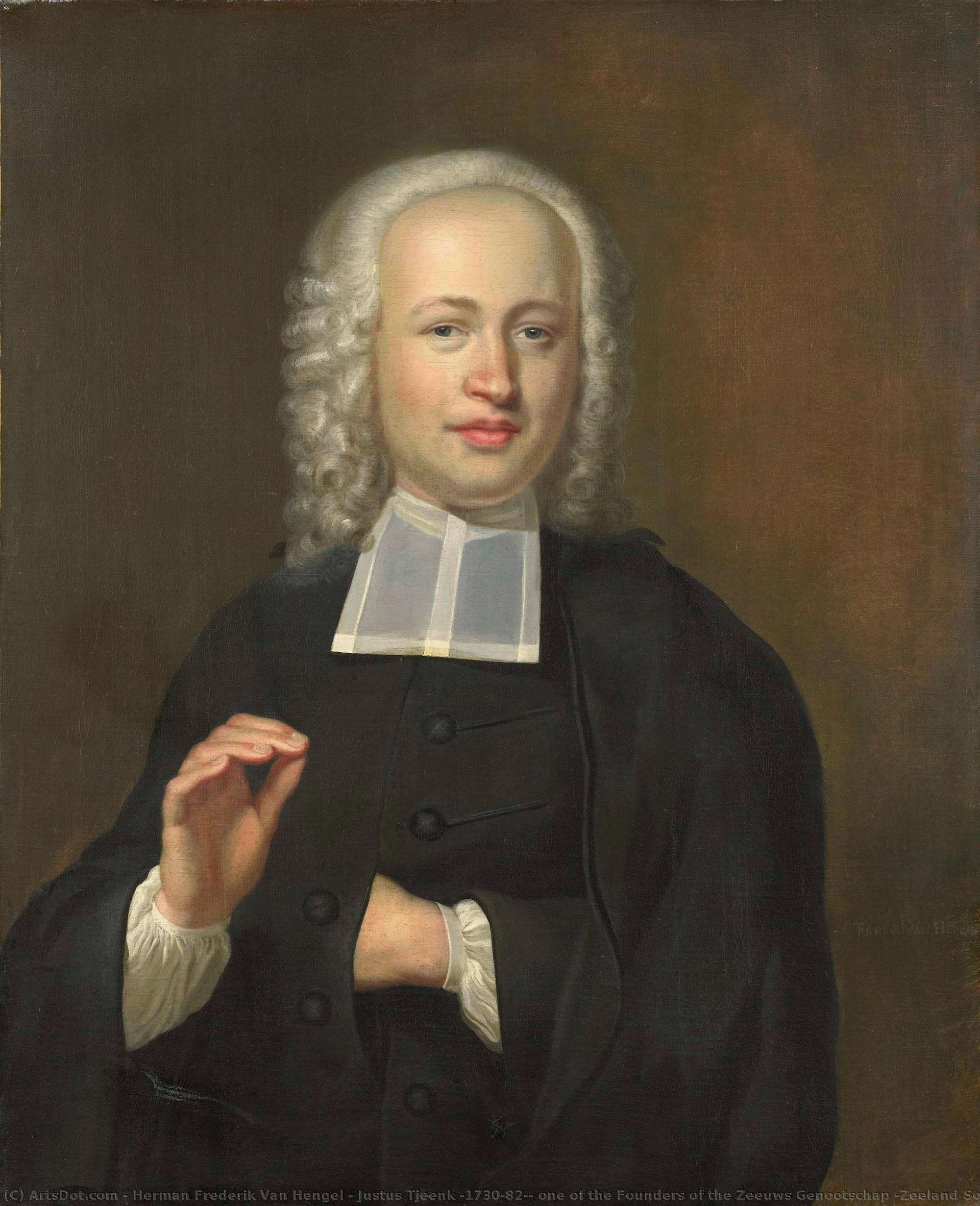
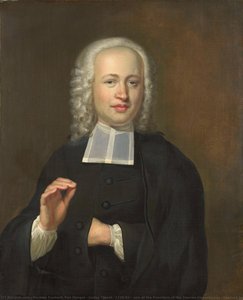
Justus Tjeenk (1730-82), one of the Founders of the Zeeuws Genootschap (Zeeland Society), Minister in Vlissingen, Herman Frederik van Hengel, 1756
 1756
1756 84.0 x 69.0 cm
 Read More
Giclée / Art Print
Museum-quality giclée or canvas print with fast production and flexible finish options. ( Buy Hand Made Painting Buy Image)




































Pick from our preset sizes that match the artwork's original proportions.

You may enter your own dimensions to fit a specific frame or space. If your selected size does not match the original image's proportions, we will either crop the artwork or extend the image with a mirrored or solid-fill edge. A digital mockup will be sent for your approval before production begins.
Please note that the on-screen preview does not reflect the actual cropping or extension. Only the mockup will accurately show the final composition.
While custom sizes are available, we recommend selecting a dimension from the predefined list to preserve the original proportions.
Worldwide Delivery () in 2 weeks instead of standard 4/5 weeks. (6 September)

Free Worldwide Express Shipping

High-Quality Linen Canvas

Full Shipping Insurance

Customs Tax Refund Guarantee

True Color Matching Guarantee

100-Day Return Policy (Defects Only)

100% Money-Back Guarantee

Bulk Discount Offer
 Glass option is only available in size under 110 CM

Justus Tjeenk (1730-82), one of the Founders of the Zeeuws Genootschap (Zeeland Society), Minister in Vlissingen, Herman Frederik van Hengel, 1756
Giclée / Art Print
Reproduction Size
-


Total Price
$ 63
Related Artworks







Artist Biography
A Floral Legacy: The Life and Art of Herman Frederik van Hengel
Herman Frederik van Hengel (1705–1785) remains a luminous figure in the tapestry of the Dutch Golden Age, an era defined by its profound reverence for the natural world. Born in the historic city of Nijmegen, Van Henglam entered a world where the meticulous observation of nature was not merely an artistic pursuit but a way of life. His journey into the heart of botanical excellence began under the watchful eye of Ernst Stuven, a master flower painter whose influence instilled in the young artist a rigorous discipline for detail and a deep-seated passion for the delicate textures of flora. This early training was more than academic; it was a foundational apprenticeship that allowed Van Hengel to capture the ephemeral beauty of petals and leaves with a precision that would later define his professional identity. By 1712, his burgeoning talent had earned him prestigious membership in the Antwerp Guild of St. Luke, signaling his arrival as a formidable force in the European art scene. His ascent was rapid, marked by an extraordinary appointment in 1713 when Johann Wilhelm, the Elector Palatine, bestowed upon him the title of court painter. This role placed Van Hengel at the very center of aristocratic life, granting him access to the most influential patrons of the age and providing a stage for his skill in royal portraiture. His brush did not merely record faces; it captured the dignity and splendor of the era's most powerful figures.A Journey Through Europe and Artistic Evolution
The scope of Van Hengel’s artistry was significantly expanded by his travels across the continent. His wanderings took him through the cultural hubs of Brussels and Paris, eventually leading him to the vibrant artistic landscape of London. These international excursions were transformative, exposing him to shifting aesthetic trends and a broader spectrum of European styles. Upon his return to the Netherlands in 1717, he brought with him a cosmopolitan sensibility that enriched his work, blending Dutch precision with the burgeoning elegance found in French and English traditions. During this period of maturity, Van Hengel’s social and professional circles became deeply intertwined with the intellectual life of the Netherlands. He engaged in meaningful collaborations and connections with figures such as Justus Tjeenk and Margaretha Leuveling, members of the esteemed Zeeuws Genootschap. His ability to navigate both the high courts of Europe and the scholarly societies of his homeland speaks to a versatile genius capable of bridging the gap between decorative beauty and intellectual depth.Teaching, Influence, and Lasting Significance
Beyond his individual canvases, Van Hengel’s legacy is etched into the history of royal education. One of his most profound contributions was his role as an instructor to Anne, Princess Royal and Princess of Orange, the daughter of King George II of Great Britain. By teaching the techniques of drawing and painting to royalty, he ensured that his meticulous methods and appreciation for botanical accuracy were passed down through the highest echelons of society. This role as a mentor underscores his commitment to the dissemination of artistic knowledge and his influence on the aesthetic sensibilities of the next generation. The enduring significance of Herman Frederik van Hengel lies in his ability to marry the scientific accuracy of botanical art with the emotive power of fine painting. His work, characterized by:- Delicate brushwork that breathes life into every stem and petal;
- Luminous color palettes that evoke the fleeting light of a garden at dawn;
- A mastery of texture that allows the viewer to almost feel the velvet of a rose or the dew on a leaf;
Herman Frederik van Hengel
1705 - 1785 , Netherlands
Quick Facts
- Artistic Movement Or Style: Botanical art
- Artists Or Movements Influenced By This Artist: Floral painting
- Artists Who Influenced This Artist: Ernst Stuven
- Date Of Birth: 1705
- Full Name: Herman Frederik van Hengel
- Nationality: Dutch
- Notable Artworks: ['Justus Tjeenk (1730-82), Herman Frederik van Hengel, 1756']
- Place Of Birth: Nijmegen, Netherlands