

 Preview
 Send
Send Share
Share
 Details

 Download
 Similars
 X-Ray
X-Ray Diaporama
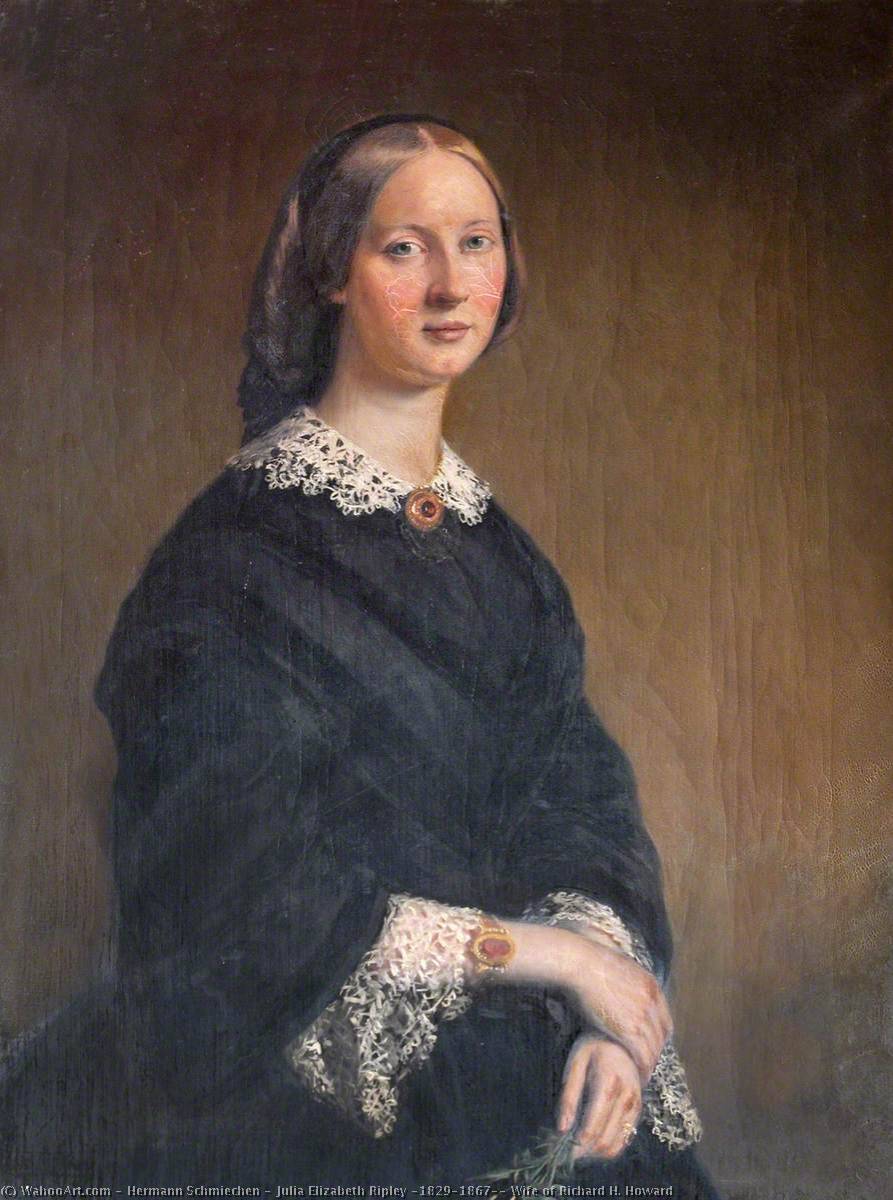
Julia Elizabeth Ripley (1829–1867), Wife of Richard H. Howard
 74.0 x 61.0 cm
 Read More
Purchase a high-resolution, enhanced digital image, far superior to the online preview.
Each file is meticulously prepared by our in-house specialists using advanced tools and expert manual retouching. We ensure every image has exceptional clarity, precise color accuracy, and fine detail.
The final file is delivered via email within 72 hours, optimized for immediate use in professional, editorial, and print environments. This is the same quality trusted by top-tier design studios, publishers, and galleries.
Digital Image
Download a high-resolution file for personal display, printing, and creative projects. ( Buy Print Buy Hand Made Painting)
Included in Every Digital Image Order
Expert Digital Delivery, Guaranteed
When you choose ArtsDot.com, you're not just getting an image - you're receiving a professionally enhanced digital artwork, crafted with precision and backed by a satisfaction guarantee. Here's everything that comes with your order, automatically:

Fast Email Delivery
Your high-resolution digital image file will be emailed to you within 72 hours of ordering - ready for immediate use.

AI-Enhanced Digital File
Your artwork is professionally optimized using advanced AI tools and manual editing, ensuring maximum detail, clarity, and color accuracy.

Free Lifetime Re-Delivery
Accidentally deleted or lost your file? No worries - we'll resend it to you anytime, free of charge.

No Import Fees - Ever
Enjoy your artwork instantly with zero customs, duties, or delivery fees - digital downloads are always tax-free.

Color Accuracy Guarantee
We ensure your digital image reflects the original colors as closely as possible using professional tools and color management.

60-Day Satisfaction Guarantee
If you're not satisfied with your digital image, we'll revise it or refund 100% within 60 days - no questions asked.

100% Money-Back Guarantee
Not satisfied? Get a full refund within 60 days of receiving your digital file - no questions asked.

Bulk Order Discounts
Buy 3 images, save 10% - Buy 5, save 15% - Buy 10+, save 20%. Great for creative projects, galleries, and agencies.
Related Artworks






Artist Biography
The Painter of Mystical Portraits: The Life and Legacy of Hermann Schmiechen
In the twilight of the nineteenth century, as the boundaries between the material world and the spiritual realm seemed to blur under the influence of burgeoning occult movements, one artist emerged with a brush capable of capturing the unseen. Hermann Schmiechen, born on July 22nd, 1855, in the Prussian Silesian town of Neumarkt, was far more than a mere chronicler of faces; he was a painter of essences. His life’s trajectory, moving from the rigorous academic traditions of Germany to the esoteric circles of London, reflects a profound journey of intellectual curiosity and spiritual exploration. Schmiechen did not merely seek to replicate the physical likeness of his subjects but aimed to pierce through the veil of the mundane to reveal the soul beneath.
Schmiechen’s artistic foundation was built upon a bedrock of classical excellence. His formative years were spent honing his craft at the Royal Academy of Arts and Crafts in Breslau, where he studied under the watchful eye of Albrecht Bräuer. This early training instilled in him a disciplined aesthetic sensibility that would serve as the structural skeleton for his more experimental later works. Seeking to expand his horizons, he transitioned into the prestigious Düsseldorf School of Painting, immersing himself in an atmosphere of vibrant creativity and collaborating with masters such as Karl Müller and Eduard von Seraphim von Gebhardt. This period of intense academic rigor was further enriched by his time at the illustrious Académie Julian in Paris, a move that allowed him to absorb the cosmopolitan nuances of French portraiture and refine his technical command over light and texture.
A Convergence of Art and Occultism
The most defining chapter of Schmiechen’s career began not with a brushstroke, but with a spiritual awakening. In 1884, following his arrival in London, he became a member of the Theosophical Society. This membership brought him into the orbit of the legendary Helena Blavatsky, the founder of Theosophy. It was through this connection that Schmiechen undertook one of his most enigmatic and historically significant projects: the commission to depict the Mahatmas—the ascended masters of spiritual wisdom. His portraits of Koot Hoomi and Morya became legendary within esoteric circles; contemporary observers noted a startling life-likeness in these works, claiming that the eyes of these mysterious figures seemed to gaze directly into the spectator's soul, possessing a vitality that transcended mere oil and canvas.
This period marked a profound shift in his work, where the boundaries between portraiture and mysticism dissolved. His technique began to serve a higher purpose, utilizing subtle symbolism and an evocative use of light to suggest the presence of the divine or the supernatural. While some critics of the era found these spiritual endeavors difficult to reconcile with traditional artistic standards, others were mesmerized by the palpable energy he infused into his subjects. This duality—the tension between his rigorous academic training and his devotion to the unseen—is what makes his oeuvre so uniquely captivating to modern scholars and collectors alike.
Legacy and Historical Significance
Beyond his mystical contributions, Schmiechen enjoyed a highly successful career within the upper echelons of European society. His talent for capturing the dignity and character of the aristocracy led to prestigious commissions, including work for the British Royal Family. He was a recognized member of the Royal Academy of Arts and the artists' association Malkasten, proving that his technical prowess commanded respect even in the most traditional artistic institutions. His ability to navigate both the glittering salons of London and the quiet, contemplative spaces of spiritual study allowed him to leave a multifaceted mark on the history of nineteenth-century art.
Today, the works of Hermann Schmiechen stand as a testament to a period of intense cultural and spiritual transition. His legacy is defined by several key pillars:
- Technical Mastery: A seamless blend of the Düsseldorf School's precision with the expressive potential of late nineteenth-century portraiture.
- Spiritual Depth: The unique ability to imbue physical portraits with esoteric symbolism and a sense of the transcendent.
- Historical Intersection: His role as a visual bridge between the classical academic tradition and the rise of modern spiritual movements like Theosophy and Anthroposophy.
As we look back upon his life, Schmiechen remains an artist who refused to be confined by the visible world, leaving behind a body of work that continues to invite us to look deeper, much like the piercing gazes of the masters he so lovingly portrayed.
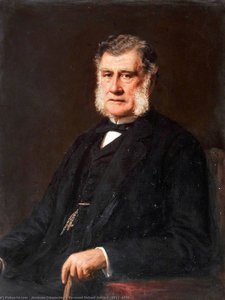
hermann schmiechen
1850 - 1903
Quick Facts
- Artistic Movement Or Style: Victorian Portraiture
- Artists Or Movements Influenced By This Artist: ['Karl Müller']
- Artists Who Influenced This Artist: ['August Becker']
- Date Of Death: c. 1923
- Full Name: Hermann Schmiechen
- Nationality: German
- Notable Artworks:
- Bildnis einer Dame
- Opernsängerin Lillian Nordica
- Princess Victoria of Hesse
- Princess Elizabeth of Hesse
- Place Of Birth: Neumarkt, Prussian Silesia

