

 Preview
 Send
Send Share
Share
 Details

 Download
 Similars
 X-Ray
X-Ray Diaporama
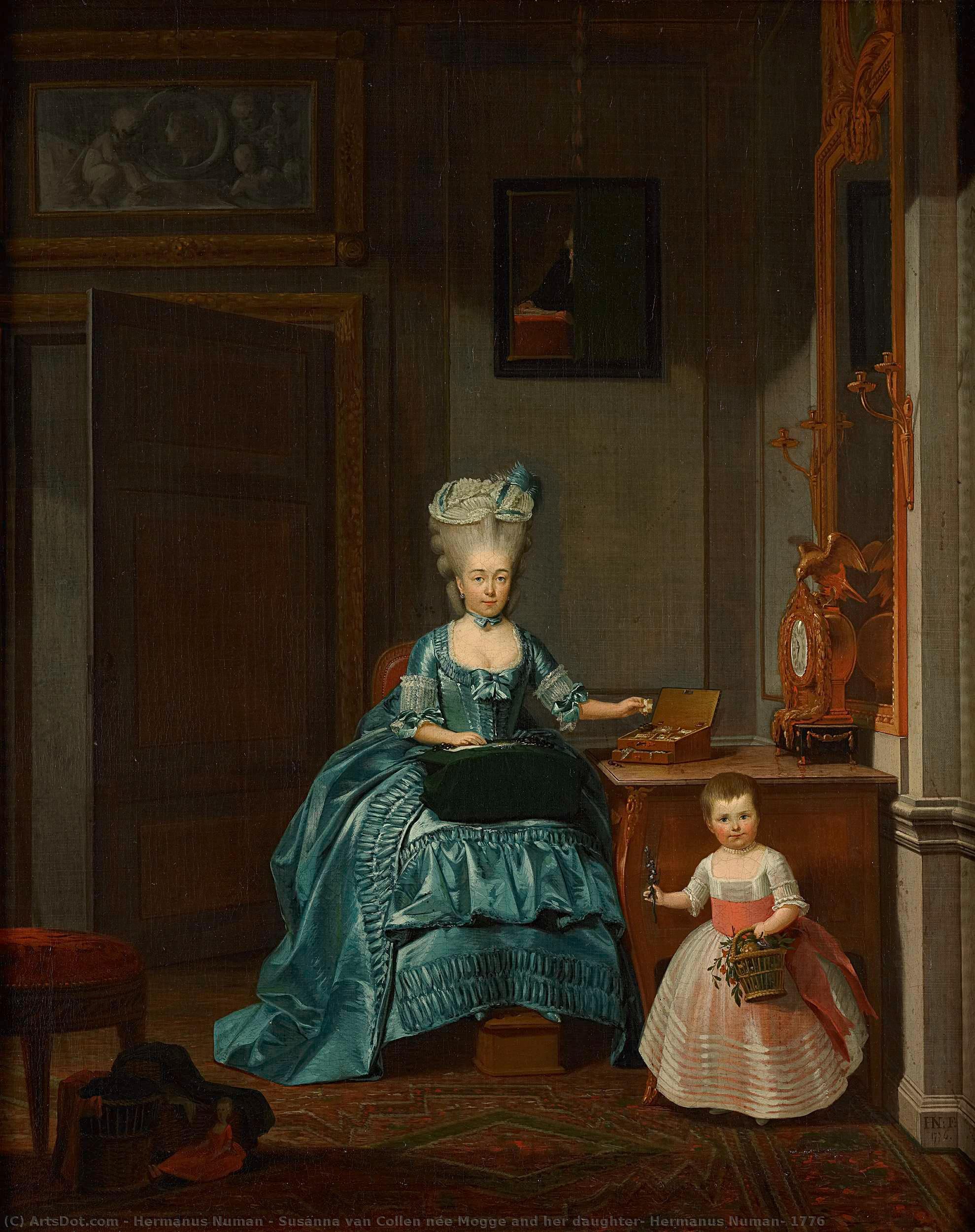
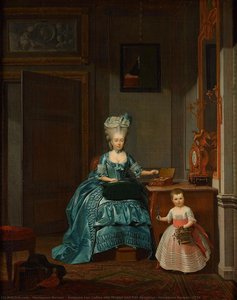
Susanna van Collen née Mogge and her daughter, Hermanus Numan, 1776
 1776
1776 80.0 x 64.0 cm
 Read More
Hand Made Oil Reproduction
Hand-painted oil on canvas in your size and frame, made to order by our artists. ( Buy Print Buy Image)




































Pick from our preset sizes that match the artwork's original proportions.

You may enter your own dimensions to fit a specific frame or space. If your selected size does not match the original image's proportions, we will either crop the artwork or extend the painting with additional hand-painted elements. A digital mockup will be sent for your approval before production begins.
Please note that the on-screen preview does not reflect the actual cropping or extension. Only the mockup will accurately show the final composition.
While custom sizes are available, we recommend selecting a dimension from the predefined list to preserve the original proportions.
After order, ArtsDot.com team will email client for instructions and provide a mockup preview
Worldwide Delivery () in 3/4 weeks instead of standard 5 weeks. (29 August). No compromise on quality.

Free Worldwide Express Shipping

High-Quality Linen Canvas

Full Shipping Insurance

Customs Tax Refund Guarantee

True Color Matching Guarantee

60-Day Return Policy (Defects Only)

100% Money-Back Guarantee

Bulk Discount Offer
 Glass option is only available in size under 110 CM

Susanna van Collen née Mogge and her daughter, Hermanus Numan, 1776
Reproduction Medium
Reproduction Size
-


Total Price
$ 263
Related Artworks






Artist Biography
The Master of Amsterdam’s Light: The Life and Legacy of Hermanus Numan
In the golden twilight of the late Enlightenment, few artists captured the architectural soul and topographical grace of the Netherlands quite like Hermanus Numan. Born in 1744 in the quiet village of Ezinge, Groningen, Numan’s journey was one of profound versatility and meticulous observation. His early years were steeped in the tactile world of craftsmanship; between 1759 and 1762, he labored alongside his father in a lacquerware factory, an experience that undoubtedly instilled in him a reverence for fine detail and surface texture. This foundational period of manual precision paved the way for his apprenticeship under Jan Augustini and his later collaboration with Egbert van Drielst in Haarlem. Together, they ventured into the delicate realm of decorative wallpaper production, a pursuit that required a unique marriage of artistic vision and ornamental discipline.
As Numan’s ambitions grew, so did the scope of his artistry. His move to Amsterdam in 1768 marked the beginning of a transformative era, placing him at the very heart of Europe's intellectual and artistic currents. Seeking to refine his technical mastery, he traveled to Paris to study the intricate art of engraving before returning to the bustling canals of Amsterdam. It was here, under the tutored guidance of Jurriaan Andriessen at the Stadstekenacademie, that Numan truly found his voice. He mastered the complexities of perspective and draughtsmanship, tools that allowed him to translate the physical reality of the city into enduring works of art. His integration into the prestigious Felix Meritis artist community further solidified his status as a respected figure within the Dutch academic circles.
A Versatile Visionary: Technique and Subject Matter
To look upon a work by Hermanus Numan is to witness a master of many mediums. He was not merely a painter, but a true polymath of the visual arts—a draftsman, pastellist, etcher, engraver, and watercolorist. This breadth of technique allowed him to approach his subjects with a multifaceted lens, capturing everything from the soft, ephemeral glow of a landscape to the sharp, structural clarity of an urban cityscape. His repertoire was remarkably diverse, spanning several disciplines:
- Topographical Landscapes: Numan became renowned for his ability to document the changing face of Amsterdam, rendering its canals, bridges, and historic buildings with an almost scientific accuracy that serves as a vital historical record today.
- Genre Art and Portraits: Beyond the grand vistas, he possessed a keen sensitivity for human presence, executing portraits and genre scenes that breathed life into the domestic and social rhythms of 18th-century Dutch life.
- Decorative and Interior Arts: His early training in wallpaper production and his later work as an interior decorator allowed him to harmonize fine art with the architectural spaces they inhabited.
- The Art of the Copyist: Numan’s skill was such that he became a celebrated copyist, reproducing significant works from Amsterdam's collections through engravings, thereby helping to preserve and disseminate the Dutch artistic heritage.
His work often functioned as a bridge between the decorative and the documentary. While his landscapes possessed a poetic quality, they were anchored by a rigorous commitment to topographical truth. This duality—the ability to evoke emotion through light and atmosphere while maintaining an unwavering dedication to structural precision—is what defines his unique contribution to the Dutch tradition.
Historical Significance and Enduring Influence
The historical weight of Hermanus Numan’s oeuvre extends far beyond the aesthetic pleasure of his paintings. As a chronicler of Amsterdam, he provided a visual diary of an era in transition. His meticulous depictions of the city's urban environment offer modern historians an invaluable window into the late Enlightenment period, capturing the textures of stone, water, and wood before the industrial age irrevocably altered the landscape. His recognition by the Royal Institute of the Netherlands in 1808 stands as a testament to his profound impact on the nation's cultural fabric.
Numan’s legacy is one of multidisciplinary excellence. He proved that the boundaries between fine art and decorative craft could be blurred through sheer technical mastery. By weaving together the precision of an engraver with the soul of a landscape painter, he created a body of work that remains both a historical treasure and a profound meditation on the beauty of the built environment. Today, his name remains synonymous with the enduring spirit of Dutch topographical art, reminding us of a time when every line drawn and every color applied was an act of devotion to the world as it was seen.
Hermanus Numan
1744 - 1820 , Netherlands
Quick Facts
- Artistic Movement Or Style: Romanticism
- Artists Or Movements Influenced By This Artist: ['Jacob van Campen']
- Artists Who Influenced This Artist: ['Jan Augustini']
- Date Of Birth: 1744
- Full Name: Hermanus Numan
- Nationality: Dutch
- Notable Artworks: ['Susanna van Collen née Mogge and her daughter']
- Place Of Birth: Ezinge, Netherlands

