 Preview
 Send
Send Share
Share
 Details

 Download
 Similars
 X-Ray
X-Ray Diaporama
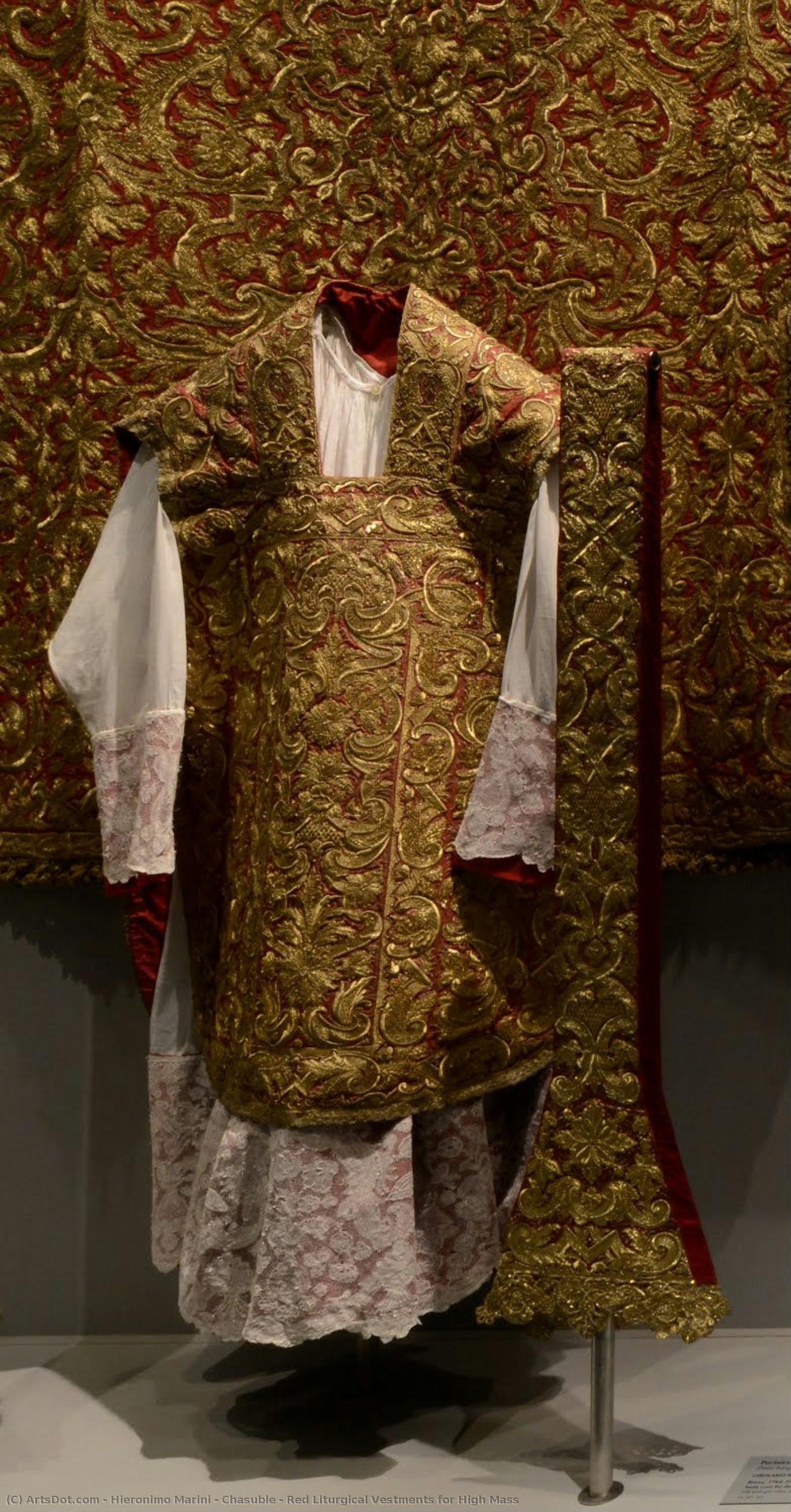
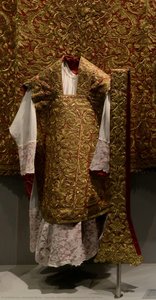
Chasuble - Red Liturgical Vestments for High Mass


 Read More
Hand Made Oil Reproduction
Hand-painted oil on canvas in your size and frame, made to order by our artists. ( Buy Print Buy Image)




































Pick from our preset sizes that match the artwork's original proportions.

You may enter your own dimensions to fit a specific frame or space. If your selected size does not match the original image's proportions, we will either crop the artwork or extend the painting with additional hand-painted elements. A digital mockup will be sent for your approval before production begins.
Please note that the on-screen preview does not reflect the actual cropping or extension. Only the mockup will accurately show the final composition.
While custom sizes are available, we recommend selecting a dimension from the predefined list to preserve the original proportions.
After order, ArtsDot.com team will email client for instructions and provide a mockup preview
Worldwide Delivery () in 3/4 weeks instead of standard 5 weeks. (31 August). No compromise on quality.

Free Worldwide Express Shipping

High-Quality Linen Canvas

Full Shipping Insurance

Customs Tax Refund Guarantee

True Color Matching Guarantee

60-Day Return Policy (Defects Only)

100% Money-Back Guarantee

Bulk Discount Offer
 Glass option is only available in size under 110 CM

Chasuble - Red Liturgical Vestments for High Mass
Reproduction Medium
Reproduction Size
-


Total Price
$ 263
Related Artworks




Artist Biography
A Life Forged in Stone and Strategy: The World of Hieronymo Marini
The 16th century was a period defined by both artistic flourishing and relentless conflict, and within this dynamic era lived girolamo mariani, known as hieronimo marini. Born around 1500 in Casarano, near Montegibbio in Sassuolo, Italy, Marini’s life wasn't solely dedicated to aesthetic beauty but also to the pragmatic demands of military architecture. He emerged not merely as an artist, but as a skilled engineer whose designs shaped the defenses of kingdoms and bore witness to the brutal realities of war. While details surrounding his early life remain scarce, it is clear that he possessed a rare combination of artistic vision and technical prowess – a blend that would define his career.
The Bastionnée Revolution: A New Approach to Fortification
Marini’s primary contribution lies in his mastery of the bastionnée system of fortification. This innovative approach, gaining prominence during the Italian Wars, moved away from traditional medieval castle designs towards lower, more angular structures designed to withstand cannon fire. Unlike towering walls vulnerable to bombardment, bastion fortifications featured projecting bastions – pentagonal or triangular outworks – that allowed for flanking fire along the curtain walls. Marini wasn’t simply replicating existing designs; he was a key figure in refining and implementing this new methodology. His expertise lay in adapting these principles to diverse terrains and anticipating evolving siege tactics.
From Italy to France: A Royal Architect in Service
Marini's talents soon drew the attention of powerful patrons, leading him beyond the borders of his native Italy. He became a royal architect in service to Francis I of France, a monarch deeply invested in strengthening his kingdom’s defenses. This appointment placed Marini at the heart of significant military projects, and he played a crucial role in fortifying key French cities. His work wasn't limited to grand-scale construction; it involved meticulous planning, logistical coordination, and an understanding of ballistics and siege warfare. The demands of his position required not only artistic skill but also a keen strategic mind.
A Tragic End: Thérouanne and the Legacy of Conflict
Marini’s life took a tragic turn in 1553, during the Siege of Thérouanne by Charles V. The city was systematically destroyed as part of the broader conflict between France and the Habsburg Empire. Marini himself perished amidst the destruction, becoming a casualty of the very forces he sought to contain. His death underscores the inherent risks faced by military engineers in an age of constant warfare. While his life ended prematurely, his impact on fortification design endured.
Beyond Defense: Artistic Expressions and Lasting Influence
Although primarily remembered for his engineering feats, Marini’s artistic sensibilities extended beyond purely functional structures. Surviving examples of his work include exquisitely crafted liturgical vestments – a chasuble from 1749 stands as a testament to his skill in embroidery and religious symbolism. This demonstrates a broader artistic range that often goes unnoticed. His influence can be traced through the subsequent development of bastion fortifications across Europe, shaping military architecture for generations. He represents a fascinating intersection of art, science, and strategy – a figure whose legacy is etched not only in stone but also in the annals of European history.
hieronimo marini
1553 , Italy
Quick Facts
- Artistic Movement Or Style: Renaissance architecture
- Date Of Birth: Around 1500
- Date Of Death: 1553
- Full Name: Hieronymo Marini
- Nationality: Italian
- Notable Artworks:
- Chasuble - Red Liturgical Vestments
- Magdalene carried by angels, detail
- Place Of Birth: Casarano, Italy
Related Articles

Crimson Threads of Narrative: Exploring Symbolism & Representation in Artworks Featuring the Red Dress
Explore the rich symbolism of the red dress in art history! From ancient power displays to iconic portraits like Cézanne’s 'Madame Cezanne', discover the cultural and artistic significance behind this captivating color. Expert analysis & insights.

Baroque Drama: Bringing Opulence & Emotion into Contemporary Interiors
Explore the opulent world of Baroque interior design! Discover key elements, modern applications & how to bring dramatic elegance into your home with 's authentic reproductions.

Baroque Masterpieces: 10 Paintings That Defined an Era |
Journey through the drama & grandeur of Baroque art! Explore 10 masterpieces by Caravaggio, Rembrandt, Rubens & more. Discover stunning oil paintings, rich colors & timeless stories. Find museum-quality reproductions at .

The Dramatic Flourish: Exploring the Baroque Movement's Enduring Legacy in Art History
Explore the dramatic world of Baroque art! Discover iconic artists like Caravaggio & Rubens, defining techniques, and its lasting impact on art history. Expert insights for collectors & enthusiasts at ArtsDot.

The Visceral Stage: Exploring Dramatic Narratives & Emotional Intensity in Baroque Art
Explore the dramatic world of Baroque art! Discover iconic masters like Caravaggio & Rembrandt, their techniques, and the movement's lasting impact. Expert insights for collectors & enthusiasts at ArtsDot.