 Preview
 Send
Send Share
Share
 Details

 Download
 Similars
 X-Ray
X-Ray Diaporama
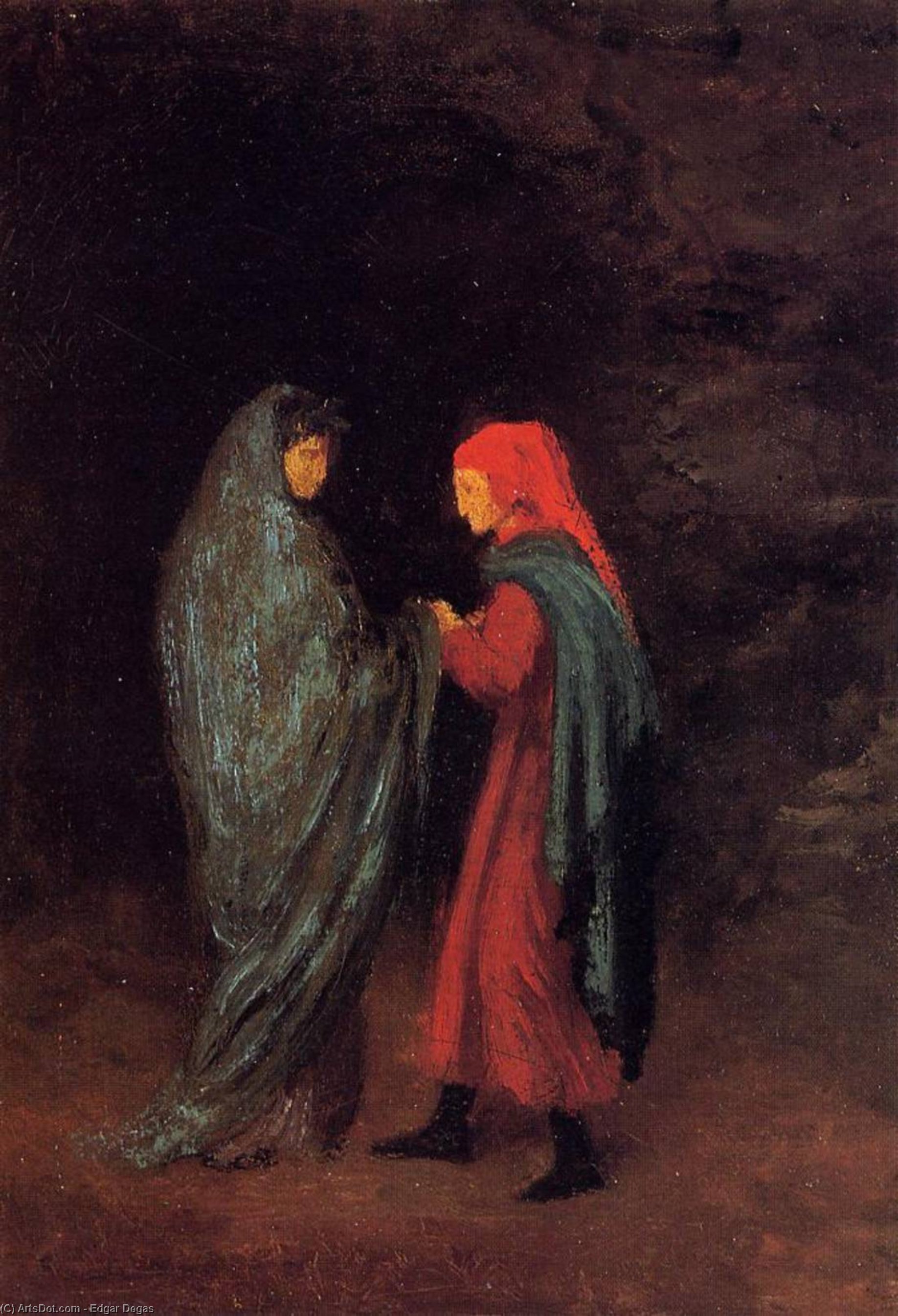
Dante and Virgil at the Entrance to Hell


 Read More
Giclée / Art Print
Museum-quality giclée or canvas print with fast production and flexible finish options. ( Buy Hand Made Painting Buy Image)




P118B $10

P118H $10

P118W $10

P438Z $10

P508JH $12

P508YH $12

P805H $10

P805Z $10

P919BZ $10

P919G $10

P919XJ $10

P959ZH $10

P968JZ $12

W106C $8

W218G $10

W218JH $8

W218Y $10

W307PJ $10

W316G $10

W316PJ $8

W316Y $10

W398PJ $8

W4111J $10

W500HY $15

W500JH $15

W692G $12

W849H $8

W940BG $15

W953PJ $8




Pick from our preset sizes that match the artwork's original proportions.

You may enter your own dimensions to fit a specific frame or space. If your selected size does not match the original image's proportions, we will either crop the artwork or extend the image with a mirrored or solid-fill edge. A digital mockup will be sent for your approval before production begins.
Please note that the on-screen preview does not reflect the actual cropping or extension. Only the mockup will accurately show the final composition.
While custom sizes are available, we recommend selecting a dimension from the predefined list to preserve the original proportions.
Worldwide Delivery () in 2 weeks instead of standard 4/5 weeks. (25 August)

Free Worldwide Express Shipping

High-Quality Linen Canvas

Full Shipping Insurance

Customs Tax Refund Guarantee

True Color Matching Guarantee

60-Day Return Policy (Defects Only)

100% Money-Back Guarantee

Bulk Discount Offer
 Glass option is only available in size under 110 CM

Dante and Virgil at the Entrance to Hell
Giclée / Art Print
Reproduction Size
-


Total Price
$ 63
Collectible Description
Dante and Virgil at the Entrance to Hell
Edgar Degas, a figure of fascinating contradictions, wasn’t simply an Impressionist despite often being grouped with Monet, Renoir, and others who redefined painting in the late 19th century. He actively resisted that label, identifying instead as a realist—a commitment rooted in his meticulous observation of the world around him and a dedication to portraying it with unflinching honesty. Degas’s early life was comfortably bourgeois; his father was a banker, and his mother came from a Creole family in New Orleans. This background afforded him access to education and artistic training, though he often chafed against academic constraints. He enrolled at the Lycée Louis-le-Grand, but his true education began when he started copying works in the Louvre, a practice that honed his skills and ignited a lifelong passion for classical art.The Painting's Composition
“Dante and Virgil at the Entrance to Hell,” created in 1858, exemplifies Degas’s early Impressionist style. The painting depicts Dante and Virgil standing at the entrance to Hell, surrounded by a dark and ominous atmosphere. Bold strokes and vivid colors dominate the canvas, conveying tension and foreboding—a deliberate departure from academic conventions that sought to capture idealized beauty. The artist skillfully utilizes chiaroscuro, employing dramatic contrasts of light and shadow to heighten the emotional impact of the scene and guide the viewer’s gaze into the abyss.Artistic Style and Influences
Degas's artistic vision was profoundly shaped by his admiration for Ingres and his unwavering belief in drawing as the foundation of painting. He meticulously studied Michelangelo, Raphael, Titian, and other Renaissance masters, absorbing their techniques and stylistic sensibilities. This influence is palpable in Degas’s precise rendering of figures and drapery—a hallmark of his oeuvre that distinguishes him from many of his contemporaries. The painting's subject matter—the literary classic “The Divine Comedy”—reflects Degas’s intellectual curiosity and desire to engage with the great ideas of his time.Historical Context
“Dante and Virgil at the Entrance to Hell” emerged during a period of significant artistic experimentation in France, as Impressionists challenged traditional notions of beauty and representation. The painting captures the spirit of this movement—a rejection of academic formalism in favor of capturing fleeting impressions of light and color. Its inclusion in the Musée d'Orsay underscores its enduring significance as a masterpiece of Impressionism and a testament to Degas’s artistic genius.Symbolism and Emotional Impact
The painting transcends mere visual depiction, conveying profound psychological depth. Dante and Virgil’s posture—Virgil pointing towards the darkness ahead—symbolizes guidance and perseverance in confronting existential anxieties. The somber palette reinforces this mood of apprehension, inviting contemplation on themes of mortality and judgment. Degas's masterful execution ensures that “Dante and Virgil at the Entrance to Hell” continues to resonate with viewers today, inspiring awe and prompting reflection on the human condition.Related Artworks


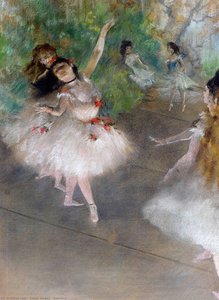
Artist Biography
A Life Immersed in Movement
Born Hilaire-Germain-Edgar De Gas in Paris, 1834, Edgar Degas was an artist of fascinating contradictions. While often grouped with the Impressionists—Monet, Renoir, and others who revolutionized painting in the late 19th century—he actively resisted that label, identifying instead as a realist. This commitment stemmed from his meticulous observation of the world around him and a dedication to portraying it with unflinching honesty. Degas’s early life was comfortably bourgeois; his father was a banker, and his mother hailed from a Creole family in New Orleans. This background afforded him access to education and artistic training, though he often chafed against academic constraints. He initially enrolled at the Lycée Louis-le-Grand, but his true education began when he started copying works in the Louvre, honing his skills and igniting a lifelong passion for classical art. However, Degas’s path wasn't one of strict adherence to tradition; it was marked by constant questioning and reevaluation of artistic norms. He possessed an independent spirit that would define his entire career.
Beyond Impressionism: A Unique Artistic Vision
While contemporaries like Monet chased the fleeting effects of light outdoors, Degas largely worked within the confines of his studio, meticulously constructing scenes from observation and memory. His subject matter was decidedly modern—a departure from the historical or mythological themes favored by many academic painters. He found inspiration in the everyday lives of Parisians: laundresses, cabaret singers, milliners, and, most famously, dancers. It is this fascination with ballet that defines much of his oeuvre. Degas didn’t simply paint beautiful ballerinas; he captured the grueling reality of their profession—the endless rehearsals, the physical strain, the fleeting moments of grace amidst a world of hard work. His compositions are often unconventional, cropping figures in unexpected ways and utilizing asymmetrical arrangements that create a sense of dynamism and immediacy. He was a master of capturing movement, not through blurred lines or hazy effects, but through precise observation and careful rendering of form. Dancer, A Group of Dancers, and Women Combing Their Hair are prime examples of this dedication to portraying the human figure in motion and revealing the complexities of modern life. He wasn’t interested in superficial beauty; he sought to reveal the truth beneath the surface.
Influences and Artistic Development
Degas’s artistic journey was shaped by a diverse range of influences. His early training emphasized classical principles, particularly the work of Jean-Auguste-Dominique Ingres, whose emphasis on draftsmanship and precise form left a lasting impression. However, Degas also admired the Realists, such as Gustave Courbet, who challenged academic conventions and championed the depiction of contemporary life. A pivotal moment in his development came through his association with Camille Pissarro, a leading Impressionist who introduced him to other artists and encouraged him to experiment with new techniques. He was captivated by Japanese prints—Ukiyo-e—which influenced his use of asymmetrical compositions, flattened perspectives, and bold patterns. He also embraced photography, recognizing its potential as a tool for studying movement and capturing fleeting moments in time. This willingness to incorporate diverse influences into his work is what sets Degas apart and contributes to the unique character of his art. He wasn’t afraid to borrow from different sources, synthesizing them into something entirely new.
Legacy and Lasting Impact
Edgar Degas died in Paris in 1917, leaving behind a body of work that continues to captivate and inspire audiences today. His innovative approach to composition, his masterful draftsmanship, and his unflinching portrayal of modern life have had a profound impact on the course of art history. He paved the way for future generations of artists who sought to break free from traditional conventions and explore new ways of representing the world around them. His influence can be seen in the work of Pablo Picasso and Henri Matisse, among others. Museums worldwide—including the Musée d'Orsay and the Musée de l’Orangerie in Paris—house significant collections of his paintings, pastels, sculptures, and prints, ensuring that his legacy will endure for generations to come. Degas wasn’t merely a painter of dancers or racehorses; he was a keen observer of human nature, a master of form and movement, and a true innovator who redefined the possibilities of art.
- A Master of Line: Degas's exceptional draftsmanship set him apart.
- Modern Life as Subject: He focused on contemporary Parisian scenes, breaking from tradition.
- Influence on Future Artists: His work profoundly impacted Picasso and Matisse.
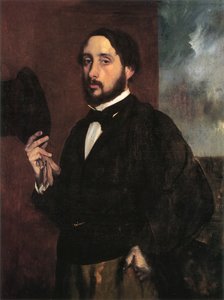
Edgar Degas
1834 - 1917 , France
Quick Facts
- Artistic Movement Or Style: Impressionism, Realism
- Artists Or Movements Influenced By This Artist:
- Picasso
- Matisse
- Artists Who Influenced This Artist:
- Ingres
- Courbet
- Pissarro
- Date Of Birth: 1834
- Date Of Death: 1917
- Full Name: Hilaire-Germain-Edgar De Gas
- Nationality: French
- Notable Artworks:
- Dancer and Tambourine
- The Ballet Class
- Degas in a Green Jacket
- The Collector
- Women Combing Their Hair
- Place Of Birth: Paris, France
Related Articles
Dante Gabriel Rossetti's 25 Masterpieces: A Journey Through Victorian Art & Symbolism | ArtsDot
Explore 25 iconic artworks by Dante Gabriel Rossetti, a leading Pre-Raphaelite artist. Discover the stories behind masterpieces like 'Proserpine' & 'Beata Beatrix'. Find museum-quality art reproductions and elevate your home decor with ArtsDot.com.
Edgar Degas: Capturing Modern Life – A Study of Movement, Observation, and the Parisian Belle Époque
Explore the captivating world of Edgar Degas! Discover his innovative techniques, iconic ballet paintings, and unique portrayal of Parisian life in this insightful art history study.

Impressionism's Masterpieces: 10 Paintings That Defined a Movement | ArtsDot
Journey through Impressionism's heart with 10 iconic paintings by Monet, Renoir & Degas. Explore light, color & the stories behind these masterpieces. Find museum-quality art reproductions and elevate your home decor on ArtsDot.com.
Impressionism's Legacy: 10 Masterpieces That Transformed Art & Decor
Journey through Impressionism's radiant world! Explore 10 masterpieces by Monet, Renoir & Degas that revolutionized art. Discover the stories behind these iconic paintings and find museum-quality reproductions for your home at .

Impressionism's Finest: 10 Masterpieces That Revolutionized Art | ArtsDot
Journey through Impressionism's golden age! Explore 10 masterpieces by Monet, Renoir & Degas that redefined art. Discover the stories behind these iconic paintings and find museum-quality reproductions to elevate your home decor on ArtsDot.com.