

 Preview
 Send
Send Share
Share
 Details

 Download
 Similars
 X-Ray
X-Ray Diaporama
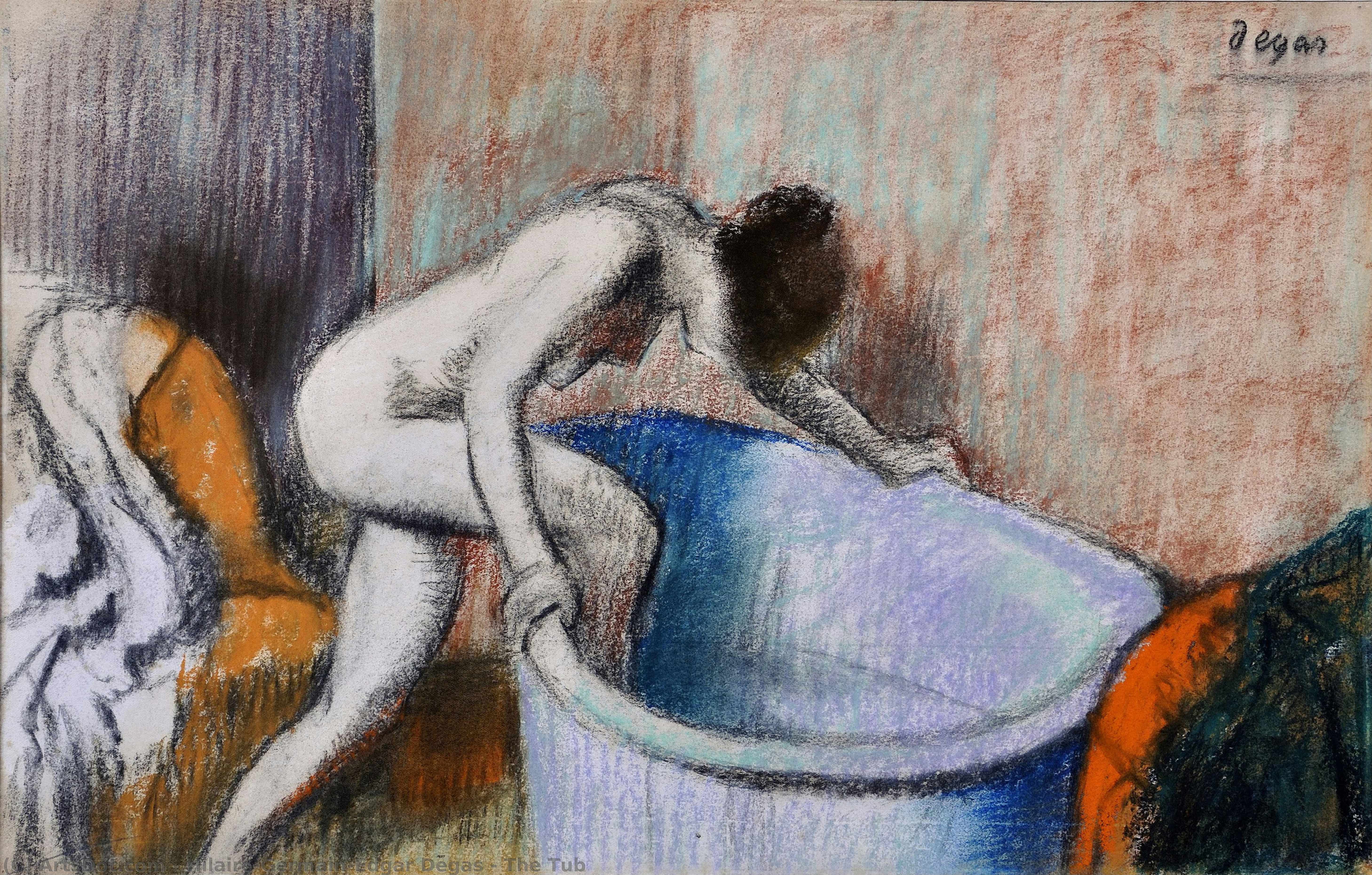
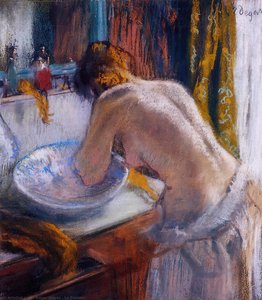
The Tub


 Read More
Purchase a high-resolution, enhanced digital image, far superior to the online preview.
Each file is meticulously prepared by our in-house specialists using advanced tools and expert manual retouching. We ensure every image has exceptional clarity, precise color accuracy, and fine detail.
The final file is delivered via email within 72 hours, optimized for immediate use in professional, editorial, and print environments. This is the same quality trusted by top-tier design studios, publishers, and galleries.
Digital Image
Download a high-resolution file for personal display, printing, and creative projects. ( Buy Print Buy Hand Made Painting)
Included in Every Digital Image Order
Expert Digital Delivery, Guaranteed
When you choose ArtsDot.com, you're not just getting an image - you're receiving a professionally enhanced digital artwork, crafted with precision and backed by a satisfaction guarantee. Here's everything that comes with your order, automatically:

Fast Email Delivery
Your high-resolution digital image file will be emailed to you within 72 hours of ordering - ready for immediate use.

AI-Enhanced Digital File
Your artwork is professionally optimized using advanced AI tools and manual editing, ensuring maximum detail, clarity, and color accuracy.

Free Lifetime Re-Delivery
Accidentally deleted or lost your file? No worries - we'll resend it to you anytime, free of charge.

No Import Fees - Ever
Enjoy your artwork instantly with zero customs, duties, or delivery fees - digital downloads are always tax-free.

Color Accuracy Guarantee
We ensure your digital image reflects the original colors as closely as possible using professional tools and color management.

60-Day Satisfaction Guarantee
If you're not satisfied with your digital image, we'll revise it or refund 100% within 60 days - no questions asked.

100% Money-Back Guarantee
Not satisfied? Get a full refund within 60 days of receiving your digital file - no questions asked.

Bulk Order Discounts
Buy 3 images, save 10% - Buy 5, save 15% - Buy 10+, save 20%. Great for creative projects, galleries, and agencies.
Collectible Description
A Moment Frozen in Time: Edgar Degas’s “The Tub”
Hilaire Germain Edgar Degas, a figure perpetually shadowed by the brilliance of Impressionism yet stubbornly resisting categorization as one of its core members, presents us with “The Tub,” a pastel masterpiece executed in 1889 and currently residing within The Art Institute of Chicago. This artwork transcends mere depiction; it’s an exploration of domestic life rendered with remarkable precision and imbued with a palpable sense of vulnerability—a testament to Degas's unwavering commitment to realism amidst the stylistic currents of his era.Subject Matter and Composition
The painting captures a deceptively simple scene: two women bathing in a tub, bathed in soft pastel hues that illuminate their figures with an ethereal glow. The woman at the forefront is positioned centrally, her gaze averted downwards as she attends to her toilette. Her posture exudes quiet contemplation, conveying a profound intimacy rarely achieved in art history. Alongside her sits another woman, partially obscured by drapery, suggesting a shared experience of relaxation and privacy. The tub itself—a meticulously rendered object—dominates the composition, flanked by two bowls containing water – elements that contribute to the overall atmosphere of stillness and understated elegance.Style and Technique: Impressionistic Realism
Degas’s approach defies easy classification. While he absorbed influences from Impressionist painters like Monet and Renoir, notably evident in his masterful use of light and color—particularly the delicate shades of pink and mauve—he steadfastly rejected the Impressionists' preoccupation with capturing fleeting impressions. Instead, Degas employed a technique that blended Impressionistic principles with meticulous observation of anatomy and movement. He painstakingly studied the musculature of dancers and horses, translating these studies into his paintings with astonishing accuracy. “The Tub” exemplifies this fusion, demonstrating Degas’s ability to convey both visual beauty and anatomical realism simultaneously. The pastel medium itself lends a velvety texture to the surface, enhancing the sense of softness and luminosity characteristic of Impressionism.Historical Context: Domestic Life Under Observation
Painted during the Belle Époque—the “Beautiful Era”—“The Tub” reflects the societal shifts occurring in late 19th-century France. The rise of bourgeois comfort and leisure coincided with a growing interest in portraying everyday life, albeit often viewed through an artist’s discerning eye. Degas's fascination with capturing candid moments—particularly those involving women—challenged prevailing artistic conventions and contributed to a broader reconsideration of the role of femininity in art. As evidenced by the Art Institute’s gallery designation (Gallery 226), this artwork continues to resonate with audiences today, prompting reflection on themes of privacy, domesticity, and the portrayal of female subjects.Symbolism and Emotional Impact
Beyond its visual beauty, “The Tub” speaks volumes about human emotion. The woman's averted gaze suggests introspection and perhaps a subtle melancholy—a poignant reminder of the quiet dramas unfolding within private spaces. The tub itself symbolizes purification and renewal, mirroring the ritualistic act of bathing as a means of cleansing both physically and spiritually. Degas’s masterful rendering captures not just an image but also a feeling—a moment frozen in time that invites viewers to contemplate the complexities of human experience.Further Exploration
For those interested in delving deeper into Degas's artistic legacy, The National Gallery of Art offers valuable insights into his sculptural endeavors and the critical reception surrounding “Nude in a Tub.” Examining provenance records reveals the artwork’s journey through history, underscoring its significance as an exemplar of Impressionistic realism.Related Artworks

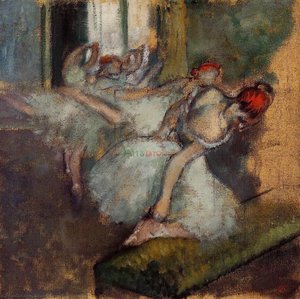
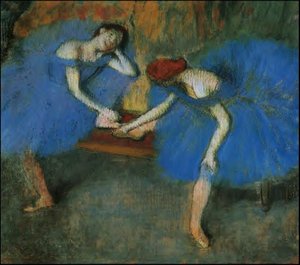
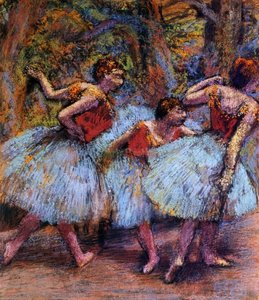


Artist Biography
A Life Immersed in Movement
Born Hilaire-Germain-Edgar De Gas in Paris, 1834, Edgar Degas was an artist of fascinating contradictions. While often grouped with the Impressionists—Monet, Renoir, and others who revolutionized painting in the late 19th century—he actively resisted that label, identifying instead as a realist. This commitment stemmed from his meticulous observation of the world around him and a dedication to portraying it with unflinching honesty. Degas’s early life was comfortably bourgeois; his father was a banker, and his mother hailed from a Creole family in New Orleans. This background afforded him access to education and artistic training, though he often chafed against academic constraints. He initially enrolled at the Lycée Louis-le-Grand, but his true education began when he started copying works in the Louvre, honing his skills and igniting a lifelong passion for classical art. However, Degas’s path wasn't one of strict adherence to tradition; it was marked by constant questioning and reevaluation of artistic norms. He possessed an independent spirit that would define his entire career.
Beyond Impressionism: A Unique Artistic Vision
While contemporaries like Monet chased the fleeting effects of light outdoors, Degas largely worked within the confines of his studio, meticulously constructing scenes from observation and memory. His subject matter was decidedly modern—a departure from the historical or mythological themes favored by many academic painters. He found inspiration in the everyday lives of Parisians: laundresses, cabaret singers, milliners, and, most famously, dancers. It is this fascination with ballet that defines much of his oeuvre. Degas didn’t simply paint beautiful ballerinas; he captured the grueling reality of their profession—the endless rehearsals, the physical strain, the fleeting moments of grace amidst a world of hard work. His compositions are often unconventional, cropping figures in unexpected ways and utilizing asymmetrical arrangements that create a sense of dynamism and immediacy. He was a master of capturing movement, not through blurred lines or hazy effects, but through precise observation and careful rendering of form. Dancer, A Group of Dancers, and Women Combing Their Hair are prime examples of this dedication to portraying the human figure in motion and revealing the complexities of modern life. He wasn’t interested in superficial beauty; he sought to reveal the truth beneath the surface.
Influences and Artistic Development
Degas’s artistic journey was shaped by a diverse range of influences. His early training emphasized classical principles, particularly the work of Jean-Auguste-Dominique Ingres, whose emphasis on draftsmanship and precise form left a lasting impression. However, Degas also admired the Realists, such as Gustave Courbet, who challenged academic conventions and championed the depiction of contemporary life. A pivotal moment in his development came through his association with Camille Pissarro, a leading Impressionist who introduced him to other artists and encouraged him to experiment with new techniques. He was captivated by Japanese prints—Ukiyo-e—which influenced his use of asymmetrical compositions, flattened perspectives, and bold patterns. He also embraced photography, recognizing its potential as a tool for studying movement and capturing fleeting moments in time. This willingness to incorporate diverse influences into his work is what sets Degas apart and contributes to the unique character of his art. He wasn’t afraid to borrow from different sources, synthesizing them into something entirely new.
Legacy and Lasting Impact
Edgar Degas died in Paris in 1917, leaving behind a body of work that continues to captivate and inspire audiences today. His innovative approach to composition, his masterful draftsmanship, and his unflinching portrayal of modern life have had a profound impact on the course of art history. He paved the way for future generations of artists who sought to break free from traditional conventions and explore new ways of representing the world around them. His influence can be seen in the work of Pablo Picasso and Henri Matisse, among others. Museums worldwide—including the Musée d'Orsay and the Musée de l’Orangerie in Paris—house significant collections of his paintings, pastels, sculptures, and prints, ensuring that his legacy will endure for generations to come. Degas wasn’t merely a painter of dancers or racehorses; he was a keen observer of human nature, a master of form and movement, and a true innovator who redefined the possibilities of art.
- A Master of Line: Degas's exceptional draftsmanship set him apart.
- Modern Life as Subject: He focused on contemporary Parisian scenes, breaking from tradition.
- Influence on Future Artists: His work profoundly impacted Picasso and Matisse.

Edgar Degas
1834 - 1917 , France
Quick Facts
- Artistic Movement Or Style: Impressionism, Realism
- Artists Or Movements Influenced By This Artist:
- Picasso
- Matisse
- Artists Who Influenced This Artist:
- Ingres
- Courbet
- Pissarro
- Date Of Birth: 1834
- Date Of Death: 1917
- Full Name: Hilaire-Germain-Edgar De Gas
- Nationality: French
- Notable Artworks:
- Dancer and Tambourine
- The Ballet Class
- Degas in a Green Jacket
- The Collector
- Women Combing Their Hair
- Place Of Birth: Paris, France

