

 Preview
 Send
Send Share
Share
 Details

 Download
 Similars
 X-Ray
X-Ray Diaporama
 Stats
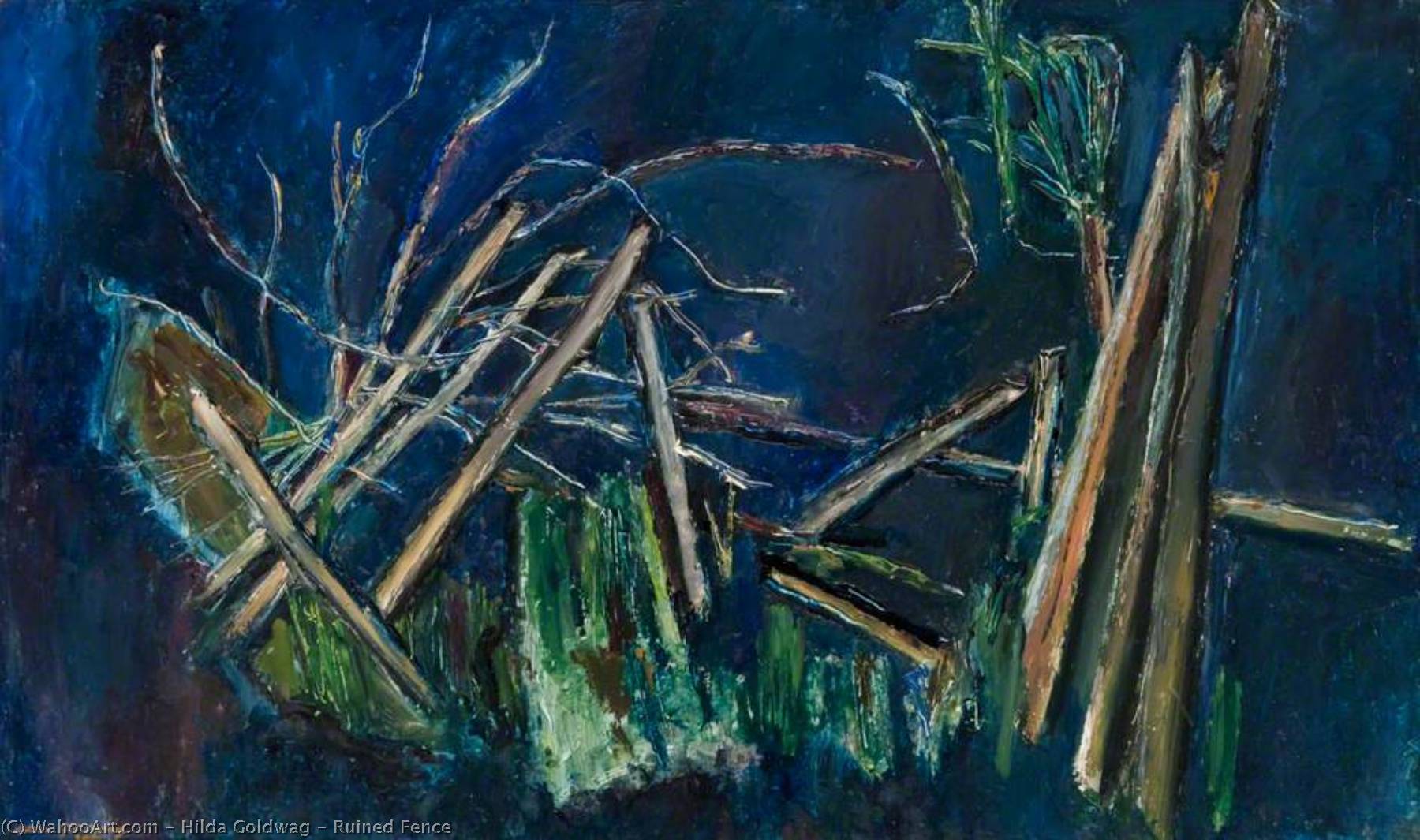
StatsRuined Fence
 2000
2000 60.0 x 100.0 cm
 Read More
Purchase a high-resolution, enhanced digital image, far superior to the online preview.
Each file is meticulously prepared by our in-house specialists using advanced tools and expert manual retouching. We ensure every image has exceptional clarity, precise color accuracy, and fine detail.
The final file is delivered via email within 72 hours, optimized for immediate use in professional, editorial, and print environments. This is the same quality trusted by top-tier design studios, publishers, and galleries.
Digital Image
Download a high-resolution file for personal display, printing, and creative projects. ( Switch to Print Buy Hand Made Painting)
Included in Every Digital Image Order
Expert Digital Delivery, Guaranteed
When you choose ArtsDot.com, you're not just getting an image - you're receiving a professionally enhanced digital artwork, crafted with precision and backed by a satisfaction guarantee. Here's everything that comes with your order, automatically:

Fast Email Delivery
Your high-resolution digital image file will be emailed to you within 72 hours of ordering - ready for immediate use.

AI-Enhanced Digital File
Your artwork is professionally optimized using advanced AI tools and manual editing, ensuring maximum detail, clarity, and color accuracy.

Free Lifetime Re-Delivery
Accidentally deleted or lost your file? No worries - we'll resend it to you anytime, free of charge.

No Import Fees - Ever
Enjoy your artwork instantly with zero customs, duties, or delivery fees - digital downloads are always tax-free.

Color Accuracy Guarantee
We ensure your digital image reflects the original colors as closely as possible using professional tools and color management.

100-Day Satisfaction Guarantee
If you're not satisfied with your digital image, we'll revise it or refund 100% within 100 days - no questions asked.

100% Money-Back Guarantee
Not satisfied? Get a full refund within 100 days of receiving your digital file - no questions asked.

Bulk Order Discounts
Buy 3 images, save 10% - Buy 5, save 15% - Buy 10+, save 20%. Great for creative projects, galleries, and agencies.
Analysis of the Painting
The Ruined Fence painting depicts a broken-down fence with wooden posts, evoking a sense of abandonment and decay. The black and white color scheme adds to the overall feeling of neglect and desolation. The composition of the image is striking, with some posts leaning against each other while others stand alone, creating a sense of instability. Key Features of the painting include:- The use of oil on canvas, which gives the painting a rich and textured feel
- The monochromatic color scheme, which adds to the overall mood of the piece
- The composition, which creates a sense of tension and instability
Artist and Style
Hilda Goldwag is a talented artist known for her unique style and ability to convey emotion through her work. Her paintings are highly regarded for their technical skill and emotional depth. The Ruined Fence painting is a prime example of her skill as an artist, showcasing her ability to create a captivating and thought-provoking piece. For more information on Hilda Goldwag and her work, visit /art/list/?Filter=Hilda-Goldwag. To view other paintings by the artist, including the Ruined Fence, visit /en/art/show/art-ar2d3a-en/The Ruined Fence painting is a must-see for anyone interested in art and emotion. With its thought-provoking composition and technical skill, it is a piece that will leave a lasting impression on all who view it.
Related Artworks








Artist Biography
A Life Forged in Displacement: The Story of Hilda Goldwag
Hilda Goldwag’s life was a testament to the enduring power of art as both solace and witness. Born in Vienna, Austria, on April 28th, 1912, into a Jewish family steeped in artistic tradition – her father, Moses Leopold Goldwag, was himself an artist and gallery owner – she inherited not just a creative inclination but also a world poised on the brink of profound upheaval. The early years of her life were marked by both privilege and loss; the death of her father when she was nine cast a long shadow, leaving her mother, Szerena, to raise Hilda and her siblings amidst growing economic uncertainty. This formative period instilled in her a quiet resilience that would become a defining characteristic, not only of her personality but also of her artistic vision. She received early training at Anna Schantruch’s Art Classes, demonstrating a natural aptitude for painting and even contributing to mural projects as a young teenager. Graduating from the Staatliche Graphische Lehr- und Versuchsanstalt Wien in 1938 with special commendation, she stood on the cusp of a promising career when the shadow of Nazism descended upon Austria.Escape to Scotland and a New Artistic Identity
The Anschluss – the Nazi annexation of Austria in March 1938 – irrevocably altered Goldwag’s trajectory. Securing a travel permit, she fled to Scotland in March 1939, hoping her family would soon follow. This hope was tragically extinguished by the outbreak of World War II just days after her parents received their permits, trapping them in Austria and ultimately leading to their deaths in the Holocaust. The profound grief and sense of isolation that followed became a silent undercurrent in much of Goldwag’s subsequent work. Arriving as a refugee, she initially found employment through the Scottish Domestic Bureau for Refugee Women, working as a domestic help for a minister in West Linton. It was in Edinburgh that she forged a lifelong friendship with fellow refugee Cecile Schwarzchild, a connection that provided crucial emotional support and would inspire numerous portraits throughout her career. The shared experience of displacement created a bond that resonated deeply within their artistic explorations. Relocating to Glasgow, Goldwag and Schwarzchild undertook war work as turners at McGlashlan's engineering works, a practical necessity that nonetheless shaped their understanding of the city’s industrial landscape.From Textile Design to Capturing the Spirit of Glasgow
Post-war, Goldwag embarked on a diverse career path that belied her artistic ambitions. From 1945 to 1955, she served as head designer at Friedlanders in Hillington, creating textile designs for Marks & Spencer – a testament to her versatility and commercial acumen. She also worked as a freelance illustrator for Collins Publishers, notably illustrating the 1955 edition of Robert Louis Stevenson’s *A Child's Garden of Verses*, showcasing her delicate touch and narrative sensibility. However, it was after retiring from these roles that Goldwag truly found her voice as a painter. She dedicated herself to capturing the essence of Glasgow – not through grand historical narratives or idealized depictions, but through intimate portrayals of everyday life. Working primarily with oils and a palette knife, she often painted *en plein air*, carrying her materials on local buses to document the changing cityscape. Her subjects ranged from the Forth and Clyde Canal and the tenements of Cowcaddens to vibrant flower pieces and panoramic farm landscapes.A Palette of Resilience: Themes and Techniques
Goldwag’s artistic style was deeply rooted in European traditions, particularly the expressive boldness of Die Brücke movement, yet it possessed a unique quality shaped by her personal experiences. Her paintings are characterized by a nostalgic warmth, an honest depiction of reality tempered by a profound affection for her surroundings. While not overtly political, her work is imbued with a quiet defiance – a celebration of life and beauty in the face of unimaginable loss. She didn’t shy away from depicting the often-dilapidated urban landscapes of Glasgow, but she transformed them into scenes of vibrant energy and human connection. Her use of color was particularly striking, employing a palette that evoked both the grit and the charm of the city. The thick impasto created by her palette knife technique added texture and depth to her canvases, lending a sense of immediacy and physicality to her work. Blinds*, for example, powerfully conveys a feeling of unease and uncertainty, while her portraits of Cecile Schwarzchild are imbued with tenderness and affection.Legacy and Historical Significance
Although Goldwag did not achieve widespread fame during her lifetime, her work has gained increasing recognition in recent years as scholars and art enthusiasts have begun to appreciate the depth and complexity of her artistic vision. Her paintings offer a unique perspective on mid-to-late 20th century Glasgow, documenting a city undergoing rapid transformation while simultaneously reflecting the experiences of a refugee artist grappling with loss and displacement. She was an active member of several artist societies – including the Glasgow Society of Women Artists and the Scottish Society of Women Artists – and exhibited in Gourock, Greenock, and at the Lillie Art Gallery. Her works are now held in public collections such as Ben Uri Gallery in London, Strathclyde University, and the Scottish Jewish Archives Centre. Hilda Goldwag’s story is a powerful reminder of the importance of recognizing and celebrating the contributions of immigrant and refugee artists, whose unique perspectives enrich our understanding of culture, identity, and the enduring power of the human spirit. Her art stands as a testament to resilience, hope, and the transformative potential of creative expression in the face of adversity.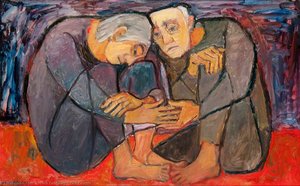
hilda goldwag
1912 - 2008
Quick Facts
- Artistic Movement Or Style: Expressionism
- Artists Or Movements Influenced By This Artist: ['Die Brücke']
- Artists Who Influenced This Artist:
- Schiele
- Klimt
- Kokoschka
- Date Of Birth: April 28, 1912
- Date Of Death: January 28, 2008
- Full Name: Hilda Goldwag
- Nationality: Austrian/Scottish
- Notable Artworks:
- Ruined Fence
- Old Couple
- Turbulent River
- Place Of Birth: Vienna, Austria