Preview
 Send
Send Share
Share
 Details

 Download
 Similars
 X-Ray
X-Ray Diaporama
Issay Dobrowen


 Read More
Giclée / Art Print
Museum-quality giclée or canvas print with fast production and flexible finish options. ( Buy Hand Made Painting Buy Image)




P118B $10

P118H $10

P118W $10

P438Z $10

P508JH $12

P508YH $12

P805H $10

P805Z $10

P919BZ $10

P919G $10

P919XJ $10

P959ZH $10

P968JZ $12

W106C $8

W218G $10

W218JH $8

W218Y $10

W307PJ $10

W316G $10

W316PJ $8

W316Y $10

W398PJ $8

W4111J $10

W500HY $15

W500JH $15

W692G $12

W849H $8

W940BG $15

W953PJ $8




Pick from our preset sizes that match the artwork's original proportions.

You may enter your own dimensions to fit a specific frame or space. If your selected size does not match the original image's proportions, we will either crop the artwork or extend the image with a mirrored or solid-fill edge. A digital mockup will be sent for your approval before production begins.
Please note that the on-screen preview does not reflect the actual cropping or extension. Only the mockup will accurately show the final composition.
While custom sizes are available, we recommend selecting a dimension from the predefined list to preserve the original proportions.
Worldwide Delivery () in 2 weeks instead of standard 4/5 weeks. (30 August)

Free Worldwide Express Shipping

High-Quality Linen Canvas

Full Shipping Insurance

Customs Tax Refund Guarantee

True Color Matching Guarantee

60-Day Return Policy (Defects Only)

100% Money-Back Guarantee

Bulk Discount Offer
 Glass option is only available in size under 110 CM

Issay Dobrowen
Giclée / Art Print
Reproduction Size
-


Total Price
$ 63
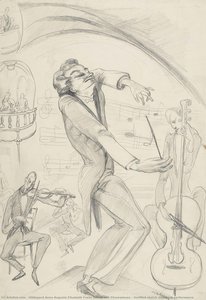
The Enigmatic Stage Presence of Issay Dobrowen
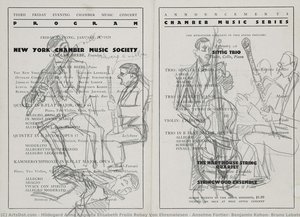
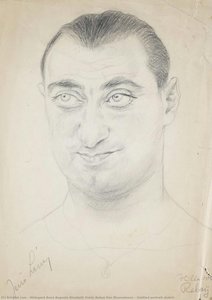
Captured in a striking black and white photograph by Hildegard Anna Augusta Elisabeth Freiin Rebay von Ehrenwiesen, better known as Hilla Rebay, the image presents a compelling portrait of Issay Dobrowen, a figure radiating authority and quiet intensity. Taken at Carnegie Hall in New York City during 1933, the photograph transcends mere documentation; it’s a window into a pivotal moment in American cultural history – a time when avant-garde music was slowly gaining acceptance alongside established traditions.
Rebay's masterful composition immediately draws the eye to Dobrowen. He stands poised on stage, bathed in the soft light of the hall, holding a baton with an almost reverent grace. The pencil sketches overlaid onto the photograph – delicate lines tracing the contours of his tie and adding subtle details to his face – suggest a deliberate attempt to imbue the image with a sense of intimacy and immediacy. This layering of techniques speaks volumes about Rebay’s artistic vision, blending photographic realism with a personal touch that elevates the portrait beyond a simple likeness.
A Pioneer in Abstraction: The Life and Legacy of Hilla Rebay
Hildegard Anna Augusta Elisabeth Freiin Rebay von Ehrenwiesen was far more than just a photographer; she was a pivotal figure in shaping the landscape of modern art. Born into German aristocracy in Strasbourg, her early life instilled a deep appreciation for beauty and tradition. However, it was her encounter with the burgeoning world of abstract expressionism in Berlin that truly ignited her artistic spirit. Influenced by artists like Rudolf Bauer and Hans Arp, she embraced a radical departure from representational painting, focusing instead on capturing the essence of form and emotion through non-objective compositions.
Her journey led her to New York City, where she became an invaluable advisor to Solomon R. Guggenheim, championing the work of artists like Kandinsky and pioneering the collection of abstract art that would ultimately define the Guggenheim Museum. Rebay’s influence extended far beyond the museum walls; she was a tireless advocate for modernism, fostering dialogue between artists and collectors alike. Her commitment to pushing artistic boundaries cemented her place as one of the most significant figures in 20th-century art.
The Symbolism of Stage Presence
Dobrowen’s posture and demeanor within the photograph are laden with symbolic meaning. As a conductor, he embodies control, precision, and the ability to orchestrate complex emotions through music. The baton itself is a potent symbol – a conduit for channeling artistic intent into tangible sound. His stance suggests both confidence and a deep connection to the art he’s about to lead.
Furthermore, the setting of Carnegie Hall—a venerable institution steeped in tradition—contrasts sharply with Rebay's focus on abstraction. This juxtaposition hints at a tension between established artistic norms and the radical experimentation that was beginning to reshape the world of art during this period. Dobrowen’s presence represents the bridge between these two worlds, embodying the potential for innovation within a framework of respect for the past.
A Reproduction Worth Cherishing
Reproductions of this photograph offer a unique glimpse into a bygone era and a remarkable artistic vision. The grainy texture of the black and white image evokes the immediacy of the original print, while Rebay’s subtle pencil sketches add layers of depth and intrigue. This is more than just a portrait; it's a testament to the power of art to capture not only likeness but also spirit and emotion. A high-quality reproduction serves as a beautiful reminder of Hilla Rebay’s legacy and the enduring influence of Issay Dobrowen’s stage presence.
Related Artworks




Artist Biography
A Pioneer of Abstraction: The Life and Legacy of Hilla Rebay
Born Hildegard Anna Augusta Elisabeth Freiin Rebay von Ehrenwiesen in 1890, the woman who would become known simply as Hilla Rebay emerged from a world steeped in German aristocracy. Her birthplace, Strasbourg – then part of the German Empire – provided an early backdrop to a life that would traverse national boundaries and artistic movements with remarkable fluidity. The daughter of Baron Franz Josef Rebay von Ehrenwiesen, an officer in the Prussian Army, she received an upbringing befitting her station, yet it was not societal expectations but an intrinsic creative drive that ultimately defined her path. From a young age, Rebay demonstrated a keen aptitude for art, setting the stage for a journey that would lead her to become a pivotal figure in the development of abstract expression and a champion of non-objective aesthetics. Her initial artistic training at the Cologne Kunstgewerbeschule and later at the Académie Julian in Paris provided a solid foundation in traditional techniques – landscape, portraiture, genre painting, and history painting – skills she would skillfully employ before embarking on her radical departure into abstraction. These early years weren’t merely about mastering form; they were about absorbing the visual language of the past, which she would later deconstruct and reimagine.From Traditional Roots to Avant-Garde Visions
The seeds of Rebay's artistic revolution were sown in Munich in 1910, where exposure to the work of German Jugendstil painter Fritz Erler opened her eyes to the burgeoning world of modern art. This encounter marked a turning point, propelling her towards experimentation and challenging conventional artistic norms. Her participation in exhibitions at the Cologne Kunstverein in 1912 and the Salon des Indépendants in Paris in 1913 brought her into contact with a constellation of avant-garde artists – Archipenko, Brâncuși, Chagall, Delaunay, Gleizes, Rivera, and van Rees among them. While exhilarating, this experience also prompted a period of intense self-assessment, leading Rebay to question the direction of her own work. A pivotal moment arrived with her meeting Hans (Jean) Arp in Zurich. Through Arp, she was introduced to the groundbreaking non-objective works of Kandinsky, Klee, Marc, Chagall, and Bauer – artists who dared to abandon representational form altogether. This exposure ignited a profound shift in Rebay’s artistic vision, inspiring her to explore the expressive potential of pure abstraction. In 1920, she solidified her commitment to avant-garde expression by co-founding “Der Krater” alongside Rudolf Bauer and Otto Nebel, a group dedicated to pushing the boundaries of artistic innovation. Her early abstract works were characterized by overlapping curved lines, planes, dots, and dense textures of asymmetrical shapes – a visual language that hinted at underlying energies and spiritual dimensions.A Patronage Forged in Vision: Rebay and Solomon Guggenheim
In 1927, Rebay embarked on a new chapter, immigrating to New York City. This move proved transformative, not only for her own artistic development but also for the landscape of American art. It was in New York that she forged an extraordinary relationship with Solomon R. Guggenheim, a bond built on mutual respect and a shared passion for non-objective art. Rebay quickly became Guggenheim’s confidante and trusted advisor, guiding his collecting endeavors and shaping what would become one of the world's most significant collections of modern art. She tirelessly championed artists like Bauer and Kandinsky, recognizing their genius and advocating for their inclusion in Guggenheim’s holdings. This patronage wasn’t merely about acquiring artworks; it was about fostering a new aesthetic sensibility and challenging prevailing artistic conventions. In 1939, Rebay's vision culminated in the founding of the Museum of Non-Objective Painting – the precursor to the Solomon R. Guggenheim Museum – with herself as its first director. This institution served as a beacon for abstract art, providing a platform for groundbreaking artists and introducing American audiences to new ways of seeing. Her ambition didn’t stop there; in 1943, she commissioned Frank Lloyd Wright to design a permanent museum building, resulting in the iconic spiral structure that stands today as a testament to her unwavering commitment to modernism.A Lasting Impact: Legacy and Historical Significance
Hilla Rebay’s influence extends far beyond her own artistic creations. She was a tireless advocate for non-objective art, organizing numerous exhibitions throughout Europe and the United States, and fostering dialogue around its aesthetic principles. As director of the Museum of Non-Objective Painting/Solomon R. Guggenheim Museum, she played a vital role in establishing its reputation as a leading center for modern art. Her guidance to Solomon Guggenheim not only shaped the development of a world-renowned collection but also contributed to the broader acceptance and appreciation of non-objective aesthetics. While her later years were marked by personal challenges within the Guggenheim family – ultimately leading to her departure from the museum’s board – Rebay continued to paint, receiving recognition for her own abstract works. Though she did not live to see the opening of the Frank Lloyd Wright-designed museum in 1959, her contribution remains a cornerstone of its history and a testament to her visionary leadership. Hilla Rebay’s legacy is one of artistic courage, unwavering dedication, and a profound belief in the power of abstraction to transform our perception of the world. She stands as a pivotal figure in the story of modern art, a pioneer who dared to challenge conventions and champion a new aesthetic vision.Key Achievements
- Co-founder of Der Krater: A significant artist group promoting avant-garde expression.
- Advisor to Solomon R. Guggenheim: Instrumental in shaping his collection of non-objective art.
- Founder and First Director of the Museum of Non-Objective Painting (now the Guggenheim): Established a leading institution for modern art.
- Commissioned Frank Lloyd Wright to design the Guggenheim Museum: Resulting in an iconic architectural landmark.
- Champion of Abstract Art: Organized exhibitions and fostered dialogue around non-objective aesthetics.
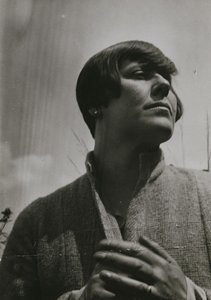
hildegard anna augusta elisabeth freiin rebay von ehrenwiesen
1890 - 1967 , Germany
Quick Facts
- Artistic Movement Or Style: Abstract Art, Non-Objective Art
- Artists Or Movements Influenced By This Artist:
- Solomon Guggenheim
- Guggenheim Museum
- Artists Who Influenced This Artist:
- Hans Arp
- Kandinsky
- Rudolf Bauer
- Date Of Birth: May 31, 1890
- Date Of Death: September 27, 1967
- Full Name: Hildegard Anna Augusta Elisabeth Freiin Rebay von Ehrenwiesen
- Nationality: German
- Notable Artworks:
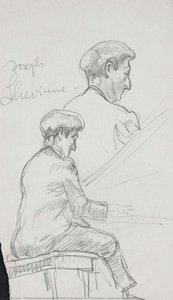
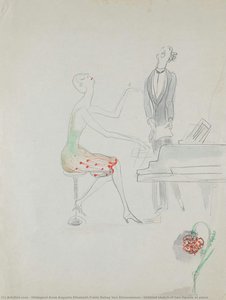
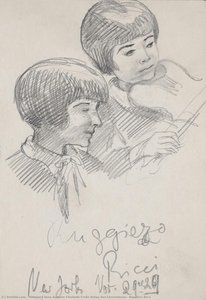
- Untitled sketch of two figures at piano
- Amelita Galli-Curci
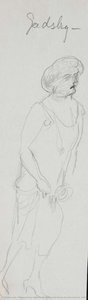
- Untitled portrait sketch
- Place Of Birth: Strasbourg, Germany
Related Articles

Geometric Abstraction's 10 Defining Masterpieces | Art for Your Home - ArtsDot
Explore 10 defining masterpieces of Geometric Abstraction! Discover Kandinsky, Mondrian & Malevich’s iconic works. Find museum-quality art reproductions and curated decor ideas to elevate your home at ArtsDot.com.

Kandinsky's Masterpieces: 25 Paintings That Define Abstract Art | ArtsDot
Journey through Wassily Kandinsky's 25 most iconic abstract paintings. Explore his revolutionary use of color, form & spiritual expressionism. Find museum-quality Kandinsky reproductions and elevate your home decor with ArtsDot.com. Discover all masterpieces on ArtsDot.com!
Abstract Expressionism's 10 Defining Masterpieces |
Explore 10 defining Abstract Expressionism masterpieces by Pollock, Rothko & de Kooning. Discover the stories behind these iconic paintings and find museum-quality art reproductions to elevate your home decor on .

Beyond Form: Exploring the Philosophical Foundations of Geometric Abstraction
Explore the philosophical roots & artistic evolution of geometric abstraction with ArtsDot. Discover Mondrian, Malevich, De Stijl & more. Expert insights for collectors and art enthusiasts.

Beyond Form & Color: Geometric Abstraction's Evolution in 20th/21st Century Art
Explore the evolution of geometric abstraction from Cubism to contemporary art. Discover key artists like Malevich & Mondrian, investment insights, and expert collecting advice at ArtsDot.