

 Preview
 Send
Send Share
Share
 Details

 Download
 Similars
 X-Ray
X-Ray Diaporama
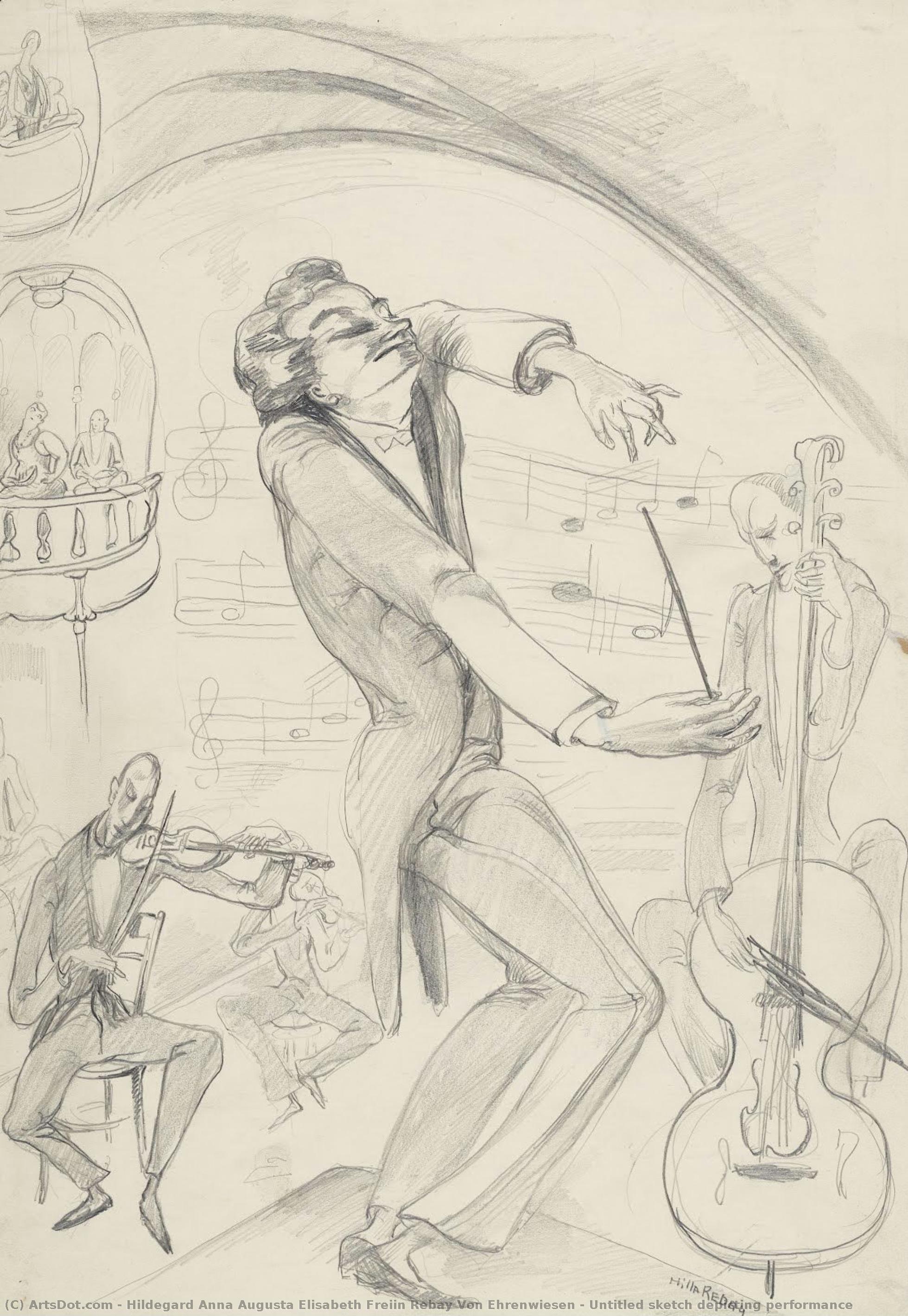
Untitled sketch depicting performance


 Read More
Purchase a high-resolution, enhanced digital image, far superior to the online preview.
Each file is meticulously prepared by our in-house specialists using advanced tools and expert manual retouching. We ensure every image has exceptional clarity, precise color accuracy, and fine detail.
The final file is delivered via email within 72 hours, optimized for immediate use in professional, editorial, and print environments. This is the same quality trusted by top-tier design studios, publishers, and galleries.
Digital Image
Download a high-resolution file for personal display, printing, and creative projects. ( Buy Print Buy Hand Made Painting)
Included in Every Digital Image Order
Expert Digital Delivery, Guaranteed
When you choose ArtsDot.com, you're not just getting an image - you're receiving a professionally enhanced digital artwork, crafted with precision and backed by a satisfaction guarantee. Here's everything that comes with your order, automatically:

Fast Email Delivery
Your high-resolution digital image file will be emailed to you within 72 hours of ordering - ready for immediate use.

AI-Enhanced Digital File
Your artwork is professionally optimized using advanced AI tools and manual editing, ensuring maximum detail, clarity, and color accuracy.

Free Lifetime Re-Delivery
Accidentally deleted or lost your file? No worries - we'll resend it to you anytime, free of charge.

No Import Fees - Ever
Enjoy your artwork instantly with zero customs, duties, or delivery fees - digital downloads are always tax-free.

Color Accuracy Guarantee
We ensure your digital image reflects the original colors as closely as possible using professional tools and color management.

60-Day Satisfaction Guarantee
If you're not satisfied with your digital image, we'll revise it or refund 100% within 60 days - no questions asked.

100% Money-Back Guarantee
Not satisfied? Get a full refund within 60 days of receiving your digital file - no questions asked.

Bulk Order Discounts
Buy 3 images, save 10% - Buy 5, save 15% - Buy 10+, save 20%. Great for creative projects, galleries, and agencies.
A Pioneer of Abstraction: The Life and Legacy of Hilla Rebay
Hilda Rebay (1890 – 1967), born Hildegard Anna Augusta Elisabeth Freiin Rebay von Ehrenwiesen in Strasbourg, Germany, stands as an extraordinary testament to artistic perseverance and a foundational architect of abstract expressionism. Her journey began amidst the opulent traditions of Prussian aristocracy, yet her fascination with art transcended societal constraints, propelling her toward groundbreaking explorations into non-objective aesthetics—a realm where color and form abandon representational illusion for pure emotional resonance. From early training at Cologne Kunstgewerbeschule to formative years spent in Paris under the tutelage of André Breton and Georges Bataille, Rebay cultivated a singular vision that would reshape the landscape of 20th-century art.- Early Influences & Artistic Training: Rebay’s initial artistic inclinations were nurtured by her family's patronage and fueled by an innate desire to capture the essence of experience beyond visual depiction. Her studies at Cologne Kunstgewerbeschule instilled in her a disciplined approach to craftsmanship, while subsequent immersion in Parisian avant-garde circles exposed her to the revolutionary ideas circulating amongst Surrealists and Dadaists—influences that would irrevocably alter her artistic trajectory.
- The Birth of Non-Objective Aesthetics: Rebay’s pivotal contribution lay in championing “non-objective art,” a concept she articulated alongside Breton and Bataille during the Surrealist Manifesto of 1924. Rejecting the conventions of Western painting—specifically perspective, illusionism, and figurative representation—she argued for an artistic language rooted solely in sensory experience and psychological intuition. This radical stance challenged prevailing aesthetic norms and paved the way for artists like Josef Albers and Barnett Newman to pursue entirely new modes of expression.
The Carnegie Hall Sketch: A Reflection of Musical Harmony
Rebay’s artistic output extended beyond theoretical pronouncements; she actively engaged in creating artworks herself, demonstrating a remarkable ability to translate abstract concepts into tangible visual forms. The “Untitled sketch depicting performance,” now housed in the Smithsonian American Art Museum's collection, exemplifies her distinctive style—characterized by geometric abstraction and subtle tonal variations that evoke the atmosphere of musical performance. Executed with graphite on paper, the drawing captures a moment at Carnegie Hall in New York City, featuring a violinist passionately engaged in his craft amidst a backdrop of orchestral instruments. The artist’s meticulous attention to detail—evident in the rendering of the violin’s contours and the depiction of the musician's posture—suggests a profound understanding of both artistic technique and musical symbolism.- Technique & Composition: Rebay employed a reductive compositional strategy, prioritizing clarity and balance over decorative embellishment. Her use of graphite allowed for nuanced tonal gradations that conveyed the subtle luminescence of stage lighting—a deliberate echo of the harmonic interplay inherent in orchestral music. The sketch’s geometric forms—primarily rectangles and circles—were chosen not merely as visual elements but also as metaphors for structural stability and harmonious proportion.
Symbolism & Emotional Resonance: Beyond Representation
Like all of Rebay's work, the Carnegie Hall Sketch transcends literal depiction, prioritizing emotional impact over factual accuracy. The violin itself serves as a symbol of artistic expression—a conduit for channeling inner feelings and conveying musical ideas. Furthermore, the setting at Carnegie Hall represents cultural heritage and communal experience—affirming the transformative power of art to unite individuals across social divides. Ultimately, Rebay’s masterpiece invites viewers to contemplate the intangible realm of sensation and intuition—encouraging them to appreciate beauty not as an imitation of reality but as a direct manifestation of human consciousness.Legacy & Influence: Shaping Abstract Expressionism
Hilla Rebay's unwavering commitment to non-objective art profoundly influenced the trajectory of abstract expressionism, establishing it as one of the most significant artistic movements of the mid-century. Her insistence on prioritizing emotional resonance over visual illusion inspired artists like Newman and Albers to explore uncharted territories in color theory and spatial organization—resulting in artworks that continue to captivate audiences today. Rebay’s legacy extends beyond her own creations; she tirelessly advocated for the recognition of non-objective art as a legitimate form of artistic endeavor, fostering dialogue between artists and critics alike—and ensuring that her pioneering vision would endure for generations to come.Related Artworks

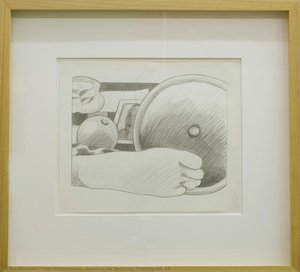
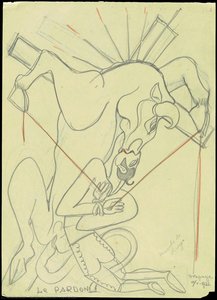
![[untitled] — Francis Henry Critchley Hinder, Modernism](/media/artworks/images-thumb/16/33/16330d46dd964ea0fca32b2cbeec7162.jpg)

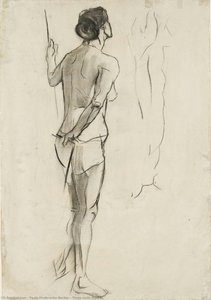
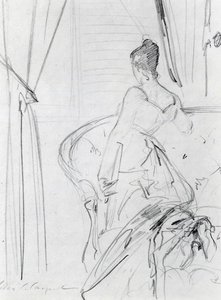
Artist Biography
A Pioneer of Abstraction: The Life and Legacy of Hilla Rebay
Born Hildegard Anna Augusta Elisabeth Freiin Rebay von Ehrenwiesen in 1890, the woman who would become known simply as Hilla Rebay emerged from a world steeped in German aristocracy. Her birthplace, Strasbourg – then part of the German Empire – provided an early backdrop to a life that would traverse national boundaries and artistic movements with remarkable fluidity. The daughter of Baron Franz Josef Rebay von Ehrenwiesen, an officer in the Prussian Army, she received an upbringing befitting her station, yet it was not societal expectations but an intrinsic creative drive that ultimately defined her path. From a young age, Rebay demonstrated a keen aptitude for art, setting the stage for a journey that would lead her to become a pivotal figure in the development of abstract expression and a champion of non-objective aesthetics. Her initial artistic training at the Cologne Kunstgewerbeschule and later at the Académie Julian in Paris provided a solid foundation in traditional techniques – landscape, portraiture, genre painting, and history painting – skills she would skillfully employ before embarking on her radical departure into abstraction. These early years weren’t merely about mastering form; they were about absorbing the visual language of the past, which she would later deconstruct and reimagine.From Traditional Roots to Avant-Garde Visions
The seeds of Rebay's artistic revolution were sown in Munich in 1910, where exposure to the work of German Jugendstil painter Fritz Erler opened her eyes to the burgeoning world of modern art. This encounter marked a turning point, propelling her towards experimentation and challenging conventional artistic norms. Her participation in exhibitions at the Cologne Kunstverein in 1912 and the Salon des Indépendants in Paris in 1913 brought her into contact with a constellation of avant-garde artists – Archipenko, Brâncuși, Chagall, Delaunay, Gleizes, Rivera, and van Rees among them. While exhilarating, this experience also prompted a period of intense self-assessment, leading Rebay to question the direction of her own work. A pivotal moment arrived with her meeting Hans (Jean) Arp in Zurich. Through Arp, she was introduced to the groundbreaking non-objective works of Kandinsky, Klee, Marc, Chagall, and Bauer – artists who dared to abandon representational form altogether. This exposure ignited a profound shift in Rebay’s artistic vision, inspiring her to explore the expressive potential of pure abstraction. In 1920, she solidified her commitment to avant-garde expression by co-founding “Der Krater” alongside Rudolf Bauer and Otto Nebel, a group dedicated to pushing the boundaries of artistic innovation. Her early abstract works were characterized by overlapping curved lines, planes, dots, and dense textures of asymmetrical shapes – a visual language that hinted at underlying energies and spiritual dimensions.A Patronage Forged in Vision: Rebay and Solomon Guggenheim
In 1927, Rebay embarked on a new chapter, immigrating to New York City. This move proved transformative, not only for her own artistic development but also for the landscape of American art. It was in New York that she forged an extraordinary relationship with Solomon R. Guggenheim, a bond built on mutual respect and a shared passion for non-objective art. Rebay quickly became Guggenheim’s confidante and trusted advisor, guiding his collecting endeavors and shaping what would become one of the world's most significant collections of modern art. She tirelessly championed artists like Bauer and Kandinsky, recognizing their genius and advocating for their inclusion in Guggenheim’s holdings. This patronage wasn’t merely about acquiring artworks; it was about fostering a new aesthetic sensibility and challenging prevailing artistic conventions. In 1939, Rebay's vision culminated in the founding of the Museum of Non-Objective Painting – the precursor to the Solomon R. Guggenheim Museum – with herself as its first director. This institution served as a beacon for abstract art, providing a platform for groundbreaking artists and introducing American audiences to new ways of seeing. Her ambition didn’t stop there; in 1943, she commissioned Frank Lloyd Wright to design a permanent museum building, resulting in the iconic spiral structure that stands today as a testament to her unwavering commitment to modernism.A Lasting Impact: Legacy and Historical Significance
Hilla Rebay’s influence extends far beyond her own artistic creations. She was a tireless advocate for non-objective art, organizing numerous exhibitions throughout Europe and the United States, and fostering dialogue around its aesthetic principles. As director of the Museum of Non-Objective Painting/Solomon R. Guggenheim Museum, she played a vital role in establishing its reputation as a leading center for modern art. Her guidance to Solomon Guggenheim not only shaped the development of a world-renowned collection but also contributed to the broader acceptance and appreciation of non-objective aesthetics. While her later years were marked by personal challenges within the Guggenheim family – ultimately leading to her departure from the museum’s board – Rebay continued to paint, receiving recognition for her own abstract works. Though she did not live to see the opening of the Frank Lloyd Wright-designed museum in 1959, her contribution remains a cornerstone of its history and a testament to her visionary leadership. Hilla Rebay’s legacy is one of artistic courage, unwavering dedication, and a profound belief in the power of abstraction to transform our perception of the world. She stands as a pivotal figure in the story of modern art, a pioneer who dared to challenge conventions and champion a new aesthetic vision.Key Achievements
- Co-founder of Der Krater: A significant artist group promoting avant-garde expression.
- Advisor to Solomon R. Guggenheim: Instrumental in shaping his collection of non-objective art.
- Founder and First Director of the Museum of Non-Objective Painting (now the Guggenheim): Established a leading institution for modern art.
- Commissioned Frank Lloyd Wright to design the Guggenheim Museum: Resulting in an iconic architectural landmark.
- Champion of Abstract Art: Organized exhibitions and fostered dialogue around non-objective aesthetics.
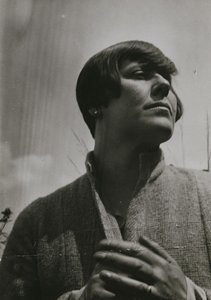
hildegard anna augusta elisabeth freiin rebay von ehrenwiesen
1890 - 1967 , Germany
Quick Facts
- Artistic Movement Or Style: Abstract Art, Non-Objective Art
- Artists Or Movements Influenced By This Artist:
- Solomon Guggenheim
- Guggenheim Museum
- Artists Who Influenced This Artist:
- Hans Arp
- Kandinsky
- Rudolf Bauer
- Date Of Birth: May 31, 1890
- Date Of Death: September 27, 1967
- Full Name: Hildegard Anna Augusta Elisabeth Freiin Rebay von Ehrenwiesen
- Nationality: German
- Notable Artworks:
- Untitled sketch of two figures at piano
- Amelita Galli-Curci
- Untitled portrait sketch
- Place Of Birth: Strasbourg, Germany

