

 Send
Send Share
Share
 Details

 Download
 Similars
 Diaporama
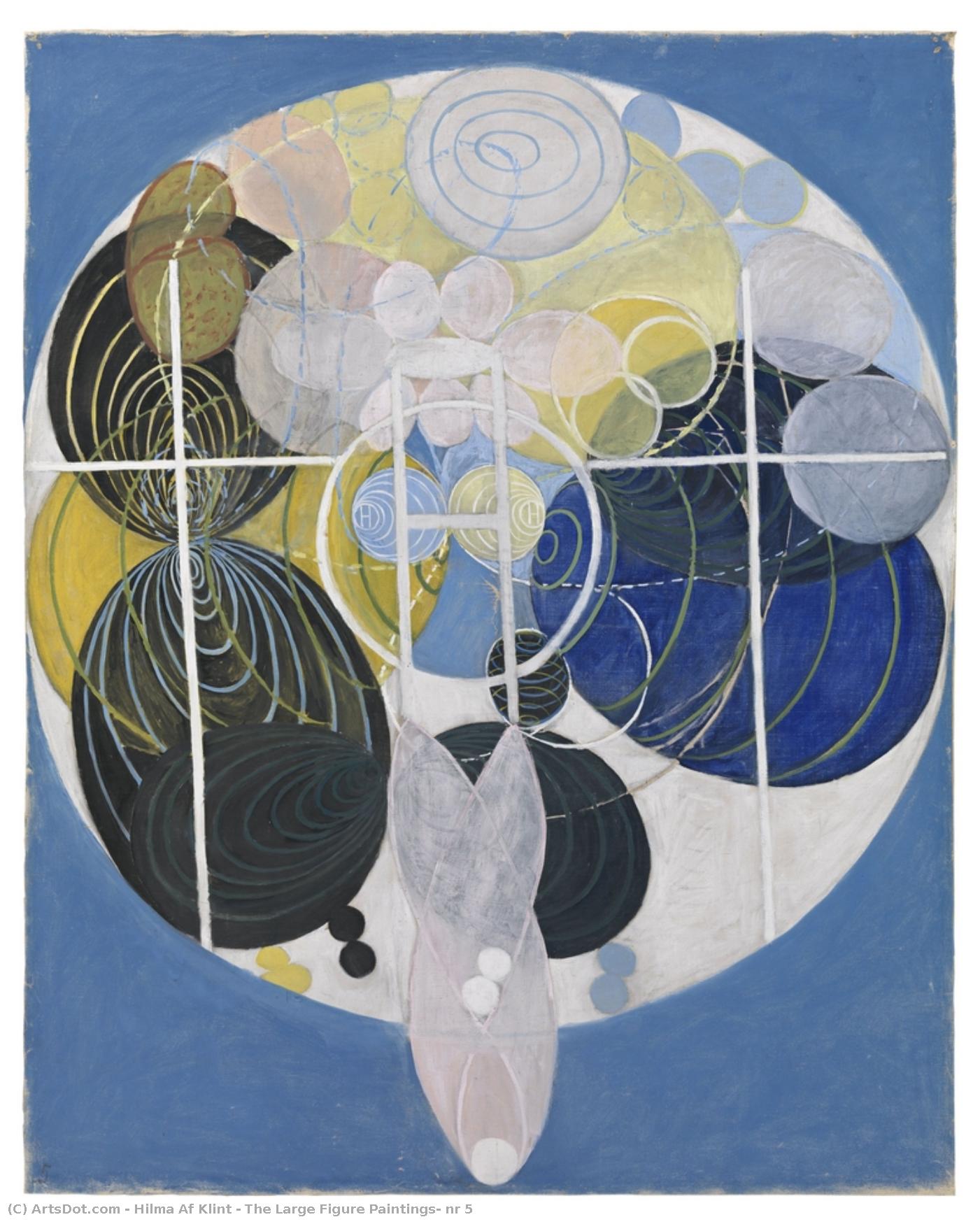
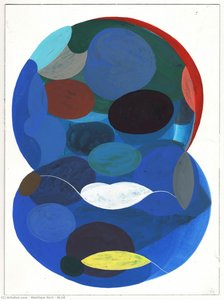
The Large Figure Paintings, nr 5


 Read More
Purchase a high-resolution, enhanced digital image, far superior to the online preview.
Each file is meticulously prepared by our in-house specialists using advanced tools and expert manual retouching. We ensure every image has exceptional clarity, precise color accuracy, and fine detail.
The final file is delivered via email within 72 hours, optimized for immediate use in professional, editorial, and print environments. This is the same quality trusted by top-tier design studios, publishers, and galleries.
Digital Image
Download a high-resolution file for personal display, printing, and creative projects. ( Buy Print Buy Hand Made Painting)
Included in Every Digital Image Order
Expert Digital Delivery, Guaranteed
When you choose ArtsDot.com, you're not just getting an image - you're receiving a professionally enhanced digital artwork, crafted with precision and backed by a satisfaction guarantee. Here's everything that comes with your order, automatically:

Fast Email Delivery
Your high-resolution digital image file will be emailed to you within 72 hours of ordering - ready for immediate use.

AI-Enhanced Digital File
Your artwork is professionally optimized using advanced AI tools and manual editing, ensuring maximum detail, clarity, and color accuracy.

Free Lifetime Re-Delivery
Accidentally deleted or lost your file? No worries - we'll resend it to you anytime, free of charge.

No Import Fees - Ever
Enjoy your artwork instantly with zero customs, duties, or delivery fees - digital downloads are always tax-free.

Color Accuracy Guarantee
We ensure your digital image reflects the original colors as closely as possible using professional tools and color management.

60-Day Satisfaction Guarantee
If you're not satisfied with your digital image, we'll revise it or refund 100% within 60 days - no questions asked.

100% Money-Back Guarantee
Not satisfied? Get a full refund within 60 days of receiving your digital file - no questions asked.

Bulk Order Discounts
Buy 3 images, save 10% - Buy 5, save 15% - Buy 10+, save 20%. Great for creative projects, galleries, and agencies.
Collectible Description
Hilma af Klint’s “The Large Figure Paintings, nr 5”: A Glimpse Beyond the Visible
In the nascent years of abstract art, before Kandinsky and Mondrian codified its forms, a visionary artist named Hilma af Klint was quietly constructing a radical new language – one rooted not in representation but in spiritual experience. “The Large Figure Paintings, nr 5,” created in 1907, stands as a pivotal example of this work, offering a profound meditation on duality, evolution, and the interconnectedness of all things. More than just paintings, these are portals to an inner world, meticulously crafted with layers of symbolism and imbued with a sense of urgent, almost prophetic, intent.
Af Klint’s artistic journey was deeply intertwined with her involvement in Theosophy, a spiritual movement that sought to bridge science and religion. This philosophical framework profoundly shaped her approach to art, leading her to reject traditional depictions of the visible world in favor of exploring unseen realms – the “macrocosm” mirroring the “microcosm,” as she termed it. The paintings themselves are characterized by a deliberate ambiguity; they resist easy interpretation, inviting viewers to engage with them on a deeply personal level. The dominant colors—a vibrant yellow and a cool blue—are not merely aesthetic choices but represent fundamental forces within her system of symbolism: the masculine and feminine, respectively.
Composition and Technique: A Dance of Geometry
The composition of “The Large Figure Paintings, nr 5” is strikingly dynamic. Two enormous circular forms – a radiant yellow and a deep blue – dominate the canvas, positioned on either side of a central vertical axis. These circles are not static; they’re fractured into smaller, concentric shapes, radiating outwards like expanding galaxies. Interwoven with these monumental circles are stylized figures, resembling elongated diamonds or leaves, that cascade downwards from the center, creating a sense of movement and growth. The artist employed a meticulous layering technique, building up the image through multiple applications of oil paint, resulting in a textured surface rich with visual depth.
Af Klint’s use of line is equally significant. Straight lines create a grid-like structure, providing a framework for the composition while simultaneously suggesting order and control. Conversely, swirling lines introduce an element of fluidity and dynamism, mirroring the ever-changing nature of consciousness. The careful placement of dots and triangles adds further complexity to the visual vocabulary, hinting at underlying geometric principles.
Symbolism and Spiritual Intent
Beyond their formal qualities, these paintings are laden with symbolism drawn from Theosophical teachings. The circles themselves represent wholeness, cycles, and the interconnectedness of all things – a reflection of the universe’s inherent unity. The central figure can be interpreted as a symbol of the individual soul embarking on a journey of self-discovery, navigating between opposing forces. The use of color is particularly potent; yellow represents masculine energy, intellect, and activity, while blue embodies feminine qualities, intuition, and receptivity.
Notably, af Klint’s intention wasn't to create representational art but rather to communicate spiritual truths through visual form. She described her process as “drawing directly from me,” emphasizing the role of intuition and inner experience in her creative practice. The paintings are not merely objects of beauty; they are conduits for accessing a deeper understanding of oneself and the universe.
A Pioneer’s Legacy
Hilma af Klint's "The Large Figure Paintings, nr 5" represents a crucial moment in art history – a bold assertion of abstraction driven by spiritual inquiry. Her work predates the formal recognition of abstract art movements and offers a unique perspective on the relationship between consciousness, symbolism, and visual form. Rediscovered decades after her death, af Klint’s paintings are now celebrated as groundbreaking achievements, challenging conventional notions of artistic expression and inviting us to contemplate the mysteries that lie beyond the realm of the visible.
Related Artworks

![Abstract Composition [triptych] — Vaclav Vytlacil, Abstract Expressionism](/media/artworks/images-thumb/08/3c/083c0675045645fd42d4e6c6d63f1ced.jpg)
Artist Biography
A Visionary Beyond Her Time: The Life and Art of Hilma af Klint
Hilma af Klint, a Swedish artist born in Solna in 1862, remains one of the most compelling and historically significant figures to emerge from the dawn of abstract art. For decades, her groundbreaking paintings lay largely unseen, deliberately withheld from public view by the artist herself who believed the world wasn’t yet ready to comprehend their profound meaning. Today, af Klint is celebrated as a pioneer, an explorer of inner worlds whose vibrant and symbolic canvases predate the better-known abstractions of Kandinsky, Mondrian, and Malevich. Her story isn't simply one of artistic innovation; it’s a testament to spiritual seeking, female agency in a male-dominated art world, and the power of intuition as a driving force for creative expression. Af Klint’s early life provided a foundation that would subtly inform her later work. Coming from a family steeped in naval tradition yet also possessing an interest in botany and mathematics, she received a traditional artistic education at the Tekniska Skolan (Technical School) and subsequently at the Royal Academy of Fine Arts in Stockholm, graduating with honors in 1887. She excelled in representational painting – portraiture, landscapes, and botanical illustration – skills that would later be transmuted into the abstract language she uniquely developed. However, a pivotal moment arrived with the death of her younger sister, Hermina, which sparked a deep exploration of spiritualism and esoteric practices.The Call to Creation: Spiritual Awakening and ‘De Fem’
This period of personal grief and questioning led af Klint to join ‘De Fem’ (The Five) in 1896 – a group of women dedicated to spiritistic séances and contacting higher masters through mediumship. This wasn't merely a social gathering; it was a profound spiritual investigation, a collective attempt to bridge the gap between the visible and invisible realms. Through these sessions, af Klint came to believe she was receiving instructions from these spiritual entities, a commission of sorts, to create paintings with a specific purpose: to visually articulate complex spiritual concepts and serve as a catalyst for inner transformation. This belief became the cornerstone of her artistic mission, shaping the direction of her work in ways that were radically different from prevailing artistic trends. The influence of this group was immense; it provided not only a framework for her beliefs but also a supportive environment where she could explore these ideas without societal constraints.The ‘Paintings for the Temple’: A Monumental Undertaking
In 1906, af Klint received what she considered the definitive commission from a higher power – to create a series of paintings for a temple that would function as a spiritual space. This directive launched her most ambitious and significant body of work: the ‘Paintings for the Temple’ (1906-1915). Comprising 193 works divided into several groups and sections, this monumental project represented a complete departure from traditional artistic conventions. The canvases burst with abstract forms, symbolic imagery drawn from diverse esoteric traditions, and a vibrant palette of colors. These paintings weren't intended as aesthetic objects in the conventional sense; they were visual representations of spiritual realities, diagrams of cosmic forces, and attempts to map the unseen dimensions of existence. Her style evolved through distinct phases, incorporating geometric abstraction, biomorphic shapes reminiscent of natural forms, and complex symbolism rooted in Theosophy, Kabbalah, and other esoteric teachings.Influences and a Lasting Legacy
Af Klint’s artistic vision was deeply informed by several key influences. Theosophy, with its emphasis on universal brotherhood, reincarnation, and the pursuit of spiritual knowledge, provided a foundational worldview. The teachings of Helena Blavatsky and the Theosophical Society offered a framework for understanding the universe and humanity’s place within it. Her encounters with Rudolf Steiner, founder of Anthroposophy, further refined her spiritual beliefs and artistic approach. The practice of spiritism and participation in séances were central to her belief that she was acting as a conduit for higher powers. Even her early training in botanical illustration subtly permeated her abstract compositions, imbuing them with organic forms and a sense of natural vitality. Af Klint deliberately withheld her work from public view during her lifetime, convinced the world wasn’t prepared to understand its meaning. She stipulated that it should remain unseen for twenty years after her death – a testament to her unwavering belief in the power and importance of her vision. She passed away in 1944, leaving behind an extraordinary legacy that would only be fully recognized decades later. In recent times, af Klint’s work has experienced a remarkable resurgence, establishing her as a pivotal figure in 20th-century art history. Her rediscovery challenges conventional narratives of abstract art's origins and highlights the often-overlooked contributions of women artists who dared to explore uncharted territories. Her paintings continue to inspire awe and contemplation, inviting viewers to embark on their own journeys of spiritual exploration and artistic discovery.
Hilma af Klint
1862 - 1944 , Sweden
Quick Facts
- Artistic Movement Or Style: Abstract art, Spiritualism
- Artists Or Movements Influenced By This Artist:
- Kandinsky
- Mondrian
- Malevich
- Artists Who Influenced This Artist:
- Helena Blavatsky
- Rudolf Steiner
- Date Of Birth: October 26, 1862
- Date Of Death: October 21, 1944
- Full Name: Hilma af Klint
- Nationality: Swedish
- Notable Artworks:
- Altarpiece No. 1
- De tio största, n° 2
- They tens mainstay IV
- Place Of Birth: Solna, Sweden

