 Preview
 Send
Send Share
Share
 Details

 Download
 Similars
 X-Ray
X-Ray Diaporama
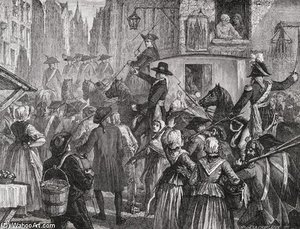
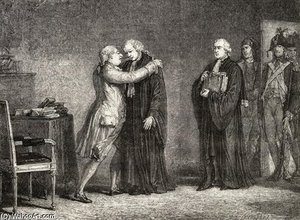
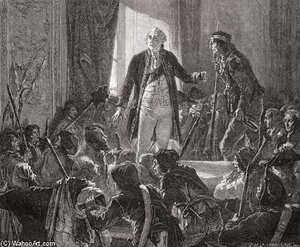
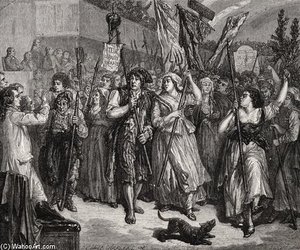
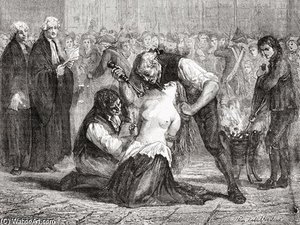
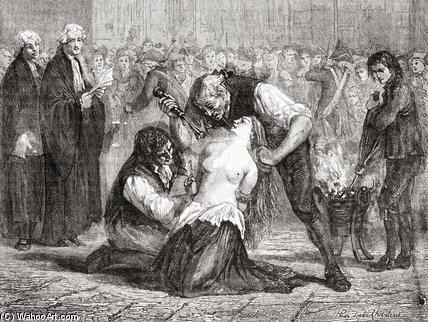
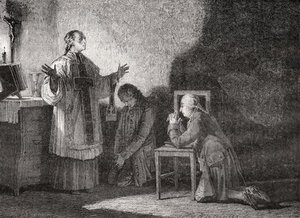
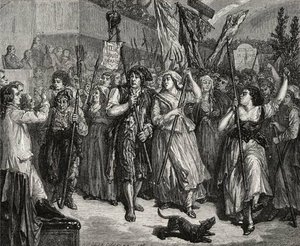
The Torture Of Madame De La Motte

 Read More
Hand Made Oil Reproduction
Hand-painted oil on canvas in your size and frame, made to order by our artists. ( Buy Print Buy Image)




































Pick from our preset sizes that match the artwork's original proportions.

You may enter your own dimensions to fit a specific frame or space. If your selected size does not match the original image's proportions, we will either crop the artwork or extend the painting with additional hand-painted elements. A digital mockup will be sent for your approval before production begins.
Please note that the on-screen preview does not reflect the actual cropping or extension. Only the mockup will accurately show the final composition.
While custom sizes are available, we recommend selecting a dimension from the predefined list to preserve the original proportions.
After order, ArtsDot.com team will email client for instructions and provide a mockup preview
Worldwide Delivery () in 3/4 weeks instead of standard 5 weeks. (16 August). No compromise on quality.

Free Worldwide Express Shipping

High-Quality Linen Canvas

Full Shipping Insurance

Customs Tax Refund Guarantee

True Color Matching Guarantee

60-Day Return Policy (Defects Only)

100% Money-Back Guarantee

Bulk Discount Offer
 Glass option is only available in size under 110 CM

The Torture Of Madame De La Motte
Reproduction Medium
Reproduction Size
-


Total Price
$ 438
Related Artworks
Artist Biography
A Life Subtly Etched: The World of Hippolyte de la Charlerie
Hippolyte de la Charlerie, born in Mouscron, Belgium in 1827, remains a figure whose artistic contributions, though deeply respected by his contemporaries, have often been overshadowed by the more flamboyant names of the 19th century. His life was one of quiet dedication to his craft – painting and illustration – unfolding against a backdrop of burgeoning social change and artistic innovation. He received his formal training at the prestigious Académie Royale des Beaux-Arts in Brussels (1843–51), where he honed his skills under the guidance of Théodore Baron, a respected figure in Belgian Romanticism. This foundation instilled in him a meticulous technique and an appreciation for classical form, qualities that would become hallmarks of his mature style.From Revolution to Refinement: Artistic Pursuits
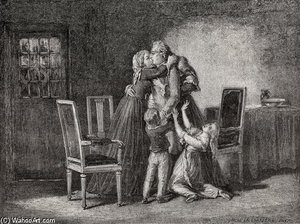
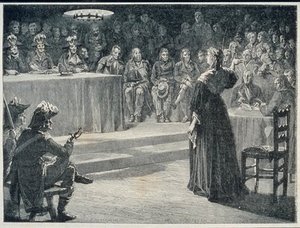
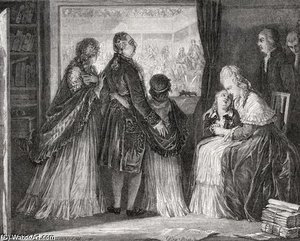
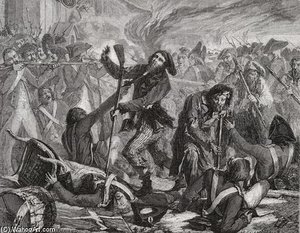
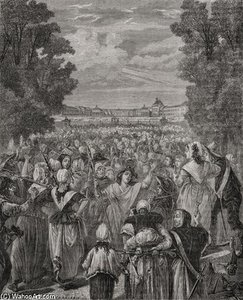
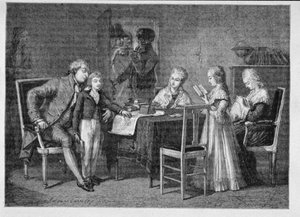
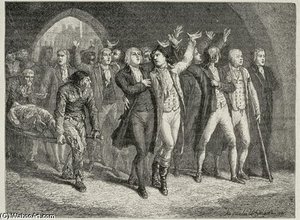
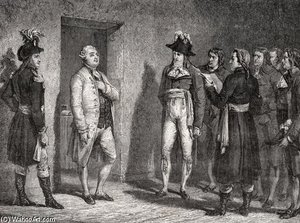
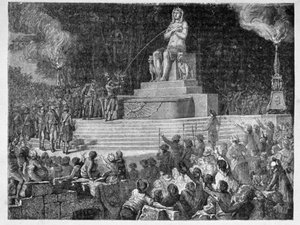
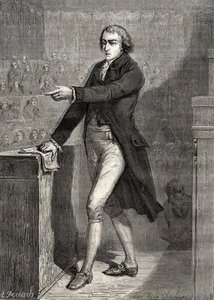
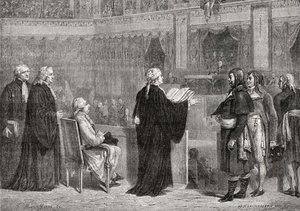
De la Charlerie’s artistic path led him towards both historical narrative and intimate portraiture. While he spent considerable time in Paris, establishing a reputation as an illustrator for lavishly produced collector's editions, his subject matter often returned to the dramatic events of the past. He is particularly remembered for his engravings depicting scenes from the French Revolution, work commissioned for M.J.G.D. Armengaud’s comprehensive history, La Révolution Française (1862). These were not merely reproductions; they were carefully considered interpretations, imbued with a sense of gravitas and emotional depth. However, it was his painting of Jean-Baptiste Lully that truly captured the attention of the Parisian art world in 1869. The work depicts the young composer as a boy, around twelve years old, playing his violin within the kitchen of the Duchesse de Montpensier, his powerful patroness. This scene, rendered with remarkable sensitivity and detail, offered a glimpse into Lully’s formative years and resonated deeply with audiences at the Salon.A Spirit of Collaboration: Atelier Saint-Luc & Société Libre des Beaux-Arts
De la Charlerie was not an artist who worked in isolation. He actively sought collaboration and community, becoming a cofounder of the Atelier Saint-Luc in Brussels. This collective aimed to provide artists with a space free from the constraints of academic tradition, fostering experimentation and independent expression. Later, in 1868, he joined the ranks of the avant-gardist Société Libre des Beaux-Arts, a group dedicated to challenging conventional artistic norms and championing “freshness and sincerity” in art – ideals that clearly aligned with his own aesthetic principles. This commitment to progressive artistic thought underscores his position as more than just a skilled craftsman; he was an advocate for a new vision within the Belgian art scene. Sadly, his life was cut short only a year later, in 1869, in Ixelles, a fashionable Brussels suburb favored by artists.An Austere Legacy: Style and Historical Significance
The work of Hippolyte de la Charlerie is characterized by an “austere simplicity,” as noted by the critic Octave Maus in 1905. His portraits, in particular, are distinguished by their dark, cool tonalities which serve to emphasize the stillness and immobility of his subjects. This deliberate restraint creates a sense of psychological depth, inviting viewers to contemplate the inner lives of those depicted. While he may not be a household name, de la Charlerie’s contribution lies in his ability to blend meticulous technique with genuine emotional resonance. His engravings offer valuable visual interpretations of a pivotal historical period, and his portraits stand as compelling examples of 19th-century realism. He represents a generation of Belgian artists who sought to balance tradition with innovation, leaving behind a body of work that continues to reward careful observation and thoughtful appreciation.Rediscovering a Quiet Master
- Key Characteristics: Austere portraiture, historical illustration (French Revolution), dark tonalities, psychological depth.
- Influences: Théodore Baron, Classical form, Romanticism.
- Major Works: Engravings for La Révolution Française, Portrait of Jean-Baptiste Lully as a Boy.
- Artistic Groups: Atelier Saint-Luc, Société Libre des Beaux-Arts.
hippolyte de la charlerie
1827 - 1869 , Belgium
Quick Facts
- Artistic Movement Or Style: Romanticism, Pre-Raphaelite
- Artists Or Movements Influenced By This Artist:
- Frye
- Romantic poetry
- Artists Who Influenced This Artist:
- Raphael
- Michelangelo
- Dürer
- Delacroix
- Swedenborg
- Date Of Birth: November 28, 1757
- Date Of Death: August 12, 1827
- Full Name: William Blake
- Nationality: British
- Notable Artworks:
- Songs of Innocence
- Songs of Experience
- The Marriage of Heaven and Hell
- Jerusalem
- Place Of Birth: London, England
Related Articles
18th Century Masters: 10 Artworks That Define an Era | ArtsDot
Journey through 18th century art! Explore 10 iconic paintings – from Rococo elegance to Neoclassical grandeur. Discover Fragonard, David & more. Find museum-quality reproductions and elevate your home decor on ArtsDot.com.

The Rococo Aesthetic: Opulence, Rebellion & the Pursuit of Pleasure in 18th-Century Art
Explore the opulent world of Rococo art! Discover its origins, key artists like Watteau & Boucher, and lasting influence on design. Expert insights for collectors & enthusiasts.
Etching Masters: 10 Legendary Prints That Revolutionized Art | ArtsDot
Journey through 10 legendary etching masterpieces by Rembrandt, Dürer & Goya. Explore the history of printmaking and discover timeless art for your home. Find museum-quality reproductions at ArtsDot.com.
Águeda Ruiz de la Prada: A Study of Eclecticism & Emotional Resonance in Contemporary Spanish Painting
Discover the vibrant world of Ágatha Ruiz de la Prada, a leading figure in contemporary Spanish art. Explore her eclectic style, emotional depth & legacy – a must-read for discerning collectors.

Echoes of Time: Exploring the Enduring Appeal & Historical Context of Vintage Art Prints
Explore the captivating world of vintage art prints! Discover their history, collecting tips & enduring appeal. Expert insights on chromolithography and building a legacy collection with ArtsDot.