

 Preview
 Send
Send Share
Share
 Details

 Download
 Similars
 X-Ray
X-Ray Diaporama
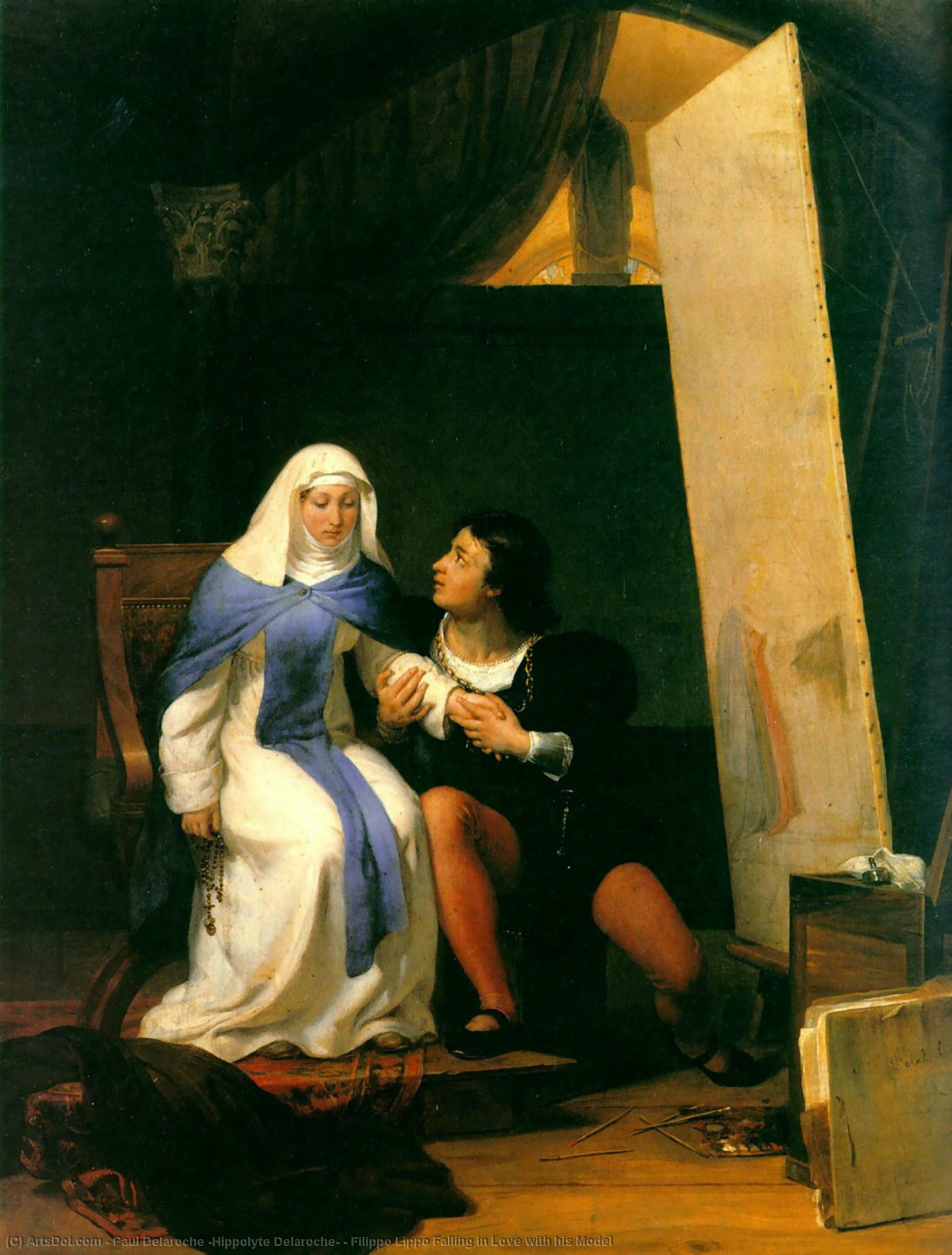
Filippo Lippo Falling in Love with his Model


 Read More
Purchase a high-resolution, enhanced digital image, far superior to the online preview.
Each file is meticulously prepared by our in-house specialists using advanced tools and expert manual retouching. We ensure every image has exceptional clarity, precise color accuracy, and fine detail.
The final file is delivered via email within 72 hours, optimized for immediate use in professional, editorial, and print environments. This is the same quality trusted by top-tier design studios, publishers, and galleries.
Digital Image
Download a high-resolution file for personal display, printing, and creative projects. ( Buy Print Buy Hand Made Painting)
Included in Every Digital Image Order
Expert Digital Delivery, Guaranteed
When you choose ArtsDot.com, you're not just getting an image - you're receiving a professionally enhanced digital artwork, crafted with precision and backed by a satisfaction guarantee. Here's everything that comes with your order, automatically:

Fast Email Delivery
Your high-resolution digital image file will be emailed to you within 72 hours of ordering - ready for immediate use.

AI-Enhanced Digital File
Your artwork is professionally optimized using advanced AI tools and manual editing, ensuring maximum detail, clarity, and color accuracy.

Free Lifetime Re-Delivery
Accidentally deleted or lost your file? No worries - we'll resend it to you anytime, free of charge.

No Import Fees - Ever
Enjoy your artwork instantly with zero customs, duties, or delivery fees - digital downloads are always tax-free.

Color Accuracy Guarantee
We ensure your digital image reflects the original colors as closely as possible using professional tools and color management.

60-Day Satisfaction Guarantee
If you're not satisfied with your digital image, we'll revise it or refund 100% within 60 days - no questions asked.

100% Money-Back Guarantee
Not satisfied? Get a full refund within 60 days of receiving your digital file - no questions asked.

Bulk Order Discounts
Buy 3 images, save 10% - Buy 5, save 15% - Buy 10+, save 20%. Great for creative projects, galleries, and agencies.
Collectible Description
A Moment Frozen in Time: The Intimacy of Delaroche’s Vision
In the quiet, shadowed corners of 19th-century Romanticism, few works capture the delicate tension between reality and desire as poignantly as Paul Delaroche’s Filippo Lippo Falling in Love with his Model. Created in 1822, this masterpiece transcends a mere historical anecdote, inviting the viewer into a private, breathless moment of human connection. The painting presents us with an intimate tableau: a man and a woman seated closely within a room that feels both grand and profoundly secluded. As they engage in what appears to be a whispered conversation or a shared, silent realization, the atmosphere vibrates with an unspoken intimacy. The woman, draped in a striking blue dress, holds her hands clasped—a gesture that suggests a mixture of vulnerability and poise—while the man sits beside her, his presence anchored by the weight of the moment. It is a scene that does not merely depict a social gathering, but rather captures the very heartbeat of an emotional encounter.
Beyond the central figures, Delaroche masterfully populates the periphery to ground this romantic tension in a lived-in reality. The presence of other figures, partially obscured or positioned at the edges of the frame, suggests the bustling life of a social event, yet their distance serves to heighten the isolation of our protagonists. This clever use of composition ensures that while the world continues to move around them, time itself seems to have paused for the lovers. For the discerning collector or interior designer, this painting offers more than just visual beauty; it provides a narrative anchor, a piece of "history in motion" that can transform a room into a space of contemplation and storytelling.
The Mastery of Technique and Romantic Grandeur
Delaroche was a virtuoso of the French Academic tradition, yet his heart beat with the dramatic fervor of the Romantic movement. In this work, we see the perfect marriage of these two worlds. His technique is characterized by an almost cinematic clarity, where every fold of fabric and every subtle shift in light is rendered with meticulous precision. The way the light catches the blue of the woman's gown or illuminates the textures of the surrounding room demonstrates a command over oil painting that was unparalleled in his era. This level of detail is what makes a high-quality reproduction so vital; to truly appreciate this piece, one must be able to see the soft transitions of shadow and the deliberate, painterly strokes that breathe life into the skin tones of the subjects.
The historical context of the work adds a layer of profound depth for those who appreciate the layers of art history. As a student of Antoine-Jean Gros, Delaroche inherited a talent for dramatic composition, but he applied it to more human, often deglorified, historical scenes. Rather than focusing on the sweeping battles of kings, he chose to focus on the internal battles of the heart. This approach—focusing on the psychological weight of a single moment—is what makes Filippo Lippo Falling in Love with his Model so enduringly relevant. It is an exploration of the human condition that remains as potent today as it was in 1822, making it an exquisite choice for those seeking to infuse their homes with art that possesses both intellectual depth and emotional resonance.
An Essential Addition to the Sophisticated Interior
For the interior designer or the passionate art lover, selecting a piece like this is about more than decoration; it is about curation of mood. The color palette, dominated by the deep, soulful blues and the warm, ambient tones of the room, allows this painting to integrate seamlessly into various sophisticated decors, from classical European estates to modern, minimalist galleries. It serves as a focal point that invites conversation, drawing the eye toward its intricate details and pulling the viewer into its historical mystery.
When considering a handmade oil painting reproduction, such as those offered by ArtsDot.com, one is investing in the preservation of this emotional legacy. A faithful reproduction captures the essence of Delaroche’s brushwork, ensuring that the dramatic light and the tender intimacy of the subjects are preserved with dignity. Whether placed in a study, a grand dining room, or a private salon, this artwork acts as a window into a bygone era of passion and elegance, offering a timeless sense of luxury and cultural sophistication.
Related Artworks

Artist Biography
The Master of Historical Drama: The Life and Legacy of Paul Delaroche
In the vibrant, turbulent landscape of nineteenth-century French art, few figures commanded the stage with as much dramatic presence as Hippolyte Paul Delaroche. Born in Paris in 1797 into a family where art was woven into the very fabric of daily life, Delaroche was destined for greatness. With a father serving as an art expert and an uncle curating the prestigious Cabinet des Estampes, his childhood was an immersive education in visual splendor. This early exposure to the masters provided him with more than just aesthetic appreciation; it instilled a profound respect for the weight of history and the power of a single, well-placed brushstroke. Under the mentorship of Antoine-Jean Gros, Delaroche began to master the art of the grand narrative, learning how to infuse monumental subjects with a sense of breathless immediacy that would become his hallmark.
Delaroche’s artistry occupied a fascinating, liminal space between the sweeping emotionalism of Romanticism and the disciplined precision of Academicism. While many of his contemporaries were lost in pure abstraction or rigid neoclassicism, Delaroche sought a middle path—a pragmatic realism that aimed to strip away the idealized veneer of history to reveal its raw, human core. He did not merely paint kings and queens; he painted their vulnerability, their terror, and their quietest moments of despair. This approach allowed him to bridge the gap between the grandiosity of the past and the burgeoning realism of his own era, making historical events feel startlingly present to a mid-century audience.
A Tapestry of Emotion and Precision
The true genius of Delaroche lay in his ability to transform a canvas into a theatrical stage. His works often functioned as visual chronicles, meticulously researched and rendered with a breathtaking attention to detail that captivated the public imagination. In masterpieces such as The Execution of Lady Jane Grey, one can feel the heavy, suffocating atmosphere of tragedy. The painting is not merely a depiction of an event; it is an exploration of innocence lost, achieved through a masterful use of light and shadow that guides the viewer's eye toward the poignant, silent grief of the protagonists. Similarly, his depictions of Napoleon—whether in the solemnity of Napoléon at Fontainebleau or the heroic scale of Napoleon Crossing the Alps—demonstrate his ability to balance the legendary status of the figure with a deeply humanizing touch.
Beyond his solo triumphs, Delaroche’s influence rippled through the Parisian art scene as a respected educator and mentor. His studio became a crucible for the next generation of French masters, fostering talents such as:
- Thomas Couture, who would further refine the boundaries of historical painting;
- Jean-Léon Gérôme, a titan of Academic realism;
- Jean-François Millet, whose later work would pivot toward the profound dignity of peasant life.
Through these connections, Delaroche’s stylistic DNA—characterized by meticulous glazing techniques and an emotive narrative structure—became embedded in the very foundation of French painting.
The Enduring Resonance of a Vanished Past
As the nineteenth century progressed, the art world underwent rapid transformations, yet the works of Delaroche remained a steadfast anchor for those seeking the spectacle of history. He possessed a unique ability to evoke a sense of nostalgia for a vanished era, treating subjects from English and French history with an equal measure of reverence and realism. Whether he was capturing the tender familial devotion in Resting on the Banks of the Tiber or the violent political upheaval in The Murder of the Duke of Guise, his work always sought to find the universal human truth beneath the historical costume.
Though the era of grand history painting eventually gave way to the fleeting impressions of the Impressionists, Delaroche’s legacy remains unshakeable. He stands as a pivotal bridge in art history, a painter who could command the grandeur of the old world while embracing the psychological depth required by the new. His canvases continue to invite us into the past, not as distant, dusty relics, but as living, breathing moments of profound human experience, forever preserved in the exquisite detail of his brush.
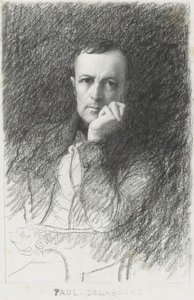
hippolyte-paul delaroche
1797 - 1856 , France
Quick Facts
- Artistic Movement Or Style: Romanticism & Neoclassicism
- Artists Or Movements Influenced By This Artist: ['Thomas Couture']
- Artists Who Influenced This Artist: ['Antoine Jean Gros']
- Date Of Birth: July 17, 1797
- Date Of Death: November 4, 1856
- Full Name: Hippolyte Paul Delaroche
- Nationality: French
- Notable Artworks:
- The Execution of Lady Jane Grey
- Young Christian Martyr
- A Child Learning to Read
- Place Of Birth: Paris, France

