

 Preview
 Send
Send Share
Share
 Details

 Download
 Similars
 X-Ray
X-Ray Diaporama
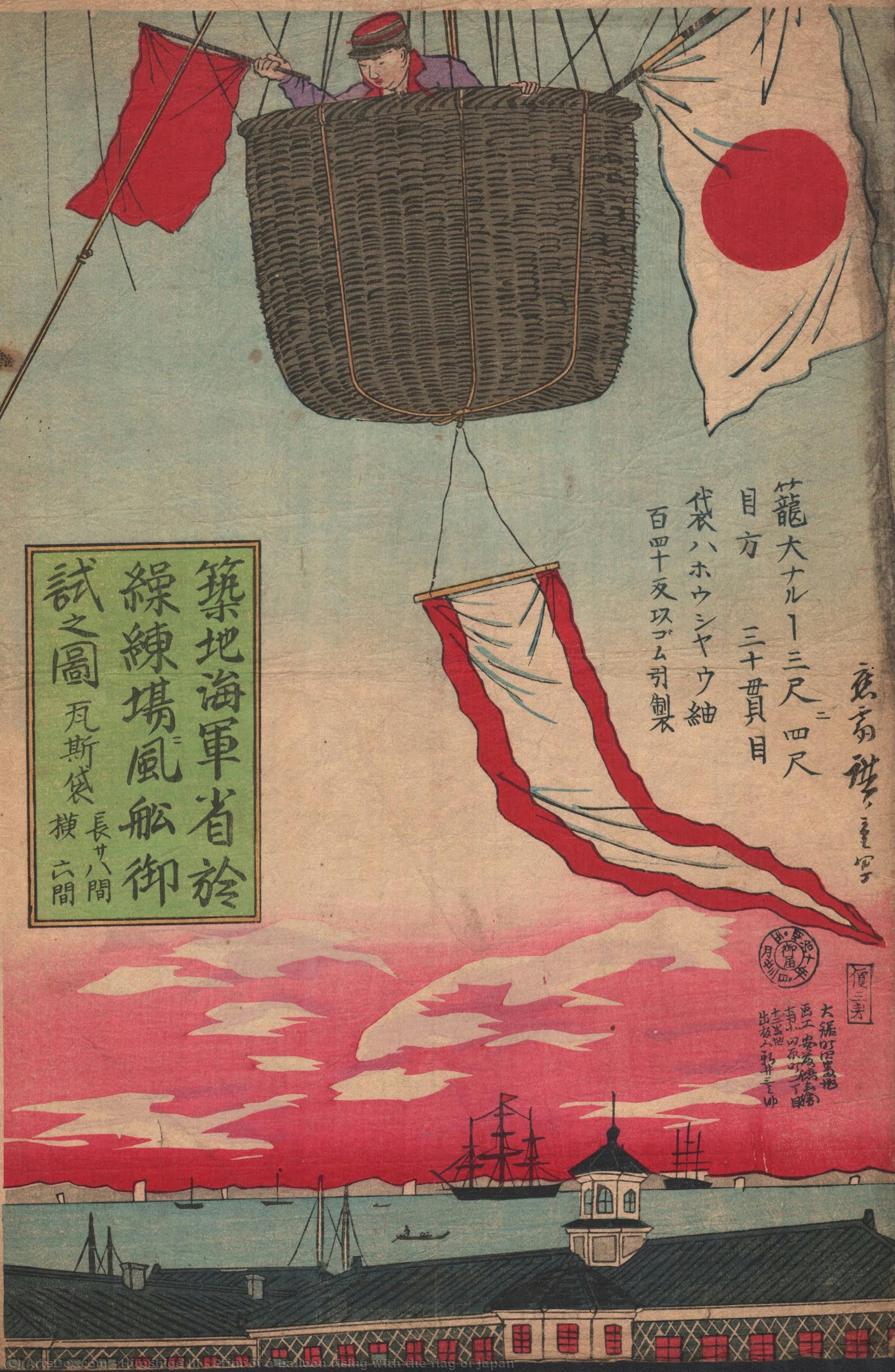
Print of a balloon rising with the flag of Japan
 1877
1877 36.0 x 26.0 cm
 Bujalance Collection
 Read More
Purchase a high-resolution, enhanced digital image, far superior to the online preview.
Each file is meticulously prepared by our in-house specialists using advanced tools and expert manual retouching. We ensure every image has exceptional clarity, precise color accuracy, and fine detail.
The final file is delivered via email within 72 hours, optimized for immediate use in professional, editorial, and print environments. This is the same quality trusted by top-tier design studios, publishers, and galleries.
Digital Image
Download a high-resolution file for personal display, printing, and creative projects. ( Buy Print Buy Hand Made Painting)
Included in Every Digital Image Order
Expert Digital Delivery, Guaranteed
When you choose ArtsDot.com, you're not just getting an image - you're receiving a professionally enhanced digital artwork, crafted with precision and backed by a satisfaction guarantee. Here's everything that comes with your order, automatically:

Fast Email Delivery
Your high-resolution digital image file will be emailed to you within 72 hours of ordering - ready for immediate use.

AI-Enhanced Digital File
Your artwork is professionally optimized using advanced AI tools and manual editing, ensuring maximum detail, clarity, and color accuracy.

Free Lifetime Re-Delivery
Accidentally deleted or lost your file? No worries - we'll resend it to you anytime, free of charge.

No Import Fees - Ever
Enjoy your artwork instantly with zero customs, duties, or delivery fees - digital downloads are always tax-free.

Color Accuracy Guarantee
We ensure your digital image reflects the original colors as closely as possible using professional tools and color management.

100-Day Satisfaction Guarantee
If you're not satisfied with your digital image, we'll revise it or refund 100% within 100 days - no questions asked.

100% Money-Back Guarantee
Not satisfied? Get a full refund within 100 days of receiving your digital file - no questions asked.

Bulk Order Discounts
Buy 3 images, save 10% - Buy 5, save 15% - Buy 10+, save 20%. Great for creative projects, galleries, and agencies.
Related Artworks









Artist Biography
The Last Maestro of Edo Landscapes
Utagawa Hiroshige III, born Gotō Torakichi in the vibrant Fukugawa district of Edo, stands as a poignant figure in the twilight of the Japanese woodblock tradition. His life and artistry were inextricably woven into the legacy of his mentor, the legendary Utagawa Hiroshige I. While history often casts him in the shadow of his predecessor’s monumental achievements, to view him merely as an imitator is to miss the profound continuity he provided for a vanishing era. As the final titan of Edo-period landscape painting, Hiroshige III acted as a bridge between the classical aesthetics of the old shogunate and the rapidly modernizing world of Meiji Japan.
His journey began under the rigorous discipline of an apprenticeship that shaped his very soul. Following the tragic loss of his parents at a young age, Torakichi found both a father figure and a creative North Star in Hiroshiente I. This relationship was so profound that it eventually extended into the domestic sphere; after the dissolution of the marriage between Hiroshige II and the master's daughter, Otatsu, Torakichi married her, briefly adopting the name Hiroshige II before settling upon his own identity as Hiroshige III in 1869. This lineage was not merely a matter of nomenclature but a commitment to a specific visual language—one defined by bokashi, the delicate art of color gradation, and an unparalleled ability to capture atmospheric depth.
A Vision of Tradition and Transition
The work of Hiroshige III is characterized by a meticulous devotion to the natural world, particularly the sweeping mountainous vistas and the ephemeral beauty of seasonal flora. He inherited the master's gift for capturing the "floating world," yet his era demanded a new way of seeing. While his technical foundation remained rooted in the classical ukiyo-e style, his subject matter began to reflect the encroaching modernity of the late 19th century. One can observe this tension in his fascinating depictions of technological marvels, such as his celebrated series documenting the ascent of a hot air balloon over the port of Yokohama in 1887.
In these prints, the artist achieved something truly remarkable: he utilized the traditional medium of woodblock printing to document the arrival of Western influence. Through his eyes, we see the familiar Japanese landscape punctuated by the presence of foreign vessels anchored in the harbor, viewed from the dizzying, novel perspective of an aerial vantage point. This ability to blend the old with the new allowed him to remain relevant during a period of intense cultural upheaval. His landscapes were not static relics of the past but living, breathing chronicles of a nation in flux.
Legacy and Artistic Significance
Though his career was tragically cut short by illness, leaving him to pass away in 1894, the impact of Hiroshige III remains etched in the annals of Japanese art history. He did not seek to overthrow the established order but rather to refine and preserve it, ensuring that the poetic vision of the Utagawa school survived into a new age. His contributions can be summarized through several key artistic pillars:
- Technical Preservation: He maintained the high standards of multi-impression printing and subtle color transitions that defined the golden age of ukiyo-e.
- Cultural Documentation: His work serves as a vital visual record of the transition from the Edo period to the Meiji era, capturing both ancient landscapes and modern innovations like the balloon.
- Stylistic Continuity: By embracing the lineage of Hiroshige I, he provided a sense of aesthetic stability during a time of profound social and political transformation in Japan.
Ultimately, Utagawa Hiroshige III deserves recognition as more than a successor; he was a guardian of beauty. In his hands, the woodblock print became a vessel for both nostalgia and progress, capturing the fleeting essence of a world that was forever changing even as he sought to immortalize it in ink and pigment.
hiroshige iii
1842 - 1894 , Japan
Quick Facts
- Artistic Movement Or Style: Ukiyo-e
- Artists Or Movements Influenced By This Artist: ['Hokusai']
- Artists Who Influenced This Artist: ['Utagawa Hiroshige I']
- Date Of Birth: 1842 or 1843
- Date Of Death: March 28, 1894
- Full Name: Utagawa Hiroshige III (安藤徳兵)
- Nationality: Japanese
- Notable Artworks:
- The Fifty-three Stations of the Tōkaidō
- One Hundred Famous Views of Edo
- Place Of Birth: Tokyo, Japan