 Preview
 Send
Send Share
Share
 Details

 Download
 Similars
 X-Ray
X-Ray Diaporama
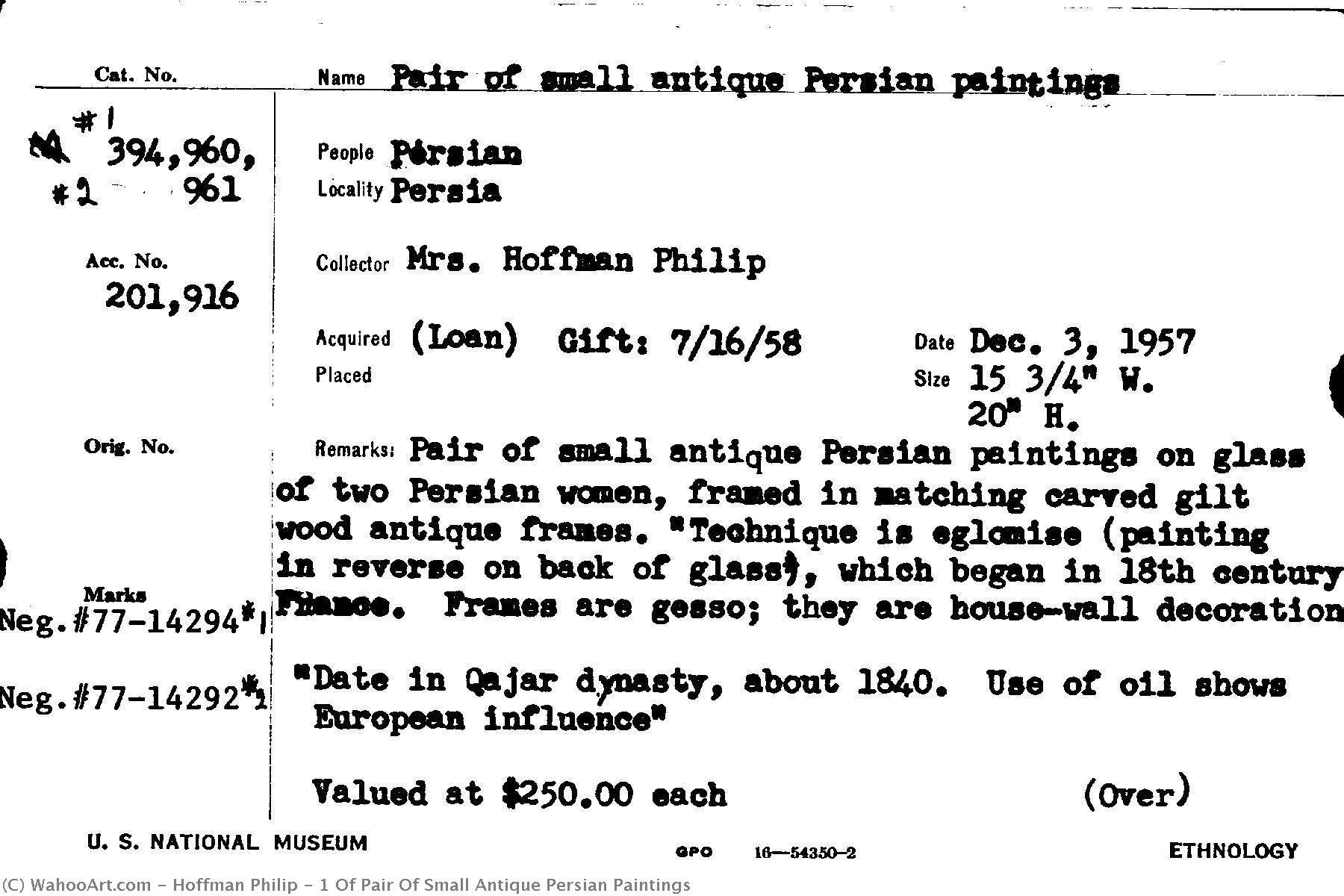
1 Of Pair Of Small Antique Persian Paintings
 Read More
Hand Made Oil Reproduction
Hand-painted oil on canvas in your size and frame, made to order by our artists. ( Buy Print Buy Image)




































Pick from our preset sizes that match the artwork's original proportions.

You may enter your own dimensions to fit a specific frame or space. If your selected size does not match the original image's proportions, we will either crop the artwork or extend the painting with additional hand-painted elements. A digital mockup will be sent for your approval before production begins.
Please note that the on-screen preview does not reflect the actual cropping or extension. Only the mockup will accurately show the final composition.
While custom sizes are available, we recommend selecting a dimension from the predefined list to preserve the original proportions.
After order, ArtsDot.com team will email client for instructions and provide a mockup preview
Worldwide Delivery () in 3/4 weeks instead of standard 5 weeks. (3 September). No compromise on quality.

Free Worldwide Express Shipping

High-Quality Linen Canvas

Full Shipping Insurance

Customs Tax Refund Guarantee

True Color Matching Guarantee

60-Day Return Policy (Defects Only)

100% Money-Back Guarantee

Bulk Discount Offer
 Glass option is only available in size under 110 CM

1 Of Pair Of Small Antique Persian Paintings
Reproduction Medium
Reproduction Size
-


Total Price
$ 263
Related Artworks

Artist Biography
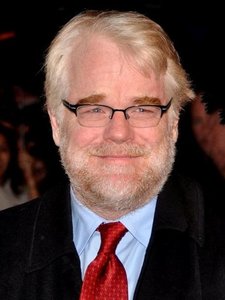
The Cinematic Tapestry of Memory: The Art of Philip Hoffman
In the ethereal realm where celluloid meets consciousness, Philip Hoffman stands as a master weaver of light and shadow. Born on December 10, 1955, in Kitchener, Ontario, Hoffman’s artistic odyssey began not with the moving image, but with the still, captured moment of photography. This early fascination with the frozen frame would later evolve into a profound cinematic language—one that does not merely record reality but seeks to deconstruct it. His work is often described as a bridge between the tangible world and the abstract landscapes of the human psyche, navigating the delicate intersections of death, diaspora, memory, and transcendence.
Hoffman’s creative DNA was shaped by the rugged landscapes of his Canadian upbringing and an academic journey that blended media arts with the deep introspection of English literature. Studying at Sheridan College and Wilfrid Laurier University, he developed a unique ability to marry technical precision with poetic depth. His formative years were deeply influenced by the avant-garde titans of experimental cinema, most notably Stan Brakhage and Hollis Frampton. From them, he inherited a reverence for the tactile nature of film—the grain, the flicker, and the raw potential of Super8 cinematography. This lineage is evident in his mastery of fragmented sequences and slow motion, techniques used to mirror the associative, often incomplete way our minds retrieve the past.
The Film Farm and the Architecture of Association
A pivotal chapter in Hoffman’s career arrived in 1983 with the establishment of Film Farm. More than a mere production house, this retreat became a vital incubator for experimental practice, fostering a community where the boundaries of cinematic language could be pushed and redefined. Through Film Farm, Hoffman championed an ethos of collaborative exploration, inviting fellow artists to challenge the rigid structures of conventional storytelling. His work during this era often blurred the lines between fiction and documentary, creating what critics have termed "diary filmmaking"—a deeply personal mode of cinema that uses the material of one's own life to interrogate broader historical and social truths.
His technical approach is characterized by a meticulous attention to the rhythm of thought. In his celebrated works, such as passing through/torn formations, the editing does not merely transition between scenes; it tracks the very movement of the mind, making melody of noise and words. This rhythmic complexity allows him to capture fleeting moments of emotion that traditional narrative cinema often overlooks. By employing repetition and layered imagery, Hoffman invites the viewer into a contemplative dialogue, where the screen becomes a mirror for the viewer's own subconscious associations.
Legacy and the Pursuit of Truth
The significance of Philip Hoffman’s contribution to Canadian experimental cinema cannot be overstated. His career is marked by profound recognition, including more than 25 retrospectives and prestigious accolades such as the Golden Gate Award at the San Francisco International Film Festival for his film What these ashes wanted. Beyond his individual achievements, his role as an educator—serving on the faculty of York University and as a visiting professor internationally—has allowed him to pass the torch of experimental inquiry to new generations of filmmakers.
Ultimately, Hoffman’s work remains a vital exploration of contested truth. In an age of digital certainty, his films remind us that reality is often subjective, layered, and beautifully unstable. His artistic legacy rests in his ability to transform the medium of film into a vessel for the intangible, ensuring that the ephemeral traces of memory are preserved through the enduring power of light and motion.
Quick Facts
- Artistic Movement Or Style: Experimental Cinema
- Artists Or Movements Influenced By This Artist: ['Film Farm']
- Artists Who Influenced This Artist: ['Hart Tiffany']
- Date Of Birth: December 10, 1955
- Full Name: Philip Hoffman
- Nationality: Canadian
- Notable Artworks:
- Battle of Adwa
- Triptych