 Preview
 Send
Send Share
Share
 Details

 Download
 Similars
 X-Ray
X-Ray Diaporama
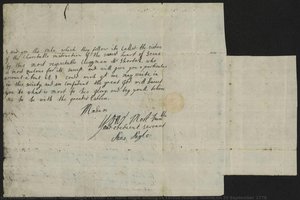
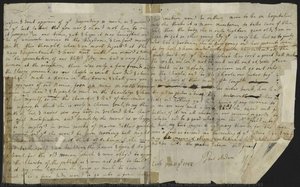
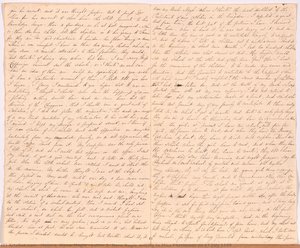
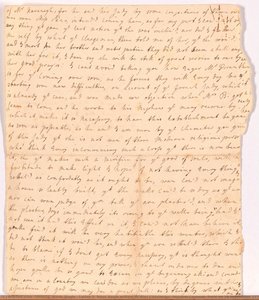
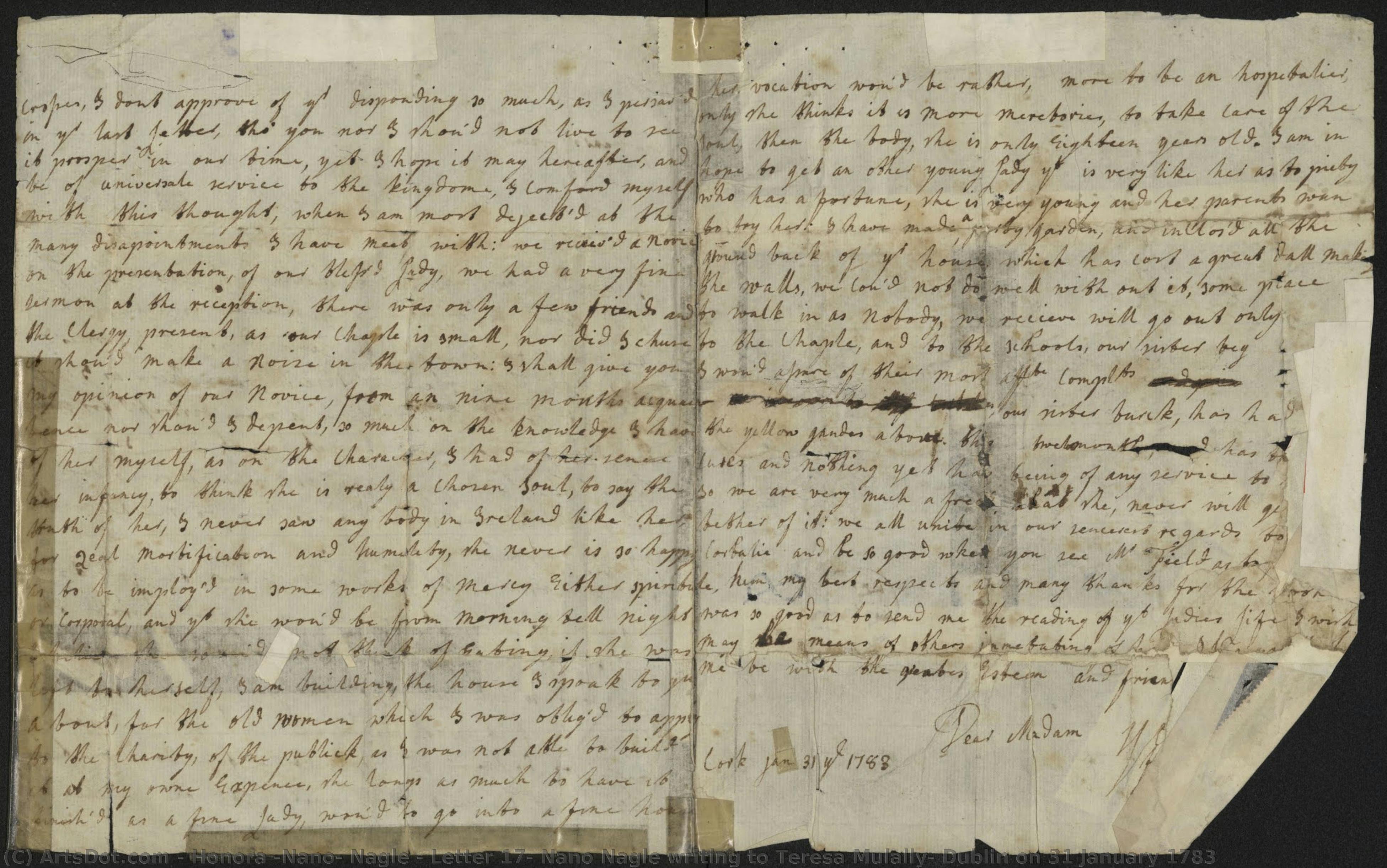
Letter 17: Nano Nagle writing to Teresa Mulally, Dublin on 31 January 1783


 Read More
Giclée / Art Print
Museum-quality giclée or canvas print with fast production and flexible finish options. ( Buy Hand Made Painting Buy Image)




































Pick from our preset sizes that match the artwork's original proportions.

You may enter your own dimensions to fit a specific frame or space. If your selected size does not match the original image's proportions, we will either crop the artwork or extend the image with a mirrored or solid-fill edge. A digital mockup will be sent for your approval before production begins.
Please note that the on-screen preview does not reflect the actual cropping or extension. Only the mockup will accurately show the final composition.
While custom sizes are available, we recommend selecting a dimension from the predefined list to preserve the original proportions.
Worldwide Delivery () in 2 weeks instead of standard 4/5 weeks. (27 August)

Free Worldwide Express Shipping

High-Quality Linen Canvas

Full Shipping Insurance

Customs Tax Refund Guarantee

True Color Matching Guarantee

60-Day Return Policy (Defects Only)

100% Money-Back Guarantee

Bulk Discount Offer
 Glass option is only available in size under 110 CM

Letter 17: Nano Nagle writing to Teresa Mulally, Dublin on 31 January 1783
Giclée / Art Print
Reproduction Size
-


Total Price
$ 63
Collectible Description
Related Artworks









![Autograph Statement Requesting That The Guarantee Provided Be Considered Sufficient (biblioteca Nacional De España)\n\n[page 1] — Cervantes Saavedra, Miguel](/media/artworks/images-thumb/be/4d/be4d8356b5c62cf26a2aac9cd48fa43b.jpg)
Artist Biography
A Legacy of Defiance: The Life and Spirit of Nano Nagle
In the shadowed corridors of eighteenth-century Ireland, where the heavy hand of the Penal Laws sought to stifle the very soul of a nation, there emerged a figure of luminous courage. Honora "Nano" Nagle was not an artist of canvas and pigment, but rather an architect of human potential and a painter of social change. Born in 1718 in the verdant landscape of Ballygriffin, County Cork, her early life was shaped by the quiet strength of a wealthy Catholic family navigating a world of systemic oppression. While her upbringing was one of relative privilege, it was marked by an underlying tension—the constant threat to the faith and culture that defined her people. This duality of comfort and conflict would become the crucible in which her extraordinary vocation was forged.
The trajectory of Nano’s life shifted profoundly during her formative years in France. Sent abroad to escape the restrictive atmosphere of Ireland, she encountered the vibrant intellectual currents of Paris. It was here, amidst the elegance of French society, that a singular, transformative moment occurred. Returning from a night of celebration, the young Nagle witnessed the stark, heartbreaking contrast between her own world of luxury and the desperate poverty of the Irish people waiting in the darkness for morning Mass. This encounter acted as a spiritual awakening, a sudden infusion of light into her consciousness that rendered her previous life of pleasure hollow. She realized that true purpose lay not in the pursuit of personal joy, but in the service of those forgotten by history.
The Architecture of Hope: Education as Rebellion
Upon her return to Ireland, Nano Nagle embarked on a mission that was as much an act of political rebellion as it was a religious calling. In an era where educating the Irish Catholic population was considered a treasonous offense, she moved through the streets of Cork City with a quiet, determined audacity. Her work began in the most humble of settings—a small, two-room mud cabin on Cove Lane—where she opened her first school for girls. This was not merely a classroom; it was a sanctuary of literacy and dignity. Through her efforts, she established a network of seven schools, providing the tools of knowledge to children who had been systematically denied them by law.
Her pedagogical vision was remarkably progressive for its time. Rather than focusing solely on rote religious instruction, Nano emphasized practical skills and vocational training. She understood that for the impoverished to truly rise, they required more than just faith; they required the agency provided by literacy and craftsmanship. This holistic approach to empowerment became the hallmark of her work. Her dedication extended beyond the classroom as she navigated the dangerous night streets of Cork to nurse the sick and provide aid to the destitute, embodying a lived theology of compassion that refused to acknowledge the boundaries set by unjust legislation.
An Enduring Impression: The Presentation Legacy
The true masterpiece of Nano Nagle’s life was the foundation of the Sisters of the Presentation of the Blessed Virgin Mary in 1769. This religious institute, born from her desire to continue her work within a structured community, allowed her vision to transcend her own lifetime. The Presentation Sisters became a global force for social justice and education, carrying her spirit of "faith in action" across continents. Her ability to create an institution that could survive the very laws intended to crush her movement is a testament to her profound strategic wisdom and unshakeable resolve.
Today, the historical significance of Nano Nagle resonates far beyond the borders of Ireland. She remains a symbol of how individual agency can dismantle systemic barriers. Her life serves as a powerful narrative of transformation—from a young woman of privilege to a pioneer of social reform. In the annals of history, she is remembered not just as a religious figure, but as a champion of human rights whose "art" was the restoration of dignity to the marginalized. Her legacy continues to inspire those who find themselves standing in the face of impossibility, reminding us that even in the darkest eras, one person's commitment to light can illuminate the path for generations to come.
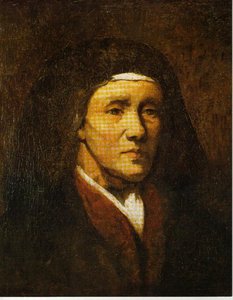
honora (nano) nagle
1718 - 1784 , Ireland
Quick Facts
- Artistic Movement Or Style: Catholic Education
- Artists Or Movements Influenced By This Artist: ['Ursuline Convent']
- Artists Who Influenced This Artist: ['None Known']
- Date Of Birth: 1718
- Date Of Death: 1784
- Full Name: Nano Nagle
- Nationality: Irish
- Notable Artworks:
- Letter 7
- Letter 1
- Letter 11
- Place Of Birth: Ballygriffin, Ireland