 Send
Send Share
Share
 Details

 Download
 Similars
 Diaporama
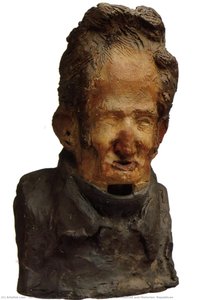
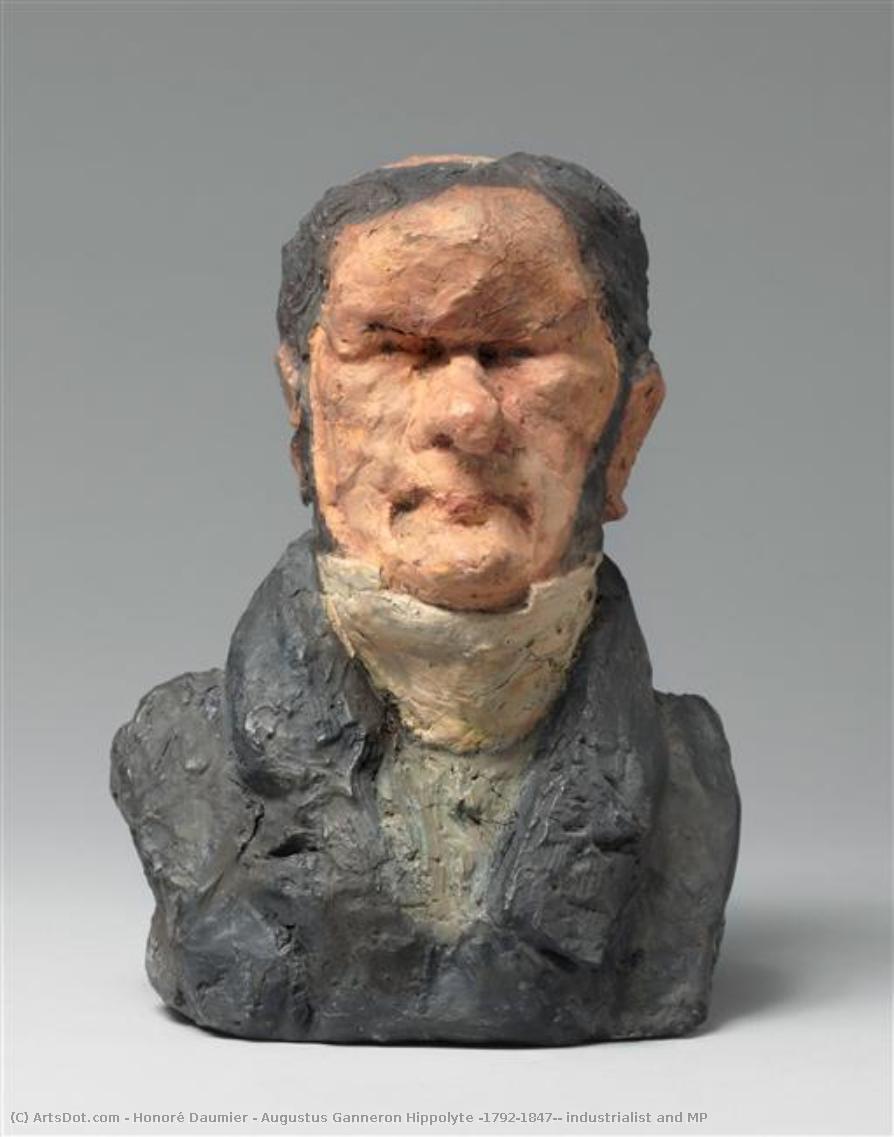
Augustus Ganneron Hippolyte (1792-1847), industrialist and MP


 Read More
Giclée / Art Print
Museum-quality giclée or canvas print with fast production and flexible finish options. ( Buy Hand Made Painting Buy Image)




































Pick from our preset sizes that match the artwork's original proportions.

You may enter your own dimensions to fit a specific frame or space. If your selected size does not match the original image's proportions, we will either crop the artwork or extend the image with a mirrored or solid-fill edge. A digital mockup will be sent for your approval before production begins.
Please note that the on-screen preview does not reflect the actual cropping or extension. Only the mockup will accurately show the final composition.
While custom sizes are available, we recommend selecting a dimension from the predefined list to preserve the original proportions.
Worldwide Delivery () in 2 weeks instead of standard 4/5 weeks. (17 August)

Free Worldwide Express Shipping

High-Quality Linen Canvas

Full Shipping Insurance

Customs Tax Refund Guarantee

True Color Matching Guarantee

60-Day Return Policy (Defects Only)

100% Money-Back Guarantee

Bulk Discount Offer
 Glass option is only available in size under 110 CM

Augustus Ganneron Hippolyte (1792-1847), industrialist and MP
Giclée / Art Print
Reproduction Size
-


Total Price
$ 63
Collectible Description
A Portrait of Power and Quietude: Honoré Daumier’s Bust of Augustus Ganneron Hippolyte
Honoré Daumier's sculpture of Augustus Ganneron Hippolyte, an industrialist and Member of Parliament from 19th-century France, is more than a mere likeness; it’s a carefully constructed statement about status, authority, and the subtle complexities of a man navigating the turbulent currents of his time. Created around 1847, this piece exemplifies Daumier's signature style – a potent blend of realism and expressive draftsmanship that simultaneously critiques and celebrates the figures who shaped French society. The work resides within ArtsDot’s extensive collection of hand-painted reproductions, offering art enthusiasts a chance to experience the depth and nuance of Daumier’s vision.
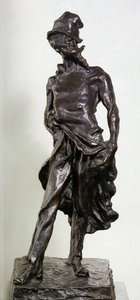
The sculpture itself is rendered in clay or plaster, likely modeled with meticulous attention to detail. Daumier's technique isn’t about idealized beauty; instead, he captures the essence of Hippolyte through simplified forms and a deliberate restraint. The muted palette – dominated by browns, tans, greys, and subtle whites – evokes an atmosphere of age and solidity, mirroring the subject’s position as a man of established influence. The lines are not sharply defined but rather subtly blended, creating a sense of organic form that draws attention to the textures of the material itself. You can almost feel the slight roughness of the clay, a testament to the artist's hand-crafted approach.
Daumier’s Realism and Social Commentary
Daumier was a pivotal figure in 19th-century French art, renowned for his ability to capture both the physical appearance and the psychological state of his subjects. He wasn’t simply a portraitist; he was a keen observer of social dynamics, using caricature and satire to expose hypocrisy and injustice within the political and economic structures of his era. This bust is no exception. The subject's stern expression – a slight furrow in his brow, a hint of melancholy around his eyes – immediately conveys a sense of seriousness and perhaps even weariness. It’s a face that has seen much, a man accustomed to making difficult decisions and bearing the weight of responsibility.
The sculpture’s composition is deliberately formal, centering on the figure within a relatively uncluttered space. This formality reinforces the subject's status as an MP and industrialist – figures who occupied positions of power and influence. However, Daumier avoids any sense of overt glorification. The lack of dramatic lighting or elaborate ornamentation suggests a measured approach to representation, prioritizing truthfulness over theatricality. It’s a quiet dignity, not a boastful display.
Symbolism and the Portrait as Social Critique
While seemingly straightforward in its depiction, the bust is rich with symbolic potential. The industrialist's attire – the collar, the coat – speaks to his profession and social standing. Yet, Daumier subtly undermines this conventional representation by emphasizing the subject’s face. It’s through this gaze that we encounter the complexities of Hippolyte’s character—a man who likely navigated a world of both privilege and hardship. The subtle downturn of the mouth hints at a certain disillusionment, suggesting that even those in positions of power are not immune to the challenges and disappointments of life.
Daumier's work frequently served as social commentary, and this bust is no different. It’s a reminder that art can be both aesthetically pleasing and politically engaged. The sculpture invites us to consider the role of individuals like Hippolyte in shaping French society – their contributions, their responsibilities, and perhaps even their vulnerabilities.
Bringing Daumier's Vision Home
ArtsDot’s hand-painted reproductions offer a remarkable opportunity to experience the artistry and intellectual depth of Honoré Daumier’s “Augustus Ganneron Hippolyte.” Unlike static prints, our reproductions capture the texture, light, and nuanced details of the original sculpture with breathtaking accuracy. Whether you're an art collector, an interior designer seeking a statement piece, or simply someone who appreciates the power of visual storytelling, a ArtsDot reproduction allows you to bring this compelling portrait into your home and engage with Daumier’s legacy in a truly meaningful way.
Explore our collection today and discover the perfect way to honor one of France's most influential artists. Learn more about this artwork here.
Related Artworks
Artist Biography
A Life Etched in Satire: The World of Honoré Daumier
Born in Marseille in 1808, Honoré-Victorin Daumier’s journey was one deeply intertwined with the tumultuous currents of 19th-century France. His early life, marked by his father's poetic aspirations and subsequent relocation to Paris in 1814, immersed him in a city brimming with artistic energy. Though initially destined for a legal career, young Daumier’s inclination leaned irrevocably towards art. He apprenticed under Alexandre Lenoir, absorbing classical influences alongside an appreciation for the dramatic chiaroscuro of Rubens, and further honed his skills at the Académie Suisse. This foundational training would prove crucial in shaping his distinctive style—a potent blend of realism and expressive draftsmanship. However, it wasn’t merely artistic technique that defined Daumier; it was a profound sensitivity to the social injustices and political absurdities surrounding him.The Sharpened Pen: Caricature and Social Commentary
Daumier's career truly ignited in the wake of the 1830 Revolution, an event that irrevocably altered the course of French history and simultaneously provided fertile ground for his burgeoning satirical talent. He quickly established himself as a master lithographer, initially contributing anonymously to various publications before gaining prominence through his work with *Le Charivari*, a fiercely independent comic journal founded by Charles Philipon. It was here that Daumier’s genius truly blossomed. His caricatures weren't simply humorous depictions; they were scathing indictments of the bourgeoisie, the legal system, and the political establishment. He fearlessly lampooned King Louis-Philippe, earning himself a six-month imprisonment in 1832 for a particularly biting caricature. This experience, far from silencing him, only solidified his commitment to exposing hypocrisy and challenging authority through art. His lithographs became visual manifestos, capturing the spirit of dissent and offering a critical commentary on the societal ills of his time. The sheer volume of his output during this period is astonishing—thousands of lithographs that served as both popular entertainment and potent political statements.Beyond Caricature: Painting and Sculptural Visions
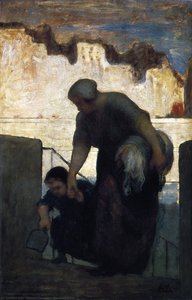
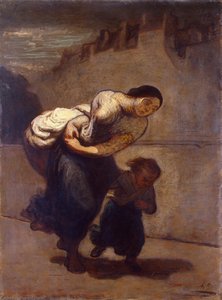
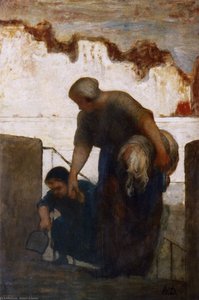
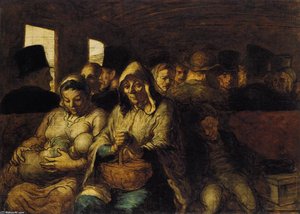
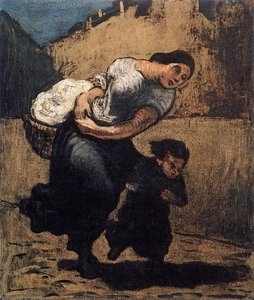
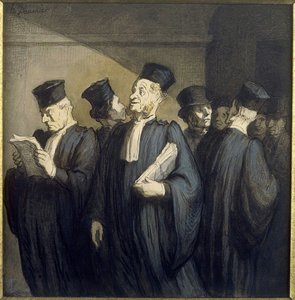
While Daumier is most celebrated for his lithography, to confine him solely to the realm of caricature would be a grave disservice. He was also a dedicated painter and sculptor, though recognition for these works came later in life. His paintings, often depicting scenes of everyday Parisian life—the third-class carriage, the laundresses, the lawyers—are imbued with a profound sense of realism and empathy. They are not idealized portrayals but rather unflinching depictions of hardship and struggle. He masterfully employed loose brushwork and dramatic lighting to convey emotion and atmosphere, foreshadowing some of the techniques later embraced by the Impressionists. His sculptural work, largely created in clay (many pieces remaining unbaked during his lifetime), reveals a similar commitment to capturing the human form with honesty and emotional depth. These sculptures, rediscovered after his death, demonstrate a remarkable talent for modeling and an ability to convey psychological complexity through physical gesture.A Lasting Legacy: Influence and Historical Significance
Honoré Daumier’s impact on art history is undeniable. He bridged the gap between Romanticism and Realism, paving the way for future generations of artists who sought to depict the world as it truly was—warts and all. His unflinching social commentary influenced artists like Gustave Courbet and Édouard Manet, while his innovative use of lithography revolutionized printmaking. His work continues to resonate today, reminding us of the power of art to challenge authority, expose injustice, and bear witness to the human condition. The Musée d'Orsay in Paris houses a significant collection of his paintings and sculptures, offering visitors a glimpse into the world he so vividly portrayed. His lithographs are widely accessible through collections like those found on ArtsDot, ensuring that his satirical genius continues to provoke thought and inspire dialogue. Daumier wasn’t merely an artist; he was a chronicler of his time—a visual poet who used his talent to give voice to the voiceless and hold power accountable. His legacy endures as a testament to the enduring relevance of art as a force for social change.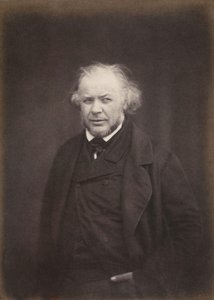
Honoré Daumier
1808 - 1879 , France
Quick Facts
- Artistic Movement Or Style: Realism, Satire
- Artists Or Movements Influenced By This Artist:
- Impressionism
- Modern art
- Artists Who Influenced This Artist:
- Alexandre Lenoir
- Jacques-Louis David
- Date Of Birth: February 26, 1808
- Date Of Death: February 10, 1879
- Full Name: Honoré-Victorin Daumier
- Nationality: French
- Notable Artworks:
- Rue Transnonain
- Les gens de justice
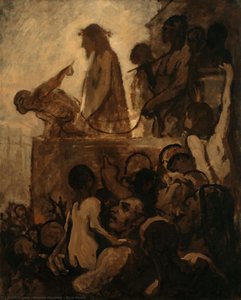
- Ecce Homo
- Place Of Birth: Marseille, France
Related Articles

Bronze Sculptures That Defined Art History | ArtsDot
Journey through art history with our Top 10 bronze sculptures! Explore masterpieces by Rodin, Michelangelo & more. Discover stories behind iconic statues and find museum-quality reproductions for your home decor at ArtsDot.com.

The Enduring Form: Exploring Themes & Techniques in Sculpture Across Historical Periods
Explore the rich history of sculpture from ancient masterpieces to contemporary innovations. Discover key techniques, influential artists & investment potential for discerning art collectors.
The Enduring Form: Sculpture Across History, Technique & Emotional Resonance
Explore the rich history of sculpture with ArtsDot. Discover key techniques, influential artists & investment potential for discerning collectors. Expert insights into valuing and collecting timeless masterpieces.
Romantic Realism's Finest: 10 Masterpieces for Your Home | ArtsDot
Explore 10 defining masterpieces of Romantic Realism! Discover Courbet, Millet & Daumier's powerful paintings—capturing emotion and social realities. Find museum-quality reproductions for your home at ArtsDot.com.

Bronze Age to Modern Masters: 10 Sculptures That Redefined Art | ArtsDot
Journey through art history with 10 legendary bronze sculptures – from Michelangelo's David to Rodin’s Thinker. Explore the stories, techniques & timeless beauty of these masterpieces. Find museum-quality reproductions & elevate your home decor on ArtsDot.com.