

 Preview
 Send
Send Share
Share
 Details

 Download
 Similars
 X-Ray
X-Ray Diaporama
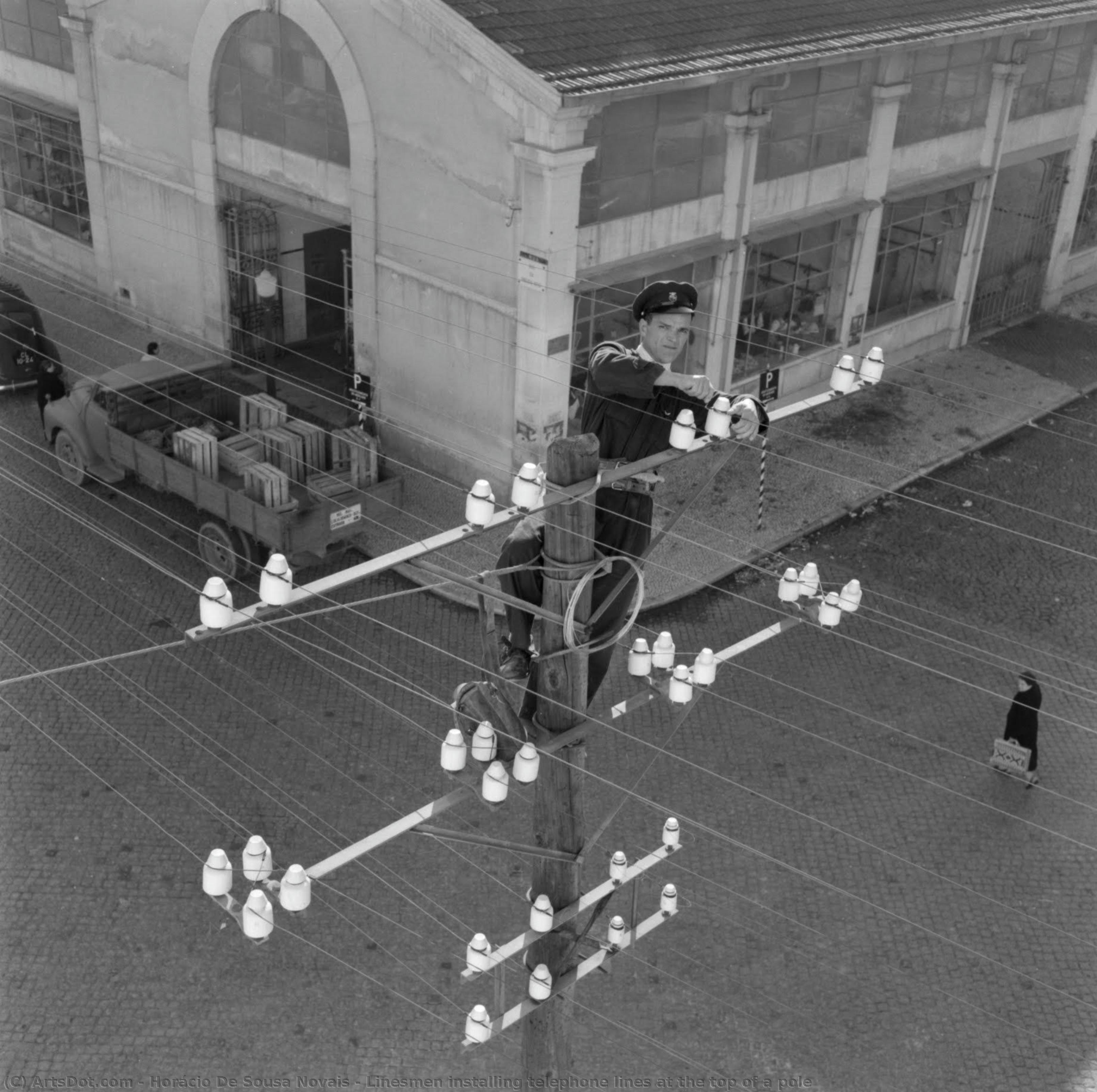
Linesmen installing telephone lines at the top of a pole


 Read More
Purchase a high-resolution, enhanced digital image, far superior to the online preview.
Each file is meticulously prepared by our in-house specialists using advanced tools and expert manual retouching. We ensure every image has exceptional clarity, precise color accuracy, and fine detail.
The final file is delivered via email within 72 hours, optimized for immediate use in professional, editorial, and print environments. This is the same quality trusted by top-tier design studios, publishers, and galleries.
Digital Image
Download a high-resolution file for personal display, printing, and creative projects. ( Buy Print Buy Hand Made Painting)
Included in Every Digital Image Order
Expert Digital Delivery, Guaranteed
When you choose ArtsDot.com, you're not just getting an image - you're receiving a professionally enhanced digital artwork, crafted with precision and backed by a satisfaction guarantee. Here's everything that comes with your order, automatically:

Fast Email Delivery
Your high-resolution digital image file will be emailed to you within 72 hours of ordering - ready for immediate use.

AI-Enhanced Digital File
Your artwork is professionally optimized using advanced AI tools and manual editing, ensuring maximum detail, clarity, and color accuracy.

Free Lifetime Re-Delivery
Accidentally deleted or lost your file? No worries - we'll resend it to you anytime, free of charge.

No Import Fees - Ever
Enjoy your artwork instantly with zero customs, duties, or delivery fees - digital downloads are always tax-free.

Color Accuracy Guarantee
We ensure your digital image reflects the original colors as closely as possible using professional tools and color management.

60-Day Satisfaction Guarantee
If you're not satisfied with your digital image, we'll revise it or refund 100% within 60 days - no questions asked.

100% Money-Back Guarantee
Not satisfied? Get a full refund within 60 days of receiving your digital file - no questions asked.

Bulk Order Discounts
Buy 3 images, save 10% - Buy 5, save 15% - Buy 10+, save 20%. Great for creative projects, galleries, and agencies.
Collectible Description
Related Artworks










Artist Biography
A Lens Through the Shadows: The Life and Legacy of Horácio de Sousa Novais
In the quiet, silver-toned echoes of mid-twentieth-century Portugal, few eyes captured the pulse of a nation quite like Horácio de Sousa Novais. Born in Lisbon in 1910, Novais did not merely observe history; he became its visual custodian. Growing up amidst the intellectual vibrancy of the Belle Époque, his artistic soul was nurtured by the very medium he would later master. His father, Júlio Novaes, a respected photographer, provided more than just a familial connection to the craft; he offered a lineage of visual storytelling that instilled in Horácio an early, profound fascination with light, shadow, and the frozen moment.
As Novais matured, his technical prowess began to merge with a burgeoning journalistic instinct. By 1932, he had established his own studio in the historic Alfama district of Lisbon—a neighborhood whose labyrinthine streets and ancient textures would become a recurring character in his photographic odyssey. It was here, amidst the salt air and cobblestones, that the foundation for his monumental career was laid, blending the intimacy of street photography with the rigorous demands of documentary truth.
Witness to an Era: The Photojournalist’s Duty
The true weight of Novais’s contribution lies in his role as a chronicler during the Estado Novo dictatorship. As a photographer for the newspaper O Século, he occupied a precarious yet vital position. His lens traversed the socio-political landscape of Portugal between 1926 and 1974, capturing the duality of an era defined by both rigid repression and quiet resilience. He moved through rallies, parades, and political speeches, documenting the grand spectacles of the state alongside the subtle, often overlooked, rhythms of everyday life under constant surveillance.
His work functioned as a vital visual narrative, providing an intimate glimpse into a reality that was often obscured by censorship. Through his camera, the tension of the streets and the gravity of political shifts were rendered tangible. He possessed a rare ability to find the human element within the monumental, ensuring that even in the most politically charged settings, the dignity of the individual remained at the forefront of the frame.
Beyond the News: Technical Mastery and Historical Significance
While much of his fame stems from his journalistic assignments, Novais’s work also reached into the realm of pure documentary reportage, where he explored the intersection of human labor and technological progress. A striking example of this can be seen in his documentation of the infrastructure connecting Lisbon to Sacavém. In his studies of the telephone lines being installed, he captured more than just utility; he documented the integration of modern technology into the Portuguese landscape, highlighting the meticulous work of linesmen as they wove new connections across the terrain.
The historical significance of Horácio de Sousa Novais cannot be overstated. His archive serves as an invaluable testimony to a vanished world, offering scholars and art historians a window into the socio-economic transformations of 20th-century Portugal. His legacy is defined by several key pillars:
- Documentary Integrity: An unwavering commitment to recording the authentic textures of Portuguese life during periods of intense political transition.
- Visual Narrative: The ability to transcend simple reportage, creating images that possess both journalistic value and profound artistic depth.
- Cultural Preservation: Providing a permanent visual record of the architectural, social, and technological evolution of Lisbon and its surrounding regions.
Today, as we look back through the silvered grain of his photographs, Novais remains a pioneer. He taught us that the camera is not merely a tool for recording facts, but a powerful instrument for preserving the soul of a nation, ensuring that the triumphs and tribulations of the past are never truly lost to time.
horácio de sousa novais
1910 - 1988 , Portugal
Quick Facts
- Artistic Movement Or Style: Photography
- Artists Who Influenced This Artist: ['Unknown Artist']
- Date Of Birth: 1910
- Date Of Death: 1988
- Full Name: Horácio de Sousa Novais
- Nationality: Portuguese
- Notable Artworks: ['Linesmen installing telephone lines at the top of a pole']
- Place Of Birth: Lisbon, Portugal

