 Preview
 Send
Send Share
Share
 Details

 Download
 Similars
 X-Ray
X-Ray Diaporama
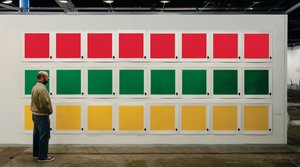
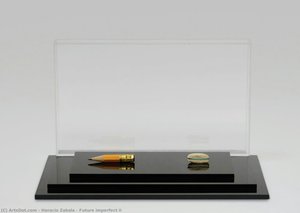
Pedestal for Three Monochromes (Malevich & Duchamp)
 Painting
- Contemporary Abstract
 2015
2015- Contemporary
 134.0 x 100.0 cm
 Colección de Arte Amalia Lacroze de Fortabat
 Read More
Giclée / Art Print
Museum-quality giclée or canvas print with fast production and flexible finish options. ( Buy Hand Made Painting Buy Image)




































Pick from our preset sizes that match the artwork's original proportions.

You may enter your own dimensions to fit a specific frame or space. If your selected size does not match the original image's proportions, we will either crop the artwork or extend the image with a mirrored or solid-fill edge. A digital mockup will be sent for your approval before production begins.
Please note that the on-screen preview does not reflect the actual cropping or extension. Only the mockup will accurately show the final composition.
While custom sizes are available, we recommend selecting a dimension from the predefined list to preserve the original proportions.
Worldwide Delivery () in 2 weeks instead of standard 4/5 weeks. (24 August)

Free Worldwide Express Shipping

High-Quality Linen Canvas

Full Shipping Insurance

Customs Tax Refund Guarantee

True Color Matching Guarantee

60-Day Return Policy (Defects Only)

100% Money-Back Guarantee

Bulk Discount Offer
 Glass option is only available in size under 110 CM

Pedestal for Three Monochromes (Malevich & Duchamp)
Giclée / Art Print
Reproduction Size
-


Total Price
$ 63
Collectible Description
A Dialogue of Pure Form and Color
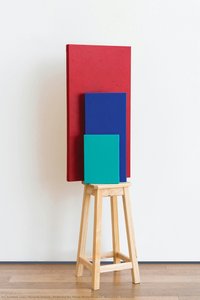
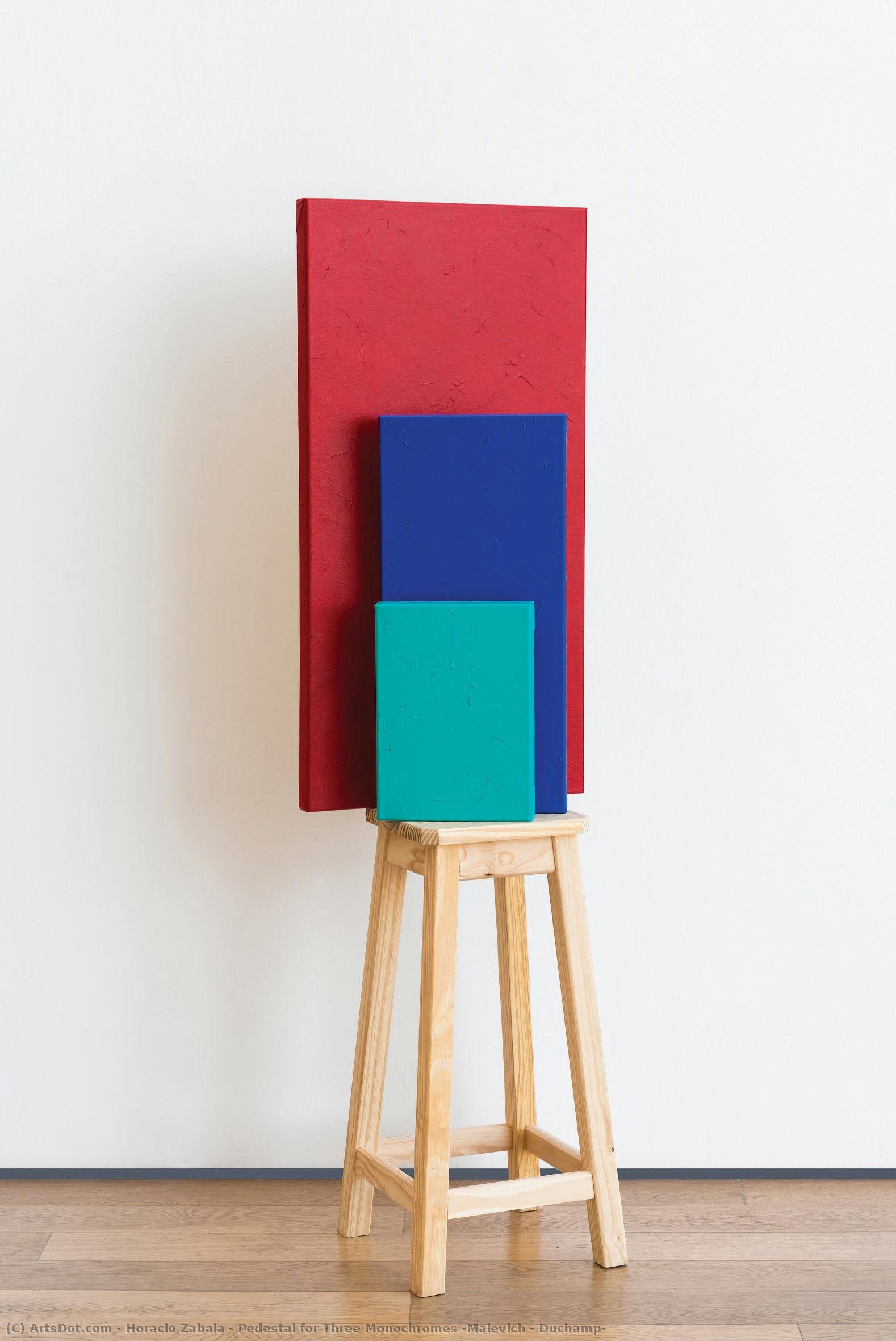
In the quiet intersection of architectural precision and abstract emotion, Pedestal for Three Monochromes (Malevich & Duchamp) stands as a profound meditation on the essence of visual language. Created in 2015 by the Argentine master Horacio Zabala, this installation-style work transcends the boundaries of traditional painting to engage directly with the space it inhabits. The piece presents three rectangular canvases, stacked with deliberate, rhythmic intent upon a simple wooden stool. Each canvas serves as a window into a singular, unadulterated chromatic experience: a vibrant red, a deep, stabilizing blue, and a lush, organic green. Through this arrangement, Zabala invites the viewer to strip away the noise of the modern world and confront the raw power of primary perception.
The technique employed here is one of disciplined minimalism, where the artist’s architectural background shines through every edge and boundary. There is no decorative flourish to distract the eye; instead, the focus remains entirely on the interplay of color, shape, and weight. The application of paint appears smooth and deliberate, creating solid blocks of pigment that seem to vibrate against one another. By utilizing a flat, geometric style, Zabala achieves a sense of timelessness. The way the light interacts with these surfaces—softly diffusing across the red, blue, and green—creates subtle shadows that lend a sculptural dimension to the two-dimensional planes, making the work feel less like an object on display and more like a living presence within the room.
Historical Echoes and Symbolic Resonance
The title of the work serves as a sophisticated homage to the titans of the avant-garde, specifically referencing the Suprematist rigor of Kazimir Malevich and the conceptual provocations of Marcel Duchamp. By invoking these names, Zabala places his contemporary creation within a grand historical lineage of radical abstraction. The "pedestal" concept suggests that these colors are not merely pigments on cloth, but sacred objects of contemplation, elevated for our scrutiny. This intellectual depth provides a rich layer of meaning for the collector; the work is not just an aesthetic choice, but a scholarly nod to the moment when art moved away from representation and toward the pure expression of thought.
Symbolically, the trio of colors offers a balanced emotional spectrum that can transform the atmosphere of any interior. The red canvas pulses with an inherent energy and passion, acting as a focal point of vitality. In contrast, the blue provides a sense of profound calm and structural stability, grounding the composition. The green introduces a subtle connection to the natural world, evoking growth and renewal. Together, they form a complete cycle of existence—fire, water, and earth—rendered through the lens of modern geometric abstraction. For the interior designer, this piece offers a versatile yet commanding presence, capable of anchoring a minimalist gallery space or adding a sophisticated, intellectual pulse to a contemporary residential setting.
An Essential Addition for the Discerning Collector
For those seeking to curate a collection defined by depth and clarity, Pedestal for Three Monochromes represents an unparalleled opportunity. It is a work that demands attention without overwhelming its surroundings, making it an ideal centerpiece for high-end decor. Whether placed in a sunlit studio or a moody, dimly lit study, the piece interacts dynamically with its environment, reflecting the changing light and the architectural lines of the room. Owning a reproduction of such a significant contemporary work allows one to inhabit a space defined by the same principles of purity and structural beauty that Zabala so masterfully captures in his original vision.
Related Artworks
![Abstract Composition [triptych] — Vaclav Vytlacil, Abstract Expressionism](/media/artworks/images-thumb/08/3c/083c0675045645fd42d4e6c6d63f1ced.jpg)
Artist Biography
introduction
horacio zabala is a renowned argentine artist, born in 1943 in buenos aires. he received his degree in architecture from the universidad de buenos aires and later emigrated to europe in 1976, where he lived in rome and vienna before returning to buenos aires in 1998.artistic career
horacio zabala's artistic career is characterized by a unique blend of architecture and art. his works are known for their thought-provoking themes, striking compositions, and innovative use of materials. some of his notable works include monochrome of adobe. purity is in the mix, created in 2014 using wire as the primary medium, and the essential is in the mix, a painting executed on paper.influences and style
horacio zabala's style is influenced by his architectural background, which is reflected in his use of geometric shapes and clean lines. his works often explore themes of texture, color, and composition, showcasing his unique perspective on the interplay between these elements.museums and collections
horacio zabala's works can be found in various museums and collections, including the colección de arte amalia lacroze de fortabat in buenos aires, argentina. his paintings are also featured on ArtsDot.com, where art enthusiasts can explore his works and learn more about his artistic endeavors.other notable artists
other notable artists from argentina include federico brook, known for his structural research into space, and oscar agustín alejandro schulz solari, a watercolor painter who created the notable work logs. these artists have contributed to the rich cultural heritage of argentina, making it a hub for innovative and thought-provoking art.- notable works: monochrome of adobe. purity is in the mix, the essential is in the mix
- influences: architecture, geometric shapes, and clean lines
- museums and collections: colección de arte amalia lacroze de fortabat, ArtsDot.com
- other notable artists: federico brook, oscar agustín alejandro schulz solari
conclusion
horacio zabala's artistic career is a testament to the power of innovation and creativity. his works continue to inspire and challenge art enthusiasts, making him a prominent figure in the argentine art scene. with his unique style and thought-provoking themes, horacio zabala has cemented his place as a master of argentine art.
horacio zabala
1943 - , Argentina
Related Articles

Geometric Abstraction's 10 Defining Masterpieces | Art for Your Home - ArtsDot
Explore 10 defining masterpieces of Geometric Abstraction! Discover Kandinsky, Mondrian & Malevich’s iconic works. Find museum-quality art reproductions and curated decor ideas to elevate your home at ArtsDot.com.
Beyond Form & Color: Geometric Abstraction's Enduring Legacy in Art History
Explore the captivating world of geometric abstraction! Discover its origins, key artists like Malevich & Mondrian, and why this movement remains highly valued by art collectors today. Expert insights at ArtsDot.
Fernand Léger's Masterpieces: 25 Iconic Paintings & The Machine Age Aesthetic | ArtsDot
Explore 25 iconic Fernand Léger paintings that defined the Machine Age & Cubism. Discover the stories behind his bold colors, geometric forms & avant-garde style. Find museum-quality art reproductions on ArtsDot.com.
Beyond Form & Color: Geometric Abstraction's Evolution in 20th/21st Century Art
Explore the evolution of geometric abstraction from Cubism to contemporary art. Discover key artists like Malevich & Mondrian, investment insights, and expert collecting advice at ArtsDot.
Kandinsky's Masterpieces: 25 Paintings That Define Abstract Art | ArtsDot
Journey through Wassily Kandinsky's 25 most iconic abstract paintings. Explore his revolutionary use of color, form & spiritual expressionism. Find museum-quality Kandinsky reproductions and elevate your home decor with ArtsDot.com. Discover all masterpieces on ArtsDot.com!