 Preview
 Send
Send Share
Share
 Details

 Download
 Similars
 X-Ray
X-Ray Diaporama
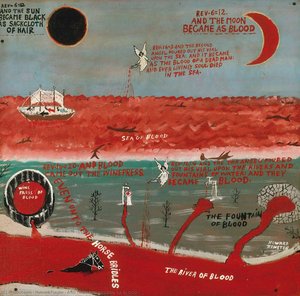
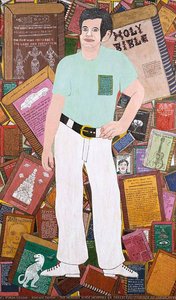
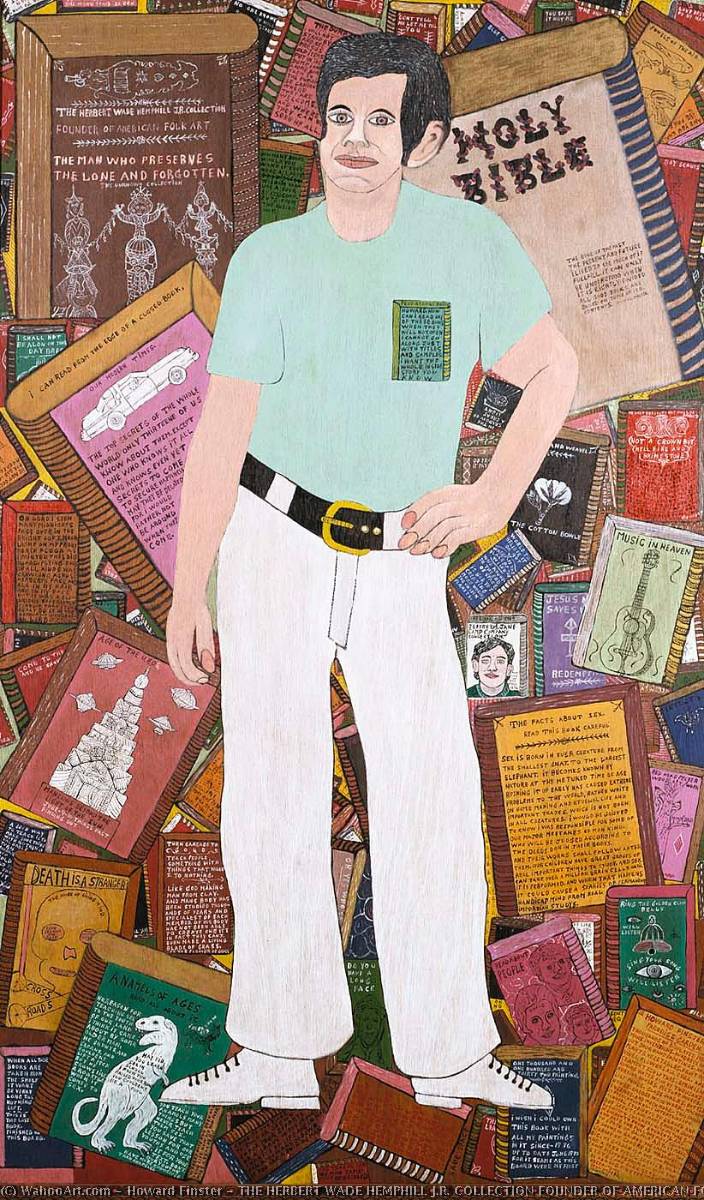
THE HERBERT WADE HEMPHILL J.R. COLLECTION FOUNDER OF AMERICAN FOLK ART THE MAN WHO PRESERVES THE LONE AND FORGOTTEN. THE UNKNOWN COLLECTION
 1978
1978 202.0 x 127.0 cm
 Read More
Hand Made Oil Reproduction
Hand-painted oil on canvas in your size and frame, made to order by our artists. ( Buy Print Buy Image)




































Pick from our preset sizes that match the artwork's original proportions.

You may enter your own dimensions to fit a specific frame or space. If your selected size does not match the original image's proportions, we will either crop the artwork or extend the painting with additional hand-painted elements. A digital mockup will be sent for your approval before production begins.
Please note that the on-screen preview does not reflect the actual cropping or extension. Only the mockup will accurately show the final composition.
While custom sizes are available, we recommend selecting a dimension from the predefined list to preserve the original proportions.
After order, ArtsDot.com team will email client for instructions and provide a mockup preview
Worldwide Delivery () in 3/4 weeks instead of standard 5 weeks. (21 August). No compromise on quality.

Free Worldwide Express Shipping

High-Quality Linen Canvas

Full Shipping Insurance

Customs Tax Refund Guarantee

True Color Matching Guarantee

60-Day Return Policy (Defects Only)

100% Money-Back Guarantee

Bulk Discount Offer
 Glass option is only available in size under 110 CM

THE HERBERT WADE HEMPHILL J.R. COLLECTION FOUNDER OF AMERICAN FOLK ART THE MAN WHO PRESERVES THE LONE AND FORGOTTEN. THE UNKNOWN COLLECTION
Reproduction Medium
Reproduction Size
-


Total Price
$ 263
Related Artworks







Artist Biography
Howard Finster: A Visionary’s Sanctuary
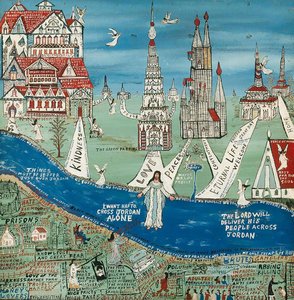
Howard Finster (1916-2001) wasn't merely an artist; he was a prophet, a preacher, and a builder of worlds—all rolled into one extraordinary figure. Born in the rural heart of Alabama, his life unfolded as a remarkable confluence of faith, ingenuity, and a deeply felt connection to the American spirit. His story is one of humble beginnings transformed by a series of profound visions, culminating in the creation of Paradise Garden, a sprawling sculpture environment that continues to captivate visitors today. Finster’s journey began with a simple upbringing—a childhood steeped in Southern Baptist traditions and punctuated by a diverse range of practical skills: he was a bricklayer, a carpenter, a plumber, and even a bicycle repairman – all honed through necessity and a relentless work ethic. Yet, it wasn't these trades that defined him; it was the insistent voice within, guiding him toward a unique form of artistic expression rooted in his spiritual beliefs.The Genesis of Paradise Garden
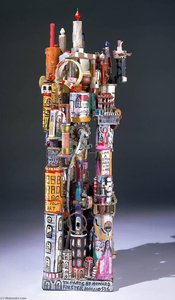
Finster’s artistic awakening occurred in 1976, during a seemingly ordinary afternoon while repairing a bicycle. He claimed to have received a divine instruction: “Paint sacred art.” This wasn't simply an invitation to create; it was a mandate—a call to translate his visions into tangible form. He began by transforming his property in Pennville, Georgia, into Paradise Garden, a sprawling testament to this newfound purpose. The garden quickly evolved beyond a simple collection of artworks; it became a fully realized environment, incorporating biblical narratives, pop culture icons, and a bewildering array of found objects—bicycle parts, hubcaps, television tubes, and countless other discarded treasures. Finster’s approach was remarkably democratic – he invited anyone to contribute to the garden's ever-expanding landscape, fostering a sense of communal creation. The sheer scale of Paradise Garden—over 46,000 pieces of art—is staggering, reflecting Finster’s boundless imagination and his unwavering commitment to his vision.Artistic Style and Influences
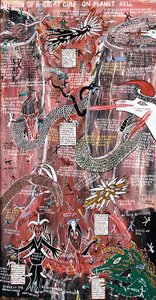
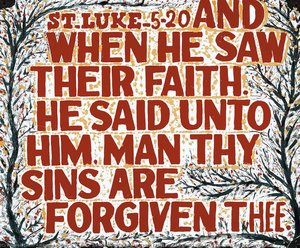
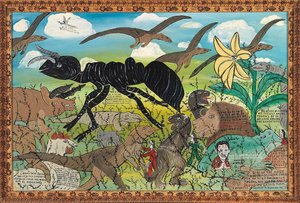
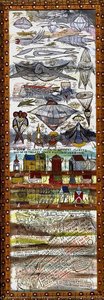
Finster’s artistic style is instantly recognizable – a vibrant blend of outsider art, folk art, and visionary expressionism. His paintings are characterized by bold colors, simplified forms, and often feature handwritten text alongside striking imagery. He eschewed traditional perspective, opting instead for a flattened picture plane that emphasizes the emotional impact of his work. His subjects range from biblical scenes and historical figures to pop culture icons like Elvis Presley and Ronald Reagan, reflecting both his deep faith and his engagement with contemporary American life. The influence of his background as a preacher is undeniable; his art functions almost as sermons in paint, conveying spiritual messages through symbolic imagery and direct quotations from the Bible. Interestingly, Finster’s work also draws inspiration from the roadside attractions that dotted America's highways – a deliberate nod to the spirit of American ingenuity and the desire to create memorable experiences.Recognition and Legacy
Despite his initial obscurity, Howard Finster experienced a remarkable resurgence in popularity during the 1980s, largely thanks to his collaborations with rock bands like R.E.M. and Talking Heads. The band’s album covers for “Radio Free Europe” and “Reckoning” brought Finster's work to a wider audience, catapulting him into the national spotlight. His unique vision and eccentric personality captivated audiences, leading to television appearances, museum exhibitions, and a devoted following of art enthusiasts and spiritual seekers. Today, Paradise Garden remains a beloved landmark in Georgia, attracting thousands of visitors each year who come to experience Finster’s extraordinary world. His work is also represented in several major museums, including the Smithsonian American Art Museum, solidifying his place as a pivotal figure in American folk art history. Howard Finster's legacy extends beyond his artistic creations; he represents a powerful example of self-taught artistry, spiritual conviction, and the transformative potential of imagination.A Continuing Vision
Even after his death in 2001, Howard Finster’s vision continues to resonate. Paradise Garden remains open to the public, offering visitors a glimpse into the mind of this extraordinary artist. The garden is not merely a collection of artworks; it's a living testament to Finster’s belief that art can be a powerful force for spiritual renewal and communal connection. His work serves as a reminder that creativity knows no bounds—that inspiration can come from the most unexpected sources, and that even the simplest objects can hold profound meaning when viewed through the lens of faith and imagination.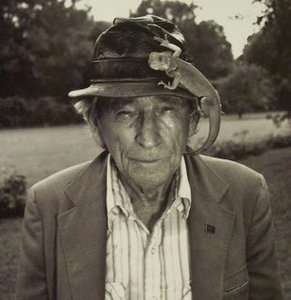
howard finster
1916 - 2001
Quick Facts
- Artistic Movement Or Style: Folk art, visionary art
- Artists Or Movements Influenced By This Artist:
- outsider art
- visionary art
- Artists Who Influenced This Artist: ['None specified']
- Date Of Birth: December 2, 1916
- Date Of Death: October 22, 2001
- Full Name: Howard Finster
- Nationality: American
- Notable Artworks:
- Bible Flying
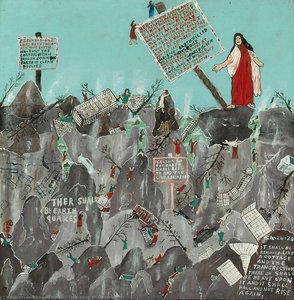
- THER SHALL BE EARTH qUAKES
- Paradise Garden
- Place Of Birth: Valley Head, Alabama