 Preview
 Send
Send Share
Share
 Details

 Download
 Similars
 X-Ray
X-Ray Diaporama
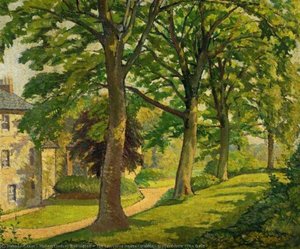
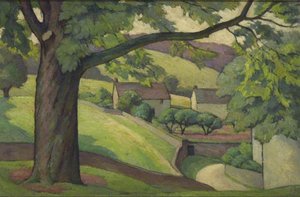
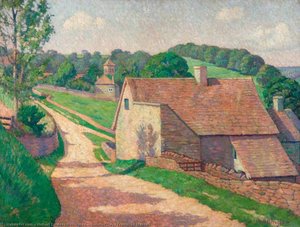
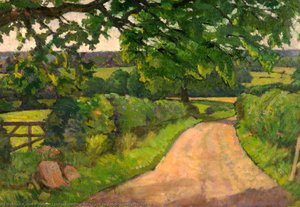
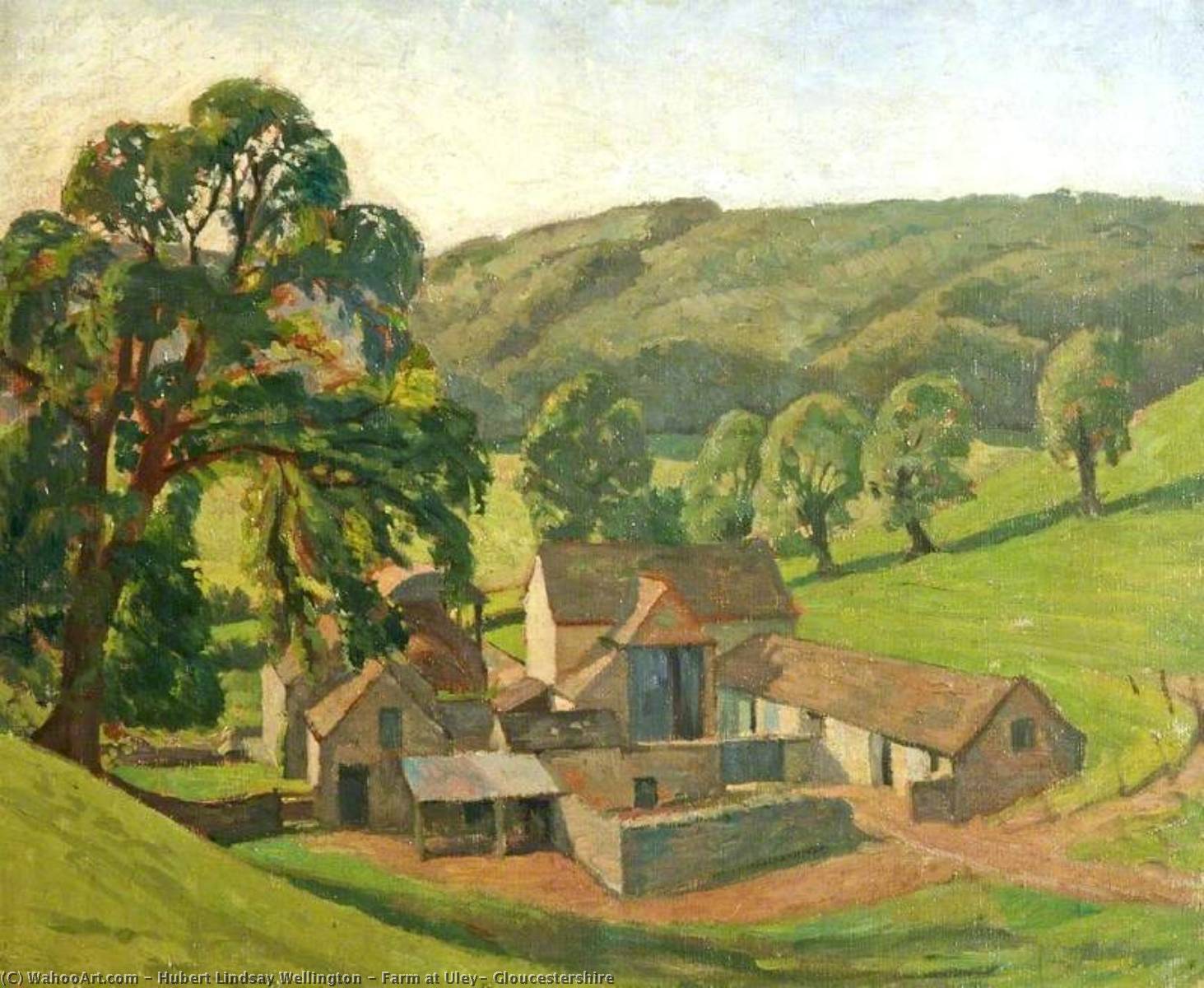
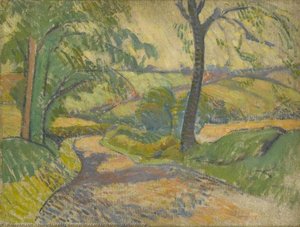
Farm at Uley, Gloucestershire
 1932
1932 50.0 x 60.0 cm
 Museum of Gloucester
 Read More
Giclée / Art Print
Museum-quality giclée or canvas print with fast production and flexible finish options. ( Buy Hand Made Painting Buy Image)




































Pick from our preset sizes that match the artwork's original proportions.

You may enter your own dimensions to fit a specific frame or space. If your selected size does not match the original image's proportions, we will either crop the artwork or extend the image with a mirrored or solid-fill edge. A digital mockup will be sent for your approval before production begins.
Please note that the on-screen preview does not reflect the actual cropping or extension. Only the mockup will accurately show the final composition.
While custom sizes are available, we recommend selecting a dimension from the predefined list to preserve the original proportions.
Worldwide Delivery () in 2 weeks instead of standard 4/5 weeks. (25 August)

Free Worldwide Express Shipping

High-Quality Linen Canvas

Full Shipping Insurance

Customs Tax Refund Guarantee

True Color Matching Guarantee

60-Day Return Policy (Defects Only)

100% Money-Back Guarantee

Bulk Discount Offer
 Glass option is only available in size under 110 CM

Farm at Uley, Gloucestershire
Giclée / Art Print
Reproduction Size
-


Total Price
$ 63
Related Artworks



Artist Biography
The Luminous Legacy of Hubert Lindsay Wellington
To wander through the canvases of Hubert Lindsay Wellington is to step into a world where time slows, and the fleeting beauty of the English countryside is captured in an eternal, golden amber. A master of British Impressionism, Wellington possessed a rare ability to translate the ephemeral qualities of light and atmosphere into palpable, textured experiences. Born in 1879, his artistic soul was deeply rooted in the pastoral rhythms of the natural world. His early years, shaped by the verdant landscapes of Worcestershire and Gloucester, instilled in him a lifelong reverence for the subtle shifts in the environment—the way a morning mist clings to a meadow or how the sun pierces through an ancient canopy of leaves.
Wellington’s formal education provided the technical scaffolding for his expressive vision. His studies at the School of Art in Gloucester, followed by periods at the Birmingham School of Art and the prestigious Slade School of Fine Art, equipped him with a rigorous understanding of form and composition. Yet, it was his encounter with the principles of Impressionism that truly liberated his brush. Drawing inspiration from luminaries such as Claude Monet and Pierre Renoir, he moved away from rigid realism toward a more emotive, sensory approach. He sought not merely to document the landscape, quite literally, but to evoke its spirit through a masterful manipulation of color and light.
Technique and the Impressionist Spirit
The hallmark of Wellington’s oeuvre lies in his tactile application of paint. He was a practitioner of thick impasto, a technique where pigment is layered heavily upon the canvas to create a three-dimensional quality. This method allowed him to capture the rugged textures of bark, the softness of wildflowers, and the heavy, moisture-laden air of the Staffordshire countryside. Through these raised strokes, light does not just sit upon the painting; it interacts with the physical surface, creating dancing shadows and brilliant highlights that change as the viewer moves.
His palette was a vibrant celebration of the seasons. In his depictions of Staffordshire, one finds an endless variety of hues: the deep, mossy greens of ancient woodlands, the pale, ethereal blues of a summer sky, and the warm, ochre tones of autumn afternoons. His work often focuses on specific, intimate scenes—a lane leading to Walton, an overhanging tree in Frampton Mansell, or the quiet dignity of a large barn. These were not mere topographical studies but poetic meditations on the tranquility of rural life, rendered with a loose, energetic brushwork that suggests movement and life within the stillness.
Academic Eminence and Lasting Significance
Beyond his private explorations of nature, Wellington was a formidable figure in the British academic and institutional art worlds. His career was marked by significant leadership roles and contributions to art education. He served as a lecturer at the National Gallery between 1919 and 1922 and dedicated a decade to teaching at the Royal College of Art in London. Perhaps most notably, his tenure as the Principal of the Edinburgh College of Art from 1932 to 1942 cemented his influence on a generation of emerging artists.
His prestige was reflected in his frequent exhibitions at some of the most respected institutions of his era, including the Royal Academy, the New English Arts Club, and the London Group. The enduring value of his work is evidenced by its presence in permanent collections that safeguard the heritage of British art, such as:
- The Tate Gallery, which holds his evocative Cotswold scenes.
- The Ashmolean Museum in Oxford.
- The Government Art Collection.
- Southampton City Art Gallery and the Museum of Gloucester.
As the art world moved toward the abstractions of modernism, Wellington remained a steadfast guardian of the Impressionist tradition, proving that there is profound, inexhaustible beauty to be found in the quiet corners of the landscape. Today, his paintings remain cherished for their ability to transport the viewer to a more serene era, offering a window into the timeless, sun-drenched heart of England.
hubert lindsay wellington
1879 - 1967
Quick Facts
- Artistic Movement Or Style: Impressionism
- Artists Or Movements Influenced By This Artist: ['Post-Impressionism']
- Artists Who Influenced This Artist: ['Claude Monet']
- Date Of Birth: 1879
- Date Of Death: 1967
- Full Name: Hubert Lindsay Wellington
- Nationality: British
- Notable Artworks:
- The Big Barn
- Lane to Walton
- Overhanging Tree
- Place Of Birth: Frampton Mansell, Staffordshire