

 Preview
 Send
Send Share
Share
 Details

 Download
 Similars
 X-Ray
X-Ray Diaporama
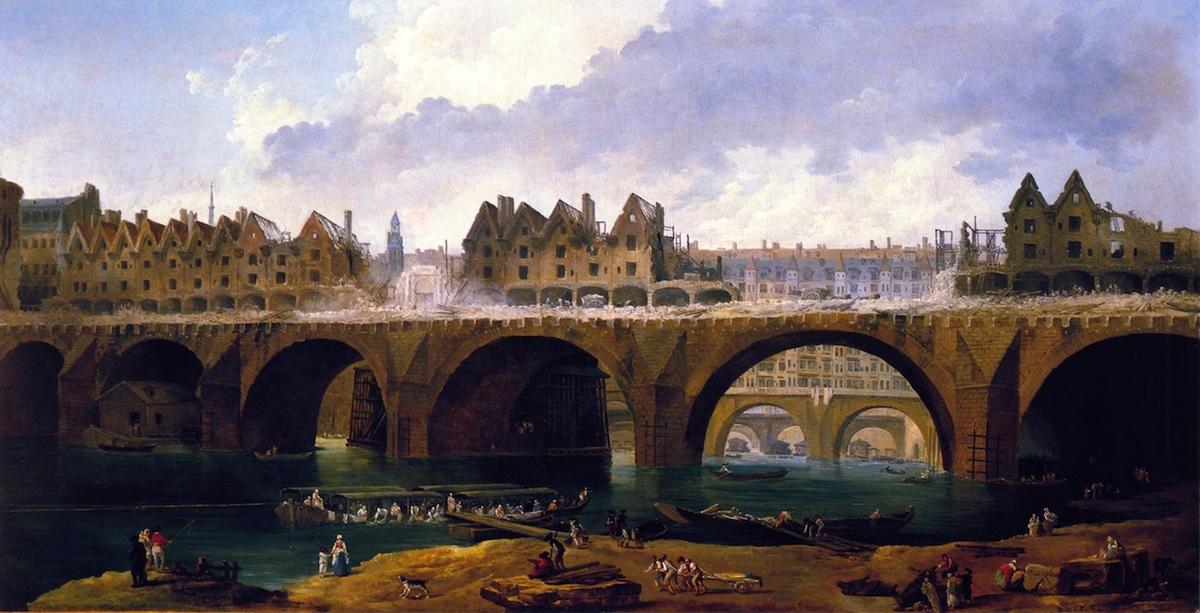
Demilishing the Buildings on the Pont Notre-Dame in Paris, 1786
 Oil On Canvas
- WallArt
- Romantic Antiquarianism
 1787
1787 81.0 x 54.0 cm
 Staatliche Kunsthalle
 Read More
Purchase a high-resolution, enhanced digital image, far superior to the online preview.
Each file is meticulously prepared by our in-house specialists using advanced tools and expert manual retouching. We ensure every image has exceptional clarity, precise color accuracy, and fine detail.
The final file is delivered via email within 72 hours, optimized for immediate use in professional, editorial, and print environments. This is the same quality trusted by top-tier design studios, publishers, and galleries.
Digital Image
Download a high-resolution file for personal display, printing, and creative projects. ( Buy Print Buy Hand Made Painting)
Included in Every Digital Image Order
Expert Digital Delivery, Guaranteed
When you choose ArtsDot.com, you're not just getting an image - you're receiving a professionally enhanced digital artwork, crafted with precision and backed by a satisfaction guarantee. Here's everything that comes with your order, automatically:

Fast Email Delivery
Your high-resolution digital image file will be emailed to you within 72 hours of ordering - ready for immediate use.

AI-Enhanced Digital File
Your artwork is professionally optimized using advanced AI tools and manual editing, ensuring maximum detail, clarity, and color accuracy.

Free Lifetime Re-Delivery
Accidentally deleted or lost your file? No worries - we'll resend it to you anytime, free of charge.

No Import Fees - Ever
Enjoy your artwork instantly with zero customs, duties, or delivery fees - digital downloads are always tax-free.

Color Accuracy Guarantee
We ensure your digital image reflects the original colors as closely as possible using professional tools and color management.

60-Day Satisfaction Guarantee
If you're not satisfied with your digital image, we'll revise it or refund 100% within 60 days - no questions asked.

100% Money-Back Guarantee
Not satisfied? Get a full refund within 60 days of receiving your digital file - no questions asked.

Bulk Order Discounts
Buy 3 images, save 10% - Buy 5, save 15% - Buy 10+, save 20%. Great for creative projects, galleries, and agencies.
Collectible Description
A Fleeting Moment of Transformation: Hubert Robert’s Parisian Vision
Hubert Robert's "Demilishing the Buildings on the Pont Notre-Dame in Paris, 1786" isn’t merely a painting; it’s a captured breath of a city undergoing radical change. Completed in 1786, this oil on canvas transports us to a pivotal moment in Parisian history – a time when the old order was yielding to the ambitions of a burgeoning modern metropolis. Robert, a master of capturing atmospheric landscapes and the melancholic beauty of ruins, doesn’t offer a static depiction but rather an intensely dynamic scene brimming with activity, decay, and the promise of what was to come. The painting isn't about destruction itself, but about the *process* of it – the visible disruption, the dust motes dancing in the light, and the palpable sense that something fundamental is being reshaped.
The Context of Change: Paris at the Dawn of a New Era
To truly appreciate Robert’s work, one must understand the tumultuous context of 1786. Paris was experiencing an unprecedented wave of urban development, driven by royal decrees and fueled by a desire to modernize the city. The Pont Notre-Dame, a venerable bridge dating back to the 13th century, housed numerous shops and residences, many of which were becoming obsolete and slated for demolition. This wasn’t simply about replacing old structures; it represented a deliberate effort to erase the vestiges of the past and pave the way for grander, more imposing buildings – a reflection of the Enlightenment ideals of progress and rational design. Robert meticulously documented this transformation, capturing not just the physical act of demolition but also the social and emotional impact on the city’s inhabitants.
A Symphony of Light and Detail: Robert's Artistic Techniques
Robert’s genius lies in his ability to render a scene with remarkable precision and atmospheric depth. The painting is dominated by a hazy, diffused light that seems to emanate from an unseen source, casting long shadows across the chaotic scene. He employs a technique known as *sfumato*, softening edges and blending colors to create a sense of atmospheric perspective – the buildings in the distance appear fainter and less distinct, conveying their greater distance. The artist’s attention to detail is equally impressive; from the individual bricks being torn away to the expressions on the faces of the workers, every element contributes to the overall sense of realism and immediacy. The inclusion of boats navigating the river below adds a layer of dynamism and reinforces the feeling that this is a vibrant, living city.
Symbolism and Emotional Resonance: A Reflection on Time
Beyond its historical documentation, "Demilishing the Buildings on the Pont Notre-Dame" carries profound symbolic weight. Robert’s work speaks to the relentless march of time and the inevitable decay that accompanies all things. The crumbling buildings represent not just physical deterioration but also the fading of traditions and the loss of a bygone era. Yet, within this scene of destruction, there is also a sense of hope – the promise of renewal and the potential for something new to emerge from the ruins. Robert’s masterful use of light and shadow creates an emotional resonance that lingers long after viewing the painting, prompting reflection on our own relationship with history and change. The image evokes a bittersweet nostalgia, reminding us of the beauty inherent in both the past and the future.
Specifications
- Title: Demilishing the Buildings on the Pont Notre-Dame in Paris, 1786
- Artist: Hubert Robert
- Date: 1786
- Medium: Oil on Canvas
- Dimensions: 81 x 54 cm
- Location: Staatliche Kunsthalle, Karlsruhe, Germany
Related Artworks

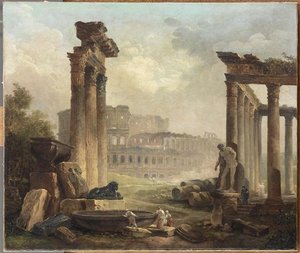

Artist Biography
A Painter of Ruins and Visions: The World of Hubert Robert
Hubert Robert, a name synonymous with evocative landscapes and the romantic allure of ruins, occupies a unique position in 18th-century French art. Born in Paris in 1733, his life unfolded against a backdrop of shifting artistic styles and monumental historical upheaval—from the Rococo’s playful elegance to the dawn of Neoclassicism, and ultimately, through the tumultuous years of the French Revolution. He wasn't merely documenting decay; he was crafting visions, blending observation with imagination to create scenes that resonated with both a nostalgic longing for the past and an anticipation of the future. His journey began within the structured world of artistic training, initially under the sculptor Michel-Ange Slodtz, who recognized Robert’s talent but wisely steered him towards painting, sensing his true calling lay in capturing light, atmosphere, and the subtle poetry of form.Roman Reveries: Shaping an Artistic Identity
The pivotal moment in Robert's artistic development arrived with his extended sojourn to Rome in 1754. Accompanying Étienne-François de Choiseul, he immersed himself in a world steeped in history and architectural grandeur. For eleven years, the ancient city became his open-air studio, its crumbling temples, majestic arches, and overgrown gardens fueling his imagination. This wasn’t simply about replicating what he saw; it was about interpreting it, reimagining it, and imbuing it with a sense of melancholic beauty. He worked alongside Giovanni Paolo Panini, whose influence is visible in Robert's early *capriccio* compositions—those fanciful views that juxtaposed classical ruins with contemporary life. However, Robert quickly moved beyond imitation, developing his own distinctive style characterized by meticulous detail, atmospheric perspective, and a profound sensitivity to the play of light and shadow. He wasn’t just painting ruins; he was painting time itself, capturing the poignant beauty of transience and the enduring power of memory. His sketchbooks from this period are invaluable records of his observations, filled with detailed studies of Roman landmarks like the Villa d'Este and Caprarola, demonstrating a keen eye for architectural nuance and landscape composition.Parisian Acclaim and Royal Patronage
Robert’s return to Paris in 1765 marked a turning point in his career. He swiftly gained recognition within the artistic establishment, securing admission to the Académie Royale de Peinture et de Sculpture with “The Port of Rome, Ornamented with Different Monuments of Architecture, Ancient and Modern.” His subsequent exhibitions at the Salon garnered widespread acclaim, captivating audiences with their evocative depictions of ruins and picturesque landscapes. Denis Diderot, a prominent figure of the Enlightenment, famously praised the grandeur evoked by Robert’s paintings, recognizing his ability to transport viewers to another time and place. This success led to royal patronage, with commissions for decorative projects and appointments as “Designer of the King's Gardens” and later, “Keeper of the King's Pictures.” He became a sought-after artist, not only for his easel paintings but also for his innovative designs for gardens and palatial interiors. His work resonated with the prevailing taste for *capriccio* painting—a genre that appealed to collectors fascinated by history, archaeology, and the picturesque—but Robert infused it with a unique sensibility, elevating it beyond mere decorative art.Revolution, Resilience, and Lasting Legacy
The French Revolution presented an unprecedented challenge for Robert. While many artists struggled to navigate the turbulent political climate, he found himself caught in the crosscurrents of change. He even faced imprisonment during the Reign of Terror, a harrowing experience that nonetheless inspired a series of drawings documenting his time in prison. Remarkably, he continued to paint prolifically throughout this period, demonstrating an unwavering commitment to his art. Following the Revolution, Robert was appointed curator of the newly established Muséum Central des Arts—the future Musée du Louvre—a testament to his expertise and dedication to preserving cultural heritage. He played a crucial role in organizing and cataloging the museum’s collection, ensuring that France's artistic treasures were safeguarded for future generations. Hubert Robert died in Paris in 1808, leaving behind an extraordinary body of work that continues to inspire awe and admiration. His legacy lies not only in his technical mastery but also in his unique ability to blend historical accuracy with imaginative vision. He pioneered a genre of painting that celebrated both the beauty of decay and the enduring power of human creativity, solidifying his place as a pivotal figure bridging the Rococo and Neoclassical periods, and anticipating aspects of Romanticism with his fascination for history and imagination.- Key Influences: Giovanni Paolo Panini, Piranesi, the architectural landscape of Rome.
- Major Themes: Ruins, landscapes, *capriccio* paintings, historical memory, the passage of time.
- Artistic Style: Meticulous detail, atmospheric perspective, evocative lighting, blending observation with imagination.
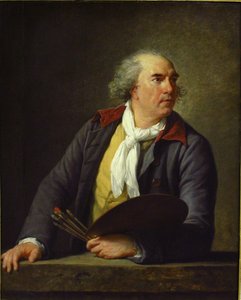
Hubert Robert
1733 - 1808 , France
Quick Facts
- Artistic Movement Or Style: Romanticism, Neoclassicism
- Artists Or Movements Influenced By This Artist: ['Romanticism']
- Artists Who Influenced This Artist:
- Giovanni Panini
- Piranesi
- Date Of Birth: May 22, 1733
- Date Of Death: April 15, 1808
- Full Name: Hubert Robert
- Nationality: French
- Notable Artworks:
- The Port of Rome
- Flight of Galatea
- La Galerie du Louvre
- Place Of Birth: Paris, France

