 Preview
 Send
Send Share
Share
 Details

 Download
 Similars
 X-Ray
X-Ray Diaporama
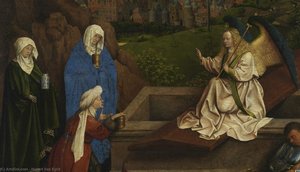
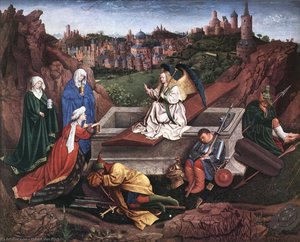
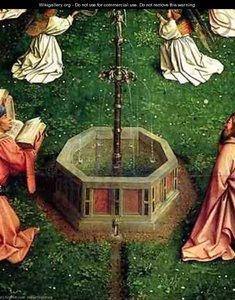
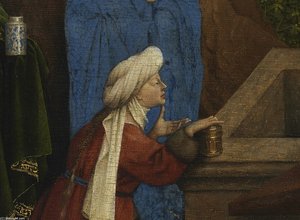
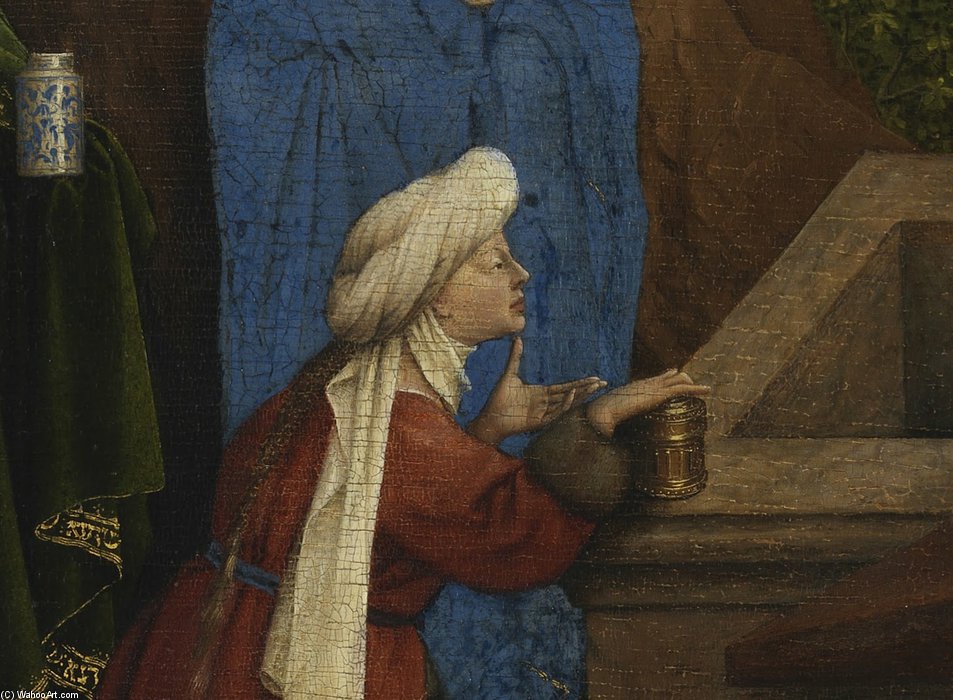
Museum Boijmans Van Beuningen The Three Marys At The Tomb Details)

 Read More
Hand Made Oil Reproduction
Hand-painted oil on canvas in your size and frame, made to order by our artists. ( Buy Print Buy Image)




































Pick from our preset sizes that match the artwork's original proportions.

You may enter your own dimensions to fit a specific frame or space. If your selected size does not match the original image's proportions, we will either crop the artwork or extend the painting with additional hand-painted elements. A digital mockup will be sent for your approval before production begins.
Please note that the on-screen preview does not reflect the actual cropping or extension. Only the mockup will accurately show the final composition.
While custom sizes are available, we recommend selecting a dimension from the predefined list to preserve the original proportions.
After order, ArtsDot.com team will email client for instructions and provide a mockup preview
Worldwide Delivery () in 3/4 weeks instead of standard 5 weeks. (16 August). No compromise on quality.

Free Worldwide Express Shipping

High-Quality Linen Canvas

Full Shipping Insurance

Customs Tax Refund Guarantee

True Color Matching Guarantee

60-Day Return Policy (Defects Only)

100% Money-Back Guarantee

Bulk Discount Offer
 Glass option is only available in size under 110 CM

Museum Boijmans Van Beuningen The Three Marys At The Tomb Details)
Reproduction Medium
Reproduction Size
-


Total Price
$ 263
Related Artworks
Artist Biography
The Architect of Flemish Realism
In the quiet, mist-shrouded landscapes of the early fifteenth century, a revolution was quietly unfolding within the workshops of Flanders. At the heart of this transformation stood Hubert van Eyck, a figure whose very name is etched into the foundation of Northern Renaissance art. Though much of his individual biography remains veiled by the passage of centuries, Hubert emerges from history not merely as a painter, but as a pioneer who helped bridge the gap between the stylized traditions of the Middle Ages and the breathtaking, luminous realism that would define the Early Netherlandish school. Born in Maasik around 1385 or 1390, he was part of a formidable artistic dynasty; his family connections, including his renowned brother Jan and siblings Lambert and Margaret, created a crucible of creativity that would forever alter the trajectory of European painting.
To understand Hubert is to understand the dawn of a new way of seeing. While the era of tempera was still transitioning toward more versatile mediums, Hubert’s early career—marked by commissions for religious panels in Tongeren—revealed an burgeoning mastery over light and texture. He was a man of his time and his guild, officially entering Ghent’s Artisten Gilded in 1413, a testament to his professional standing and his integration into the vibrant, wealthy urban culture of Flanders. His work began to move away from the flat, symbolic representations of the past, leaning instead toward an almost tactile observation of the world, where every fold of heavy fabric and every glint of divine light held profound theological significance.
The Legacy of the Ghent Altarpiece
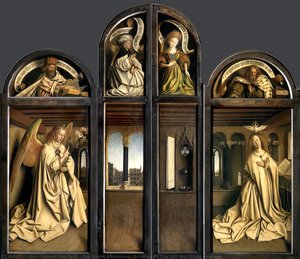
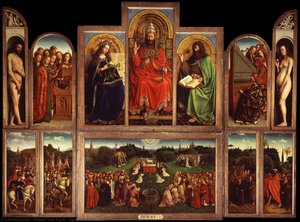
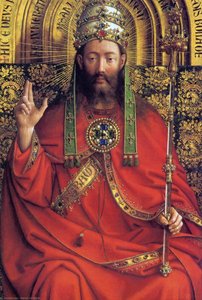
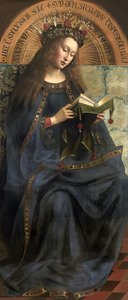
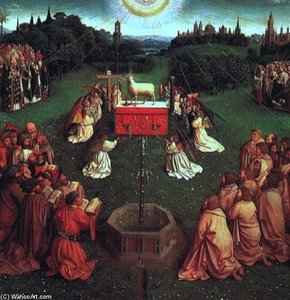
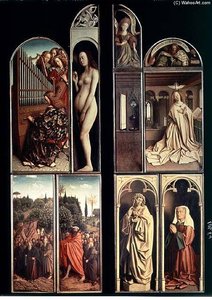
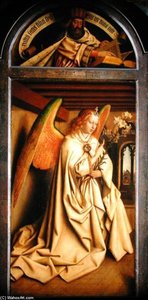
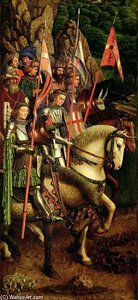
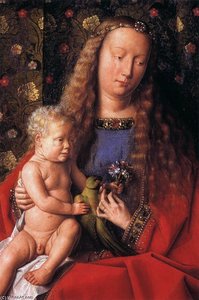
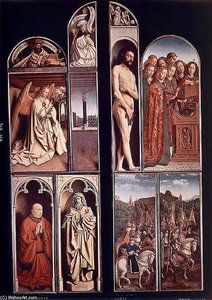
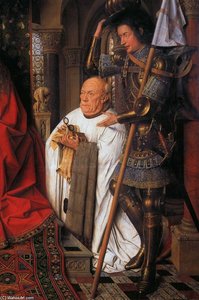
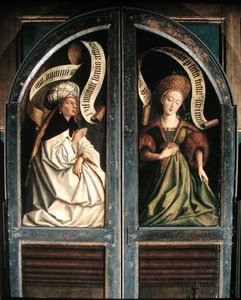
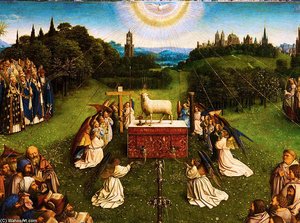
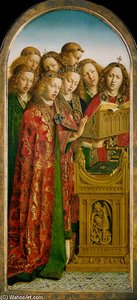
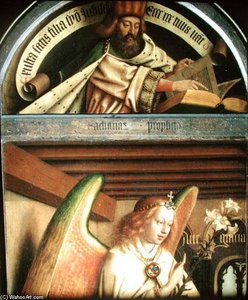
The most enduring shadow cast by Hubert van Eyck is undoubtedly that of the Ghent Altarpiece. This monumental polyptych, a masterpiece of unparalleled complexity, serves as the primary vessel for his artistic spirit. While scholars have long debated the exact division of labor between Hubert and his brother Jan, it is widely accepted that Hubert laid the essential groundwork for this sacred narrative. He is credited with initiating the grand design, infusing the work with a structural majesty and a spiritual depth that provided the canvas upon which Jan would later apply his legendary, microscopic detail. The altarpiece is not merely a collection of panels; it is a cosmic vision, a window into the divine that utilizes the burgeoning potential of oil painting to create an immersive, devotional experience.
Beyond the grand scale of the Ghent Altarpiece, other works attributed to his hand, such as The Three Marys at the Tomb, offer glimpses into his ability to command dramatic lighting and emotional gravity. In these compositions, one can sense the precursor to the Northern Renaissance's obsession with naturalism. His influence is felt in the way he utilized the medium to capture the weight of human sorrow and the ethereal glow of the miraculous. Through his hands, the religious subject matter ceased to be a distant icon and became a tangible, breathing reality for the faithful.
A Lasting Impression on Art History
The historical significance of Hubert van Eyck lies in his role as a foundational architect of style. He was part of a movement that redefined the boundaries of what paint could achieve. His contributions can be summarized through several key artistic shifts:
- The Evolution of Oil Technique: By participating in the early refinement of oil glazes, he helped move art toward a medium capable of unprecedented depth and luminosity.
- The Rise of Naturalism: He championed an observational approach that prioritized the physical reality of objects and figures, setting the stage for the hyper-realistic traditions of his successors.
- Symbolic Complexity: His work integrated intricate religious symbolism within realistic settings, creating a sophisticated visual language that required both devotion and intellect to decode.
Though he passed away in 1426, leaving behind a legacy that is often inextricably linked with the more documented achievements of his brother, Hubert van Eyck remains an indispensable figure. He was the silent force behind the Flemish revolution, a master who helped transform the wooden panels of the fifteenth century into windows of infinite light and profound human truth. His life serves as a testament to the power of collaborative genius and the enduring impact of those who dare to innovate at the very threshold of a new era.
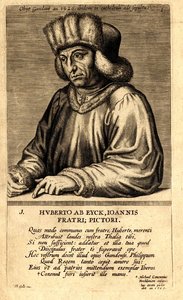
Hubert van Eyck
1370 - 1426 , Belgium
Quick Facts
- Artistic Movement Or Style: Early Netherlandish
- Artists Or Movements Influenced By This Artist: ['Northern Renaissance']
- Artists Who Influenced This Artist: ['Jan van Eyck']
- Date Of Birth: c. 1385/90
- Date Of Death: 1426
- Full Name: Hubert van Eyck
- Nationality: Dutch
- Notable Artworks:
- Ghent Altarpiece
- Angel Annunciate
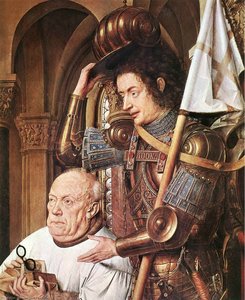
- The Just Judges & Knights of Christ
- Place Of Birth: Maaseik, Belgium