

 Preview
 Send
Send Share
Share
 Details

 Download
 Similars
 X-Ray
X-Ray Diaporama
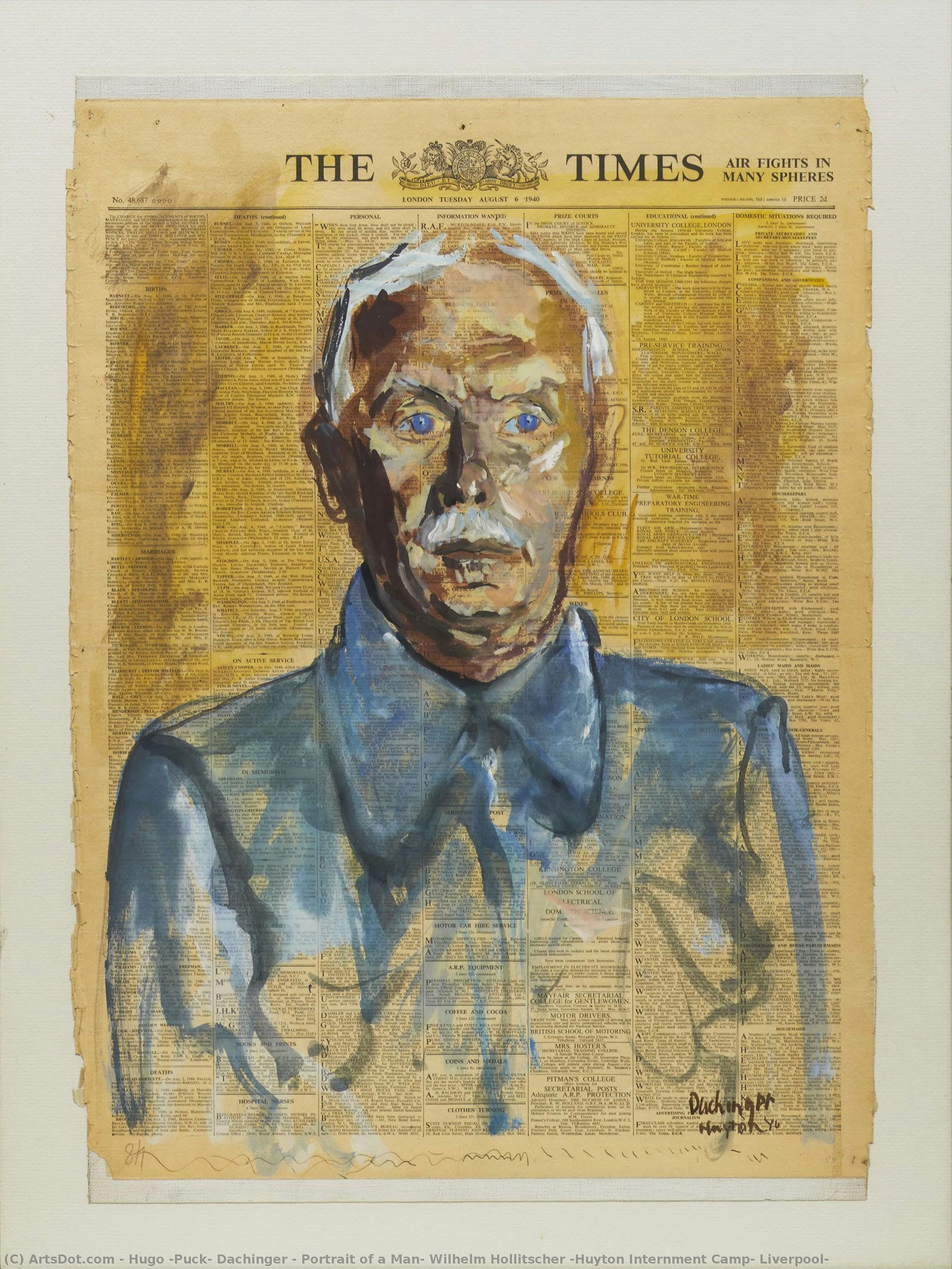
Portrait of a Man: Wilhelm Hollitscher (Huyton Internment Camp, Liverpool)
 Watercolor
- WallArt
- Expressionism
 1940
1940- Modern
 61.0 x 46.0 cm
 Ben Uri Gallery and Museum
 Read More
Purchase a high-resolution, enhanced digital image, far superior to the online preview.
Each file is meticulously prepared by our in-house specialists using advanced tools and expert manual retouching. We ensure every image has exceptional clarity, precise color accuracy, and fine detail.
The final file is delivered via email within 72 hours, optimized for immediate use in professional, editorial, and print environments. This is the same quality trusted by top-tier design studios, publishers, and galleries.
Digital Image
Download a high-resolution file for personal display, printing, and creative projects. ( Buy Print Buy Hand Made Painting)
Included in Every Digital Image Order
Expert Digital Delivery, Guaranteed
When you choose ArtsDot.com, you're not just getting an image - you're receiving a professionally enhanced digital artwork, crafted with precision and backed by a satisfaction guarantee. Here's everything that comes with your order, automatically:

Fast Email Delivery
Your high-resolution digital image file will be emailed to you within 72 hours of ordering - ready for immediate use.

AI-Enhanced Digital File
Your artwork is professionally optimized using advanced AI tools and manual editing, ensuring maximum detail, clarity, and color accuracy.

Free Lifetime Re-Delivery
Accidentally deleted or lost your file? No worries - we'll resend it to you anytime, free of charge.

No Import Fees - Ever
Enjoy your artwork instantly with zero customs, duties, or delivery fees - digital downloads are always tax-free.

Color Accuracy Guarantee
We ensure your digital image reflects the original colors as closely as possible using professional tools and color management.

60-Day Satisfaction Guarantee
If you're not satisfied with your digital image, we'll revise it or refund 100% within 60 days - no questions asked.

100% Money-Back Guarantee
Not satisfied? Get a full refund within 60 days of receiving your digital file - no questions asked.

Bulk Order Discounts
Buy 3 images, save 10% - Buy 5, save 15% - Buy 10+, save 20%. Great for creative projects, galleries, and agencies.
A Gaze Through History: The Soul of Wilhelm Hollitscher
In the quiet, evocative depths of Hugo 'Puck' Dachinger’s 1940 watercolor, Portrait of a Man: Wilhelm Hollitscher, we encounter more than just a likeness; we meet a survivor. This intimate head-and-shoulders portrait captures a man of profound presence, characterized by startlingly blue eyes that seem to pierce through the veil of time. The subject, identified as Wilhelm Hollitscher, was held within the Huyton Internment Camp in Liverpool during the tumultuous years of World War II. Through Dachinger’s delicate yet precise brushwork, the painting transcends its biographical constraints, offering a window into the human spirit maintained amidst the shadows of global conflict. The composition focuses on the interplay between the man's white hair and the vibrant, almost luminous yellow background, creating a visual tension that is both unsettling and deeply captivating.
The technique employed by Dachinger showcases the masterful versatility of watercolor, a medium capable of both ethereal transparency and striking definition. There is a remarkable clarity in the rendering of the subject's features—the fine lines of his glasses, the structured texture of his suit, and the subtle shadows that define his facial structure. The artist utilizes the natural luminosity of the paper to breathe life into the man's gaze, making the blue of his eyes appear almost liquid. This mastery of light and color allows the portrait to vibrate with an internal energy, ensuring that even as a reproduction, the piece retains its ability to command attention in any curated space.
Symbolism and the Weight of the Moment
Beyond the technical execution, the painting serves as a poignant historical document. The year 1940 was a period of immense uncertainty, and the setting of the Huyton Internment Camp imbues every stroke with a sense of heavy significance. The choice of a bright, yellow background acts as a brilliant, almost surreal contrast to the somber reality of internment. This juxtaposition can be interpreted as a symbol of hope or perhaps an attempt by the artist to reclaim dignity and light for his subject in a time of darkness. The man's serious expression and formal attire—a blue shirt and jacket—suggest a steadfast adherence to decorum and identity, even when stripped of much of his worldly autonomy.
For the discerning collector or interior designer, this artwork offers a profound emotional resonance. It is not merely a decorative element but a conversation piece that invites contemplation on resilience, memory, and the enduring nature of the human gaze. The portrait possesses a timeless quality; its ability to evoke empathy makes it an ideal centerpiece for a study, a library, or a sophisticated gallery wall where art is intended to provoke thought and inspire reflection. To possess a reproduction of this work is to hold a fragment of history, rendered with the exquisite grace of an artist who found beauty in the midst of upheaval.
Related Artworks
Artist Biography
Wassily Kandinsky: Pioneer of Abstraction
Born in Moscow in December 1866, Wassily Kandinsky’s life and artistic journey represent a pivotal moment in the history of art – the birth of abstraction. Initially pursuing law and economics, a profound shift occurred when, at the age of thirty, he began to dedicate himself to painting, driven by an intense fascination with color and its evocative power. This nascent passion would ultimately lead him away from traditional representation and towards a radically new visual language.
Kandinsky’s early influences were diverse, encompassing Russian folklore, Byzantine icons, and the works of Vincent van Gogh – particularly his expressive use of color. He studied at the Moscow School of Painting, Sculpture, and Architecture, but found himself increasingly dissatisfied with academic constraints. A pivotal trip to Munich in 1896 marked a turning point, exposing him to Impressionism and Post-Impressionism, further fueling his desire for artistic liberation. It was here that he met Gabriele Münter, who would become not only his lifelong partner but also a crucial collaborator and confidante throughout his career.
The early 1900s witnessed Kandinsky’s rapid experimentation with color theory and form. He meticulously documented his evolving ideas in notebooks filled with sketches, diagrams, and philosophical reflections on the relationship between art and emotion. These writings, particularly “Concerning the Spiritual in Art” (1911), articulate his belief that color and form could directly communicate spiritual truths, bypassing the need for literal depiction. This theoretical framework underpinned his increasingly abstract compositions, moving beyond mere representation to explore pure sensation and inner experience.
The Blue Rider Group and Early Abstraction
Kandinsky’s artistic development was inextricably linked to the “Blue Rider” (Die Brücke) group, a collective of avant-garde artists based in Munich. Founded in 1908, this group sought to challenge established conventions and explore new modes of expression. Kandinsky, along with Mikhail Larionov and Franz Marc, played a central role in shaping the Blue Rider’s aesthetic – characterized by bold colors, simplified forms, and a focus on emotional intensity. The group's name derives from Marc’s painting “The Blue Horse,” reflecting their shared interest in exploring the spiritual dimension of color.
During this period, Kandinsky produced works like "Composition VII" (1913) and "Improvisation 28" (1912), which demonstrate his growing commitment to abstraction. These paintings are not merely devoid of recognizable objects; they are dynamic arrangements of shapes and colors designed to evoke specific emotional responses in the viewer. The use of overlapping planes, rhythmic lines, and vibrant hues creates a sense of movement and energy, reflecting Kandinsky’s belief that art could directly affect the soul.
Movements and Artistic Evolution
Following World War I, Kandinsky relocated to Russia, where he played a significant role in establishing the Institute for Art History and later served as director of the Moscow Museum of Fine Arts. He continued to develop his abstract style, exploring new techniques and approaches. During this period, he experimented with geometric abstraction, influenced by Cubism but ultimately forging his own unique path.
In 1922, Kandinsky returned to Germany, joining the Bauhaus school in Weimar, a revolutionary institution dedicated to integrating art, craft, and technology. At the Bauhaus, he taught principles of color theory and design, influencing a new generation of artists. However, the rise of Nazism forced him to flee Germany again, eventually settling in France in 1933. During his time in Paris, he continued to paint, producing works that reflected both his earlier abstract explorations and his growing interest in spirituality.
Legacy and Influence
Wassily Kandinsky’s legacy is immense. He is widely considered one of the founding fathers of abstract art, paving the way for countless artists who followed. His theoretical writings on color and form profoundly influenced the development of modern art movements such as Expressionism, Surrealism, and Abstract Expressionism. His emphasis on the spiritual dimension of art continues to resonate with artists and viewers today.
Kandinsky’s work is exhibited in major museums around the world, including the Guggenheim Museum in New York, the Centre Pompidou in Paris, and the State Russian Museum in St. Petersburg. His paintings are not simply visual objects; they are invitations to a deeper understanding of ourselves and the world around us – a testament to the power of art to transcend the limitations of representation and speak directly to the soul.
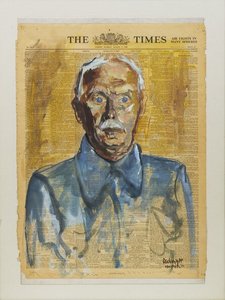
hugo 'puck' dachinger
1908 - 1995 , Austria
Quick Facts
- Artistic Movement Or Style: Abstraction, Expressionism
- Artists Or Movements Influenced By This Artist:
- Abstract art
- Bauhaus
- Artists Who Influenced This Artist:
- Paul Gauguin
- Vincent van Gogh
- Date Of Birth: 1866-12-16
- Date Of Death: 1944-12-13
- Full Name: Wassily Kandinsky
- Nationality: Russian (later French)
- Notable Artworks:
- On White II
- Blue Rider
- Composition VII
- Place Of Birth: Moscow, Russia

