 Preview
 Send
Send Share
Share
 Details

 Download
 Similars
 X-Ray
X-Ray Diaporama
 Stats
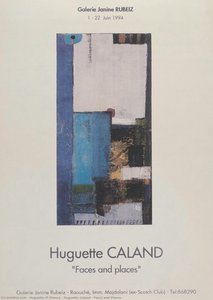
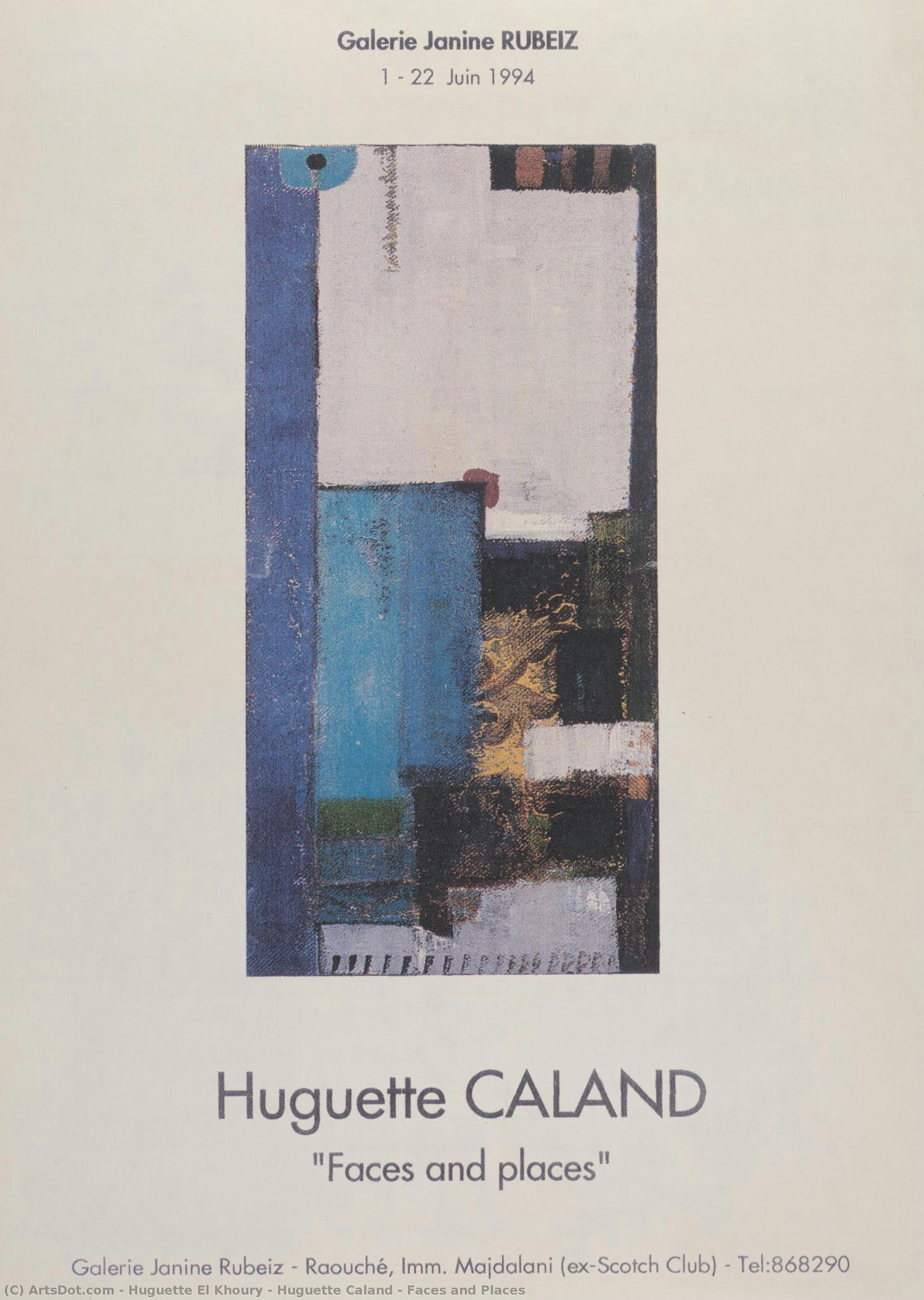
StatsHuguette Caland : Faces and Places
 1994
1994 42.0 x 30.0 cm
 American University of Beirut
 Read More
Giclée / Art Print
Museum-quality giclée or canvas print with fast production and flexible finish options. ( Buy Hand Made Painting Switch to Digital Image)




































Pick from our preset sizes that match the artwork's original proportions.

You may enter your own dimensions to fit a specific frame or space. If your selected size does not match the original image's proportions, we will either crop the artwork or extend the image with a mirrored or solid-fill edge. A digital mockup will be sent for your approval before production begins.
Please note that the on-screen preview does not reflect the actual cropping or extension. Only the mockup will accurately show the final composition.
While custom sizes are available, we recommend selecting a dimension from the predefined list to preserve the original proportions.
Worldwide Delivery () in 2 weeks instead of standard 4/5 weeks. (11 September)

Free Worldwide Express Shipping

High-Quality Linen Canvas

Full Shipping Insurance

Customs Tax Refund Guarantee

True Color Matching Guarantee

100-Day Return Policy (Defects Only)

100% Money-Back Guarantee

Bulk Discount Offer
 Glass option is only available in size under 110 CM

Huguette Caland : Faces and Places
Giclée / Art Print
Reproduction Size
-


Total Price
$ 63
Related Artworks




Artist Biography
A Life Painted in Freedom: The World of Huguette Caland
Huguette Caland, born Huguette El Khoury in 1931 in Beirut, Lebanon, was an artist who dared to bloom late, defying expectations and societal constraints to forge a path uniquely her own. Her story is inextricably linked to the tumultuous political landscape of her homeland, being the daughter of Bechara El Khoury, the first president of independent Lebanon. Yet, while steeped in a world of power and tradition, Caland’s spirit yearned for a different kind of expression—one found not in politics but in the vibrant language of color and form. For years, this yearning remained dormant, overshadowed by familial duties and societal expectations. It wasn't until her thirties that she formally began studying art at the American University in Beirut, an act of quiet rebellion that would ultimately define her life’s work. This initial foray into artistic training ignited a passion that propelled her towards Paris in 1970, marking a pivotal moment in her creative evolution.Parisian Liberation and the Birth of an Abstract Language
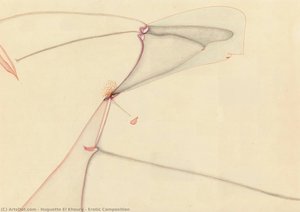
The seventeen years Caland spent in Paris were transformative. Liberated from the constraints of Lebanese society, she immersed herself in the city’s thriving artistic milieu, engaging with avant-garde thinkers and experimenting fearlessly with new techniques. This period saw her develop a distinctive visual vocabulary—a bold, erotic abstraction that explored the human body not as a literal form but as a landscape of sensation and emotion. Influenced by artists like André Masson, Pierre Schaeffer, and Adalberto Mecaelli, she moved beyond representational art, embracing the power of line, color, and texture to convey complex inner states. Her canvases began to pulsate with energy, filled with swirling forms that hinted at hidden desires and unspoken truths. It was during this time that Caland truly found her voice, a voice that was unapologetically feminine, sensual, and free. This freedom extended beyond the canvas; in 1979 she collaborated with Pierre Cardin on a collection of caftans, translating her abstract visions into wearable art—a testament to the fluidity between her different creative pursuits.Exploring the Body as Landscape
Caland’s work is characterized by an intimate and often provocative exploration of the body, particularly the female form. However, she wasn't interested in depicting the body realistically; instead, she sought to capture its essence—its curves, textures, and hidden landscapes. Her paintings are filled with suggestive shapes and vibrant colors that evoke a sense of both vulnerability and power. The body becomes a terrain for exploration, a site of pleasure and pain, desire and longing. This focus on sensuality was not merely aesthetic; it was deeply political, challenging conventional representations of women in art and reclaiming the female experience as a source of creative energy. Her later work continued this exploration, evolving into more intricate compositions that resembled textile surfaces—a nod to her earlier fashion collaborations and an ongoing fascination with texture and pattern.Recognition and Legacy
Despite a career that blossomed relatively late in life, Huguette Caland achieved significant recognition during her lifetime. Her work has been exhibited in prestigious institutions worldwide, including Tate St Ives, the Hammer Museum, and most notably, featured in the groundbreaking 2021 exhibition “Women in Abstraction” at the Centre Pompidou in Paris—a landmark moment that cemented her place within the canon of abstract art history. This inclusion was not simply a belated acknowledgement; it was a recognition of Caland’s unique contribution to the field, her ability to push boundaries and challenge conventions with grace and audacity. Her legacy extends beyond her paintings and sculptures; she serves as an inspiration to artists of all ages, demonstrating that creative expression can flourish at any stage of life. She passed away in Beirut in 2019, leaving behind a body of work that continues to captivate and provoke, reminding us of the power of art to liberate, challenge, and transform.- Notable Works: Faces and Places, Tête-à-tête.
- Nationality: Lebanese
- Known For: Erotic abstract paintings, body landscapes, sculpture, and fashion design.

huguette el khoury
1931 - 2019 , Lebanon
Quick Facts
- Artistic Movement Or Style: Erotic abstraction
- Artists Who Influenced This Artist:
- André Masson
- Pierre Schaeffer
- Adalberto Mecaelli
- Date Of Birth: January 19, 1931
- Date Of Death: 2019
- Full Name: Huguette Caland
- Nationality: Lebanese
- Notable Artworks:
- Faces and Places
- Tête-à-tête
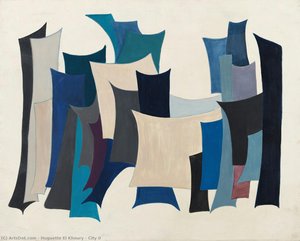
- City II
- Place Of Birth: Beirut, Lebanon