 Preview
 Send
Send Share
Share
 Details

 Download
 Similars
 X-Ray
X-Ray Diaporama
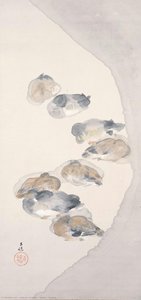
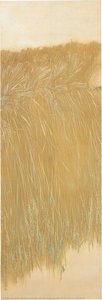
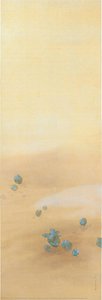
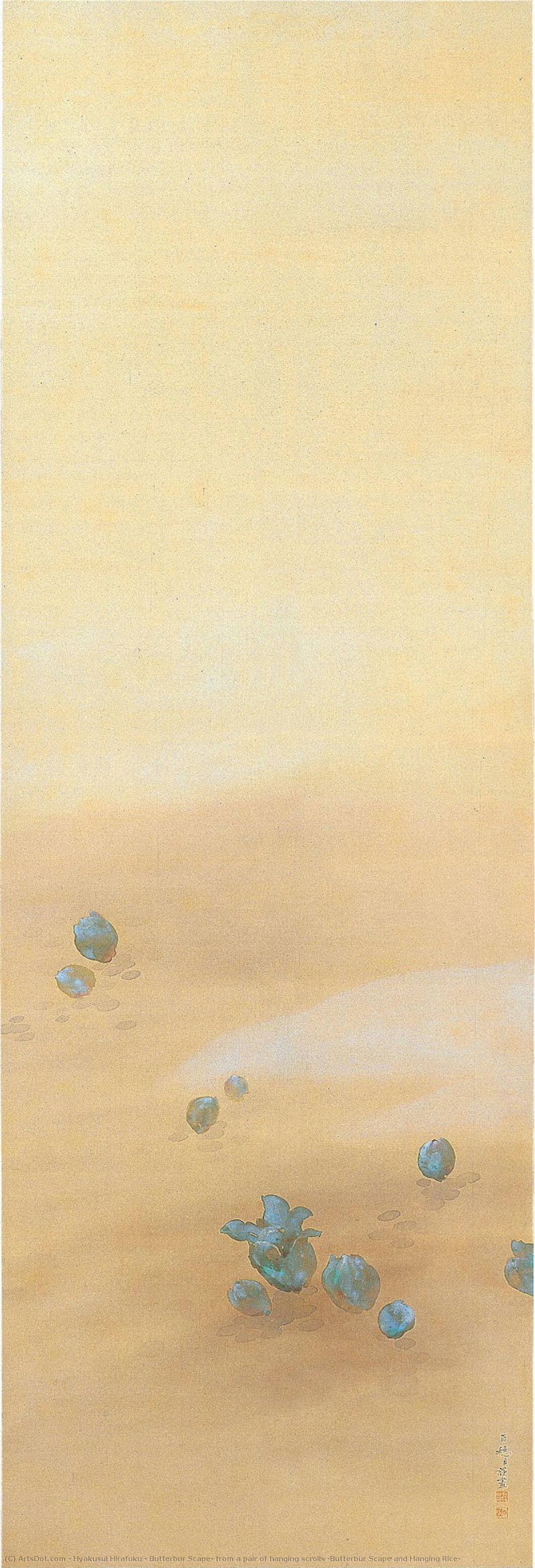
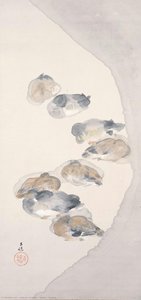
Butterbur Scape, from a pair of hanging scrolls ‘Butterbur Scape and Hanging Rice’
 1924
1924 148.0 x 50.0 cm
 Read More
Giclée / Art Print
Museum-quality giclée or canvas print with fast production and flexible finish options. ( Buy Hand Made Painting Buy Image)




































Pick from our preset sizes that match the artwork's original proportions.

You may enter your own dimensions to fit a specific frame or space. If your selected size does not match the original image's proportions, we will either crop the artwork or extend the image with a mirrored or solid-fill edge. A digital mockup will be sent for your approval before production begins.
Please note that the on-screen preview does not reflect the actual cropping or extension. Only the mockup will accurately show the final composition.
While custom sizes are available, we recommend selecting a dimension from the predefined list to preserve the original proportions.
Worldwide Delivery () in 2 weeks instead of standard 4/5 weeks. (25 August)

Free Worldwide Express Shipping

High-Quality Linen Canvas

Full Shipping Insurance

Customs Tax Refund Guarantee

True Color Matching Guarantee

60-Day Return Policy (Defects Only)

100% Money-Back Guarantee

Bulk Discount Offer
 Glass option is only available in size under 110 CM

Butterbur Scape, from a pair of hanging scrolls ‘Butterbur Scape and Hanging Rice’
Giclée / Art Print
Reproduction Size
-


Total Price
$ 63
Related Artworks


Artist Biography
The Legacy of Hyakusui Hirafuku: A Symphony of Tradition and Modernity
In the delicate interplay of ink and light that defines the late Meiji era, few names resonate with as much poetic grace as Hyakusui Hirafutig. Born in the historic surroundings of Kakunodate, Akita Prefecture, in 1877, his life was an intricate tapestry woven from the threads of ancestral heritage and a restless, modernizing spirit. As the son of the esteemed painter Hirafuku Suian, Hyakusui did not merely inherit a profession; he inherited a visual language. His earliest lessons, whispered through the brushstrokes of his father, laid a foundation of nihonga mastery that would remain the heartbeat of his work, even as he ventured into uncharted artistic territories.
His journey from the quiet landscapes of his youth to the vibrant intellectual centers of Tokyo marked a period of profound transformation. Seeking to expand the boundaries of his classical training, he studied under the legendary Kawabata Gyokushō and enrolled at the prestigious Tokyo Art School. Yet, Hirafuku was never content with mere imitation. A brief but transformative year dedicated to Western design studies infused his traditional sensibilities with a new structural awareness, allowing him to approach the Japanese landscape with a fresh, almost sculptural eye. This unique duality—the ability to honor the ancient while embracing the contemporary—became the hallmark of his creative identity.
Innovation Through the Musei-kai and Kinrei-sha
Hirafuku’s career was defined by a courageous pursuit of realism and personal expression, often through the formation of influential artistic collectives. In 1900, alongside visionaries such as Yuki Somai and Shimazaki Yanagi, he became a founding member of the Musei-kai. This group sought to breathe new life into established traditions by introducing more realistic elements, challenging the static nature of classical styles. His commitment to artistic evolution continued with the creation of the Kinrei-sha (Golden Bell) group, where he joined luminaries like Kaburagi Kiyokata to champion a sense of individual freedom and emotional depth in painting.
This spirit of experimentation was not limited to his subject matter but extended deeply into his technical repertoire. While his roots lay in the meticulous nihonga style, Hirafuku became a master of subtle textures and atmospheric effects. He famously explored the bleeding of ink and innovative dripping techniques—methods inspired by the great Tawaraya Sotatsu—to capture the ephemeral beauty of nature. Whether depicting the soft, heavy presence of a turkey or the serene expanse of a butterbur scape, his work utilized these advanced methods to evoke a sense of movement and life that felt startlingly immediate to his contemporaries.
A Global Ambassador of Japanese Aesthetics
As his reputation ascended, Hirafuku’s influence transcended the borders of Japan. His talent as an illustrator for the Kokumin Shimbun allowed him to bring a sophisticated visual narrative to the masses, while his prestigious accolades—including awards at the Bunten and serving as a judge for the Teiten exhibition—solidified his status within the Japanese art establishment. His reach eventually became truly international; his travels to Rome in 1930 and his participation in exhibitions at the Prussian Academy of Arts in Berlin served to introduce the nuanced beauty of Japanese landscape painting to the Western world.
The historical significance of Hyakusui Hirafuku lies in his role as a bridge. He stood at the crossroads of eras, successfully navigating the tension between the preservation of cultural identity and the inevitable tide of global modernism. His life’s work remains a testament to the idea that tradition is not a static relic to be guarded, but a living, breathing entity capable of infinite reinvention. Through his sensitive observation of nature and his bold technical advancements, he ensured that the soul of Japanese painting would continue to flourish in an ever-changing world.
hyakusui hirafuku
1877 - 1933 , Japan
Quick Facts
- Artistic Movement Or Style: Nihonga
- Artists Or Movements Influenced By This Artist: ['Rinpa']
- Artists Who Influenced This Artist: ['Kawabata Gyokushō']
- Date Of Birth: December 28, 1877
- Date Of Death: October 30, 1933
- Full Name: Hyakusui Hirafuku
- Nationality: Japanese
- Notable Artworks:
- Butterbur Scape
- Hanging Rice
- Place Of Birth: Kakunodate, Japan