 Preview
 Send
Send Share
Share
 Details

 Download
 Similars
 X-Ray
X-Ray Diaporama
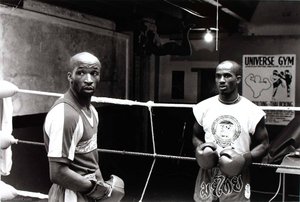
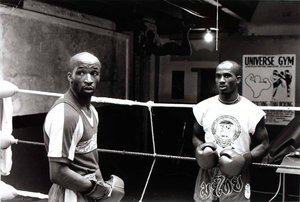
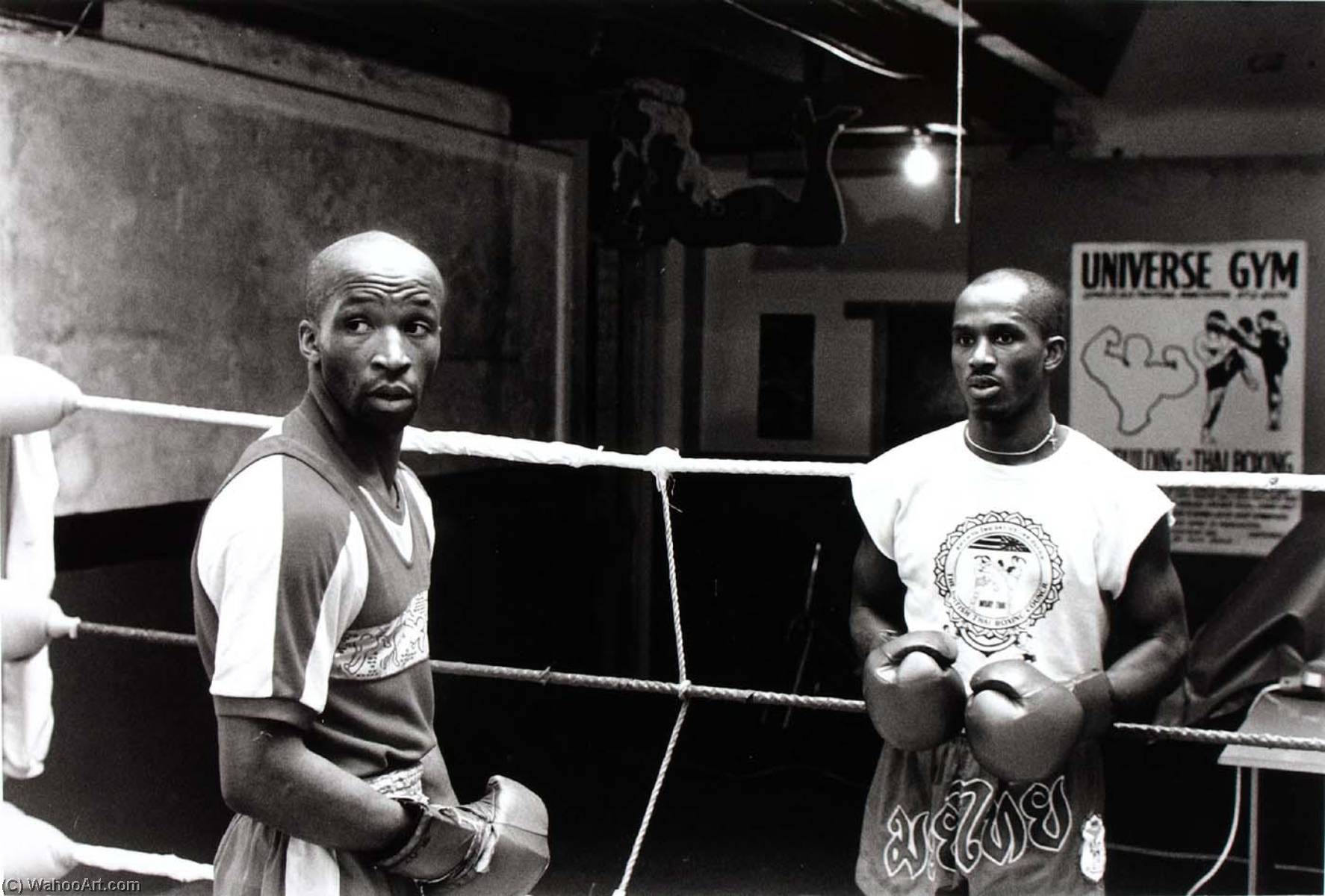
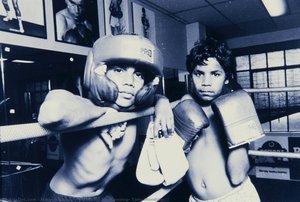
Two Unidentified Boxers in Ring, Salfero Gym
 1989
1989 25.0 x 37.0 cm
 Read More
Hand Made Oil Reproduction
Hand-painted oil on canvas in your size and frame, made to order by our artists. ( Buy Print Buy Image)




































Pick from our preset sizes that match the artwork's original proportions.

You may enter your own dimensions to fit a specific frame or space. If your selected size does not match the original image's proportions, we will either crop the artwork or extend the painting with additional hand-painted elements. A digital mockup will be sent for your approval before production begins.
Please note that the on-screen preview does not reflect the actual cropping or extension. Only the mockup will accurately show the final composition.
While custom sizes are available, we recommend selecting a dimension from the predefined list to preserve the original proportions.
After order, ArtsDot.com team will email client for instructions and provide a mockup preview
Worldwide Delivery () in 3/4 weeks instead of standard 5 weeks. (23 August). No compromise on quality.

Free Worldwide Express Shipping

High-Quality Linen Canvas

Full Shipping Insurance

Customs Tax Refund Guarantee

True Color Matching Guarantee

60-Day Return Policy (Defects Only)

100% Money-Back Guarantee

Bulk Discount Offer
 Glass option is only available in size under 110 CM

Two Unidentified Boxers in Ring, Salfero Gym
Reproduction Medium
Reproduction Size
-


Total Price
$ 288
Artwork Description
The Artist's Vision
Ian Beesley's work is characterized by his attention to detail and ability to convey emotion through his subjects. In "Two Unidentified Boxers in Ring, Salfero Gym", he masterfully captures the intensity and focus of the two boxers as they stand in the ring. The use of black and white adds a sense of timelessness to the piece, allowing the viewer to focus on the emotions and movements of the subjects.Key Features of the Painting
Some key features of the painting include:- The contrasting colors of the boxers' shorts, with one wearing red and the other white, adding a sense of visual interest to the piece.
- The rope surrounding the boxing ring, which adds depth and context to the scene.
- The expressions on the boxers' faces, which convey a sense of determination and focus.
For those interested in learning more about the artist and his work, https://en.ArtsDot.com/@/Ian-Beesley provides a comprehensive overview of his biography and available artworks. The Smithsonian American Art Museum also offers a wealth of information on the painting and its history, making it a valuable resource for art enthusiasts.
Related Artworks






Artist Biography
A Witness to Change: The Photography of Ian Beesley
Ian Beesley’s work is more than simply documentation; it's a deeply empathetic chronicle of Northern England, particularly the industrial heartlands and the communities that have defined them for generations. Emerging in the 1970s, Beesley didn’t approach his subject matter with detached observation but rather with an intimate understanding born from being *of* those places he photographed. His lens became a tool not just to record, but to bear witness – to the slow erosion of traditional industries, the resilience of working-class life, and the vibrant pulse that continued to beat within these changing landscapes. While biographical details remain intentionally sparse, allowing his work to take center stage, it’s clear Beesley's commitment stems from a profound connection to the region and its people. He isn’t an outsider looking in; he is embedded within the narrative he portrays.Early Years & The Bradford Project
Beesley’s formative years coincided with a period of immense upheaval for Northern England. The decline of coal mining, steel production, and textile manufacturing cast a long shadow over towns and cities, leaving economic hardship and social displacement in its wake. It was within this context that Beesley began his most celebrated project: documenting Bradford, West Yorkshire. Unlike many photographers who focused solely on the bleakness of industrial decay, Beesley’s early work captured both the hardship *and* the enduring spirit of the city's inhabitants. His photographs of working-class families, bustling markets, and everyday street scenes are imbued with a quiet dignity, revealing a community grappling with change but refusing to be defined by it. This wasn’t about sensationalizing poverty; it was about presenting a nuanced portrait of lives lived fully, even amidst adversity. The Bradford project became a long-term commitment, evolving over decades and forming the core of his artistic vision.Beyond Industry: Nightlife & Social Spaces
While often associated with industrial photography, Beesley’s scope extends far beyond factory floors and slag heaps. He possessed an equally keen eye for the social spaces where communities found solace and expression. His documentation of Bradford's nightclub scene in the 1970s and 80s offers a fascinating glimpse into a vibrant subculture often overlooked by mainstream media. These images aren’t simply records of fashion or dance; they capture a sense of liberation, belonging, and youthful energy – a counterpoint to the narratives of decline that dominated the era. He captured the raw emotion and uninhibited joy found within these spaces, presenting them as vital components of community life. This ability to move seamlessly between documenting hardship and celebrating resilience is a hallmark of Beesley’s work.Technique & Influences
Beesley's photographic style is characterized by its directness and honesty. He favored black-and-white photography, lending his images a timeless quality and emphasizing the stark realities of his subjects. His compositions are often unpretentious, focusing on capturing authentic moments rather than constructing elaborate scenes. While he doesn’t explicitly discuss specific artistic influences, it's possible to see echoes of documentary photographers like Bill Brandt and Bert Hardy in his work – particularly their commitment to social realism and their ability to connect with their subjects on a human level. However, Beesley developed a distinct voice, rooted in the unique character of Northern England and his own deeply personal connection to the region. He wasn’t attempting to emulate others; he was creating a visual record that reflected *his* experience and understanding.Legacy & Historical Significance
Ian Beesley's work has become increasingly recognized for its historical importance, offering invaluable insights into a period of profound social change in Britain. His photographs are not merely artifacts of the past; they serve as powerful reminders of the human cost of industrial decline and the enduring strength of working-class communities. The images from Bradford, in particular, have been exhibited widely and are now considered iconic representations of the city's history.- Salts Mill: His extensive documentation of Salts Mill, a former textile mill transformed into an art gallery and cultural center, further cemented his reputation as a chronicler of Northern England’s industrial heritage.
- Social Documentary Art: Beesley's work is often cited as a prime example of social documentary photography, demonstrating the power of images to raise awareness about important social issues and challenge prevailing narratives.
- Preserving Memory: His commitment to long-term projects ensures that these stories are not forgotten, preserving the memory of communities and individuals who might otherwise have been overlooked by history.