 Preview
 Send
Send Share
Share
 Details

 Download
 Similars
 X-Ray
X-Ray Diaporama
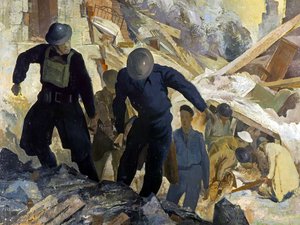
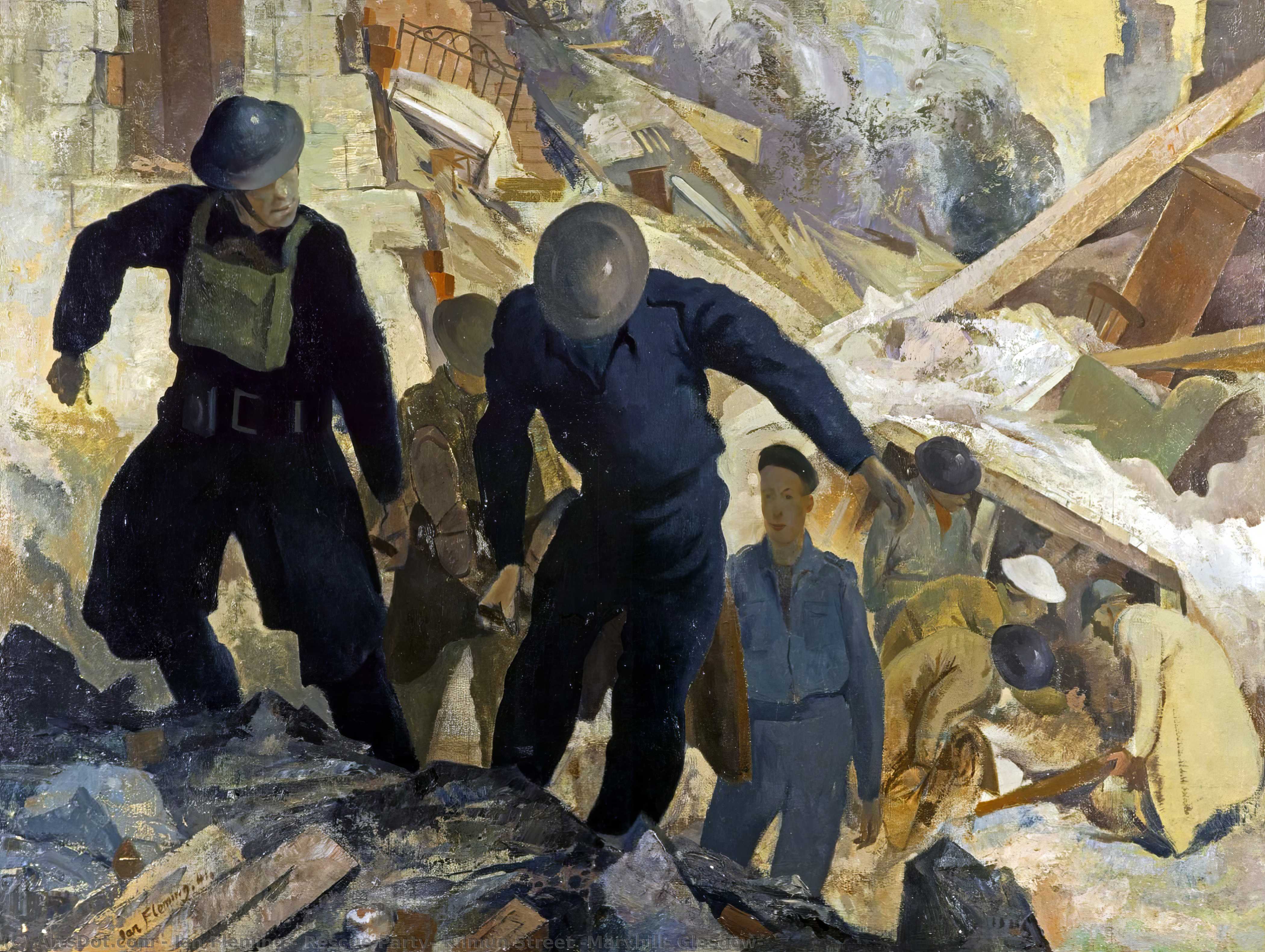
Rescue Party, Kilmun Street (Maryhill, Glasgow)
 1941
1941 80.0 x 102.0 cm
 Read More
Hand Made Oil Reproduction
Hand-painted oil on canvas in your size and frame, made to order by our artists. ( Buy Print Buy Image)




































Pick from our preset sizes that match the artwork's original proportions.

You may enter your own dimensions to fit a specific frame or space. If your selected size does not match the original image's proportions, we will either crop the artwork or extend the painting with additional hand-painted elements. A digital mockup will be sent for your approval before production begins.
Please note that the on-screen preview does not reflect the actual cropping or extension. Only the mockup will accurately show the final composition.
While custom sizes are available, we recommend selecting a dimension from the predefined list to preserve the original proportions.
After order, ArtsDot.com team will email client for instructions and provide a mockup preview
Worldwide Delivery () in 3/4 weeks instead of standard 5 weeks. (30 August). No compromise on quality.

Free Worldwide Express Shipping

High-Quality Linen Canvas

Full Shipping Insurance

Customs Tax Refund Guarantee

True Color Matching Guarantee

60-Day Return Policy (Defects Only)

100% Money-Back Guarantee

Bulk Discount Offer
 Glass option is only available in size under 110 CM

Rescue Party, Kilmun Street (Maryhill, Glasgow)
Reproduction Medium
Reproduction Size
-


Total Price
$ 263
The Composition and Context
The painting depicts a group of men in uniforms standing together, possibly involved in a rescue operation. The black and white image features at least 12 individuals, with some standing closer together while others are more spread out. The men wear various types of clothing and accessories, including ties visible on a few individuals. This suggests that they are working together to accomplish their task, likely during wartime or another challenging situation.Artistic Style and Technique
Ian Fleming's use of oil on canvas allows for rich textures and detailed expressions. The monochromatic palette adds a sense of unity and focus to the scene, emphasizing the collective effort of the men. The composition is well-balanced, with figures arranged in a way that creates a sense of movement and urgency.Relevance and Significance
"Rescue Party, Kilmun Street (Maryhill, Glasgow)" is significant not only for its depiction of wartime efforts but also for its representation of community and cooperation. The painting captures the essence of people coming together to face challenges, a theme that resonates with audiences today.Other Works by Ian Fleming
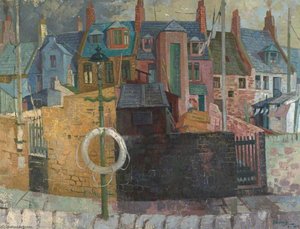
Ian Fleming's other notable works include Fisher Houses, Arbroath, which is also part of the collection at the National Galleries of Scotland. This painting showcases his ability to capture everyday life with a sense of realism and detail.Reproductions Available at ArtsDot.com
For those interested in owning a piece of art history, ArtsDot.com offers handmade oil painting reproductions of "Rescue Party, Kilmun Street (Maryhill, Glasgow)" and other works by Ian Fleming. These high-quality reproductions are created with meticulous attention to detail, ensuring that the essence of the original artwork is preserved.Conclusion
"Rescue Party, Kilmun Street (Maryhill, Glasgow)" by Ian Fleming is a powerful piece that highlights the importance of unity and cooperation during challenging times. Through his artistic vision, Fleming captures the spirit of community and resilience, making this painting a valuable addition to any art collection. Experience the art of Ian Fleming through ArtsDot.com's handmade oil painting reproductions.Related Artworks









Artist Biography
The Soul of the Scottish Landscape: The Life and Legacy of Ian Fleming
In the rich tapestry of twentieth-century Scottish art, few names evoke the atmospheric grit and quiet beauty of the nation quite like Ian Fleming. Born in Glasgow on November 19, 1906, Fleming’s life was an enduring tribute to the landscapes and people that defined his homeland. While history may occasionally confuse him with other famous figures of the same name, the painter Fleming carved out a singular identity through his profound ability to translate the textures of Scottish life onto canvas and print. His journey began in the vibrant artistic atmosphere of the Glasgow School of Art, an institution that would serve as both his training ground and his lifelong inspiration. It was here, amidst the shadows of industrial progress and the enduring strength of tradition, that he honed a technique characterized by meticulous observation and a deep, empathetic connection to his subjects.
Fleming’s artistic evolution was marked by a transition from the structured discipline of his early training to a more expressive, emotive mastery of medium. As a student under the guidance of masters like William Cruikshank, he developed an extraordinary command over etching and engraving, techniques that allowed him to explore the subtle gradations of light and shadow in urban scenes. His prints, particularly those capturing the bustling life of Glasgow, are celebrated for their precision and their ability to evoke the rhythmic pulse of the city. However, it was in his oil paintings and watercolours that Fleming truly found his voice, moving toward a style that blended social realism with a poetic sensitivity. He possessed a rare gift for capturing the fleeting essence of a moment—the heavy atmosphere of a harbor, the weary dignity of a worker, or the stark beauty of a Highland landscape.
Mastery of Medium and the Spirit of Place
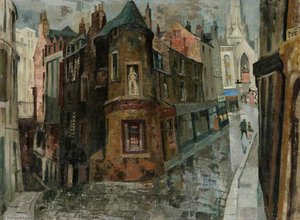
The breadth of Fleming’s oeuvre is a testament to his versatility as a creator. Whether working with the sharp, decisive lines of an engraver or the fluid, luminous washes of a watercolourist, his work remained anchored in a profound respect for reality. His oil paintings often explored themes of human interaction and social narrative, most notably seen in works such as "Rescue Party, Kilmun Street (Maryhill, Glasgow)". Created in 1941, this powerful piece serves as a poignant window into the collective spirit of wartime Britain, utilizing a focused palette to emphasize the unity and urgency of the figures depicted. Similarly, his ability to capture architectural grandeur and street life is evident in works like "The Wallace Tower, Aberdeen," where he blended traditional composition with a modern vitality that brought the bustling city streets to life.
A significant portion of Fleming’s aesthetic was shaped by the enduring influence of the Glasgow School of Art movement. The decorative elegance and geometric considerations championed by figures such as Charles Rennie Mackintosh resonated within his work, lending a structured grace to even his most spontaneous landscapes. This duality—the tension between modernist abstraction and a steadfast commitment to naturalism—became a hallmark of his style. He did not merely paint what he saw; he painted the feeling of the light hitting the stone, the weight of the mist over the water, and the psychological depth of the faces he portrayed.
Recognition and Lasting Significance
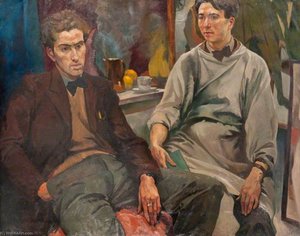
Throughout his distinguished career, Fleming received the highest accolades available to a Scottish artist. His talent was formally recognized early on when he was awarded the prestigious Guthrie Award in 1938 for his work "The Painters: McBryde and Colquhoun." This period of success marked his ascent into the upper echelons of the art establishment, eventually leading to his election as a Fellow of the Royal Scottish Academy (RSA). His role as a teacher and former principal at Gray's School of Art further cemented his influence, as he passed his dedication to craftsmanship and observation down to a new generation of Scottish painters.
When Ian Fleming passed away in Aberdeen in 1994, he left behind a legacy that continues to resonate within the halls of the National Galleries of Scotland and beyond. His work remains a vital historical record, capturing the shifting social landscapes of Scotland from the industrial era through the mid-twentieth century. To look upon a Fleming painting is to encounter the very heart of Scotland—a world of rugged beauty, resilient characters, and an eternal, atmospheric light that refuses to fade.
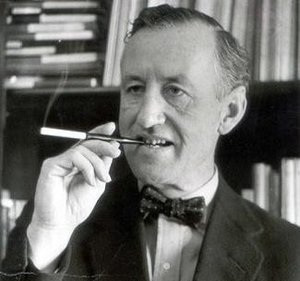
ian fleming
1906 - 1994
Quick Facts
- Artistic Movement Or Style: Glasgow School of Art
- Artists Or Movements Influenced By This Artist: ['']
- Artists Who Influenced This Artist: ['']
- Date Of Birth: 1906
- Date Of Death: 1994
- Full Name: Ian Fleming
- Nationality: Scottish
- Notable Artworks:
- Rescue Party, Kilmun Street (Maryhill, Glasgow)
- Art Students Preparing a Still Life
- The Wallace Tower, Aberdeen
- Place Of Birth: Glasgow, Scotland