 Preview
 Send
Send Share
Share
 Details

 Download
 Similars
 X-Ray
X-Ray Diaporama
 Stats
StatsMatriach II
 Read More
Giclée / Art Print
Museum-quality giclée or canvas print with fast production and flexible finish options. ( Buy Hand Made Painting Switch to Digital Image)




































Pick from our preset sizes that match the artwork's original proportions.

You may enter your own dimensions to fit a specific frame or space. If your selected size does not match the original image's proportions, we will either crop the artwork or extend the image with a mirrored or solid-fill edge. A digital mockup will be sent for your approval before production begins.
Please note that the on-screen preview does not reflect the actual cropping or extension. Only the mockup will accurately show the final composition.
While custom sizes are available, we recommend selecting a dimension from the predefined list to preserve the original proportions.
Worldwide Delivery () in 2 weeks instead of standard 4/5 weeks. (10 September)

Free Worldwide Express Shipping

High-Quality Linen Canvas

Full Shipping Insurance

Customs Tax Refund Guarantee

True Color Matching Guarantee

100-Day Return Policy (Defects Only)

100% Money-Back Guarantee

Bulk Discount Offer
 Glass option is only available in size under 110 CM

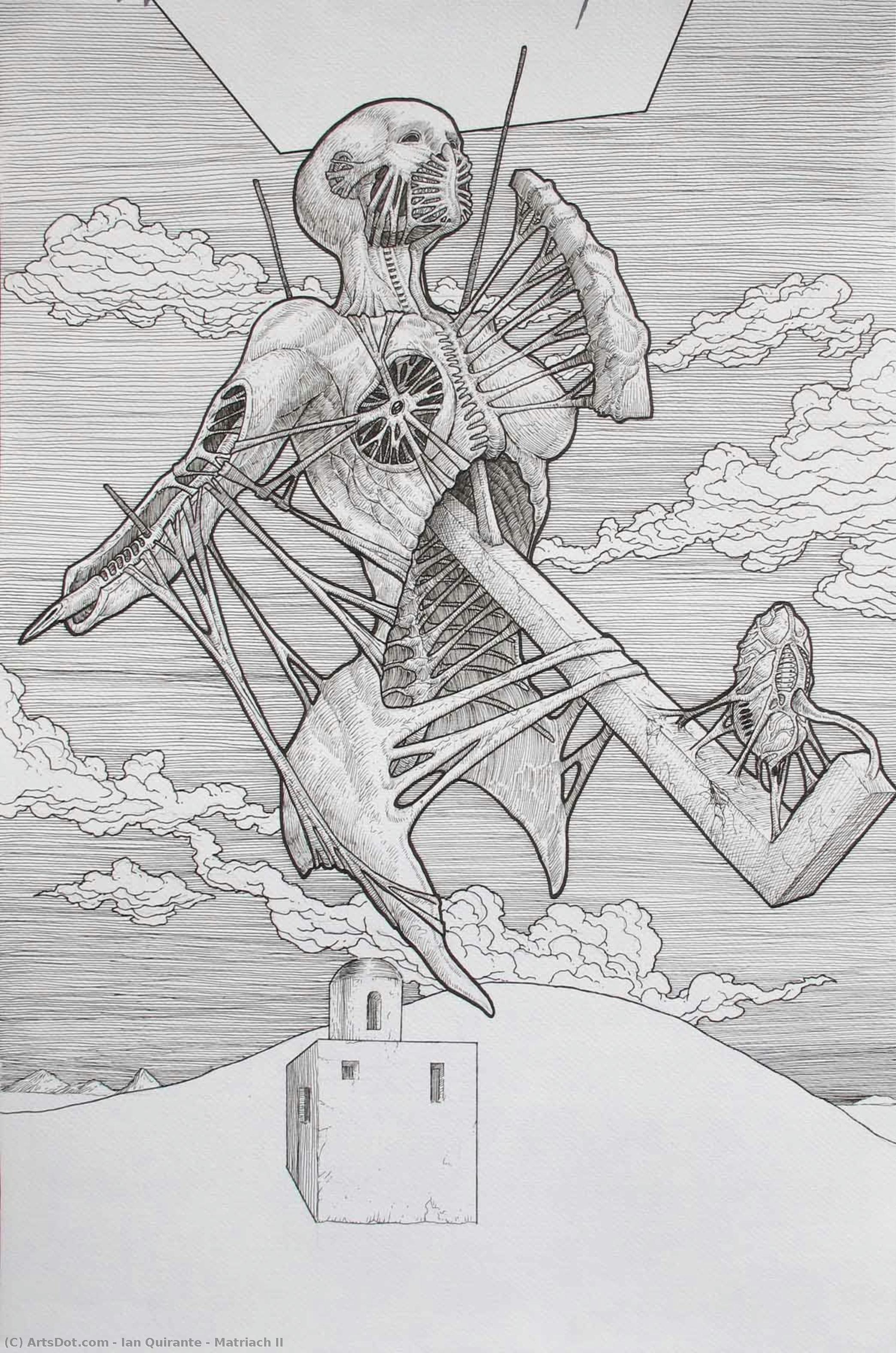
Matriach II
Giclée / Art Print
Reproduction Size
-


Total Price
$ 63
Related Artworks





Artist Biography
A Delicate Strength: The World of Ian Quirante
Ian Quirante, a Filipino artist born and residing in the Philippines, emerges as a compelling voice in contemporary portraiture, though shrouded in an intriguing layer of artistic reserve. While biographical details remain scarce—a deliberate choice perhaps, allowing his work to speak for itself—the power of his ink drawings resonates deeply, establishing him as a significant figure within the Philippine art scene and beyond. Quirante’s artistry isn't about grand narratives or flamboyant self-promotion; it is a quiet exploration of emotion, identity, and the human condition, meticulously rendered through the subtle nuances of line and shadow. His work possesses an intimacy that draws viewers in, inviting contemplation rather than demanding attention.The Language of Ink: Technique and Style
Quirante’s chosen medium—ink—is central to understanding his artistic vision. Unlike the bold strokes of painting or the textured surfaces of sculpture, ink offers a delicate precision, a control over detail that allows for an almost photographic realism while simultaneously retaining a distinctly handcrafted quality. He masterfully employs varying line weights and densities to create depth and form, often leaving areas intentionally unshaded, suggesting rather than explicitly defining features. This technique lends his portraits a haunting ethereal quality, as if the subjects are emerging from—or dissolving into—the very paper they inhabit. His style is characterized by an exceptional attention to texture – the fall of hair, the wrinkles etched on skin, the subtle play of light and shadow across bone structure. This isn’t merely representation; it's a profound study of human presence. The monochromatic palette further emphasizes this focus, stripping away distractions and forcing viewers to engage with the raw emotional core of each piece.Portraits as Vessels: Themes and Symbolism
The majority of Quirante’s known work centers around portraits, particularly those of women. These are not idealized depictions; they are complex studies of character, often imbued with a sense of melancholy or quiet resilience. His celebrated “Matriarch” series—“Matriach I” and “Matriach II”—exemplifies this approach. The subjects gaze directly at the viewer, their expressions unreadable yet profoundly affecting. There’s a palpable weight of history in their eyes, a suggestion of untold stories and enduring strength. While specific symbolic interpretations remain open to individual perception, recurring motifs – such as floral elements or traditional Filipino textiles subtly incorporated into the backgrounds—hint at a connection to cultural heritage and ancestral memory. Quirante's portraits are not simply likenesses; they are vessels containing layers of personal and collective experience.Emerging Presence: Recognition and Influence
Despite the limited public information surrounding his life, Ian Quirante’s work has garnered increasing recognition within art circles. His pieces have been featured in numerous online galleries and exhibitions, attracting a dedicated following of collectors and admirers. While pinpointing direct artistic influences is challenging given the artist's private nature, one can discern echoes of classical portraiture—the chiaroscuro techniques reminiscent of Rembrandt or Dürer—blended with a distinctly contemporary sensibility. His work stands apart through its unique blend of technical mastery, emotional depth, and subtle cultural references. He represents a new generation of Filipino artists who are reclaiming traditional artistic practices while forging their own distinct visual language.A Future Unfolding: Historical Significance
It is perhaps too early to fully assess Ian Quirante’s long-term historical significance. However, his contribution lies in the quiet power of his work—a refusal to sensationalize or oversimplify the human experience. In a world saturated with visual noise, his ink drawings offer a moment of stillness, an invitation to connect with something deeper and more meaningful. As his career unfolds, it is likely that Quirante will continue to challenge conventional notions of portraiture, pushing the boundaries of his chosen medium and solidifying his position as a vital voice in contemporary art. His legacy may not be one of grand pronouncements but rather of subtle, enduring beauty—a testament to the power of line, shadow, and the human spirit.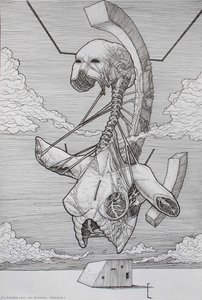
ian quirante
Philippines
Quick Facts
- Artistic Movement Or Style: Ink drawings, Surrealism
- Artists Or Movements Influenced By This Artist: ['Finale Art File']
- Artists Who Influenced This Artist: ['René Laloux']
- Full Name: Ian Quirante
- Nationality: Filipino
- Notable Artworks:
- Matriarch I
- Matriach II
- Place Of Birth: Philippines