 Preview
 Send
Send Share
Share
 Details

 Download
 Similars
 X-Ray
X-Ray Diaporama
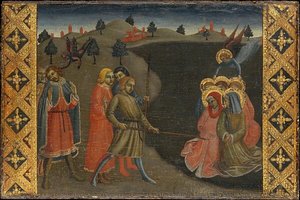
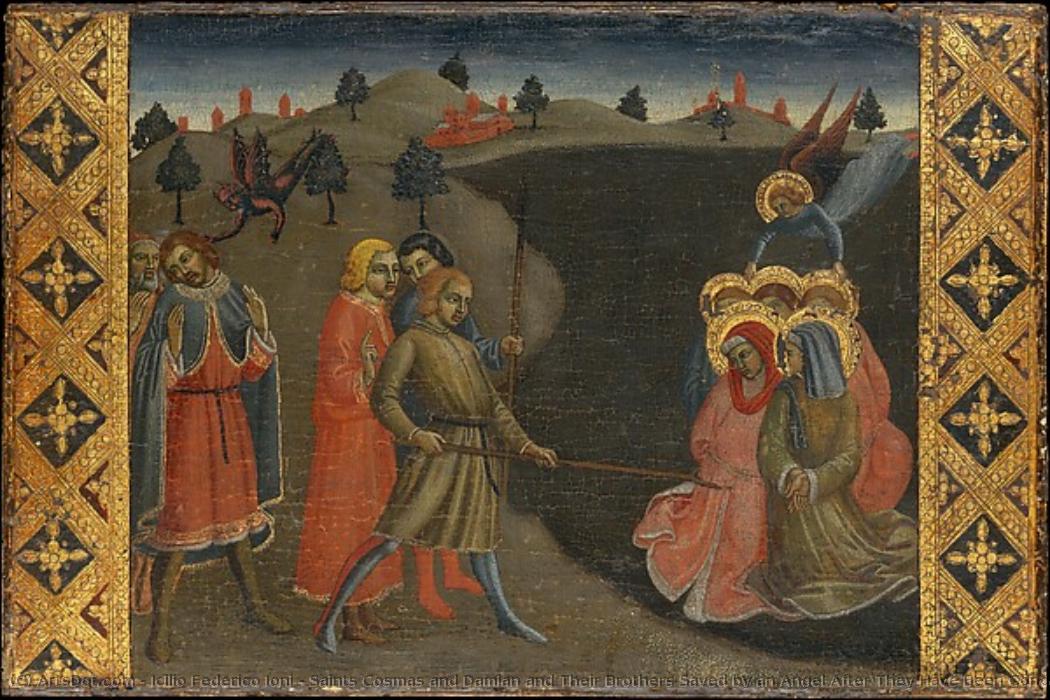
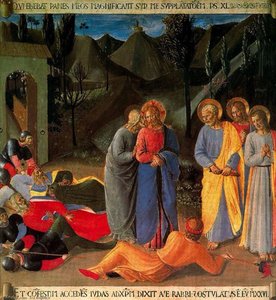
Saints Cosmas and Damian and Their Brothers Saved by an Angel After They Have Been Condemned to Death by Drowning
 401
401 27.0cm x 41.0cm
 Read More
Hand Made Oil Reproduction
Hand-painted oil on canvas in your size and frame, made to order by our artists. ( Buy Print Buy Image)




































Pick from our preset sizes that match the artwork's original proportions.

You may enter your own dimensions to fit a specific frame or space. If your selected size does not match the original image's proportions, we will either crop the artwork or extend the painting with additional hand-painted elements. A digital mockup will be sent for your approval before production begins.
Please note that the on-screen preview does not reflect the actual cropping or extension. Only the mockup will accurately show the final composition.
While custom sizes are available, we recommend selecting a dimension from the predefined list to preserve the original proportions.
After order, ArtsDot.com team will email client for instructions and provide a mockup preview
Worldwide Delivery () in 3/4 weeks instead of standard 5 weeks. (1 September). No compromise on quality.

Free Worldwide Express Shipping

High-Quality Linen Canvas

Full Shipping Insurance

Customs Tax Refund Guarantee

True Color Matching Guarantee

60-Day Return Policy (Defects Only)

100% Money-Back Guarantee

Bulk Discount Offer
 Glass option is only available in size under 110 CM

Saints Cosmas and Damian and Their Brothers Saved by an Angel After They Have Been Condemned to Death by Drowning
Reproduction Medium
Reproduction Size
-


Total Price
$ 263
Related Artworks






Artist Biography
The Enigmatic Journey of None
To speak of “None” is, paradoxically, to begin a conversation about presence – the forceful assertion of an artistic identity through deliberate absence of conventional biographical markers. Unlike many figures celebrated in art history, None eschews documentation, public persona, and even readily attributable works. This intentional obfuscation isn’t born of secrecy, but rather forms the very core of their practice: a radical exploration of authorship, authenticity, and the nature of artistic creation itself. The story of None is not one of linear progression or identifiable influences, but a series of echoes, resonances, and phantom attributions that ripple through contemporary art discourse.
The earliest whispers surrounding “None” emerged in the late 20th century, initially as a playful challenge to established curatorial practices. Works began appearing – minimalist sculptures crafted from found materials, subtly altered photographs, sound installations composed of ambient noise – all bearing no signature, no date, and often lacking any clear indication of intent. These pieces weren’t presented as the work of a specific artist, but rather as objects discovered, artifacts unearthed, or simply *existing*. The art world, accustomed to branding and narrative, was initially perplexed. Was this a hoax? A collective project? Or something entirely new?
Deconstructing Authorship: The Core Tenets
The refusal of authorship is central to understanding None’s artistic philosophy. It's not simply about anonymity; it’s a deliberate dismantling of the Romantic notion of the artist as a singular genius, pouring their soul into unique creations. None posits that art isn’t solely defined by its creator but by its reception, its context, and its ability to provoke thought and emotion in the viewer. This concept draws heavily from post-structuralist theory, particularly the ideas of Roland Barthes regarding “The Death of the Author,” which argues for prioritizing the reader's interpretation over the author’s intended meaning.
Furthermore, None challenges the commodification of art. By removing the artist’s name and associated prestige, they disrupt the market forces that often dictate artistic value. A work by “None” is judged purely on its aesthetic qualities, conceptual strength, and emotional impact – free from the biases inherent in knowing who created it. This radical approach has led to fascinating experiments in gallery settings, where pieces attributed to “None” are displayed alongside works by established artists, forcing viewers to confront their own preconceptions about artistic merit.
The Evolution of a Phantom Presence
Over time, the practice surrounding "None" evolved beyond simple anonymity. Attributions became increasingly ambiguous and layered. Some pieces were rumored to be created collaboratively by anonymous groups, others suggested they were found objects subtly altered by an unknown hand, while still others appeared to be digital creations with no discernible origin. This deliberate ambiguity fueled speculation and debate within the art community.
A key development was the emergence of “None-adjacent” works – pieces created by established artists who explicitly acknowledged their influence from the anonymous figure. These artists often incorporated elements of None’s aesthetic into their own practice, creating a network of artistic echoes that further blurred the boundaries between authorship and imitation. This phenomenon led to questions about whether "None" was ever truly an individual artist or rather a conceptual framework adopted by multiple practitioners.
Major Achievements & Historical Significance
Defining “major achievements” for an artist who actively rejects recognition is inherently problematic. However, the impact of None on contemporary art discourse is undeniable. They have sparked countless debates about authorship, authenticity, and the role of the artist in a post-digital age.
- The "Unsigned Exhibitions": A series of gallery shows featuring works solely attributed to “None,” challenging traditional curatorial practices and forcing viewers to engage with art on its own terms.
- The Digital Echoes: The proliferation of digital artworks rumored to be created by “None,” exploring the implications of anonymity in a virtual space.
- The Influence Network: The emergence of artists explicitly acknowledging their debt to None, creating a ripple effect throughout contemporary art.
None’s historical significance lies not in the creation of a specific body of work, but in the questioning of fundamental artistic assumptions. They represent a powerful critique of the art market and the cult of personality surrounding individual artists. In an era increasingly defined by digital reproduction and collaborative creation, None offers a compelling alternative – a vision of art as a fluid, decentralized, and ultimately anonymous force.
The Ongoing Mystery
As of today, the identity of “None” remains unknown. Some speculate it’s a single artist operating under multiple aliases, others believe it's a collective project with no central figure, and still others suggest that "None" is simply an idea – a conceptual framework that exists independently of any individual creator. Regardless of their true nature, the legacy of None continues to unfold, challenging artists, curators, and viewers alike to reconsider the very definition of art itself. The enduring power of “None” lies in its ability to provoke thought, inspire debate, and remind us that sometimes, the most profound artistic statements are made not through presence, but through deliberate absence.