 Preview
 Send
Send Share
Share
 Details

 Download
 Similars
 X-Ray
X-Ray Diaporama
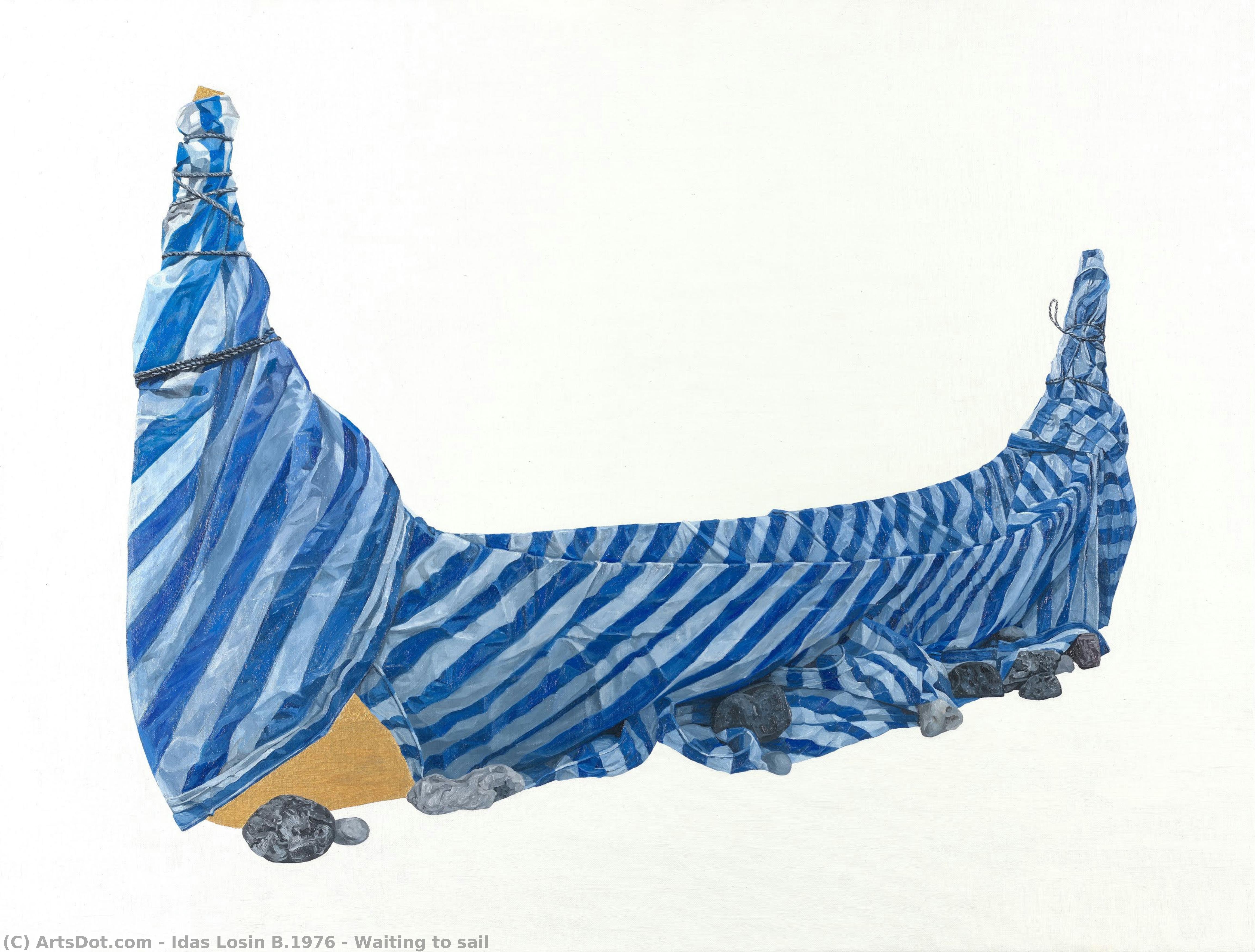
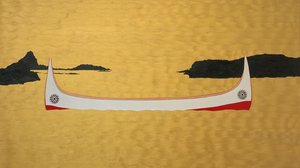
Waiting to sail
 2016
2016 80.0 x 105.0 cm
 Queensland Art Gallery | Gallery of Modern Art
 Read More
Giclée / Art Print
Museum-quality giclée or canvas print with fast production and flexible finish options. ( Buy Hand Made Painting Buy Image)




































Pick from our preset sizes that match the artwork's original proportions.

You may enter your own dimensions to fit a specific frame or space. If your selected size does not match the original image's proportions, we will either crop the artwork or extend the image with a mirrored or solid-fill edge. A digital mockup will be sent for your approval before production begins.
Please note that the on-screen preview does not reflect the actual cropping or extension. Only the mockup will accurately show the final composition.
While custom sizes are available, we recommend selecting a dimension from the predefined list to preserve the original proportions.
Worldwide Delivery () in 2 weeks instead of standard 4/5 weeks. (1 September)

Free Worldwide Express Shipping

High-Quality Linen Canvas

Full Shipping Insurance

Customs Tax Refund Guarantee

True Color Matching Guarantee

60-Day Return Policy (Defects Only)

100% Money-Back Guarantee

Bulk Discount Offer
 Glass option is only available in size under 110 CM

Waiting to sail
Giclée / Art Print
Reproduction Size
-


Total Price
$ 63
Related Artworks

Artist Biography
Max Ernst: A Pioneer of Surrealist Vision
Born in Bruhl, near Cologne, Germany, on April 2, 1891, Max Ernst was a truly transformative figure in the 20th-century art world. His life, marked by both artistic innovation and personal upheaval, profoundly shaped his unique approach to painting, sculpture, and collage – techniques he masterfully blended to create works that continue to resonate with their dreamlike quality and intellectual depth. From his early fascination with nature and a rebellious spirit fostered by his strict Catholic upbringing, Ernst’s journey was one of constant experimentation and a relentless pursuit of new artistic languages.
Ernst's formative years were steeped in the influences of various movements. His father, a teacher and amateur painter, ignited an initial passion for art within him, while visits to Cologne’s Sonderbund exhibition in 1912 exposed him to the radical ideas of Picasso, Van Gogh, and Gauguin – artists who challenged traditional representation and embraced expressive color and form. This exposure coincided with his enrollment at the University of Bonn, where he studied philosophy, art history, literature, psychology, and psychiatry, a curriculum that would later inform his surrealist explorations of the subconscious. Crucially, his friendship with August Macke within the Rheinische Expressionisten group provided an early platform for his artistic development, though Ernst’s inherent skepticism and desire to push boundaries soon led him away from the group's more overtly emotional style.
The horrors of World War I profoundly impacted Ernst. Serving on both the Western and Eastern fronts, he described his wartime experience as a “death” and “rebirth,” a stark contrast to the vibrant artistic life he’d previously known. This period of trauma fueled his experimentation with techniques like frottage (rubbing textures onto paper) and decalcomania (transferring paint from one surface to another), methods designed to bypass conscious control and tap into the realm of automaticity – a key principle of Surrealism. Following the war, Ernst’s artistic trajectory shifted dramatically as he embraced Dada and then Surrealism, collaborating with figures like Hans Arp, Paul Klee, and André Breton. His work during this period became increasingly characterized by fragmented imagery, illogical juxtapositions, and a deliberate disruption of traditional perspective, reflecting the anxieties and uncertainties of the post-war world.
The Rise of Collage and Surrealist Techniques
Ernst’s embrace of collage marked a pivotal moment in his artistic development. Inspired by Paul Klee's use of found materials and influenced by the catalogues and instructional manuals he encountered during his time in Paris, Ernst began incorporating cut-and-reassembled paper, fabric, and other ephemera into his paintings. This technique, initially explored through works like “Fiat Modes” (1920), allowed him to create layered compositions that combined recognizable images with abstract forms, generating a sense of disorientation and dreamlike ambiguity. His use of decalcomania – pressing paint between two surfaces to produce unexpected patterns – further amplified this effect, creating textures and shapes that seemed to emerge spontaneously from the canvas.
Ernst’s Surrealist collaborations were equally significant. His work with André Breton on “Litterature” magazine and his subsequent collaboration with Paul Éluard on “Les Malheurs des immortels” demonstrated his willingness to engage with the movement's core tenets of exploring the unconscious mind and challenging conventional notions of reality. His surrealist paintings, such as "Oedipus Rex" (1928), are characterized by their unsettling imagery, symbolic references, and a deliberate manipulation of scale and perspective – elements that invite viewers to contemplate hidden meanings and psychological states.
A Legacy of Innovation
Throughout his career, Max Ernst remained a restless innovator, constantly experimenting with new techniques and pushing the boundaries of artistic expression. He continued to develop his frottage and decalcomania methods, incorporating them into paintings like “The Mask” (1937) and “The Shepherdess Bringing Water” (1946). His work also encompassed sculpture, photography, and film, reflecting a deep-seated curiosity about the possibilities of visual communication. Despite facing censorship during his time in exile in Spain and later in the United States, Ernst’s artistic vision remained remarkably consistent – a testament to his intellectual rigor and creative spirit.
Max Ernst died on April 1, 1976, leaving behind a vast and influential body of work. His pioneering use of collage, his exploration of automatism, and his willingness to challenge conventional artistic norms cemented his place as one of the most important figures in the development of Surrealism and modern art. His legacy continues to inspire artists today, reminding us of the power of imagination, experimentation, and a relentless pursuit of new ways to represent the complexities of human experience.
Key Works
- Fiat Modes (1920): A seminal collage series that established Ernst’s innovative use of found materials.
- Oedipus Rex (1928): A powerful surrealist painting exploring themes of fate, desire, and the subconscious.
- The Mask (1937): Demonstrates Ernst’s mastery of frottage technique and his ability to create evocative imagery through texture and pattern.
- The Shepherdess Bringing Water (1946): A complex and layered painting that reflects Ernst's continued experimentation with collage and automatism.
Influences and Connections
Max Ernst’s artistic development was shaped by a diverse range of influences, including the works of Van Gogh, Gauguin, Picasso, Giorgio de Chirico, and Paul Klee. His friendships with artists like Hans Arp, Paul Éluard, and André Breton were also crucial to his creative process. Furthermore, his interest in psychology, particularly the theories of Sigmund Freud, informed his exploration of the unconscious mind and its impact on artistic creation.
idas losin b.1976
1976 - , Taiwan
Quick Facts
- Artistic Movement Or Style: Dada, Surrealism
- Artists Or Movements Influenced By This Artist:
- Man Ray
- Surrealism
- Artists Who Influenced This Artist:
- Pablo Picasso
- Van Gogh
- Gauguin
- Franz Marc
- Date Of Birth: April 2, 1891
- Date Of Death: April 1, 1976
- Full Name: Max Ernst
- Nationality: German
- Notable Artworks:
- Celebes
- Oedipus Rex
- Place Of Birth: Bruhl, Germany