 Preview
 Send
Send Share
Share
 Details

 Download
 Similars
 X-Ray
X-Ray Diaporama
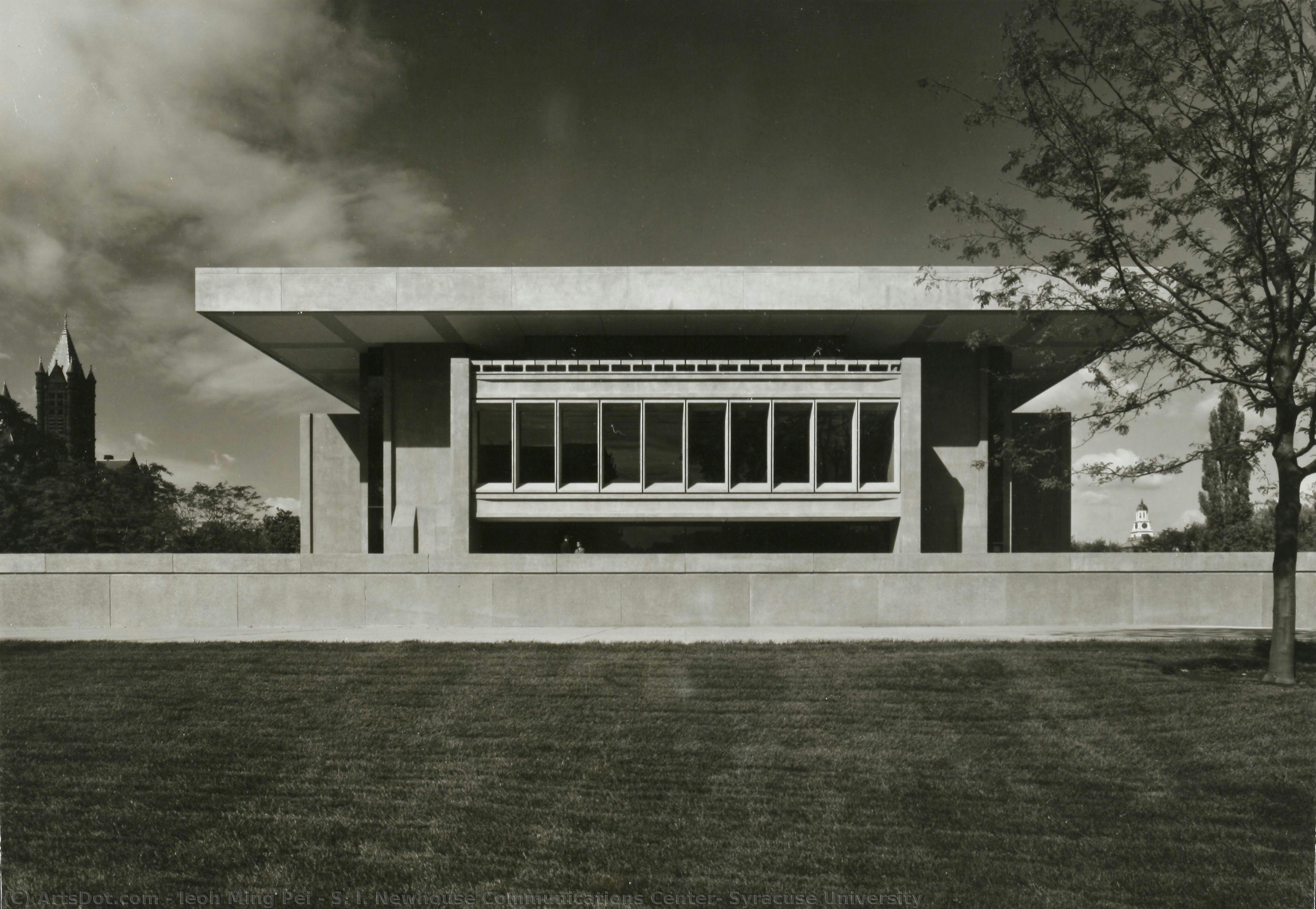
S. I. Newhouse Communications Center, Syracuse University

 Read More
Giclée / Art Print
Museum-quality giclée or canvas print with fast production and flexible finish options. ( Buy Hand Made Painting Buy Image)




































Pick from our preset sizes that match the artwork's original proportions.

You may enter your own dimensions to fit a specific frame or space. If your selected size does not match the original image's proportions, we will either crop the artwork or extend the image with a mirrored or solid-fill edge. A digital mockup will be sent for your approval before production begins.
Please note that the on-screen preview does not reflect the actual cropping or extension. Only the mockup will accurately show the final composition.
While custom sizes are available, we recommend selecting a dimension from the predefined list to preserve the original proportions.
Worldwide Delivery () in 2 weeks instead of standard 4/5 weeks. (21 August)

Free Worldwide Express Shipping

High-Quality Linen Canvas

Full Shipping Insurance

Customs Tax Refund Guarantee

True Color Matching Guarantee

60-Day Return Policy (Defects Only)

100% Money-Back Guarantee

Bulk Discount Offer
 Glass option is only available in size under 110 CM

S. I. Newhouse Communications Center, Syracuse University
Giclée / Art Print
Reproduction Size
-


Total Price
$ 63
Related Artworks

Artist Biography
I.M. Pei: A Life in Architecture
Early Life and Education
- Ieoh Ming Pei, also known as I.M. Pei, was born on April 26, 1917, in Guangzhou, China.
- His family had a rich history rooted in the scholar-gentry class and wealth derived from medicinal herbs.
- Early influences included the garden villas of Suzhou, which instilled a lifelong appreciation for spatial harmony and design.
- In 1935, Pei moved to the United States and initially enrolled at the University of Pennsylvania’s architecture school before transferring to MIT.
- Dissatisfied with the Beaux-Arts focus at both institutions, he independently studied emerging architects like Le Corbusier.
- He continued his education at Harvard Graduate School of Design (GSD), befriending Bauhaus masters Walter Gropius and Marcel Breuer.
Early Career and Establishing a Firm
- From 1948, Pei worked for New York City real estate developer William Zeckendorf, gaining practical experience.
- In 1955, he founded his own firm, I. M. Pei & Associates, which later became I. M. Pei & Partners (1966) and finally Pei Cobb Freed & Partners (1989).
- He retired from full-time practice in 1990 but continued as an architectural consultant through his sons’ firm, Pei Partnership Architects.
Artistic Development and Influences
- Pei's style is characterized by a synthesis of modernist principles with elements of traditional Chinese design.
- He skillfully integrated geometric forms, clean lines, and innovative use of materials like glass and steel.
- His work reflects influences from Le Corbusier’s functionalism, the Bauhaus emphasis on simplicity, and his own cultural heritage.
- A key aspect of his design philosophy was creating spaces that were both aesthetically pleasing and functionally efficient.
Major Achievements and Notable Works
- Mesa Laboratory (1967): His breakthrough project, showcasing a minimalist aesthetic within a natural landscape.
- John F. Kennedy Library (1979): A powerful memorial combining modern design with symbolic elements.
- Dallas City Hall (1978): An iconic example of modernist civic architecture.
- East Building, National Gallery of Art (1978): A striking addition to the National Gallery, known for its geometric forms and natural light.
- Louvre Pyramid (1989): Perhaps his most famous work, a controversial yet ultimately celebrated glass pyramid that serves as the main entrance to the Louvre Museum in Paris.
- Bank of China Tower (1990), Hong Kong: A soaring skyscraper embodying modern architectural principles.
- Museum of Islamic Art (2008), Qatar: A stunning museum showcasing Islamic art within a unique geometric structure.
Historical Significance and Legacy
- I.M. Pei was one of the most influential architects of the 20th and early 21st centuries.
- He received numerous awards, including the AIA Gold Medal (1979), the Praemium Imperiale for Architecture (1989), and the Pritzker Prize (1983).
- His work redefined modern architecture by seamlessly blending different cultural influences and pushing the boundaries of design.
- Pei’s buildings continue to inspire architects and captivate audiences worldwide, solidifying his place as a legendary figure in architectural history.
- He passed away on May 16, 2019, leaving behind a remarkable legacy of innovation and artistic excellence.
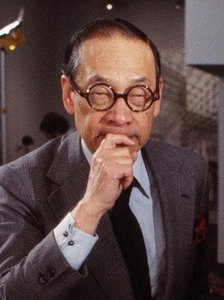
ieoh ming pei
1917 - 2019 , China
Quick Facts
- Birth Date: April 26, 1917
- Birth Place: Guangzhou, China
- Death Date: May 16, 2019
- Influenced By:
- Le Corbusier
- Walter Gropius
- Marcel Breuer
- Movement: Modernism
- Name: Ieoh Ming Pei
- Nationality: Chinese-American
- Notable Works:
- Louvre Pyramid
- Mesa Laboratory
- John F. Kennedy Library
- Bank of China Tower