 Preview
 Send
Send Share
Share
 Details

 Download
 Similars
 X-Ray
X-Ray Diaporama
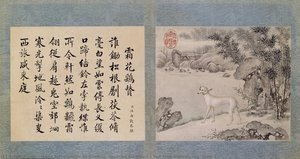
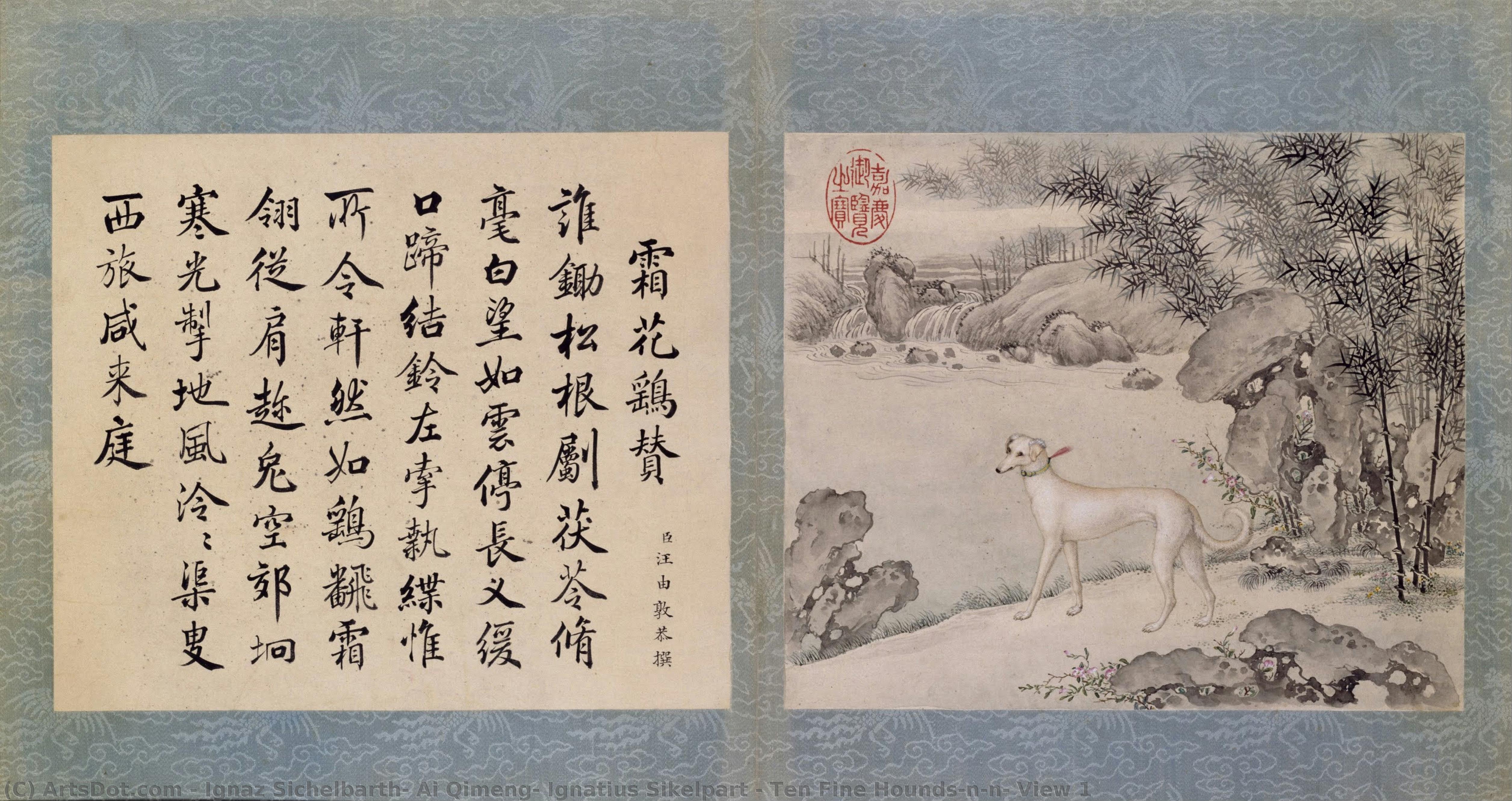
Ten Fine Hounds\n\n- View 1
 Read More
Hand Made Oil Reproduction
Hand-painted oil on canvas in your size and frame, made to order by our artists. ( Buy Print Buy Image)




































Pick from our preset sizes that match the artwork's original proportions.

You may enter your own dimensions to fit a specific frame or space. If your selected size does not match the original image's proportions, we will either crop the artwork or extend the painting with additional hand-painted elements. A digital mockup will be sent for your approval before production begins.
Please note that the on-screen preview does not reflect the actual cropping or extension. Only the mockup will accurately show the final composition.
While custom sizes are available, we recommend selecting a dimension from the predefined list to preserve the original proportions.
After order, ArtsDot.com team will email client for instructions and provide a mockup preview
Worldwide Delivery () in 3/4 weeks instead of standard 5 weeks. (1 September). No compromise on quality.

Free Worldwide Express Shipping

High-Quality Linen Canvas

Full Shipping Insurance

Customs Tax Refund Guarantee

True Color Matching Guarantee

60-Day Return Policy (Defects Only)

100% Money-Back Guarantee

Bulk Discount Offer
 Glass option is only available in size under 110 CM

Ten Fine Hounds\n\n- View 1
Reproduction Medium
Reproduction Size
-


Total Price
$ 263
Related Artworks









Artist Biography
A Bridge Between Worlds: The Life and Art of Ignaz Sichelbarth
Ignaz Sichelbarth, a name that echoes across the centuries as a testament to artistic fusion, was born in 1708 in Nejdek, Czech Republic. More commonly known as Ignatius Sikelpart or Ai Qimeng – titles adopted during his remarkable career at the Chinese Imperial Court – he represents a pivotal moment in art history: the successful blending of European and Asian aesthetics. His life’s journey is one of profound cultural exchange, driven by his vocation as a Jesuit priest and fueled by an extraordinary talent for visual representation. Sichelbarth's story isn’t simply that of an artist; it’s a narrative of diplomacy, faith, and the courageous pursuit of artistic innovation in a world increasingly defined by global interaction.Early Life and Religious Calling
Sichelbarth’s early life unfolded within the confines of a devout Jesuit community. Born into a family deeply rooted in religious tradition, it was perhaps inevitable that he would embrace the path of the priesthood. The Jesuits, renowned for their educational endeavors and missionary work, provided Sichelbarth with an exceptional artistic training – a foundation built upon classical European techniques but subtly influenced by the burgeoning interest in Eastern cultures within the order. This early exposure to both Western art and nascent Orientalist studies proved crucial to his later success. His decision to dedicate himself to service as a painter was not merely a profession, but a calling aligned with his faith and a desire to communicate complex ideas through visual means. The meticulous detail and religious symbolism prevalent in much of his earlier work reflect this deeply held belief system.Service at the Chinese Imperial Court
Sichelbarth’s most significant contribution to art history lies in his decades-long service as a painter for the Qing Dynasty Emperors. He arrived in Beijing in 1738, initially serving as an artist within the Jesuit mission and gradually gaining access to the imperial court. This was an unprecedented opportunity – a European artist working directly under the patronage of the Chinese Emperor. His role extended beyond simple portraiture; he was commissioned to create illustrations for books, maps, and decorative panels, often depicting scenes from Chinese history, mythology, and daily life. Crucially, Sichelbarth didn’t simply replicate existing styles; instead, he actively synthesized European and Asian artistic traditions. He adopted the vibrant colors and fluid brushwork characteristic of Chinese painting, while simultaneously incorporating Western compositional techniques and a heightened sense of realism.‘Les Conquêtes de l'Empereur de la Chine’ – A Collaborative Masterpiece
Sichelbarth’s most celebrated work is undoubtedly his contribution to ‘Les Conquêtes de l'Empereur de la Chine,’ a series of engravings commissioned by Louis XV of France. This ambitious project aimed to document the Chinese Empire and its military campaigns, and Sichelbarth was tasked with producing a series of illustrations depicting these events. These prints are remarkable not only for their technical skill but also for their stylistic innovation. He skillfully combined Western engraving techniques – precise lines and detailed shading – with traditional Chinese motifs and perspectives, creating images that were both strikingly accurate and imbued with an exotic allure. The influence of his work can be seen in the development of Orientalist art throughout Europe, demonstrating how Sichelbarth’s artistic bridge helped to shape perceptions of Asia during this period.Legacy and Historical Significance
Ignaz Sichelbarth died in Beijing in 1780, leaving behind a legacy as one of the most significant artists of his era. His work stands as a powerful symbol of cultural exchange and artistic synthesis. He wasn’t merely an artist who traveled to the East; he was an active participant in shaping the dialogue between two vastly different cultures. Sichelbarth's ability to seamlessly integrate European and Asian artistic principles challenged conventional notions of style and representation, paving the way for future generations of artists to explore cross-cultural influences. His contribution to ‘Les Conquêtes de l’Empereur de la Chine’ remains a testament to his skill and vision, solidifying his place as a pivotal figure in the history of art and diplomacy. His story continues to resonate today, reminding us of the transformative power of artistic collaboration and the enduring allure of bridging seemingly disparate worlds.
ignaz sichelbarth, ai qimeng, ignatius sikelpart
1708 - 1780 , Czech Republic
Quick Facts
- Artistic Movement Or Style: European-Asian art
- Date Of Birth: 1708
- Date Of Death: 1780
- Full Name: Ignaz Sichelbarth (ai qimeng)
- Nationality: German
- Notable Artworks: ["Les Conquêtes de l'Empereur de la Chine"]
- Place Of Birth: Nejdek, Czech Republic