

 Preview
 Send
Send Share
Share
 Details

 Download
 Similars
 X-Ray
X-Ray Diaporama
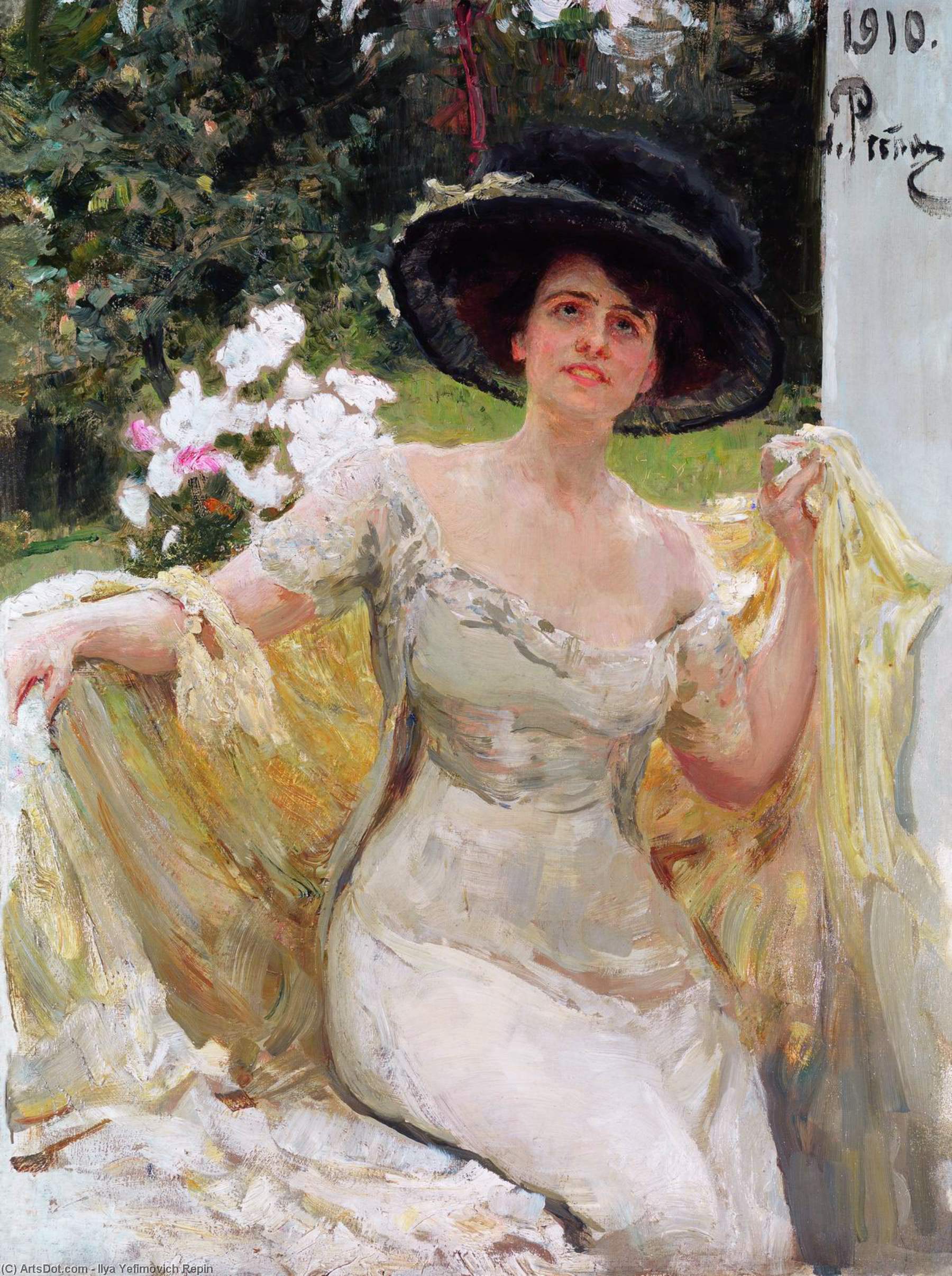
Portrait of Bella Gorskaya
 Oil On Canvas
- WallArt
- Realism
 1910
1910- 19th Century
 125.0 x 93.0 cm
 Read More
Purchase a high-resolution, enhanced digital image, far superior to the online preview.
Each file is meticulously prepared by our in-house specialists using advanced tools and expert manual retouching. We ensure every image has exceptional clarity, precise color accuracy, and fine detail.
The final file is delivered via email within 72 hours, optimized for immediate use in professional, editorial, and print environments. This is the same quality trusted by top-tier design studios, publishers, and galleries.
Digital Image
Download a high-resolution file for personal display, printing, and creative projects. ( Buy Print Buy Hand Made Painting)
Included in Every Digital Image Order
Expert Digital Delivery, Guaranteed
When you choose ArtsDot.com, you're not just getting an image - you're receiving a professionally enhanced digital artwork, crafted with precision and backed by a satisfaction guarantee. Here's everything that comes with your order, automatically:

Fast Email Delivery
Your high-resolution digital image file will be emailed to you within 72 hours of ordering - ready for immediate use.

AI-Enhanced Digital File
Your artwork is professionally optimized using advanced AI tools and manual editing, ensuring maximum detail, clarity, and color accuracy.

Free Lifetime Re-Delivery
Accidentally deleted or lost your file? No worries - we'll resend it to you anytime, free of charge.

No Import Fees - Ever
Enjoy your artwork instantly with zero customs, duties, or delivery fees - digital downloads are always tax-free.

Color Accuracy Guarantee
We ensure your digital image reflects the original colors as closely as possible using professional tools and color management.

60-Day Satisfaction Guarantee
If you're not satisfied with your digital image, we'll revise it or refund 100% within 60 days - no questions asked.

100% Money-Back Guarantee
Not satisfied? Get a full refund within 60 days of receiving your digital file - no questions asked.

Bulk Order Discounts
Buy 3 images, save 10% - Buy 5, save 15% - Buy 10+, save 20%. Great for creative projects, galleries, and agencies.
Collectible Description
The Enduring Gaze of Russian Realism
To stand before Portrait of Bella Gorskaya is to step directly into the vibrant, nuanced world of turn-of-the-century Russia. Ilya Yefimovich Repin, a titan whose brushstrokes defined the trajectory of Russian art, captured not merely a likeness, but an entire moment suspended in time. Painted in 1910, this oil on canvas is a masterful testament to the power and depth of Realism. Repin possessed an unparalleled gift for observing humanity—the subtle tilt of a head, the gentle curve of a hand holding blossoms—and translating that observation onto linen with breathtaking fidelity. The painting invites us into an intimate space, suggesting a quiet afternoon where life unfolds with effortless grace.
A Study in Domestic Beauty and Detail
The subject herself is rendered with exquisite care. Bella Gorskaya sits amidst a backdrop rich with suggestion: potted plants lend an air of cultivated domesticity, while the visible clock hints at the passage of time, grounding the portrait in a tangible reality. Her attire—the flowing dress complemented by a delicate scarf around her neck—speaks to the fashion and sensibility of the era. Yet, it is the details that truly captivate the eye: the way the light catches the fabric, the careful arrangement of the flowers she cradles, all speak to Repin's meticulous technique. He built his compositions not just with color, but with palpable texture, allowing one to almost feel the softness of her garments and the cool earth beneath her perch.
The Heart of Russian Realism
Repin was more than just a portraitist; he was an chronicler of the Russian soul through the lens of observable truth. His commitment to Realism meant eschewing lofty allegory for something far more immediate and deeply human. This painting embodies that spirit—it is beautiful, yes, but its beauty is rooted in authenticity. For the collector or designer seeking art that speaks with intellectual depth alongside aesthetic pleasure, this work offers a connection to a pivotal moment in cultural history. It suggests a life lived richly, observed keenly.
Bringing Salon Grandeur Home
For those considering bringing the spirit of Portrait of Bella Gorskaya into your own sanctuary, understanding its scale (125 x 93 cm) and its inherent warmth is key. A high-quality reproduction allows you to possess this piece of artistic history without the constraints of museum walls. Imagine this scene—the soft greens of the foliage contrasting with the rich tones of her dress—illuminating a drawing-room or a sunlit gallery space. It serves not merely as decoration, but as a conversation starter, an anchor to the enduring legacy of Russian mastery.
Related Artworks
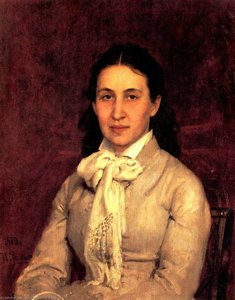
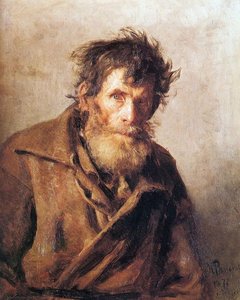
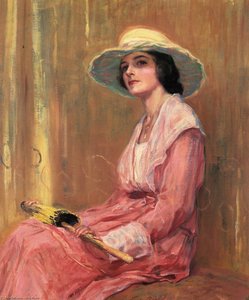
Artist Biography
Early Life and the Seeds of Realism
Ilya Yefimovich Repin, a name that resonates with the very soul of Russian art, was born in 1844 in the humble Ukrainian town of Chuguev. His origins were far removed from the aristocratic circles often associated with artistic patronage; his father, a former soldier who traded horses, and his mother, deeply rooted in local traditions, instilled in young Ilya a profound connection to the land and its people. This early immersion into rural life – its hardships, its vibrant spirit, and its unwavering resilience – would become the bedrock of his artistic vision. Formal education began at a local school where his mother taught, but a period at a military cantonist school followed, an experience Repin later recalled with little fondness. Yet, even within the rigid confines of military discipline, his innate talent for drawing blossomed. At sixteen, he apprenticed himself to Ivan Bunakov, an icon painter, embarking on a rigorous training in religious art that honed his skills in meticulous detail and compositional precision. These formative years were not merely technical exercises; they represented a crucial immersion into the visual language of Russian culture, laying the groundwork for his later explorations of national identity and social commentary. Through restoring ancient icons and fulfilling portrait commissions, Repin began to observe and capture the essence of human character – a skill he would master throughout his illustrious career.St. Petersburg and the Embrace of Social Consciousness
Driven by an unwavering ambition, Repin journeyed to St. Petersburg in 1863, seeking admission to the prestigious Imperial Academy of Arts. Initial rejection did not deter him; he audited classes, immersing himself in the city’s vibrant artistic milieu. It was here that he encountered Ivan Kramskoi, a leading figure in the Peredvizhniki movement – a collective of realist artists who boldly rejected academic conventions and sought to depict Russian life with unflinching honesty. Kramskoi became Repin's mentor, guiding him towards a more socially conscious art. The influence of critic Vladimir Stasov was also pivotal, encouraging Repin to focus on contemporary themes and the lives of ordinary people. Repin’s talent quickly flourished, earning recognition and awards, including gold medals for works like “Job and His Friends” in 1869 and "The Raising of Jairus' Daughter" in 1871. These early successes signaled the arrival of a powerful new voice in Russian art – one that would challenge established norms and capture the spirit of a changing nation. A formative experience was his journey along the Volga River in 1870, sketching the arduous lives of barge haulers; this provided the inspiration for what would become his breakthrough masterpiece, a work that would forever cement his reputation as a champion of the downtrodden.Masterpieces of Realism and Historical Drama
Repin’s name became inextricably linked with realism through works that unflinchingly portrayed the realities of Russian society. "Barge Haulers on the Volga" (1873), a monumental canvas depicting exhausted laborers dragging boats along the river, shocked and captivated audiences. It was not merely a depiction of physical hardship; it was a powerful indictment of social injustice and a testament to human endurance. This painting launched Repin into national prominence and established him as a leading voice for the marginalized. He continued to explore themes of Russian life in works like "Religious Procession in Kursk Province" (1883), which offered a nuanced portrayal of faith, superstition, and social hierarchy. However, Repin’s artistic vision extended beyond contemporary issues; he also tackled historical subjects with dramatic flair. "Ivan the Terrible and His Son Ivan" (1885), depicting a moment of horrific violence and remorse, caused a scandal upon its unveiling but remains one of his most iconic works, a chilling exploration of power and guilt. Perhaps his most celebrated painting is "Reply of the Zaporozhian Cossacks" (1880-91), a vibrant scene capturing the defiant spirit of Ukrainian Cossacks composing a satirical letter to the Ottoman Sultan – a symbol of resistance and national pride. These paintings were not simply historical recreations; they were imbued with psychological depth and emotional intensity, bringing the past vividly to life.Legacy and Enduring Influence
Throughout his long and prolific career, Repin continued to paint portraits of prominent figures – Leo Tolstoy, Modest Mussorgsky, Pavel Tretyakov – capturing their personalities with remarkable insight. He also taught at the Academy of Arts in St. Petersburg, influencing generations of Russian artists. His commitment to realism and social commentary resonated deeply within Russia and beyond, establishing him as a major figure in European art. While he initially embraced the February Revolution of 1917, Repin was disillusioned by the subsequent violence and terror unleashed by the Bolsheviks. He retreated to his estate, Penates, in Kuokkala (now Repino), Finland, where he continued to paint until his death in 1930. Repin’s legacy extends far beyond his individual paintings. He helped define Russian realism, paving the way for Socialist Realism and inspiring countless artists to use their work as a means of social critique. His ability to capture the human condition with both empathy and unflinching honesty continues to resonate with audiences today, ensuring his place among the masters of 19th-century art. Penates, his home, is now a museum, preserving not only his artistic legacy but also offering a glimpse into the life of one of Russia’s most important cultural figures.Key Works and Artistic Style
- "Barge Haulers on the Volga": A monumental depiction of social injustice, showcasing Repin's mastery of realism and his empathy for the working class.
- "Reply of the Zaporozhian Cossacks": A vibrant celebration of Ukrainian spirit and defiance, characterized by dynamic composition and expressive figures.
- "Ivan the Terrible and His Son Ivan": A psychologically intense portrayal of grief and remorse, demonstrating Repin's ability to convey complex emotions through dramatic lighting and gesture.
- "Religious Procession in Kursk Province": A nuanced observation of Russian society, capturing the interplay between faith, superstition, and social hierarchy.
- Portraits of Leo Tolstoy, Modest Mussorgsky, and Pavel Tretyakov: Intimate and insightful portrayals of prominent cultural figures, revealing Repin's skill in capturing personality and character.
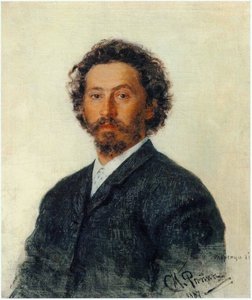
Ilya Yefimovich Repin
1844 - 1930 , Russia
Quick Facts
- Artistic Movement Or Style: Realism
- Artists Or Movements Influenced By This Artist: ['Socialist Realism']
- Artists Who Influenced This Artist:
- Ivan Kramskoi
- Vladimir Stasov
- Date Of Birth: 1844
- Date Of Death: 1930
- Full Name: Ilya Yefimovich Repin
- Nationality: Russian
- Notable Artworks:
- Barge Haulers on Volga
- Reply Zaporozhian Cossacks
- Ivan the Terrible...
- Unexpected Visitors
- Place Of Birth (City And Country): Chuguev, Russia

