 Preview
 Send
Send Share
Share
 Details

 Download
 Similars
 X-Ray
X-Ray Diaporama
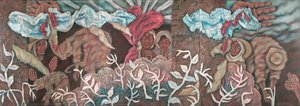
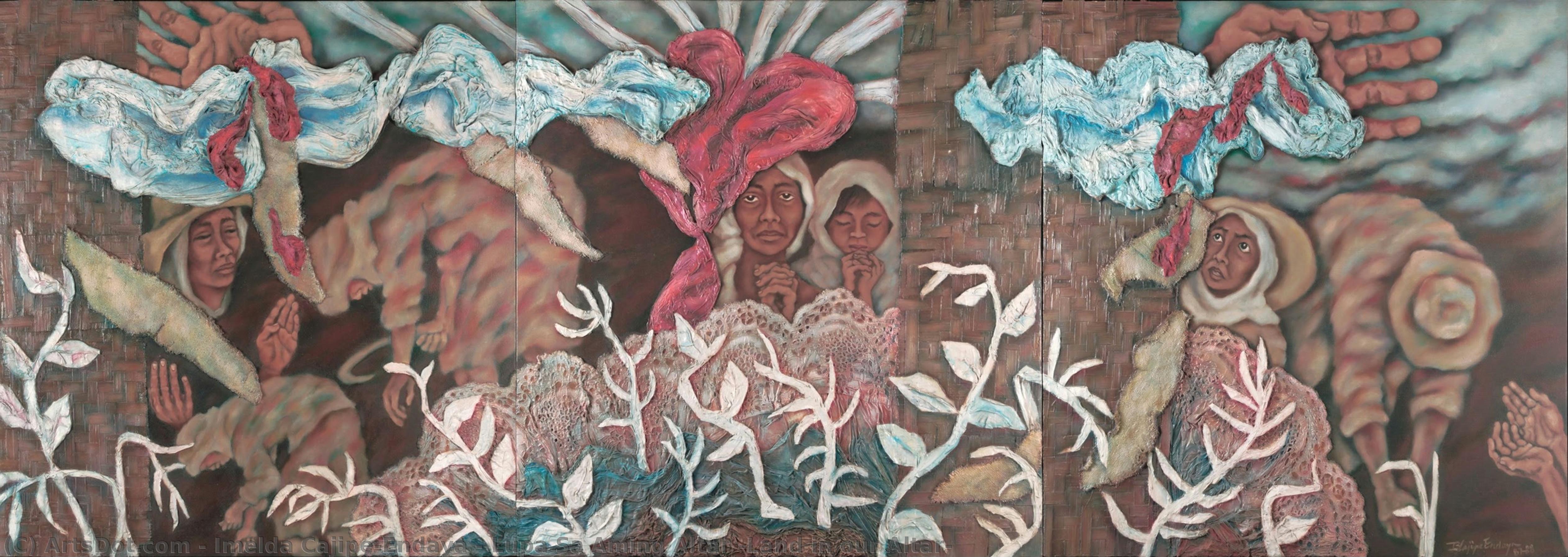
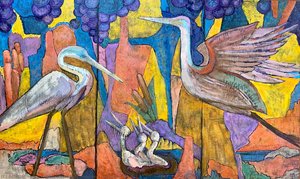
Lupa Sa Aming Altar (Land in our Altar)
 122.0 x 122.0 cm
 National Gallery Singapore
 Read More
Giclée / Art Print
Museum-quality giclée or canvas print with fast production and flexible finish options. ( Buy Hand Made Painting Buy Image)




































Pick from our preset sizes that match the artwork's original proportions.

You may enter your own dimensions to fit a specific frame or space. If your selected size does not match the original image's proportions, we will either crop the artwork or extend the image with a mirrored or solid-fill edge. A digital mockup will be sent for your approval before production begins.
Please note that the on-screen preview does not reflect the actual cropping or extension. Only the mockup will accurately show the final composition.
While custom sizes are available, we recommend selecting a dimension from the predefined list to preserve the original proportions.
Worldwide Delivery () in 2 weeks instead of standard 4/5 weeks. (25 August)

Free Worldwide Express Shipping

High-Quality Linen Canvas

Full Shipping Insurance

Customs Tax Refund Guarantee

True Color Matching Guarantee

60-Day Return Policy (Defects Only)

100% Money-Back Guarantee

Bulk Discount Offer
 Glass option is only available in size under 110 CM

Lupa Sa Aming Altar (Land in our Altar)
Giclée / Art Print
Reproduction Size
-


Total Price
$ 63
Related Artworks








Artist Biography
A Tapestry of Resistance and Resilience
Imelda Cajipe-Endaya stands as a monumental figure in the landscape of Philippine visual arts, a creator whose work serves as both a mirror to social upheaval and a vibrant celebration of cultural identity. Born in Manila in 1949, her artistic consciousness was forged in the crucible of a nation navigating profound socio-political transformations. Growing up in an intellectually rich environment—the daughter of Dr. Pedro M. Cajipe, a survivor of the harrowing Bataan Death March, and Felipa Baisas, a dedicated educator—she inherited a legacy of strength and social awareness. This lineage of resilience became the heartbeat of her practice, driving her to use the canvas, the print, and the installation as tools for advocacy during the turbulent years of martial law in the Philippines.
Her early training at the University of the Philippines College of Fine Arts provided the technical foundation upon which she would build a complex, multi-layered visual language. While her academic beginnings were rooted in advertising art, her spirit quickly gravitated toward the deeper, more visceral realms of printmaking and painting. Influenced by the meticulous etching techniques of European masters like Rembrandt, yet deeply anchored in the Filipino experience, her early series such as Mga Ninuno (Ancestors) began to interrogate the very essence of national identity. Through these works, she sought to reconnect the contemporary Filipino soul with its ancestral roots, weaving together the threads of history and heritage.
The Art of Empowerment and Collective Voice
As her career matured, Cajipe-Endaya’s work transcended individual expression to become a powerful instrument of feminist activism. She became a cornerstone of the Kasibulan collective, a historic group of women artists dedicated to fostering grassroots change and centering the female experience within the broader narrative of Philippine history. Her art does not merely depict women; it embodies their struggles, their domesticity, and their political agency. In her hands, the materials of everyday life—crochet, lace, textiles, and found objects like suitcases or flatirons—are transformed into profound symbols of migration, family, and the labor of womanhood. This tactile approach creates a sensory experience that is both intimately "womanly" and undeniably Filipino.
Her practice expanded into large-scale installations and mixed-media works that tackle the most pressing issues of her era. From the complexities of reproductive health and children’s rights to the globalized pressures of migration, displacement, and climate collapse, Cajipe-Endaya’s oeuvre is a relentless pursuit of truth. Her ability to blend the delicate with the political allows her to navigate themes of peace and environmental justice through a lens that is both tender and confrontational. This duality has earned her immense respect within the international art community, leading to exhibitions in prestigious venues such as the Biennale of Sydney and the Asia-Pacific Triennial of Contemporary Art.
Legacy and Global Resonance
The significance of Imelda Cajipe-Endaya lies in her ability to bridge the gap between the personal and the political, the local and the global. Her contributions extend far beyond the studio; as a curator, author, and educator, she has been instrumental in shaping contemporary art discourse through initiatives like Pananaw: Philippine Journal of Visual Arts. Her leadership within the National Commission for Culture and the Arts and her role in the Philippine Association of Printmakers have left an indelible mark on the institutional fabric of her homeland.
Today, her works reside in some of the most esteemed collections in Asia and beyond, including the National Gallery of Singapore, the Cultural Center of the Philippines, and the Fukuoka Asian Art Museum. The accolades she has received—such as the Ani ng Dangal and the CCP Thirteen Artists Award—are reflections of a lifetime devoted to the pursuit of social justice through aesthetic excellence. As she continues to work from New York, her art remains a vital, breathing testament to the enduring power of the human spirit to resist oppression and reimagine a future defined by hope and liberation.
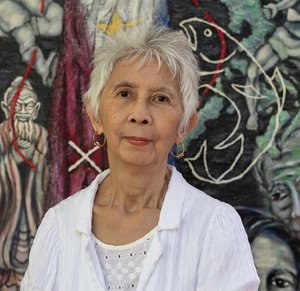
Imelda Cajipe-Endaya
1949 - , Philippines
Quick Facts
- Artistic Movement Or Style: Contemporary Filipino Art
- Artists Or Movements Influenced By This Artist: ['Eastern Painting Traditions']
- Artists Who Influenced This Artist:
- Benedicto Cabrera
- Ofelia Gelvezon-Tequi
- Date Of Birth: September 16, 1949
- Full Name: Imelda Cajipe-Endaya
- Nationality: Filipino
- Notable Artworks:
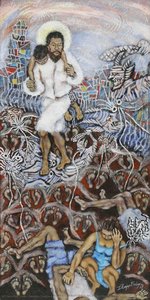
- Bangungot ng Mabuting Pastol
- Lupa Sa Aming Altar
- Place Of Birth: Manila, Philippines