

 Preview
 Buy Print
 Send
Send Share
Share


 Download
 Similars
 X-Ray
X-Ray Diaporama
Madonna and Child
 Oil On Canvas
- WallArt
- Early Italian Renaissance
 1295
1295 67.0 x 48.0 cm
 Museo d'Arte Sacra della Val d'Arbia
Duccio di Buoninsegna (1255 – 1319)
Discover Duccio di Buoninsegna (c. 1255-1319), a pivotal Italian painter of the Trecento & Sienese School. Explore his innovative Gothic style, emotional depth in masterpieces like the Rucellai Madonna & Maestà.
Museo d'Arte Sacra della Val d'Arbia (Buonconvento, Italy)
The Museo d'Arte Sacra della Val d’Arbia, nestled in Buonconvento, Italy, showcases a remarkable collection of Sienese paintings from the 14th-16th centuries—including Duccio’s ‘Madonna and Child’ and Lorenzetti’s visionary frescoes. Located within Palazzo Ricci Socini near Sant'Albano church, it offers an intimate glimpse into Tuscan religious artistry.
The Sienese Luminary's Tender Vision
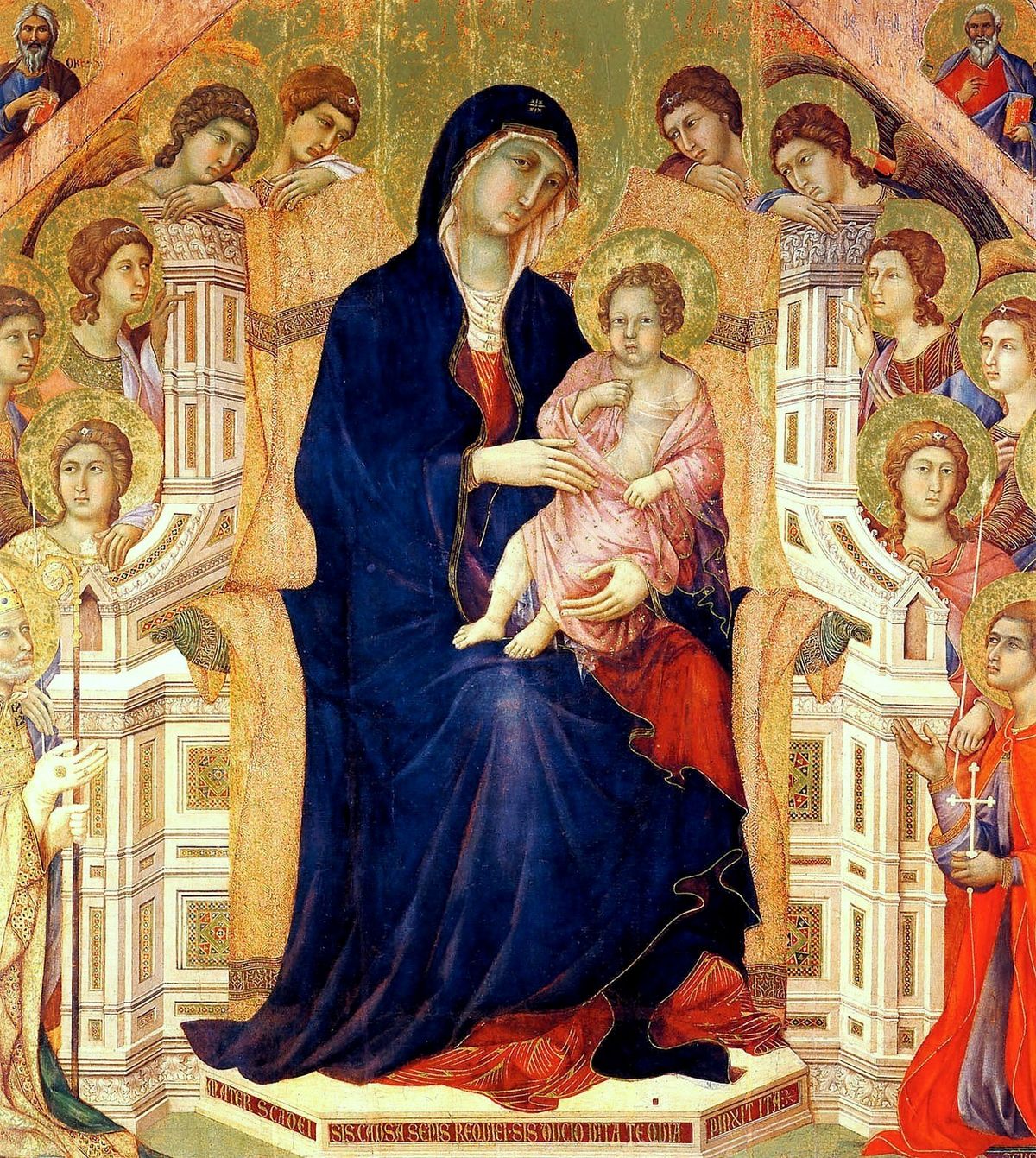
Dating to 1295, Duccio di Buoninsegna’s “Madonna and Child” is more than just a depiction of the Virgin Mary cradling her infant son; it’s a pivotal moment in the evolution of Italian art. Born in Siena during a period of profound religious transformation, Duccio wasn't merely replicating established Byzantine iconography; he was subtly pushing against its rigid formality, injecting a nascent humanity into sacred narratives – a hallmark that would define the Sienese School and profoundly influence generations to come. This painting represents a crucial bridge between the weighty traditions of the East and the burgeoning naturalism taking root in Italy, offering a glimpse into an artist grappling with how to represent divine grace within a more relatable human context.
A Symphony of Color and Texture
The painting immediately captivates with its rich, vibrant palette – a testament to Duccio’s mastery of tempera paint. The gold background, meticulously applied, isn't merely decorative; it evokes the opulent splendor of Byzantine mosaics, yet here it serves to illuminate the figures within, creating an ethereal glow that emphasizes their serenity and devotion. Notice the careful modeling of Mary’s drapery – a departure from the flat, stylized forms common in earlier works. Duccio employs subtle shifts in tone and light to create a sense of volume and depth, drawing the viewer's eye towards the tender embrace between mother and child. The deep blues and reds, particularly in the Virgin’s robes, are not just aesthetically pleasing; they carry symbolic weight – blue representing purity and divinity, while red signifies both Mary’s maternal love and her role as a vessel of grace.
- Technique: Tempera on panel, showcasing Duccio's refined control over the medium.
- Color Palette: Rich blues, reds, golds – carefully chosen to evoke both spiritual significance and visual beauty.
- Composition: A balanced arrangement emphasizing intimacy and tenderness between Mary and Christ.
Symbolism of Devotion
Beyond its technical brilliance, the painting is laden with symbolic meaning. The positioning of the infant Jesus close to Mary’s chest speaks volumes about their intimate connection – a visual representation of the concept of *coincidentia oppositorum* (the unity of opposites) so central to medieval thought. The ornate frame surrounding the scene further elevates its sacred status, suggesting the importance of this image within the devotional practices of the time. The presence of angels, though subtly integrated into the composition, reinforces the divine nature of the event and underscores Mary’s role as the “Mother of God.” Considering Duccio's work in the Museo d'Arte Sacra della Val d’Arbia, alongside other Sienese masterpieces, reveals a consistent focus on conveying emotional depth within religious narratives – a characteristic that distinguishes his art from earlier, more formal styles.
A Legacy of Innovation
Duccio di Buoninsegna's “Madonna and Child” stands as a landmark achievement in Italian art history. His willingness to experiment with naturalism, emotion, and spatial depth paved the way for the Renaissance masters who would follow. This painting is not simply a beautiful image; it’s a window into the evolving spiritual and artistic landscape of 13th-century Italy – a testament to an artist who dared to infuse sacred narratives with humanity and grace. Reproductions of this iconic work offer a unique opportunity to experience the profound beauty and emotional resonance of Duccio's vision, bringing a touch of Sienese devotional art into any space.
About this artwork
- Title: Madonna and Child
- Artist: Duccio di Buoninsegna
- Year: 1295
- Original dimensions: 67.0 x 48.0 cm
- Format: Portrait
- Copyright status: Public domain
- Where to see it: Museo d'Arte Sacra della Val d'Arbia
- Movement: Early Italian Renaissance
- Medium: Oil On Canvas
- Medium type: WallArt
Quick Facts
- Notable elements: Gold background, ornate frame
- Artist: Duccio di Buoninsegna
- Year: 1295
- Artistic style: Sienese Gothic
- Subject or theme: Virgin Mary and Child
- Dimensions: 67 x 48 cm
- Influences: Byzantine art
QR Code


