

 Preview
 Buy Print
 Send
Send Share
Share


 Download
 Similars
 X-Ray
X-Ray Diaporama
Apelles Painting Campaspe
 Oil On Canvas
- WallArt
- Baroque Classicism
 1716
1716 126.0 x 97.0 cm
 The Louvre
Nicolas Vleughels (1668 – 1737)
Explore the elegant works of Nicolas Vleughels, a French painter & director at the French Academy in Rome. Known for Venetian influences & classical themes.
The Louvre (Paris, France)
Explore the Louvre Museum in Paris! Home to iconic masterpieces like the Mona Lisa & Venus de Milo, journey through art history from ancient Egypt to Renaissance icons. Plan your visit today!
Nicolas Vleughels: Bridging Flemish Tradition and Venetian Grandeur
Nicolas Vleughels (1668 – 1737) stands as a pivotal figure in the artistic landscape of the early Baroque era, embodying the confluence of Flemish artistic heritage with the burgeoning influence of Venetian painting. Born in Paris to Philippe Vleughels, a renowned Flemish painter who had emigrated from Antwerp, Nicolas inherited a lineage steeped in artistic excellence and established within a vibrant community of Flemish artists residing in the capital. His formative years were profoundly shaped by instruction under Pierre Mignard, a prominent portraitist whose meticulous realism would undoubtedly influence his stylistic sensibilities. Furthermore, he diligently copied works by Rubens—a titan of Baroque art—demonstrating an unwavering dedication to mastering the techniques and expressive power of one of his era’s greatest masters. This synthesis of Flemish precision and Venetian dynamism characterizes his oeuvre, securing him a prominent place in art history.The Painting: Apelles Painting Campaspe
“Apelles Painting Campaspe,” created in 1716, is an oil on canvas masterpiece that captures the essence of Venetian idealism blended with subtle Flemish nuances. The artwork depicts a serene tableau featuring a woman seated before a man wielding a paintbrush—a deliberate allusion to the legendary painter Apelles and his celebrated portrait of Alexander’s beloved Campaspe. This narrative embodies the humanist ideals prevalent during the period, reflecting an interest in portraying human emotion and intellect alongside aesthetic beauty. The composition is carefully balanced, utilizing geometric forms and harmonious color palettes typical of Venetian painters like Titian and Veronese. However, Vleughels subtly incorporates Flemish stylistic elements—particularly a meticulous attention to detail and textural rendering—resulting in a captivating visual experience.Detailed Description & Symbolism
The painting’s central figure, the woman, exudes composure and grace, her hands resting delicately on her chest – a gesture signifying vulnerability and contemplation. Her gaze directs towards the man, symbolizing artistic inspiration and creative endeavor. The room itself is rendered with understated realism, featuring furnishings like a chair, dining table, and couch—elements that contribute to the painting’s sense of domestic tranquility. Scattered throughout the space are symbolic objects: a vase positioned at the top left corner evokes notions of purity and refinement, mirroring classical ideals; a bowl on the dining table represents nourishment and abundance; and two books nestled close to each other symbolize knowledge and erudition. Collectively, these elements reinforce the painting’s overarching theme—a celebration of human connection and intellectual pursuit within an idealized setting.Technique & Artistic Influences
Vleughels' masterful technique demonstrates a profound understanding of chiaroscuro – the dramatic interplay between light and shadow – a hallmark of Venetian painting that elevates the artwork’s emotional impact. He skillfully employs glazing techniques to achieve luminous colors and subtle tonal variations, mirroring Rubens’ influence and furthering his artistic development. The artist’s meticulous attention to detail—evident in the rendering of fabrics, textures, and facial expressions—underscores the Flemish tradition's commitment to realism and psychological depth. This careful execution ensures that every element contributes to the painting’s overall narrative and aesthetic beauty.Concluding Remarks: An Enduring Legacy
“Apelles Painting Campaspe” stands as a testament to Nicolas Vleughels’ artistic genius—a harmonious fusion of Flemish tradition and Venetian grandeur. Its enduring appeal lies in its ability to evoke contemplation, admiration for beauty, and an appreciation for the complexities of human emotion. Like many artworks from this era, it continues to inspire artists and collectors alike, securing its place as a cornerstone of Baroque art history.- Artist: Nicolas Vleughels
- Birth Year: 1668
- Death Year: 1737
- Birth City: Paris
- Birth Country: France
Additional Research:
Explore the elegant works of Nicolas Vleughels, a French painter & director at the French Academy in Rome. Known for Venetian influences & classical themes.
Nicolas Vleughels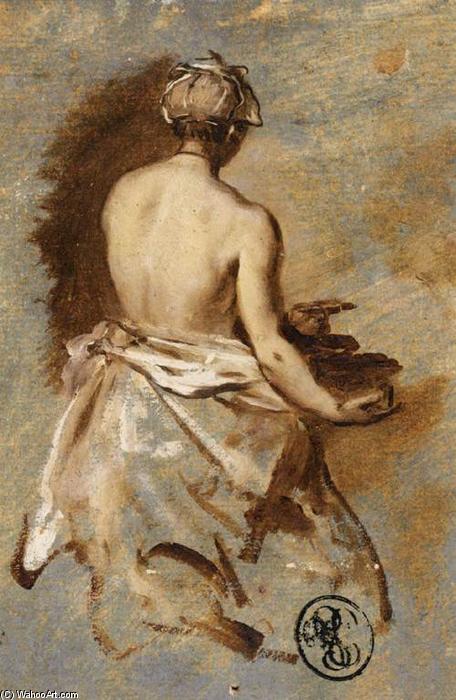
Discover the life & work of Nicolas Poussin, a master of French Classicism. Explore his allegorical paintings, Roman influences, and enduring impact on art history.
Nicolas Poussin: Classicism, Allegory & Order in 17th-Century French Painting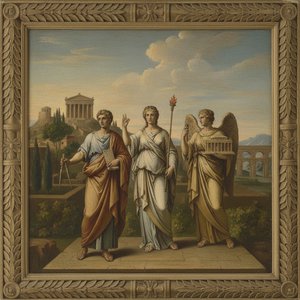
Explore the captivating world of Nicolaes Berchem, a leading Dutch Golden Age painter. Discover his idyllic landscapes, masterful technique & lasting influence on art history.
Nicolaes Berchem: Dutch Golden Age Pastoralism & The Evolution of Landscape Painting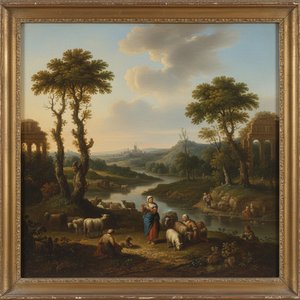
File Information:
File Name: Vleughels, Nicolas - Apelles Painting Campaspe - 1716.jpg
File:Vleughels, Nicolas - Apelles Painting Campaspe - 1716.jpg

License: CC ZERO 1.0
Related Links:
Wikidata:
About this artwork
- Title: Apelles Painting Campaspe
- Artist: Nicolas Vleughels
- Year: 1716
- Original dimensions: 126.0 x 97.0 cm
- Format: Portrait
- Copyright status: Public domain
- Where to see it: The Louvre
- Movement: Baroque Classicism
- Color palette: Earthy
- Main color: Phthalo Green
Quick Facts
- Subject or theme: Portraiture; Romanticism
- Medium: Oil on canvas
- Notable elements or techniques: Venetian influences; Classical themes
- Artist: Nicolas Vleughels
- Movement: Baroque
- Influences: Rubens
- Year: 1716
QR Code



