 Preview
 Send
Send Share
Share
 Details

 Download
 Similars
 X-Ray
X-Ray Diaporama
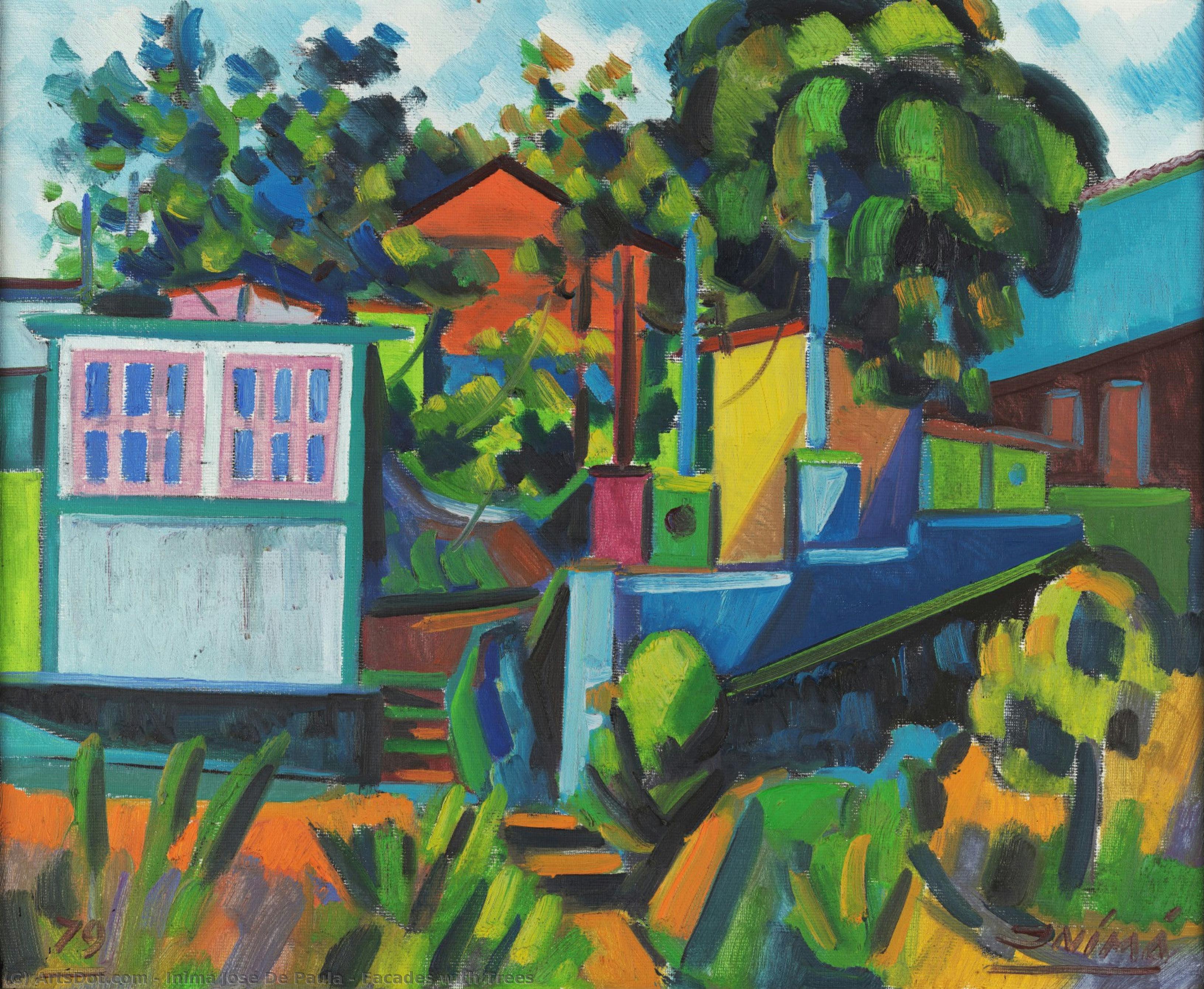
Facades with Trees


 Read More
Giclée / Art Print
Museum-quality giclée or canvas print with fast production and flexible finish options. ( Buy Hand Made Painting Buy Image)




P118B $10

P118H $10

P118W $10

P438Z $10

P508JH $12

P508YH $12

P805H $10

P805Z $10

P919BZ $10

P919G $10

P919XJ $10

P959ZH $10

P968JZ $12

W106C $8

W218G $10

W218JH $8

W218Y $10

W307PJ $10

W316G $10

W316PJ $8

W316Y $10

W398PJ $8

W4111J $10

W500HY $15

W500JH $15

W692G $12

W849H $8

W940BG $15

W953PJ $8




Pick from our preset sizes that match the artwork's original proportions.

You may enter your own dimensions to fit a specific frame or space. If your selected size does not match the original image's proportions, we will either crop the artwork or extend the image with a mirrored or solid-fill edge. A digital mockup will be sent for your approval before production begins.
Please note that the on-screen preview does not reflect the actual cropping or extension. Only the mockup will accurately show the final composition.
While custom sizes are available, we recommend selecting a dimension from the predefined list to preserve the original proportions.
Worldwide Delivery () in 2 weeks instead of standard 4/5 weeks. (17 August)

Free Worldwide Express Shipping

High-Quality Linen Canvas

Full Shipping Insurance

Customs Tax Refund Guarantee

True Color Matching Guarantee

60-Day Return Policy (Defects Only)

100% Money-Back Guarantee

Bulk Discount Offer
 Glass option is only available in size under 110 CM

Facades with Trees
Giclée / Art Print
Reproduction Size
-


Total Price
$ 63
Collectible Description
A Symphony of Color and Motion
In the vibrant masterpiece Facades with Trees, created in 1979, the legendary Brazilian Fauvist Inimá José de Paula invites us into a world where reality is filtered through a prism of intense, emotive color. The painting captures a bustling street scene that feels less like a static photograph and more like a living, breathing organism. At the heart of this composition lies a striking blue train car, its bright green door acting as a visual anchor amidst a sea of movement. As the eye wanders across the canvas, it encounters a rhythmic arrangement of other trains, weaving through a landscape populated by figures that appear to dance within the urban tapestry. The scene is a masterful study in energy, where the boundaries between architecture, machinery, and humanity blur into a singular, joyous expression of life.
The technique employed here is a testament to Paula’s deep roots in the Fauvist tradition. Eschewing the muted palettes of realism, he utilizes bold, uninhibited brushstrokes and high-contrast hues to evoke the heat and spirit of the setting. The interplay between the cool blues of the locomotive and the verdant greens of the foliage creates a dynamic tension that keeps the viewer's gaze in constant motion. This is not merely a depiction of a foreign street; it is an exploration of how light and color can transform the mundane into the extraordinary. For the collector or interior designer, this piece offers a profound sense of vitality, making it an ideal centerpiece for spaces that require a burst of chromatic energy and a sophisticated, modern edge.
The Legacy of the Brazilian Fauve
To understand the emotional depth of Facades with Trees, one must look to the artistic lineage of Inimá José de Paula. Trained in the prestigious halls of Paris and influenced by masters such as André Lhote and Gino Severini, Paula brought a European avant-garde sensibility back to his native Brazil. His work serves as a bridge between the structured lessons of classical training and the wild, expressive freedom of modern abstraction. In this 1979 work, we see the culmination of a lifetime spent studying how color can function as a language of its own—a language that speaks directly to the soul without the need for literal representation.
The symbolism within the painting lies in its celebration of connectivity and the pulse of civilization. The trains, symbols of progress and transit, act as conduits for the human stories unfolding around them. There is a profound sense of community and shared experience captured in the way the figures are scattered throughout the frame—some huddled in conversation, others solitary in their journey. For those seeking to adorn a home or gallery with art that inspires movement and optimism, this reproduction offers more than just aesthetic beauty; it provides a window into a world where every color is a heartbeat and every facade tells a story of enduring life.
Related Artworks
Artist Biography
The Vibrant Soul of Brazilian Fauvism
In the grand tapestry of modern art, few threads shine with as much chromatic intensity as those woven by Inimá José de Paula. Born on December 7th, 1918, in the quiet town of Itanhomi, Minas Gerais, Paula would eventually become a titan of Brazilian Fauvism, a movement defined by its liberation from representational accuracy in favor of raw, emotive color. His life was a journey of constant motion, much like the rhythmic compositions found within his canvases. From his early formative years in Brazil to the avant-garde circles of Paris, Paula’s existence was dedicated to capturing the pulse of life through a prism of uninhibited pigment and expressive abstraction.
His artistic foundation was laid with rigorous discipline, beginning at the Núcleo Antônio Parreiras in Juiz de Fora. This early training provided him with the technical vocabulary that he would later deconstruct and reimagine. As he moved toward the cultural hubs of Rio de Janeiro, studying at the Liceu de Artes e Ofiente, he began to absorb the influences of masters like Argemiro Cunha and the members of the Bernardelli Nucleus. However, it was his exposure to European modernism that truly ignited his creative spirit. The encounter with the techniques of André Lhote and Gino Severini acted as a catalyst, introducing him to the Fauvist tradition where color is not merely descriptive but serves as the primary vehicle for emotion and energy.
A Journey Through Color and Continent
The trajectory of Paula’s career was marked by significant milestones that bridged the gap between Brazilian identity and international modernism. A pivotal moment arrived in 1948 with his inaugural solo exhibition at the Instituto dos Arquitetos do Brasil (IAB/RJ). This debut was not merely a personal triumph but a professional coronation, as it received the generous support of the legendary Candido Portinari. Such an endorsement placed Paula firmly within the vanguard of the Brazilian art scene, establishing him as a rising star capable of blending local sensibilities with global movements.
In 1954, seeking to further immerse himself in the heart of the art world, Paula moved to Paris. This period of residency allowed him to breathe the same air as the avant-garde spirits that had shaped his youth. Living amidst the intellectual ferment of the French capital, his work began to evolve into a sophisticated dialogue between structure and spontaneity. He brought back to Brazil a refined sensibility—a way of seeing that utilized bold, uninhibited brushstrokes and high-contrast hues to transform the mundane into the extraordinary. Whether depicting urban landscapes or more abstract forms, his work remained anchored in a profound sense of vitality.
Legacy of an Expressive Visionary
The enduring significance of Inimá José de Paula lies in his ability to evoke the heat, spirit, and movement of life through a singular visual language. His masterpieces, such as Facades with Trees (1979), serve as breathtaking examples of his mastery. In these works, one finds a symphony of color where blue train cars and verdant foliage dance within an urban tapestry, blurring the boundaries between architecture, machinery, and humanity. He did not merely paint scenes; he painted the energy inherent in them.
Throughout his decades-long career, Paula earned prestigious recognition from institutions such as the SNBA and SNAM, solidifying a legacy that continues to inspire collectors and historians alike. His contribution to art can be summarized through several key pillars:
- Chromatic Innovation: The use of intense, emotive palettes that define the Brazilian Fauvist identity.
- Cultural Synthesis: The seamless integration of European avant-garde techniques with the vibrant spirit of Brazilian landscapes and life.
- Structural Dynamism: A unique ability to use simplified forms and rhythmic arrangements to create a sense of perpetual motion.
- Artistic Mentorship and Connection: His role in the broader movement of modern Brazilian art, supported by icons like Portinari.
When we look upon the works of Inimá José de Paula, we are not merely observing paint on canvas; we are witnessing a lifelong celebration of existence. He remains a vital figure in the history of 20th-century art, a painter who taught us that color is the most direct path to the human soul.
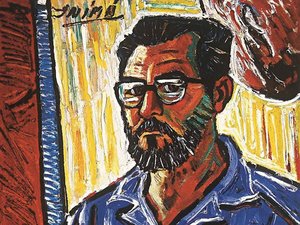
inimá josé de paula
1918 - 1999 , Brazil
Quick Facts
- Artistic Movement Or Style: Fauvism
- Artists Who Influenced This Artist:
- André Lhote
- Gino Severini
- Date Of Birth: December 7, 1918
- Date Of Death: August 13, 1999
- Full Name: inimá josé de paula
- Nationality: Brazilian
- Notable Artworks: ['Facades with Trees']
- Place Of Birth: Itanhomi, Brazil
Related Articles
Slate Blue Masterpieces: 10 Iconic Paintings & Timeless Home Decor Ideas
Immerse yourself in the captivating world of slate blue! Explore 10 iconic paintings by Monet, Van Gogh & Renoir. Discover their stories, techniques & find museum-quality art reproductions for your home at .
The Allure of Azure: Exploring the Symbolic & Aesthetic Depths of Blue in Art History
Explore the rich history of blue in art! Discover its symbolism, from ancient pigments to modern masterpieces by Kandinsky & Seurat. Uncover the psychological impact and cultural meanings behind this captivating hue.
Fauvism's Bold Vision: 10 Masterpieces That Revolutionized Modern Art |
Explore the revolutionary world of Fauvism! Discover 10 masterpieces by Matisse, Derain & Vlaminck that defined this bold art movement. Find museum-quality reproductions and vibrant canvas prints to elevate your home decor at .
Fauvism's Boldest Visions: 10 Masterpieces That Revolutionized Modern Art | ArtsDot
Explore 10 Fauvist masterpieces by Matisse, Derain & Vlaminck that ignited Modern Art! Discover bold colors, expressionist landscapes & the history of this revolutionary movement. Find museum-quality prints at ArtsDot.com.
Azure Visions: Exploring Representations of the Blue Dress in Western Art History
Explore the rich history of the blue dress in Western art! Discover its symbolism, from Renaissance masterpieces to modern interpretations by artists like Martin & Schiele. Uncover cultural meanings and artistic techniques.