 Preview
 Send
Send Share
Share
 Details

 Download
 Similars
 X-Ray
X-Ray Diaporama
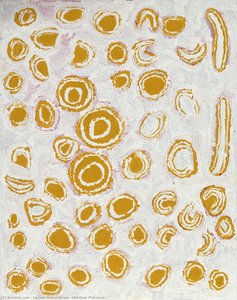
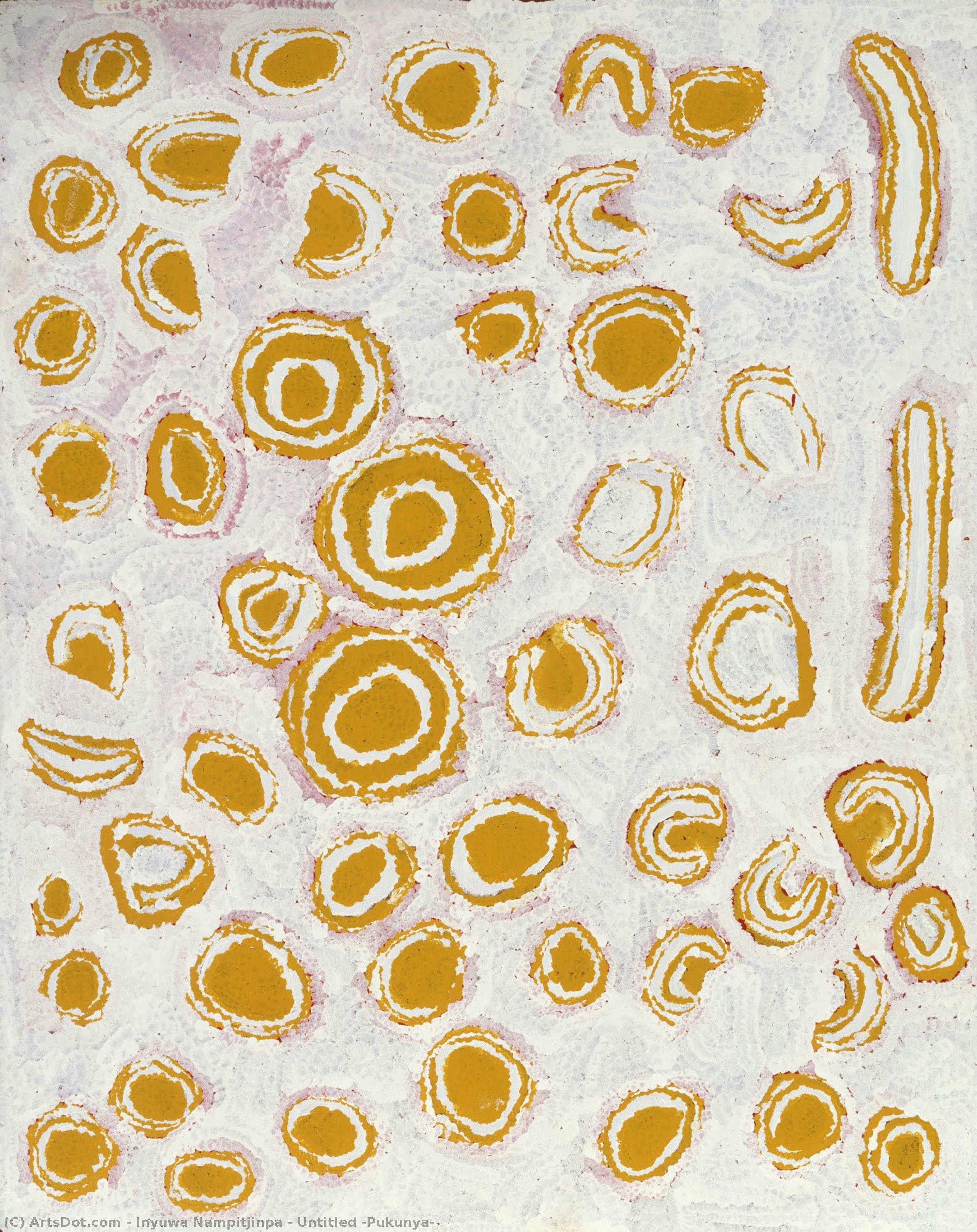
Untitled (Pukunya)
 Acrylic
- WallArt
- Contemporary Indigenous
 1999
1999- Contemporary
 152.0 x 121.0 cm
 Art Gallery of New South Wales
 Read More
Hand Made Oil Reproduction
Hand-painted oil on canvas in your size and frame, made to order by our artists. ( Buy Print Buy Image)




































Pick from our preset sizes that match the artwork's original proportions.

You may enter your own dimensions to fit a specific frame or space. If your selected size does not match the original image's proportions, we will either crop the artwork or extend the painting with additional hand-painted elements. A digital mockup will be sent for your approval before production begins.
Please note that the on-screen preview does not reflect the actual cropping or extension. Only the mockup will accurately show the final composition.
While custom sizes are available, we recommend selecting a dimension from the predefined list to preserve the original proportions.
After order, ArtsDot.com team will email client for instructions and provide a mockup preview
Worldwide Delivery () in 3/4 weeks instead of standard 5 weeks. (19 August). No compromise on quality.

Free Worldwide Express Shipping

High-Quality Linen Canvas

Full Shipping Insurance

Customs Tax Refund Guarantee

True Color Matching Guarantee

60-Day Return Policy (Defects Only)

100% Money-Back Guarantee

Bulk Discount Offer
 Glass option is only available in size under 110 CM

Untitled (Pukunya)
Reproduction Medium
Reproduction Size
-


Total Price
$ 263
Artwork Description
A Celestial Dance of Form and Light
In the profound stillness of the Australian desert, where the horizon meets the infinite sky, Inyuwa Nampitjinpa captured a moment of pure, rhythmic abstraction in her 1999 masterpiece, Untitled (Pukunya). This breathtaking work serves as a visual meditation, inviting the viewer into a world where geometry and spirit converge. At first glance, the eye is immediately drawn to the vibrant, sun-drenched yellow circles that drift across a pristine white expanse. These forms are not merely shapes; they possess an organic vitality, varying slightly in size and contour, suggesting a celestial dance or perhaps the rhythmic ripples of water in a sacred rockhole. The composition breathes with a sense of movement, as if the golden orbs are caught in a slow, eternal rotation across a canvas of pure light.
The technique employed by Nampit::jpa reflects a masterful command of minimalist polymer painting, a style that honors the profound simplicity of the Pintupi landscape. Each circle is rendered with a deliberate, energetic touch that speaks to her lineage and the influence of her second husband, the prolific Tutuma Tjapangati. There is a tactile quality to the overlapping layers, where the intersection of yellow pigments creates a subtle depth, transforming a two-dimensional surface into a multidimensional experience. For the discerning collector or interior designer, this piece offers a sophisticated interplay of high-contrast color and negative space, making it an ideal focal point for modern, minimalist, or contemporary organic interiors where light and clarity are paramount.
The Echoes of Ancestral Journeys
To truly appreciate Untitled (Pukunya), one must look beyond the surface to the deep historical currents that flow through Nampitjinpa’s brushstrokes. Her life was a bridge between two worlds: the ancient, nomadic rhythms of the East Gibson Desert and the transformative era of permanent settlements like Haasts Bluff. This painting is an evocative remnant of that transition, embodying the spiritual geography of the Pintupi people. The "Pukunya" referred to in the title—often signifying a place of gathering or a meeting point—is mirrored in the way the yellow circles cluster and overlap. They represent more than just abstract motifs; they are echoes of campsites, water sources, and the communal gatherings that have sustained her people for millennia.
The emotional resonance of the work lies in its ability to evoke both peace and profound connection. There is a quiet strength in the white void, a sense of the vast, untouched desert air, while the golden forms provide a warmth that feels deeply human and grounded. For those seeking to adorn a space with art that possesses a soul, this reproduction offers more than mere decoration; it provides a window into a resilient culture and a testament to the enduring power of ancestral memory. It is a piece that does not demand attention through noise, but rather commands it through a serene, luminous presence that lingers in the mind long after the first viewing.
Related Artworks
Artist Biography
A Life Etched in the Desert Landscape
Inyuwa Nampitjinpa, a pivotal figure in contemporary Indigenous Australian art, emerged from the remote East Gibson Desert of Western Australia around 1922. Her life was inextricably linked to the ancient traditions and harsh beauty of her Pintupi heritage, a connection that would profoundly shape her artistic vision. Born into a nomadic family deeply rooted in the land, Inyuwa’s early years were defined by the rhythms of traditional Aboriginal life—a constant journey following water sources and seasonal food availability. This existence, steeped in ancestral knowledge and spiritual understanding, formed the bedrock of her later creative expression.
The mid-1950s brought significant change with the arrival of government settlements like Ikuntji (Haasts Bluff). Inyuwa’s family was among those who cautiously approached these new outposts, seeking access to essential supplies. This marked a transition from complete isolation to a more complex interaction with the outside world, though their connection to the traditional lands remained unbroken. The subsequent years saw her settle in Papunya and later Walungurru (Kintore), communities that would become vital hubs for the burgeoning Desert art movement.
The Emergence of a Unique Artistic Voice
Inyuwa began painting relatively late in life, around 1994, joining the women’s painting project at Haasts Bluff. While her husband, Tutuma Tjapangati, was already an established artist known for his energetic style, Inyuwa quickly developed a distinctive aesthetic of her own. Her work is immediately recognizable for its minimalist compositions and bold use of polymer paint—a medium that allowed for vibrant color and textural depth. Unlike the often intricate dot paintings associated with other regions, Inyuwa’s canvases are characterized by their simplicity and emotional resonance.
Her subject matter draws directly from her lived experience: rockholes, vital sources of life in the arid landscape; campsites, remnants of ancestral journeys; and women's utensils—objects imbued with cultural significance. These elements aren’t depicted realistically but rather abstracted into powerful visual statements. The paintings are not merely representations of places or objects; they are evocations of spiritual connections to the land, embodying stories passed down through generations.
Symbolism and Technique: A Language of the Land
The power of Inyuwa’s work lies in its subtle yet profound symbolism. Her minimalist style isn't an absence of meaning but a distillation of it. The rockholes, for example, are often represented by circular forms filled with layers of vibrant color—a visual metaphor for the life-giving water they contain and the spiritual energy associated with them. Similarly, campsites are suggested through arrangements of lines and shapes that evoke movement and presence.
The use of polymer paint is also significant. Unlike traditional ochre pigments derived from the earth, polymer paints offered a new range of colors and textures. Inyuwa embraced this medium, using it to create dense, tactile surfaces that reflect the roughness and resilience of the desert environment. Her technique involved applying thick layers of paint with a directness and physicality that conveys a sense of immediacy and emotional intensity.
Legacy and Influence
Although she passed away in 1999, Inyuwa Nampitjinpa’s influence on Indigenous Australian art continues to be felt. Her work helped establish the signature style of senior women’s painting at Walungurru, characterized by its bold colors, minimalist compositions, and focus on emotional and spiritual content. She paved the way for other female artists in the region, encouraging them to express their unique perspectives and cultural knowledge through art.
Her paintings have been exhibited at major institutions like the Art Gallery of New South Wales, bringing her work to a wider audience and solidifying her reputation as a leading figure in contemporary Indigenous art. Untitled (Pukunya), one of her most iconic works, stands as a testament to her artistic vision—a large-scale painting that encapsulates the essence of her style and technique. Inyuwa Nampitjinpa’s legacy is not simply about creating beautiful objects; it's about preserving cultural knowledge, celebrating ancestral connections, and offering a powerful visual language for understanding the profound relationship between people and the land.
- Her work has been compared to that of Chris O'Doherty and Napanangka Lucy Yukenbarri.
- She was part of the Pintupi art movement, which emphasized bold colors and abstract shapes.
- Notable works include her untitled (pukunya) series and marpa series.
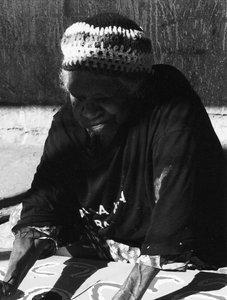
inyuwa nampitjinpa
1999 , Australia
Quick Facts
- Artistic Movement Or Style: World Goes Pop
- Artists Or Movements Influenced By This Artist: ['Pop Art']
- Artists Who Influenced This Artist: ['Andy Warhol']
- Date Of Death: 1999
- Nationality: WahooArt
- Notable Artworks: ['The World Goes Pop']
Related Articles

White on Canvas: 10 Masterpieces & Timeless Elegance for Your Home Decor
Explore 10 iconic white paintings by Monet, Whistler & Rothko! Discover the stories behind these serene masterpieces and their impact on art history. Find museum-quality reproductions for your home decor at .
Kandinsky's Masterpieces: 25 Paintings That Define Abstract Art | ArtsDot
Journey through Wassily Kandinsky's 25 most iconic abstract paintings. Explore his revolutionary use of color, form & spiritual expressionism. Find museum-quality Kandinsky reproductions and elevate your home decor with ArtsDot.com. Discover all masterpieces on ArtsDot.com!
Abstract Expressionism's 10 Defining Masterpieces |
Explore 10 defining Abstract Expressionism masterpieces by Pollock, Rothko & de Kooning. Discover the stories behind these iconic paintings and find museum-quality art reproductions to elevate your home decor on .

Geometric Abstraction's 10 Defining Masterpieces | Art for Your Home - ArtsDot
Explore 10 defining masterpieces of Geometric Abstraction! Discover Kandinsky, Mondrian & Malevich’s iconic works. Find museum-quality art reproductions and curated decor ideas to elevate your home at ArtsDot.com.
Mark Rothko's Masterpieces: 25 Paintings That Define Abstract Expressionism | ArtsDot
Explore 25 iconic Mark Rothko paintings that define Abstract Expressionism. Discover the stories, colors & emotions behind these masterpieces. Find museum-quality art reproductions and curated decor ideas at ArtsDot.com.