 Preview
 Send
Send Share
Share
 Details

 Download
 Similars
 X-Ray
X-Ray Diaporama
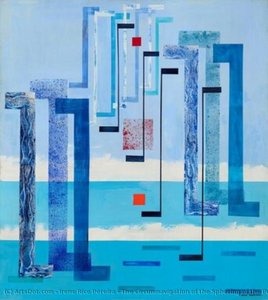
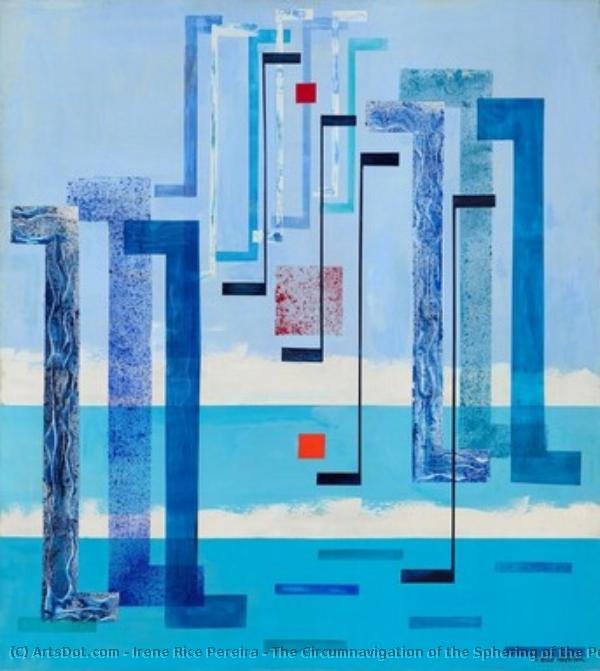
The Circumnavigation of the Sphering of the Poles
 1964
1964 164.0 x 149.0 cm
 Read More
Giclée / Art Print
Museum-quality giclée or canvas print with fast production and flexible finish options. ( Buy Hand Made Painting Buy Image)




































Pick from our preset sizes that match the artwork's original proportions.

You may enter your own dimensions to fit a specific frame or space. If your selected size does not match the original image's proportions, we will either crop the artwork or extend the image with a mirrored or solid-fill edge. A digital mockup will be sent for your approval before production begins.
Please note that the on-screen preview does not reflect the actual cropping or extension. Only the mockup will accurately show the final composition.
While custom sizes are available, we recommend selecting a dimension from the predefined list to preserve the original proportions.
Worldwide Delivery () in 2 weeks instead of standard 4/5 weeks. (6 September)

Free Worldwide Express Shipping

High-Quality Linen Canvas

Full Shipping Insurance

Customs Tax Refund Guarantee

True Color Matching Guarantee

100-Day Return Policy (Defects Only)

100% Money-Back Guarantee

Bulk Discount Offer
 Glass option is only available in size under 110 CM

The Circumnavigation of the Sphering of the Poles
Giclée / Art Print
Reproduction Size
-


Total Price
$ 63
Related Artworks
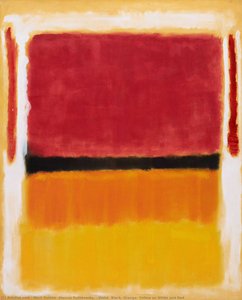
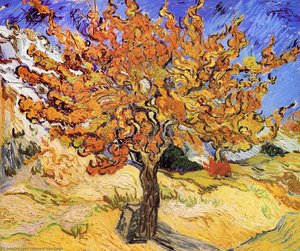
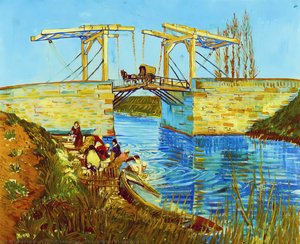
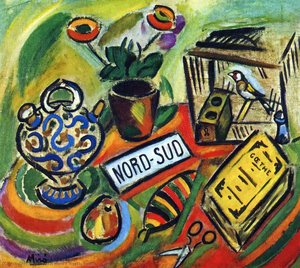

Artist Biography
A Pioneer of American Modernism: The Visionary World of Irene Rice Pereira
Irene Rice Pereira, born in Chelsea, Massachusetts in 1902 and passing away in Marbella, Spain in 1971, stands as a pivotal figure in the evolution of American modernist art. Often overshadowed despite her significant contributions, Pereira was a restless innovator who fearlessly traversed the boundaries of geometric abstraction, abstract expressionism, and lyrical abstraction throughout her prolific career. Her artistic journey wasn’t merely about aesthetic exploration; it was deeply intertwined with philosophical inquiry, technological fascination, and a profound belief in art's capacity to reflect—and shape—the modern world. From early explorations influenced by the burgeoning machine age to later works imbued with spiritual resonance, Pereira consistently challenged conventional notions of form, space, and meaning. She wasn’t simply painting pictures; she was constructing visual languages for a new era.Early Life and Artistic Awakening
Pereira's early life was marked by both hardship and intellectual stimulation. Following the death of her father in 1918, the family relocated to Brooklyn, where young Irene took on secretarial work to support her mother and siblings. This period instilled a sense of pragmatism alongside an enduring passion for literature and poetry—a duality that would later inform her artistic approach. Her formal art education began in 1927 at the Art Students League in New York City, where she studied under Jan Matulka, who introduced her to the radical ideas emanating from European avant-garde movements like Cubism and Constructivism. This exposure proved transformative, igniting a lifelong commitment to exploring non-representational forms. A pivotal journey to Europe and North Africa in 1931 further broadened her artistic horizons, exposing her to diverse cultures and landscapes that would subtly permeate her work. The vibrant colors of Italian Primitives and the expansive light of the Sahara Desert left an indelible mark on her aesthetic sensibility.The Bauhaus Influence and Social Engagement
Upon returning to New York, Pereira became deeply immersed in the burgeoning modernist scene. A defining moment came with her involvement in the Works Progress Administration’s Federal Art Project, where she co-founded the Design Laboratory in 1935. This institution, modeled after the Bauhaus school, was dedicated to bridging the gap between art and industry, emphasizing functional design and experimentation with materials. Pereira's commitment to the Bauhaus principles—truth to materials, a rejection of ornamentation, and a belief in art’s social responsibility—became central to her artistic philosophy. She believed that abstract art held the key to shaping a more progressive future, influencing architecture, typography, and industrial design. This period saw her work evolve towards increasingly geometric forms, reflecting her fascination with technology and the machine age. Her paintings began to incorporate elements of engineering – smokestacks, ventilators, anchors – abstracted into dynamic compositions.A Shifting Aesthetic: From Geometry to Spirituality
Throughout the 1940s, Pereira’s artistic trajectory took a significant turn. While she continued to explore abstraction, her work became less rigidly geometric and more lyrical, infused with a sense of depth and spatial ambiguity. She began experimenting with painting on layered glass, creating luminous effects that evoked both scientific precision and spiritual transcendence. This period marked a shift from the purely rational concerns of earlier works towards a more intuitive and emotionally resonant aesthetic. Her paintings increasingly explored themes of energy, matter, and time, reflecting her growing interest in philosophical concepts and the mysteries of the universe. Despite achieving recognition – including inclusion in landmark exhibitions at the Whitney Museum and the Museum of Modern Art – Pereira found herself increasingly at odds with the dominant trends of Abstract Expressionism. She felt that much contemporary art lacked intellectual rigor and spiritual depth, a conviction that led her to withdraw from the New York art world and eventually relocate to Spain in the late 1960s. Shadows on Painting, created in 1940, exemplifies this transition, showcasing her innovative use of glass to create layered depths and ethereal light effects.Legacy and Historical Significance
Although Irene Rice Pereira’s work has often been overlooked, her contributions to American modernism are undeniable. She was a true pioneer, fearlessly experimenting with new materials and techniques while consistently challenging artistic conventions. Her commitment to integrating art with social purpose, her embrace of technological innovation, and her exploration of spiritual themes set her apart from many of her contemporaries. Pereira’s legacy lies not only in the beauty and intellectual depth of her paintings but also in her unwavering belief in art's power to transform both individual consciousness and society as a whole. She paved the way for future generations of artists who sought to push the boundaries of abstraction and explore the intersection of art, science, and philosophy. Her work continues to resonate today, reminding us of the enduring relevance of modernist ideals and the importance of artistic vision in an increasingly complex world.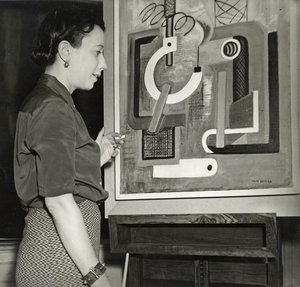
Irene Rice Pereira
1902 - 1971 , United States of America
Quick Facts
- Artistic Movement Or Style: Geometric Abstraction, Abstract Expressionism
- Artists Who Influenced This Artist: ['Herbert von Karajan']
- Date Of Birth: 1902
- Date Of Death: 1971
- Full Name: Irene Rice Pereira
- Nationality: American
- Notable Artworks:
- The Circumnavigation...
- White Lines
- White Rectangles, Number 3
- Place Of Birth: Chelsea, USA