 Preview
 Send
Send Share
Share
 Details

 Download
 Similars
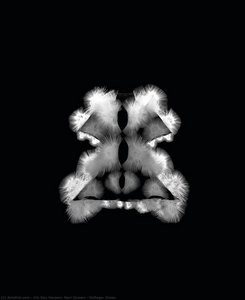
 X-Ray
X-Ray Diaporama
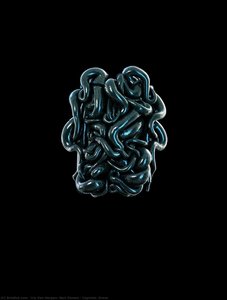
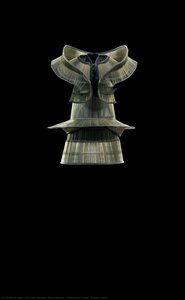
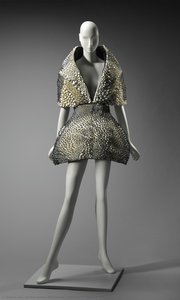
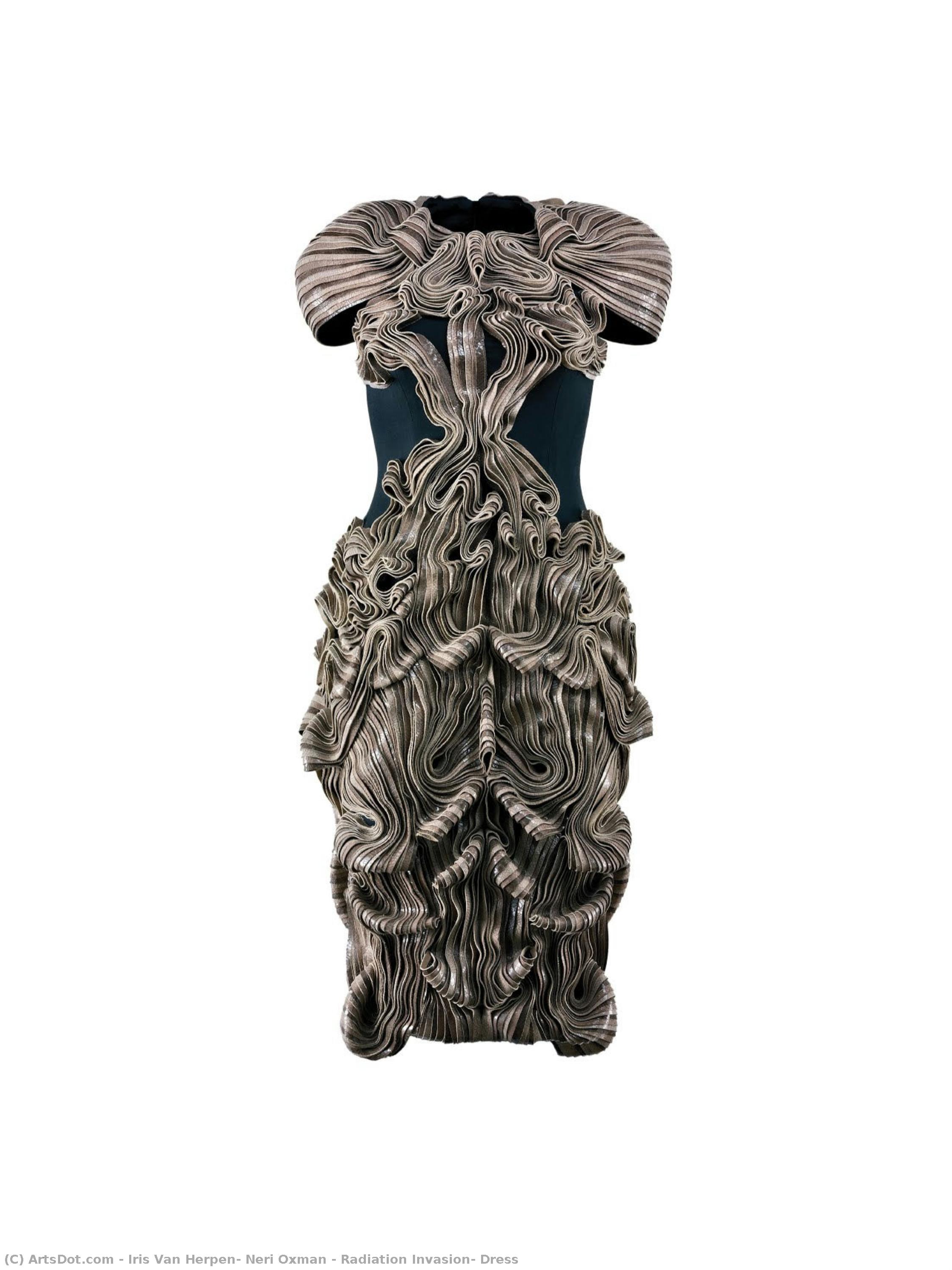
Radiation Invasion, Dress


 Read More
Hand Made Oil Reproduction
Hand-painted oil on canvas in your size and frame, made to order by our artists. ( Buy Print Buy Image)




P118B $10

P118H $10

P118W $10

P438Z $10

P508JH $12

P508YH $12

P805H $10

P805Z $10

P919BZ $10

P919G $10

P919XJ $10

P959ZH $10

P968JZ $12

W106C $8

W218G $10

W218JH $8

W218Y $10

W307PJ $10

W316G $10

W316PJ $8

W316Y $10

W398PJ $8

W4111J $10

W500HY $15

W500JH $15

W692G $12

W849H $8

W940BG $15

W953PJ $8




Pick from our preset sizes that match the artwork's original proportions.

You may enter your own dimensions to fit a specific frame or space. If your selected size does not match the original image's proportions, we will either crop the artwork or extend the painting with additional hand-painted elements. A digital mockup will be sent for your approval before production begins.
Please note that the on-screen preview does not reflect the actual cropping or extension. Only the mockup will accurately show the final composition.
While custom sizes are available, we recommend selecting a dimension from the predefined list to preserve the original proportions.
After order, ArtsDot.com team will email client for instructions and provide a mockup preview
Worldwide Delivery () in 3/4 weeks instead of standard 5 weeks. (22 August). No compromise on quality.

Free Worldwide Express Shipping

High-Quality Linen Canvas

Full Shipping Insurance

Customs Tax Refund Guarantee

True Color Matching Guarantee

60-Day Return Policy (Defects Only)

100% Money-Back Guarantee

Bulk Discount Offer
 Glass option is only available in size under 110 CM

Radiation Invasion, Dress
Reproduction Medium
Reproduction Size
-


Total Price
$ 263
Artwork Description
The Genesis: Iris van Herpen and Neri Oxman’s Vision
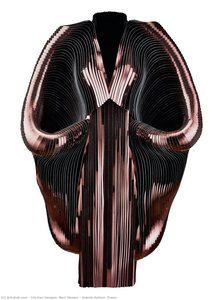
Iris van Herpen's "Radiation Invasion, Dress" isn’t merely a garment; it’s a crystallized concept—a collision of the organic and the engineered. Born in 1984 in Wegmond, Netherlands, van Herpen emerged from the rigorous discipline of ballet to forge a path as a couture designer utterly unbound by convention. Partnering with architect and digital fabricator Neri Oxman, she embarked on a radical exploration: how could fashion seamlessly integrate technology, biology, and artistic vision? This collaboration, rooted in the principles of “material ecology,” sought to move beyond traditional notions of design, creating pieces that actively interact with their wearers and the environment. The dress itself represents a pivotal moment—a declaration that couture could be both exquisitely handcrafted and profoundly futuristic.
- Historical Context: Van Herpen’s work builds upon decades of experimentation in textile technology, yet she pushes beyond mere digital printing to embrace 3D-printed structures, electromagnetic weaving, and intricate layering techniques.
- Oxman's Influence: Oxman’s expertise in parametric design—creating forms based on algorithms and data—is crucial to the dress’s complex geometry and structural integrity.
Deconstructing the Form: A Study in Layered Complexity
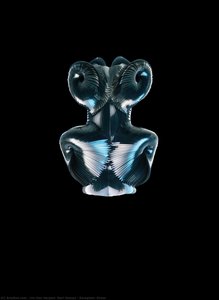
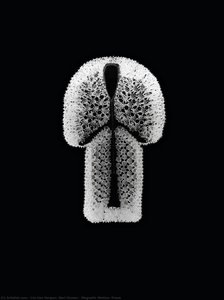
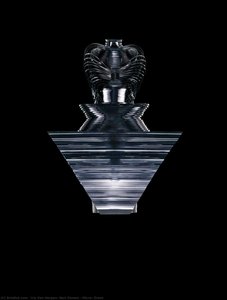
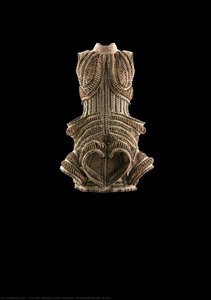
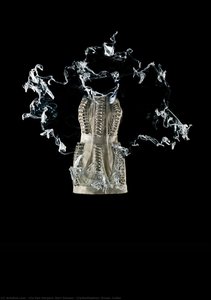
The visual impact of "Radiation Invasion, Dress" is immediately arresting – a cascade of metallic silver and grey tones that seem to defy gravity. Close examination reveals an astonishingly intricate structure built from interwoven wires, meticulously layered to create a dynamic, almost cellular surface. The dress isn’t simply draped; it's sculpted—each element carefully positioned to evoke the feeling of branching coral or the delicate network of veins in a leaf. The deliberate separation between the upper torso and skirt emphasizes this duality, suggesting a harmonious balance between organic growth and technological precision.
Technique: The dress’s construction is a testament to advanced fabrication techniques. 3D printing plays a key role, but van Herpen and Oxman augmented this with hand-casting of transparent leather, creating a remarkable interplay of rigidity and fluidity. The use of electromagnetic weaving further enhances the structural complexity, allowing for dynamic movement and an ethereal quality.Symbolism and Emotional Resonance: A Dance Between Worlds
The title, "Radiation Invasion," immediately conjures images of both technological disruption and natural transformation. It’s a provocative statement suggesting that technology isn't simply imposed upon the world but rather actively shapes it—a “radiation” of innovation permeating our environment. However, the organic forms within the dress – reminiscent of coral reefs or cellular structures – offer a counterpoint, hinting at a deeper connection to nature and the cyclical processes of life and death. The overall effect is one of unsettling beauty, inviting viewers to contemplate the complex relationship between humanity and technology.
Emotional Impact: The dress evokes a sense of wonder and intrigue, prompting questions about our future and the potential for symbiotic relationships between humans and machines. It’s a piece that challenges conventional notions of fashion, transforming it into a sculptural statement—a wearable work of art that speaks to both the beauty and the anxieties of the 21st century.A Legacy of Innovation: Van Herpen's Continuing Exploration
“Radiation Invasion, Dress” stands as a landmark achievement in contemporary fashion. It solidified Iris van Herpen’s reputation as a visionary designer pushing the boundaries of what’s possible—a pioneer who seamlessly blends art, science, and technology. Her ongoing collaborations with Neri Oxman continue to explore these themes, resulting in increasingly ambitious and conceptually rich collections. The dress remains a powerful symbol of innovation and a testament to the transformative potential of design.
Related Artworks

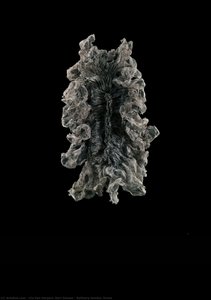
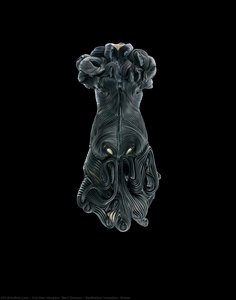
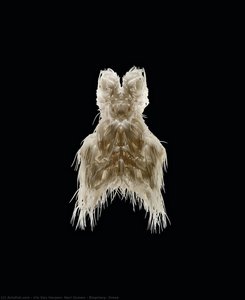
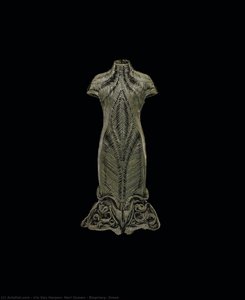
Artist Biography
A Convergence of Couture and Code: The World of Iris van Herpen
Born in the tranquil Dutch village of Wegmond in 1984, Iris van Herpen’s artistic trajectory was anything but conventional. Initially drawn to the discipline of classical ballet, she soon discovered that fashion offered a more expansive canvas for her burgeoning creativity—a realm where movement, form, and texture could be synthesized into something entirely new. This early exposure to the precision and physicality of dance profoundly shaped her aesthetic, instilling in her a deep understanding of how garments interact with the body and influence its expression. After studying at the Artez Institute of the Arts in Arnhem, graduating in 2006, van Herpen didn’t simply enter the world of fashion; she sought to redefine it. Launching her eponymous label in 2007, she quickly distinguished herself not through adherence to established trends, but through a radical embrace of innovation and experimentation.Sculpting with Light and Technology
Van Herpen’s work transcends the traditional boundaries of haute couture, blurring the lines between fashion, art, and science. She is renowned for her pioneering use of technology—specifically 3D printing, laser cutting, and unconventional materials—to create garments that are less “worn” than *inhabited*. These aren't simply clothes; they are wearable sculptures, intricate constructions that seem to defy gravity and challenge our perceptions of form. Her designs often evoke the natural world, drawing inspiration from biomimicry, anatomy, and complex scientific phenomena. The delicate structures of marine life, the intricacies of the human nervous system, and the patterns found in geological formations all serve as source material for her breathtaking creations. A signature element is her ability to manipulate light and shadow through the use of transparent and reflective materials, creating an ethereal quality that imbues her pieces with a sense of otherworldly beauty. The garments seem to breathe and evolve with the wearer, becoming extensions of their own physicality.Collaboration as Catalyst: Neri Oxman and Beyond
Central to van Herpen’s artistic development has been a spirit of collaboration. Perhaps her most significant partnership is with MIT Media Lab professor Neri Oxman, a visionary in the field of material ecology. Together, they have produced groundbreaking works like “Biopiracy” and “Voltage,” exploring the intersection of biological structures and digital fabrication techniques. These collaborations aren’t merely about applying technology to fashion; they are about using fashion as a platform for scientific inquiry and artistic expression. Beyond Oxman, van Herpen has also sought inspiration from architecture, recognizing its ability to create dynamic spaces and forms. She's engaged in projects with architects, further expanding her creative vocabulary. The influence of avant-garde designers like Alexander McQueen and Hussein Chalayan is also evident in her conceptual approach and willingness to push boundaries. These influences aren’t imitations but rather springboards for her own unique vision—a synthesis of artistry, technology, and a profound respect for the natural world.Recognition and a Lasting Legacy
The impact of Iris van Herpen's work has been widely recognized within the fashion industry and beyond. In 2011, she was invited to become a guest member of the prestigious Parisian Chambre Syndicale de la Haute Couture—a testament to her exceptional talent and innovative approach. Her creations have graced the runways of Paris Fashion Week and have been exhibited in renowned museums worldwide, including the Metropolitan Museum of Art (New York), the Victoria & Albert Museum (London), and the Palais de Tokyo (Paris). Numerous awards and accolades further acknowledge her contributions to fashion and design. But perhaps van Herpen’s most enduring legacy will be her role as a pioneer—a revolutionary figure who has challenged traditional notions of garment construction, integrated advanced technologies into the fashion industry, and bridged the gap between art, science, and technology. She inspires a new generation of designers to explore unconventional materials, techniques, and concepts, proving that fashion can be more than just clothing; it can be a powerful form of artistic expression and a catalyst for innovation. Her work is not simply about what we wear, but *how* we interact with the world around us—and how we envision the future of design itself.
iris van herpen, neri oxman
1984 - , Netherlands
Quick Facts
- Artistic Movement Or Style: Haute Couture, Techwear
- Artists Or Movements Influenced By This Artist: Future Fashion Designers
- Artists Who Influenced This Artist:
- Alexander McQueen
- Hussein Chalayan
- Date Of Birth: 1984
- Full Name: Iris van Herpen
- Nationality: Dutch
- Notable Artworks:
- Synesthesia Dress
- Refinery Smoke
- Micro Dress
- Place Of Birth: Wegmond, Netherlands
Related Articles

Rembrandt's Masterpieces: Explore 25 Iconic Paintings & Prints | ArtsDot
Journey through Rembrandt van Rijn's 25 most iconic paintings & etchings. Explore Dutch Golden Age masterpieces, dramatic chiaroscuro, and timeless portraits. Find museum-quality art reproductions to elevate your home decor on ArtsDot.com.
Gianfranco Ferré: Deconstructing Haute Couture – A Legacy of Architectural Form
Explore the revolutionary world of Gianfranco Ferré, 'the architect of fashion.' Discover his architectural approach to haute couture, iconic Dior designs, and lasting influence on luxury style. A deep dive for collectors & enthusiasts.
Early Netherlandish Masters: 10 Paintings That Revolutionized Art & Decor
Journey into the world of Early Netherlandish painting! Explore 10 masterpieces by Jan van Eyck, Rogier van der Weyden & more. Discover stunning detail, symbolism & Renaissance art for your home decor. Find museum-quality reproductions on ArtsDot.com
Cristóbal Balenciaga: Deconstructing Haute Couture's Architectural Legacy
Explore the revolutionary world of Cristóbal Balenciaga, the 'couturier's couturier'. Discover his architectural designs, lasting influence on haute couture, and guide to collecting rare pieces. A connoisseur’s resource.
Early Netherlandish Masters: 10 Paintings That Revolutionized Art & Decor
Journey into the Early Netherlandish Renaissance! Explore 10 iconic paintings by Jan van Eyck, Rogier van der Weyden & more. Discover stunning detail, symbolism, and oil painting techniques. Find museum-quality art reproductions for your home at ArtsDot.com.