 Preview
 Send
Send Share
Share
 Details

 Download
 Similars
 X-Ray
X-Ray Diaporama
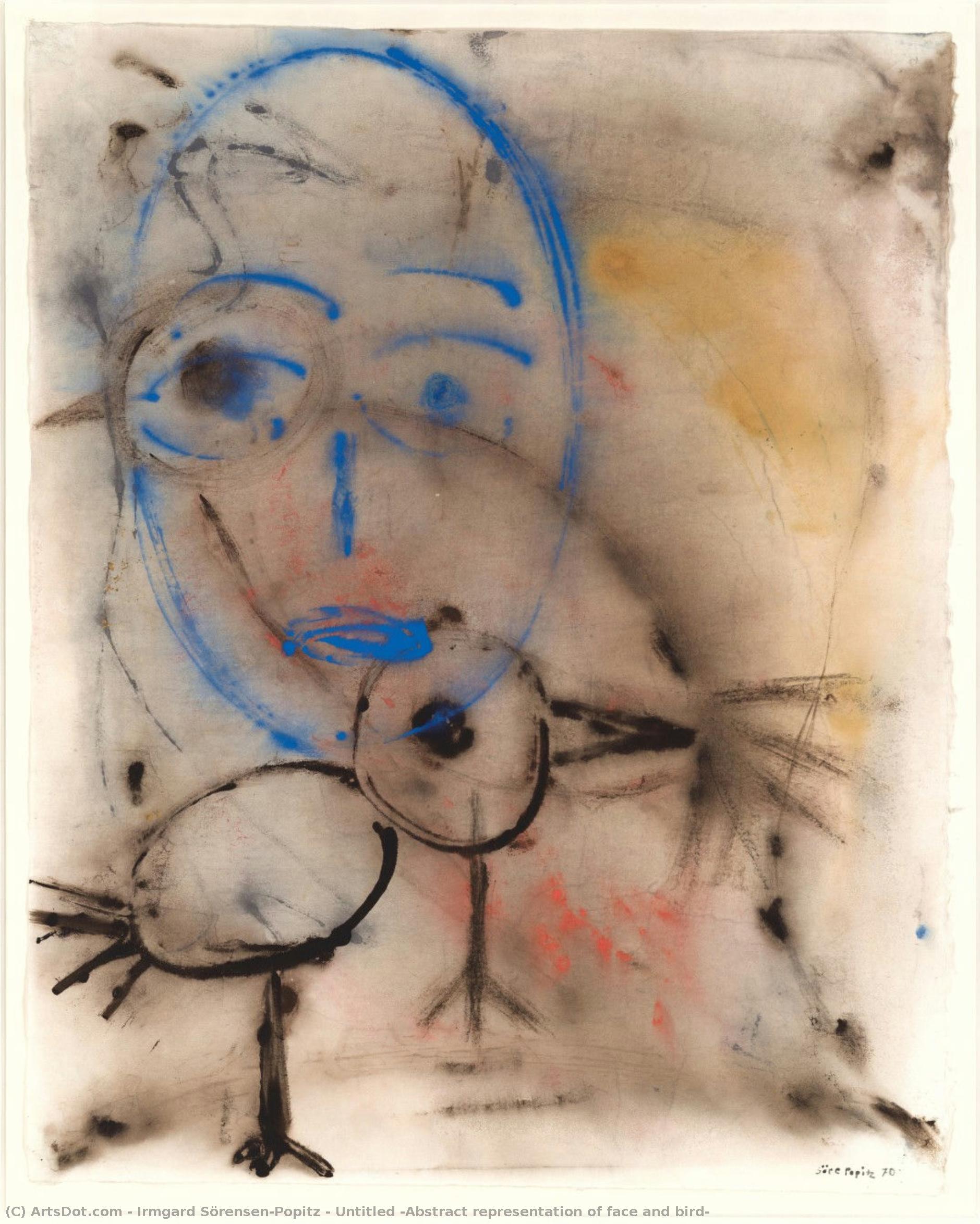
Untitled (Abstract representation of face and bird)
 Mixed Technique
- WallArt
- Abstract Expressionism
 1970
1970 67.0 x 53.0 cm
 Bauhaus Dessau Foundation
 Read More
Hand Made Oil Reproduction
Hand-painted oil on canvas in your size and frame, made to order by our artists. ( Buy Print Buy Image)




P118B $10

P118H $10

P118W $10

P438Z $10

P508JH $12

P508YH $12

P805H $10

P805Z $10

P919BZ $10

P919G $10

P919XJ $10

P959ZH $10

P968JZ $12

W106C $8

W218G $10

W218JH $8

W218Y $10

W307PJ $10

W316G $10

W316PJ $8

W316Y $10

W398PJ $8

W4111J $10

W500HY $15

W500JH $15

W692G $12

W849H $8

W940BG $15

W953PJ $8




Pick from our preset sizes that match the artwork's original proportions.

You may enter your own dimensions to fit a specific frame or space. If your selected size does not match the original image's proportions, we will either crop the artwork or extend the painting with additional hand-painted elements. A digital mockup will be sent for your approval before production begins.
Please note that the on-screen preview does not reflect the actual cropping or extension. Only the mockup will accurately show the final composition.
While custom sizes are available, we recommend selecting a dimension from the predefined list to preserve the original proportions.
After order, ArtsDot.com team will email client for instructions and provide a mockup preview
Worldwide Delivery () in 3/4 weeks instead of standard 5 weeks. (23 August). No compromise on quality.

Free Worldwide Express Shipping

High-Quality Linen Canvas

Full Shipping Insurance

Customs Tax Refund Guarantee

True Color Matching Guarantee

60-Day Return Policy (Defects Only)

100% Money-Back Guarantee

Bulk Discount Offer
 Glass option is only available in size under 110 CM

Untitled (Abstract representation of face and bird)
Reproduction Medium
Reproduction Size
-


Total Price
$ 263
Artwork Description
A Glimpse of Soul: Untitled (Abstract representation of face and bird)
To stand before Untitled (Abstract representation of face and bird) is to encounter a moment suspended between the human spirit and the wild freedom of nature. This captivating mixed-media piece, executed by Irmgard Sörensen-Popitz in 1970, transcends mere portraiture; it becomes an intimate dialogue. The composition centers on a smiling face, rendered with striking blue eyes that seem to meet the viewer's gaze directly, suggesting a profound sense of knowing or gentle welcome. Perched delicately upon this countenance is a bird, its posture conveying a quiet detachment as it gazes away from us, perhaps toward some unseen horizon.
Technique and Materiality: The Hand of the Artist
The sheer complexity of this work speaks volumes about Sörensen-Popitz's mastery. As a mixed technique piece, it invites close inspection, revealing layers of paint, texture, and careful application that give the surface a rich, tactile quality. While the photograph presents it in evocative black and white tones, one can sense the vibrancy inherent in its creation—a testament to an artist unafraid to combine disparate materials into a cohesive whole. The scale, measuring 67 x 53 cm, allows the narrative within the painting ample room to breathe, making it a commanding yet emotionally resonant focal point for any sophisticated interior space.
Symbolism of Connection and Departure
The pairing of the human face and the bird is rich with universal symbolism. The smile suggests acceptance or inner peace, while the blue eyes draw us into a realm of contemplation. Conversely, the bird—a timeless emblem of the soul, freedom, and the spirit—is turned away. This subtle tension between the fixed gaze of humanity and the migratory glance of nature creates a beautiful visual metaphor: perhaps it speaks to the necessary balance between connection and solitude, or the moment where inner joy (the smile) coexists with an unfulfilled yearning for elsewhere (the bird's gaze).
Historical Echoes and Emotional Resonance
Created in 1970, this artwork carries the weight of its time while maintaining a timeless quality. Its presence at a location like the Bauhaus Dessau Foundation suggests an alignment with modernist ideals—a focus on form, function, and emotional depth within abstract representation. For the modern collector or designer, owning a reproduction of this piece is not merely acquiring art; it is curating a mood. It introduces a sophisticated layer of mystery and gentle melancholy into a room, prompting quiet reflection every time one passes by.
Related Artworks


Artist Biography
John Everett Millais: A Pre-Raphaelite Pioneer of Light and Nature
Born in Southampton, England, on June 8th, 1829, John Everett Millais was a pivotal figure in the vibrant artistic movement known as the Pre-Raphaelites. His life, intertwined with intellectual circles and personal drama, profoundly shaped his distinctive style – one characterized by meticulous observation of nature, a fascination with medieval and Renaissance themes, and an innovative use of light and color. From humble beginnings to international recognition, Millais’s journey reflects both the challenges and opportunities faced by artists during a period of rapid social and artistic change.
Millais's early life was marked by privilege and access to education uncommon for his time. The son of a wealthy gentleman, he received an unusually thorough upbringing, including schooling at prestigious institutions like Sass’s Art School in London and later studying at the Royal Academy Schools. This foundation, coupled with the influence of his family’s connections – particularly his sister’s association with the poet Julian del Casal – exposed him to intellectual discourse and a broader artistic landscape than many of his contemporaries. His early training emphasized drawing from antique casts, a technique that would later inform his meticulous attention to detail and his deep engagement with classical subjects.
The formation of the Pre-Raphaelite Brotherhood in 1848 proved to be a watershed moment in Millais’s career and artistic development. Alongside William Holman Hunt and Dante Gabriel Rossetti, he sought to reject the academic conventions of the Royal Academy and return to what they perceived as the sincerity and truthfulness of art before Raphael. The brotherhood's core principles – a commitment to direct observation, detailed realism, vibrant color palettes, and a rejection of idealized representations – profoundly influenced Millais’s artistic vision. His early works, such as *Isabella* (1848-9) and *Ophelia* (1851-2), exemplify this approach, capturing scenes from literature with remarkable accuracy and emotional intensity.
The Iconic Ophelia and the Pursuit of Naturalism
*Ophelia*, perhaps Millais’s most famous painting, stands as a testament to his artistic ambition and technical skill. Commissioned for *The Illustrated London News* in 1851-2, the work depicted the tragic heroine from Shakespeare's *Hamlet* floating in a stream, surrounded by wildflowers. Millais spent months meticulously studying the subject, sketching directly from nature under various lighting conditions to achieve the painting’s luminous quality and unparalleled realism. The painstaking detail of the flowers – each identified and accurately rendered – was revolutionary for its time, demonstrating a commitment to scientific observation rarely seen in Romantic art.
However, *Ophelia* also sparked controversy. Critics initially condemned the painting's perceived lack of poetic interpretation and its overly literal depiction of Shakespeare’s tragedy. Millais, however, remained steadfast in his belief that truthfulness was paramount. He continued to explore themes of nature and mythology throughout his career, producing works such as *The Proclamation* (1854-5), a vibrant depiction of the marriage of Louis XIV and Marie Therese of Austria, and *Fishing*, which showcased his mastery of capturing fleeting moments of light and atmosphere.
A Shift Towards Portraiture and Later Works
As the Pre-Raphaelite Brotherhood fragmented in the 1860s, Millais increasingly focused on portraiture. He established a successful practice as a painter of wealthy patrons, producing numerous portraits that reflected his refined artistic sensibilities and technical expertise. His portraits of prominent figures like Gladstone, Tennyson, and Disraeli are notable for their psychological depth and subtle nuances of expression.
Despite the shift in focus, Millais never abandoned his interest in landscape and narrative subjects. He continued to paint scenes from literature and mythology, often employing a more subdued palette and a looser brushstroke than in his earlier works. His later paintings, such as *Stella* (1868) and *The Shadow of the House*, demonstrate a growing awareness of contemporary artistic trends and a willingness to experiment with new techniques. He also embraced commercial illustration work, producing numerous images for magazines and books.
Legacy and Historical Significance
John Everett Millais died in London on August 13th, 1896, at the age of 67. His legacy as a Pre-Raphaelite painter is undeniable. He was instrumental in shaping the movement’s aesthetic principles and establishing its reputation for realism, beauty, and intellectual rigor. His meticulous attention to detail, his innovative use of light and color, and his profound engagement with nature continue to inspire artists today.
Millais's influence extends beyond the realm of painting. He helped to elevate the status of the artist as a professional and contributed to the development of art education in England. His work remains a vital part of the British artistic heritage, offering a window into a fascinating period of social and artistic transformation.

irmgard sörensen-popitz
1896 - 1993 , Germany
Quick Facts
- Artistic Movement Or Style: Pre-Raphaelite
- Artists Or Movements Influenced By This Artist:
- William Holman Hunt
- Dante Gabriel Rossetti
- Artists Who Influenced This Artist: ['Sir John Everett Millais']
- Date Of Birth: 8 June 1829
- Date Of Death: 13 August 1896
- Full Name: John Everett Millais
- Nationality: English
- Notable Artworks:
- Ophelia
- Christ in the House of His Parents
- Place Of Birth: Southampton, England
Related Articles
Abstract Expressionism's 10 Defining Masterpieces |
Explore 10 defining Abstract Expressionism masterpieces by Pollock, Rothko & de Kooning. Discover the stories behind these iconic paintings and find museum-quality art reproductions to elevate your home decor on .

Geometric Abstraction's 10 Defining Masterpieces | Art for Your Home - ArtsDot
Explore 10 defining masterpieces of Geometric Abstraction! Discover Kandinsky, Mondrian & Malevich’s iconic works. Find museum-quality art reproductions and curated decor ideas to elevate your home at ArtsDot.com.
Kandinsky's Masterpieces: 25 Paintings That Define Abstract Art | ArtsDot
Journey through Wassily Kandinsky's 25 most iconic abstract paintings. Explore his revolutionary use of color, form & spiritual expressionism. Find museum-quality Kandinsky reproductions and elevate your home decor with ArtsDot.com. Discover all masterpieces on ArtsDot.com!

Navigating Abstract Expression: A Guide to Contemporary Movements for Emotional Resonance in Art Selection
Explore the evolution of Abstract Expressionism & discover contemporary movements for emotional resonance. Expert guidance for discerning art collectors seeking lasting value. ArtsDot.

German Expressionism's 10 Defining Masterpieces | Art for Your Home
Explore 10 defining German Expressionism masterpieces – from Munch's 'The Scream' to Kandinsky’s abstracts. Discover the artists, stories & bold colors behind this powerful art movement. Find museum-quality reproductions at ArtsDot.com.