 Preview
 Send
Send Share
Share
 Details

 Download
 Similars
 X-Ray
X-Ray Diaporama
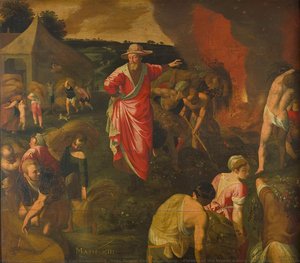
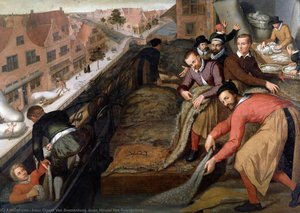
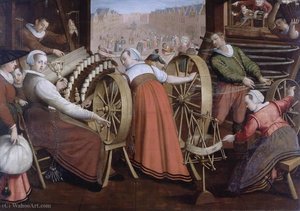
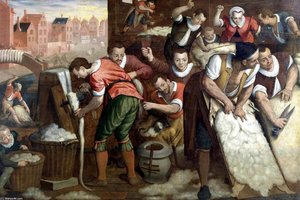
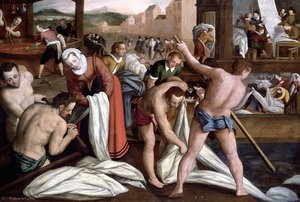
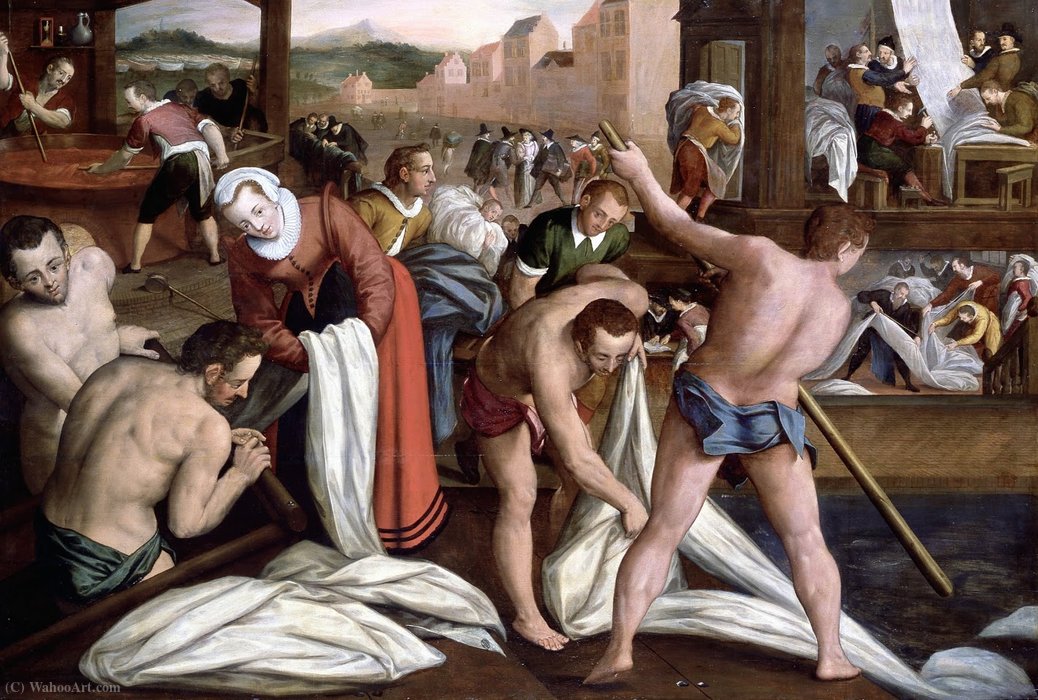
Fulling and Dyeing
 Read More
Hand Made Oil Reproduction
Hand-painted oil on canvas in your size and frame, made to order by our artists. ( Buy Print Buy Image)




































Pick from our preset sizes that match the artwork's original proportions.

You may enter your own dimensions to fit a specific frame or space. If your selected size does not match the original image's proportions, we will either crop the artwork or extend the painting with additional hand-painted elements. A digital mockup will be sent for your approval before production begins.
Please note that the on-screen preview does not reflect the actual cropping or extension. Only the mockup will accurately show the final composition.
While custom sizes are available, we recommend selecting a dimension from the predefined list to preserve the original proportions.
After order, ArtsDot.com team will email client for instructions and provide a mockup preview
Worldwide Delivery () in 3/4 weeks instead of standard 5 weeks. (27 August). No compromise on quality.

Free Worldwide Express Shipping

High-Quality Linen Canvas

Full Shipping Insurance

Customs Tax Refund Guarantee

True Color Matching Guarantee

60-Day Return Policy (Defects Only)

100% Money-Back Guarantee

Bulk Discount Offer
 Glass option is only available in size under 110 CM

Fulling and Dyeing
Reproduction Medium
Reproduction Size
-


Total Price
$ 263
Related Artworks





Artist Biography
Lorenzo di Credi: A Shadow of Verrocchio, a Voice of the Renaissance
Lorenzo di Credi’s life and artistic journey represent a fascinating intersection of apprenticeship, imitation, and nascent originality within the vibrant milieu of 15th-century Florence. Born around 1456/59, his early years were deeply intertwined with the workshop of Andrea del Verrocchio, one of the era's most celebrated artists – a connection that profoundly shaped his artistic development yet ultimately defined by its subtle constraints. While often overshadowed by the towering figures of Leonardo da Vinci and Michelangelo, Credi’s contribution to Florentine art deserves renewed attention, revealing a skilled craftsman who navigated the complex dynamics of patronage and stylistic influence with remarkable consistency.Early Training and the Verrocchio Studio
Lorenzo's apprenticeship under Verrocchio commenced in his early twenties, placing him firmly within a workshop renowned for its technical mastery and diverse output. This period was crucial; he absorbed not only the practical skills of painting and sculpture but also Verrocchio’s distinctive approach – characterized by meticulous detail, balanced compositions, and a refined sense of color. Crucially, Credi worked alongside Leonardo da Vinci during this time, an association that undoubtedly influenced his artistic sensibilities. While the precise nature of their collaboration remains somewhat elusive, scholars believe Leonardo's innovative techniques—particularly in perspective and sfumato—left an indelible mark on Credi’s style, subtly shifting it towards a more atmospheric and nuanced rendering of form. The *Madonna di Piazza* at Pistoia Cathedral, completed by Verrocchio but largely attributed to Credi due to the stylistic similarities, stands as a testament to this shared influence – a painting that showcases both the master's established techniques and the emerging artistic voice of his assistant.A Consistent Style: Religious Subjects and Portraits
Credi’s oeuvre primarily consists of religious paintings and portraits, reflecting the prevalent demands of Florentine society at the time. He demonstrated a remarkable consistency in his style throughout his career, favoring smaller-scale works executed with painstaking detail and a polished finish—a characteristic often noted by Vasari, who described him as avoiding large-scale projects. His subjects frequently included depictions of the Virgin Mary with the Child, saints, and scenes from the life of Christ, all rendered with a serene elegance and a deep understanding of devotional iconography. Portraits, though less numerous than his religious works, reveal a keen eye for capturing individual character and a subtle mastery of facial expression. Notable examples include panels depicting the *Madonna and Child* at the Galleria Sabauda in Turin, another at the National Gallery in London, and the evocative *Adoration of the Child*, now housed in Venice’s Pinacoteca Querini Stampalia.Beyond Imitation: Hints of Originality
Despite his close association with Verrocchio and Leonardo, Credi's work is not simply a derivative imitation. While he undoubtedly absorbed and adapted their techniques, there are subtle indications of an emerging artistic personality. His compositions often exhibit a greater sense of spatial depth and atmospheric perspective than those of his immediate predecessors, suggesting the influence of Leonardo’s groundbreaking innovations. Furthermore, certain details in his portraits—particularly the rendering of hands and drapery—display a remarkable sensitivity to texture and form. The *Baptism of Christ* for the Chiostro dello Scalzo in Florence, with its intricate detailing and carefully orchestrated composition, exemplifies this burgeoning originality – a work that transcends mere imitation and reveals a distinct artistic vision.Legacy and Historical Significance
Lorenzo di Credi’s legacy is often overshadowed by the brilliance of his contemporaries, yet he remains an important figure in the history of Florentine Renaissance art. His long tenure as Verrocchio's principal assistant provided him with invaluable experience and access to some of the most influential artistic circles of the era. While he never achieved the fame or recognition of Leonardo da Vinci or Michelangelo, Credi’s consistent skill, stylistic refinement, and subtle innovations contributed significantly to the development of Florentine painting during a pivotal period in art history. His work serves as a valuable reminder that even within the shadow of great masters, individual voices can emerge—offering unique perspectives and enriching the artistic landscape of the Renaissance. His life’s work provides a window into the practical realities of an artist's career during this time, highlighting the importance of apprenticeship, patronage, and the constant negotiation between imitation and originality.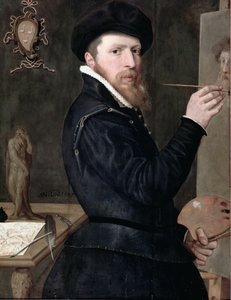
isaac claesz van swanenburg (isaac nicolai van swanenburg)
1537 - 1614 , Netherlands
Quick Facts
- Artistic Movement Or Style: Renaissance painting
- Artists Or Movements Influenced By This Artist: ['Leonardo da Vinci']
- Artists Who Influenced This Artist: ['Andrea del Verrocchio']
- Date Of Birth: 1456/59
- Date Of Death: 1537
- Full Name: Lorenzo di Credi
- Nationality: Italian Renaissance
- Notable Artworks:
- Adoration of the Shepherds
- Madonna and Child
- Annunciation
- Place Of Birth: Florence, Italy