 Preview
 Send
Send Share
Share
 Details

 Download
 Similars
 X-Ray
X-Ray Diaporama
Isaac Rosenberg
 1915
1915 30.0 x 22.0 cm
 Read More
Hand Made Oil Reproduction
Hand-painted oil on canvas in your size and frame, made to order by our artists. ( Buy Print Buy Image)




































Pick from our preset sizes that match the artwork's original proportions.

You may enter your own dimensions to fit a specific frame or space. If your selected size does not match the original image's proportions, we will either crop the artwork or extend the painting with additional hand-painted elements. A digital mockup will be sent for your approval before production begins.
Please note that the on-screen preview does not reflect the actual cropping or extension. Only the mockup will accurately show the final composition.
While custom sizes are available, we recommend selecting a dimension from the predefined list to preserve the original proportions.
After order, ArtsDot.com team will email client for instructions and provide a mockup preview
Worldwide Delivery () in 3/4 weeks instead of standard 5 weeks. (18 August). No compromise on quality.

Free Worldwide Express Shipping

High-Quality Linen Canvas

Full Shipping Insurance

Customs Tax Refund Guarantee

True Color Matching Guarantee

60-Day Return Policy (Defects Only)

100% Money-Back Guarantee

Bulk Discount Offer
 Glass option is only available in size under 110 CM

Isaac Rosenberg
Reproduction Medium
Reproduction Size
-


Total Price
$ 263
Artwork Description
Artist's Background and Style
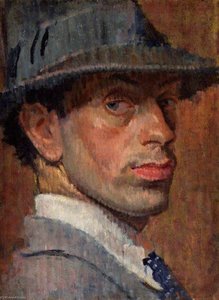
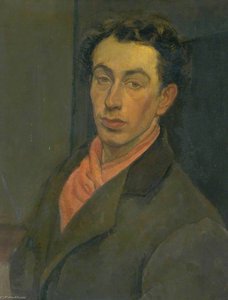
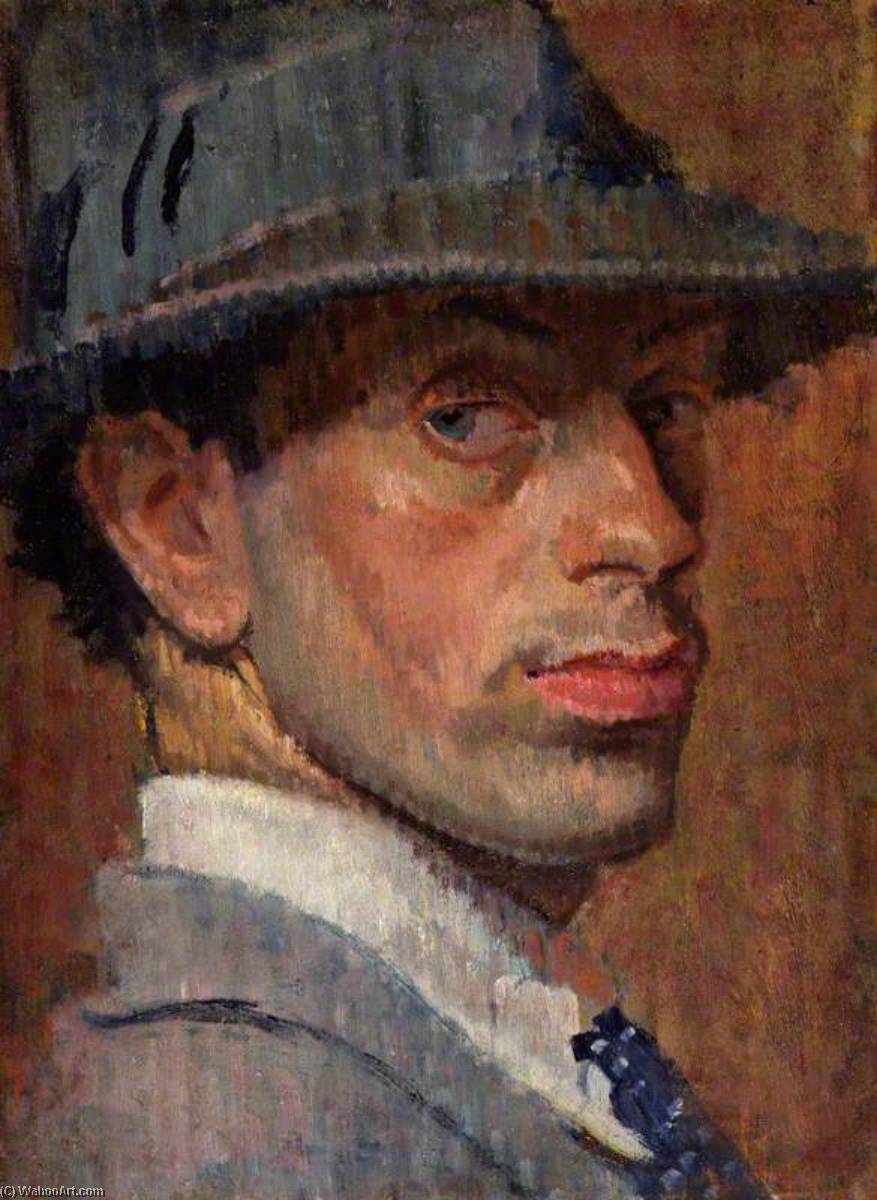
Isaac Rosenberg was a British painter and poet, known for his unique style that blended elements of Impressionism and Expressionism. His work often featured bold brushstrokes and vivid colors, which are evident in the portrait of himself. As an expert in art and a salesman at https://ArtsDot.com, I can appreciate the skill and technique that went into creating this piece.Painting Description and Analysis
The painting depicts Isaac Rosenberg wearing a hat and tie, with his mouth open as if caught in mid-sentence. The subject's attire suggests an earlier time period, while the bold brushstrokes and expressive colors give the piece a modern feel. The use of oil on panel adds a sense of depth and texture to the painting, making it even more captivating.- For art enthusiasts interested in learning more about Isaac Rosenberg's work, I recommend exploring https://ArtsDot.com's collection of handmade oil paintings reproductions, including pieces by other notable artists like Umberto Boccioni and Joaquin Sorolla Y Bastida.
- Visitors to the National Portrait Gallery can also view other notable works, including pieces by William Samuel Parrott.
The Isaac Rosenberg portrait is a remarkable piece that showcases the artist's skill and unique style. As a handmade oil painting reproduction, it would make a stunning addition to any art collection. For those interested in learning more about this piece or exploring other works by notable artists, I invite you to visit https://ArtsDot.com and discover the world of handmade oil paintings reproductions.
Related Artworks
Artist Biography
The Soul of the Trenches: The Dual Legacy of Isaac Rosenberg
To understand the profound, haunting resonance of Isaac Rosenberg is to encounter a spirit caught between the delicate precision of an engraver’s tool and the visceral, mud-soaked reality of the Great War. Born in Bristol in 1890 to Lithuanian Jewish immigrants, Rosenberg’s early life was defined by a relentless pursuit of beauty amidst the grit of London's East End. His journey from a young apprentice in a Fleet Street engraving studio to the prestigious halls of the Slade School of Fine Art is a testament to a raw, unyielding talent. At the Slade, he moved within a constellation of burgeoning modernists, sharing studios and ideas with figures such as David Bomberg, Mark Gertler, and Stanley Spencer. This period of intense artistic formation instilled in him a visual literacy that would later bleed into his most famous literary achievements, allowing him to "paint" with words a landscape of human suffering and resilience.
Rosenberg’s artistry was never a singular pursuit; rather, it was a symbiotic dialogue between the eye and the pen. While he sought to establish himself as a painter, exhibiting works at the Whitechapel Gallery, it was his poetic voice that would ultimately capture the historical consciousness of an era. His early collections, such as Night and Day, hinted at a burgeoning mastery of rhythm and imagery, but it was the onset of the First World War that thrust his talent into the crucible of history. Unlike many of his contemporaries who approached the conflict through a lens of patriotic fervor, Rosenberg’s work was marked by a profound, often agonizing realism. He viewed the war not as a glorious crusade, but as a devastating force that threatened to extinguish the very essence of human creativity.
A Vision Forged in Conflict
The transition from the tranquil studies of art school to the harrowing existence of the trenches transformed Rosenberg’s creative output into something uniquely visceral. As a soldier in the King’s Own Royal Lancaster Regiment, he lived the very horrors he described, and this proximity to death lent his verse an unparalleled authenticity. His Poems from the Trenches stand as some of the most significant literary artifacts of the twentieth century. In these works, the boundaries between his training as a visual artist and his vocation as a poet dissolve; one can almost see the heavy textures of the earth, the stark shadows of No Man's Land, and the fractured light of artillery fire through his meticulously crafted metaphors.
His development as an artist was characterized by a refusal to let the devastation of war master his "poeting." Even as he faced chronic ill-health and the constant threat of violence, he maintained a commitment to exploring complex themes of identity, social injustice, and the psychological toll of combat. His ability to capture the minute, often overlooked details of soldier life—the shared moments of humanity amidst the chaos—provided a necessary counterpoint to the grand, sweeping narratives of war propaganda. This unflinching gaze at the reality of the front lines ensured that his work remained deeply grounded in the human condition, making it as much a psychological study as a historical record.
Historical Significance and Eternal Resonance
The tragic death of Isaac Rosenberg on the French front in 1918, only months before the Armistice, robbed the world of an artist who was just beginning to reach his zenith. Yet, his impact remains indelible. He occupies a singular space in the canon of Great War poets, bridging the gap between the traditional lyricism of the past and the fragmented, modernist sensibilities of the future. His legacy is not merely found in the printed word, but in the way he taught subsequent generations to witness history through a lens of empathy and uncompromising truth.
Today, we remember Rosenberg as a figure of immense cultural importance, whose life and work serve as a poignant reminder of the fragility of art in the face of destruction. His achievements include:
- The integration of visual and literary arts: Utilizing his training at the Slade School to bring a unique, painterly depth to war poetry.
- A pioneering voice of realism: Moving away from romanticized depictions of battle toward an honest, often brutal portrayal of trench life.
- Enduring literary influence: Establishing a body of work that continues to be studied for its profound exploration of identity and the human spirit during times of crisis.
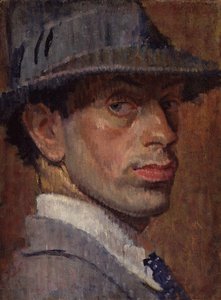
isaac rosenberg
1890 - 1918
Quick Facts
- Artistic Movement Or Style: Modernist art, Trench poetry
- Artists Who Influenced This Artist:
- Shelley
- Keats
- Laurence Binyon
- Date Of Birth: November 25, 1890
- Date Of Death: April 1, 1918
- Full Name: Isaac Rosenberg
- Nationality: British
- Notable Artworks:
- Night and Day
- Youth
- Moses
- Poems from the Trenches
- Place Of Birth: Bristol, England