 Preview
 Send
Send Share
Share
 Details

 Download
 Similars
 X-Ray
X-Ray Diaporama
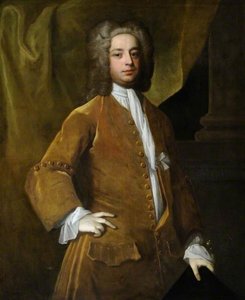
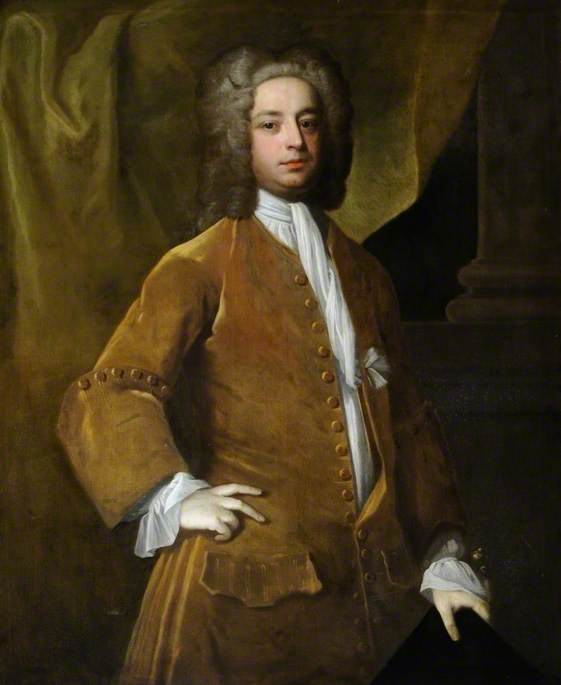
Portrait of a Gentleman (possibly Philip Howard of Buckenham, Norfolk, d.1750)
 127.0 x 102.0 cm
 Read More
Hand Made Oil Reproduction
Hand-painted oil on canvas in your size and frame, made to order by our artists. ( Buy Print Buy Image)




































Pick from our preset sizes that match the artwork's original proportions.

You may enter your own dimensions to fit a specific frame or space. If your selected size does not match the original image's proportions, we will either crop the artwork or extend the painting with additional hand-painted elements. A digital mockup will be sent for your approval before production begins.
Please note that the on-screen preview does not reflect the actual cropping or extension. Only the mockup will accurately show the final composition.
While custom sizes are available, we recommend selecting a dimension from the predefined list to preserve the original proportions.
After order, ArtsDot.com team will email client for instructions and provide a mockup preview
Worldwide Delivery () in 3/4 weeks instead of standard 5 weeks. (30 August). No compromise on quality.

Free Worldwide Express Shipping

High-Quality Linen Canvas

Full Shipping Insurance

Customs Tax Refund Guarantee

True Color Matching Guarantee

60-Day Return Policy (Defects Only)

100% Money-Back Guarantee

Bulk Discount Offer
 Glass option is only available in size under 110 CM

Portrait of a Gentleman (possibly Philip Howard of Buckenham, Norfolk, d.1750)
Reproduction Medium
Reproduction Size
-


Total Price
$ 263
Related Artworks






Artist Biography
The Visionary of Haarlem: The Soulful World of Isaac Seeman
In the heart of the Dutch Golden Age, amidst a sea of vibrant landscapes and bustling genre scenes, there existed a singular, contemplative voice that sought to capture the divine through the human form. Isaac Seeman, born around 1730 in the historic city of Haarlem, carved out a niche that was as much spiritual as it was artistic. While his contemporaries often turned their brushes toward the tangible realities of Dutch life—the quiet corners of taverns or the sweeping vistas of the countryside—Seeman looked inward and upward. He dedicated his life to the profound realms of biblical portraiture and allegory, creating a body of work that serves as a window into the sacred narratives of antiquity.
The foundations of Seeman’s mastery were laid during his formative years under the guidance of Johann Friedrich Overbeck. This apprenticeship was far more than a mere technical education; it was an immersion into a world of meticulous realism and deep religious devotion. From Overbeck, Seeman inherited a reverence for iconography and a precise command over the expressive potential of oil paint. This early training instilled in him the ability to translate complex theological concepts into palpable, human emotions, ensuring that his later works would never be mere illustrations, but rather living, breathing encounters with the divine.
A Mastery of Light, Shadow, and Emotion
To encounter a Seeman canvas is to enter an atmosphere of profound psychological depth. His technique was characterized by a sophisticated interplay of light and shadow, a mastery that allowed him to sculpt figures out of the darkness with breathtaking grace. He eschewed the more superficial stylistic trends of his era, opting instead for a deeply internalized approach. Through subtle gradations of color and a meticulous attention to tonal harmony, he created immersive environments where the air itself seems heavy with the weight of history and myth.
His brushwork remains one of his most captivating legacies. It was a style that achieved a rare equilibrium: delicate enough to convey the softness of skin or the intricate folds of drapery, yet decisive enough to capture the anatomical precision and psychological nuance of his subjects. This technical virtuosity allowed him to portray biblical figures not as distant icons, but as individuals caught in moments of intense contemplation, grief, or revelation. In his hands, the light does not merely illuminate; it reveals the very soul of the sitter.
Legacy and the Enduring Power of Allegory
The breadth of Seeman’s contribution to the Haarlem artistic community is evidenced by his remarkable oeuvre, which includes approximately eighty significant paintings. His works often functioned as complex allegories, where every gesture and shadow held a deeper symbolic meaning. Whether depicting the quiet repose of John Pennant or reimagining classical themes through the lens of religious devotion, Seeman’s ability to weave narrative and emotion remains unparalleled.
Though the specific details of his later years remain shrouded in the mists of history, his impact on the tradition of Dutch portraiture is undeniable. He stands as a testament to the power of specialized vision—a reminder that even in an age of rapid stylistic change, there is a profound and lasting value in the pursuit of the eternal. His paintings continue to command admiration from art historians, serving as enduring monuments to a man who saw the sacred within the human face.
Quick Facts
- Artistic Movement Or Style: Van Dyck Style
- Artists Or Movements Influenced By This Artist: ['Dutch Golden Age']
- Artists Who Influenced This Artist: ['Anthony van Dyck']
- Date Of Death: Living
- Full Name: Isaac Seeman
- Nationality: Dutch
- Notable Artworks: ['John Pennant Portrait']
- Place Of Birth: Haarlem, Netherlands