

 Preview
 Send
Send Share
Share
 Details

 Download
 Similars
 X-Ray
X-Ray Diaporama
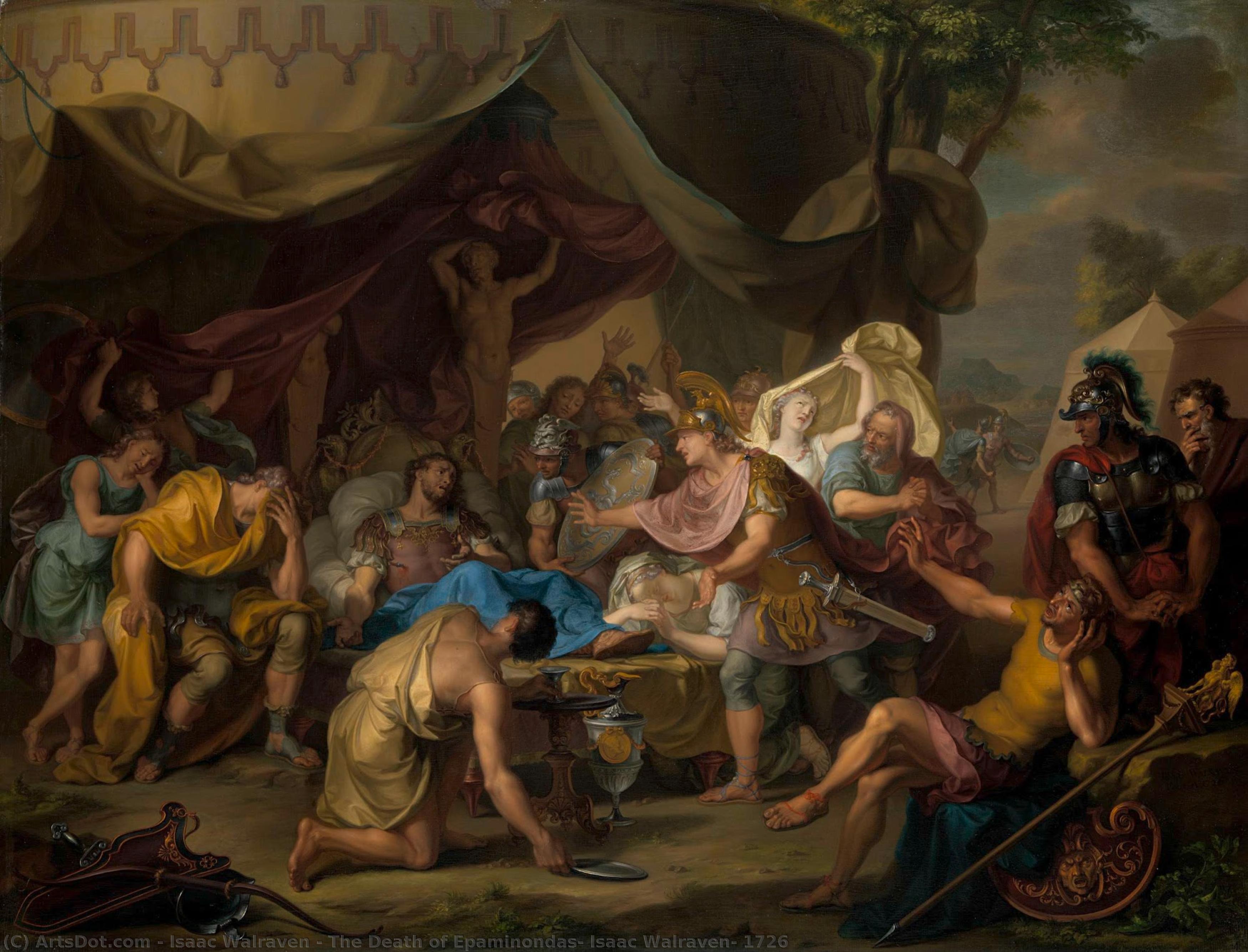
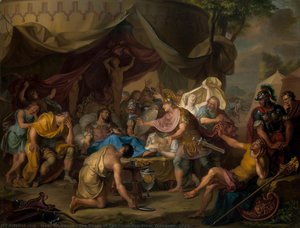
The Death of Epaminondas, Isaac Walraven, 1726
 1726
1726 61.0 x 80.0 cm
 Read More
Hand Made Oil Reproduction
Hand-painted oil on canvas in your size and frame, made to order by our artists. ( Buy Print Buy Image)




































Pick from our preset sizes that match the artwork's original proportions.

You may enter your own dimensions to fit a specific frame or space. If your selected size does not match the original image's proportions, we will either crop the artwork or extend the painting with additional hand-painted elements. A digital mockup will be sent for your approval before production begins.
Please note that the on-screen preview does not reflect the actual cropping or extension. Only the mockup will accurately show the final composition.
While custom sizes are available, we recommend selecting a dimension from the predefined list to preserve the original proportions.
After order, ArtsDot.com team will email client for instructions and provide a mockup preview
Worldwide Delivery () in 3/4 weeks instead of standard 5 weeks. (29 August). No compromise on quality.

Free Worldwide Express Shipping

High-Quality Linen Canvas

Full Shipping Insurance

Customs Tax Refund Guarantee

True Color Matching Guarantee

60-Day Return Policy (Defects Only)

100% Money-Back Guarantee

Bulk Discount Offer
 Glass option is only available in size under 110 CM

The Death of Epaminondas, Isaac Walraven, 1726
Reproduction Medium
Reproduction Size
-


Total Price
$ 263
Related Artworks



Artist Biography
Isaac Walraven: A Dutch Painter Bridging Tradition and Innovation
Isaac Walraven (1686–1765) stands as a significant figure in the artistic landscape of Amsterdam during the Dutch Golden Age, embodying both meticulous adherence to classical conventions and an emerging sensitivity to Impressionistic aesthetics. Born into a family steeped in mercantile tradition—his father was a prosperous draper—Walraven’s early life fostered a pragmatic spirit that would inform his multifaceted career as painter, jeweler, etcher, and collector. While biographical details remain somewhat sparse, scholarly research confirms his formative apprenticeship under Jan Ebbelaar and Gerrit Rademaker, establishing him firmly within the influential Haarlem Baroque artistic circle.- Early Training & Influences: Walraven’s education prioritized technical mastery, equipping him with skills honed through diligent study of Old Masters—particularly Rembrandt and Rubens—whose dramatic compositions and masterful use of chiaroscuro profoundly impacted his stylistic choices.
- Copying Old Masters: A hallmark of Walraven's oeuvre was the faithful reproduction of celebrated artworks, demonstrating a deep understanding of artistic principles and an unwavering commitment to preserving visual heritage. These copies weren’t mere reproductions; they were considered interpretations that aimed to capture the essence of the original master’s vision.
- Beyond Reproduction: However, Walraven wasn't solely devoted to replicating established styles. He actively engaged in etching—a technique he skillfully employed to produce stunning prints depicting landscapes and architectural subjects—and pursued commissions for jewelry design, showcasing his versatility as an artist and craftsman.
Notable Works & Artistic Style
Walraven’s artistic style is characterized by a balanced fusion of Baroque grandeur and Impressionistic subtlety. His paintings frequently depict historical narratives—often illuminated with dramatic lighting—drawing inspiration from classical mythology and biblical tales. The Death of Epaminondas, completed in 1726 (available as a reproduction on ArtsDot), exemplifies this stylistic blend, showcasing meticulous detail combined with expressive brushwork that conveys emotion and dynamism. His landscapes are rendered with atmospheric perspective and nuanced tonal gradations, anticipating the burgeoning Impressionist movement while retaining the solidity and clarity of Baroque tradition.- The Death of Epaminondas: This monumental canvas exemplifies Walraven’s ability to convey profound emotional depth within a meticulously crafted composition.
- Amsterdam Landscapes: His depictions of Amsterdam's cityscape capture the city's vibrant energy and architectural beauty with remarkable accuracy.
Legacy & Historical Significance
Isaac Walraven’s contribution to Dutch art extends beyond his individual masterpieces. He served as a teacher, nurturing the talents of younger artists and fostering the continuation of artistic excellence within Amsterdam's vibrant cultural milieu. Furthermore, his prolific etching practice disseminated visual culture widely, contributing to the broader intellectual discourse of his time. Although overshadowed by some contemporaries, Walraven’s unwavering dedication to mastering technique and interpreting classical narratives secures his place as a pivotal figure in bridging the gap between Baroque formalism and Impressionistic innovation—a testament to the enduring power of artistic tradition and its capacity for embracing new aesthetic horizons.Resources
- Wikipedia:Isaac Walraven
- Artnet:Isaac Walraven
isaac walraven
1686 - 1765 , Netherlands
Quick Facts
- Artistic Movement Or Style: Historical Painting; Old Master Copies
- Artists Who Influenced This Artist:
- Jan Ebbelaar
- Gerrit Rademaker
- Date Of Birth: Amsterdam, Netherlands (1686)
- Date Of Death: 1765
- Full Name: Isaac Walraven
- Nationality: Dutch
- Notable Artworks: ['The Death of Epaminondas']
- Place Of Birth: Amsterdam


