 Preview
 Send
Send Share
Share
 Details

 Download
 Similars
 X-Ray
X-Ray Diaporama
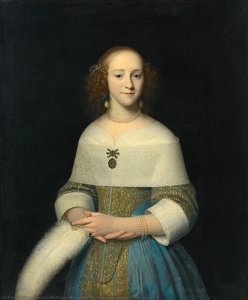
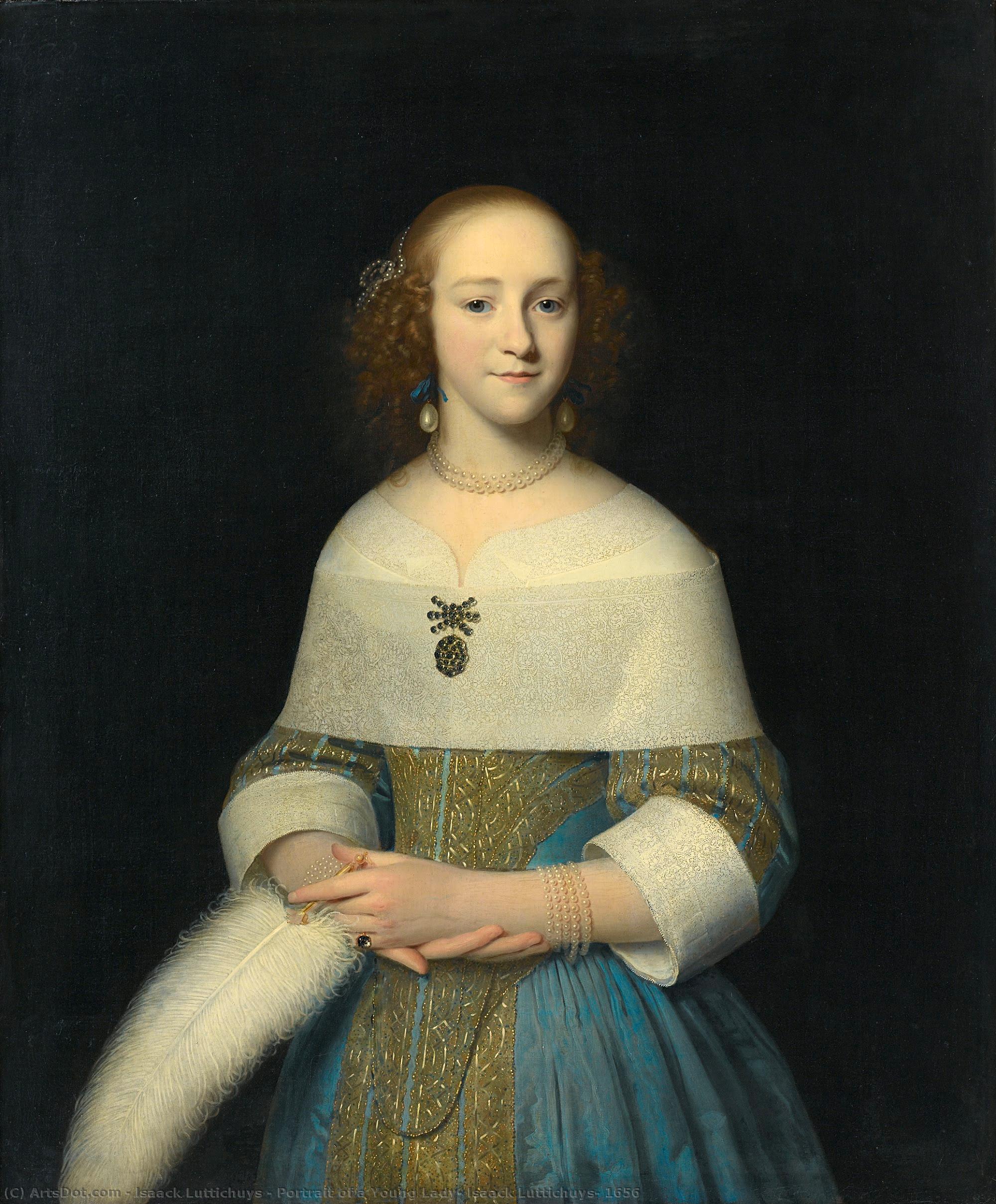
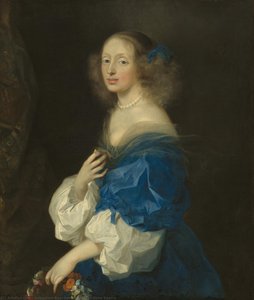
Portrait of a Young Lady, Isaack Luttichuys, 1656
 1656
1656 99.0 x 82.0 cm
 Read More
Giclée / Art Print
Museum-quality giclée or canvas print with fast production and flexible finish options. ( Buy Hand Made Painting Buy Image)




































Pick from our preset sizes that match the artwork's original proportions.

You may enter your own dimensions to fit a specific frame or space. If your selected size does not match the original image's proportions, we will either crop the artwork or extend the image with a mirrored or solid-fill edge. A digital mockup will be sent for your approval before production begins.
Please note that the on-screen preview does not reflect the actual cropping or extension. Only the mockup will accurately show the final composition.
While custom sizes are available, we recommend selecting a dimension from the predefined list to preserve the original proportions.
Worldwide Delivery () in 2 weeks instead of standard 4/5 weeks. (5 September)

Free Worldwide Express Shipping

High-Quality Linen Canvas

Full Shipping Insurance

Customs Tax Refund Guarantee

True Color Matching Guarantee

60-Day Return Policy (Defects Only)

100% Money-Back Guarantee

Bulk Discount Offer
 Glass option is only available in size under 110 CM

Portrait of a Young Lady, Isaack Luttichuys, 1656
Giclée / Art Print
Reproduction Size
-


Total Price
$ 63
Related Artworks







Artist Biography
Carlo Dolci: A Florentine Soul in Shadow and Light
Carlo Dolci, born in Florence on May 25th, 1616, and passing away on January 17th, 1686, remains a fascinating figure within the history of Italian painting. Often overshadowed by his more flamboyant contemporaries, Dolci’s legacy lies not in grand gestures or dramatic scenes, but rather in a profound sense of quiet devotion and an exquisitely refined technique that has recently experienced a remarkable resurgence in critical appreciation. His life was inextricably linked to Florence – he spent his entire career within its walls, absorbing the city's artistic traditions while simultaneously forging a uniquely personal style. Dolci’s story is one of unwavering piety, meticulous craftsmanship, and a subtle yet powerful ability to evoke spiritual emotion through carefully rendered light and shadow.Early Life and Artistic Training
Dolci’s early life offers little in the way of dramatic biographical detail. He began his artistic training with Jacopo Vignali, a prominent Florentine painter known for his portraits and religious scenes. This apprenticeship proved crucial, providing Dolci with a solid foundation in technique and an understanding of Florentine painting conventions. However, it was through his association with the Medici court that Dolci truly blossomed. He became a valued artist for Grand Duchess Vittoria della Rovere, a devout patron who deeply appreciated his ability to capture religious subjects with sincerity and grace. This patronage afforded him stability and allowed him to develop his distinctive style – one characterized by an almost melancholic beauty and a deliberate avoidance of overt theatricality. Unlike many of his contemporaries who flocked to Rome seeking fame and fortune, Dolci remained rooted in Florence, creating a body of work deeply connected to the city’s atmosphere and its artistic heritage.Style and Technique: The Language of Shadow
Dolci's style is immediately recognizable for its subdued palette, its emphasis on atmospheric perspective, and its masterful manipulation of light and shadow. He eschewed bright colors and dramatic contrasts in favor of a muted range of browns, grays, and ochres – colors that evoke the stillness of twilight or the hushed reverence of a sacred space. His compositions are often small-scale, intimate scenes depicting solitary figures engaged in prayer, contemplation, or simple acts of piety. These works aren’t designed to overwhelm the viewer with spectacle; instead, they invite quiet reflection and a sense of profound peace. Dolci's technique was painstaking, involving numerous layers of thin glazes applied over time – a process that contributed to the enamel-like sheen often observed in his paintings. He meticulously rendered every detail, from the folds of fabric to the texture of stone, demonstrating an almost obsessive attention to accuracy and realism. This dedication to craft is what gives his work its enduring quality and its remarkable sense of presence.Themes and Influences: A Spiritual Landscape
Dolci’s artistic output was overwhelmingly religious in nature. His paintings are not grand narratives of biblical events, but rather intimate glimpses into the soul's yearning for communion with God. He frequently depicted scenes from the life of Christ, moments of quiet contemplation by saints, and depictions of humble figures engaged in acts of devotion. His work is deeply influenced by the Counter-Reformation’s emphasis on piety and emotional engagement with religious subjects. However, Dolci’s approach transcends mere propaganda; his paintings are infused with a genuine sense of spiritual longing and a profound respect for the sacred. He drew inspiration from the Florentine tradition of *pittura di sacra conversazione* – a style that emphasized the interaction between Christ and Mary or other saints – but he imbued it with his own unique sensibility, creating works that are both deeply personal and universally resonant.Legacy and Rediscovery
For much of the 19th century, Dolci’s work fell into relative obscurity, dismissed by critics as overly sentimental and lacking in dynamism. However, in recent decades, a renewed appreciation for his subtle artistry has emerged. Scholars have recognized the depth of his technical skill, the sincerity of his religious devotion, and the evocative power of his paintings. His meticulous attention to detail, combined with his masterful use of light and shadow, creates an atmosphere of profound stillness and spiritual contemplation – qualities that are increasingly valued in contemporary art. The rediscovery of Dolci’s work is a testament to the enduring appeal of quiet beauty and the importance of recognizing artistic merit beyond fleeting trends. His paintings continue to be exhibited widely, and his influence can be seen in the works of later artists who sought to capture the essence of Florentine spirituality through subtle brushstrokes and evocative imagery. Carlo Dolci’s legacy is a reminder that true artistry lies not in grand pronouncements, but in the quiet contemplation of the human soul.
isaack littlehouse
1616 - 1673 , United Kingdom
Quick Facts
- Artistic Movement Or Style: Religious painting
- Artists Or Movements Influenced By This Artist:
- Baroque painting
- Dolci School
- Artists Who Influenced This Artist:
- Titian
- Andrea del Sarto
- Date Of Birth: May 25, 1616
- Date Of Death: Jan 17, 1686
- Full Name: Carlo Dolci
- Nationality: Italian
- Notable Artworks:
- Penitent Mary
- The Penitent Magdalene
- St. Lucy
- Place Of Birth: Florence, Italy